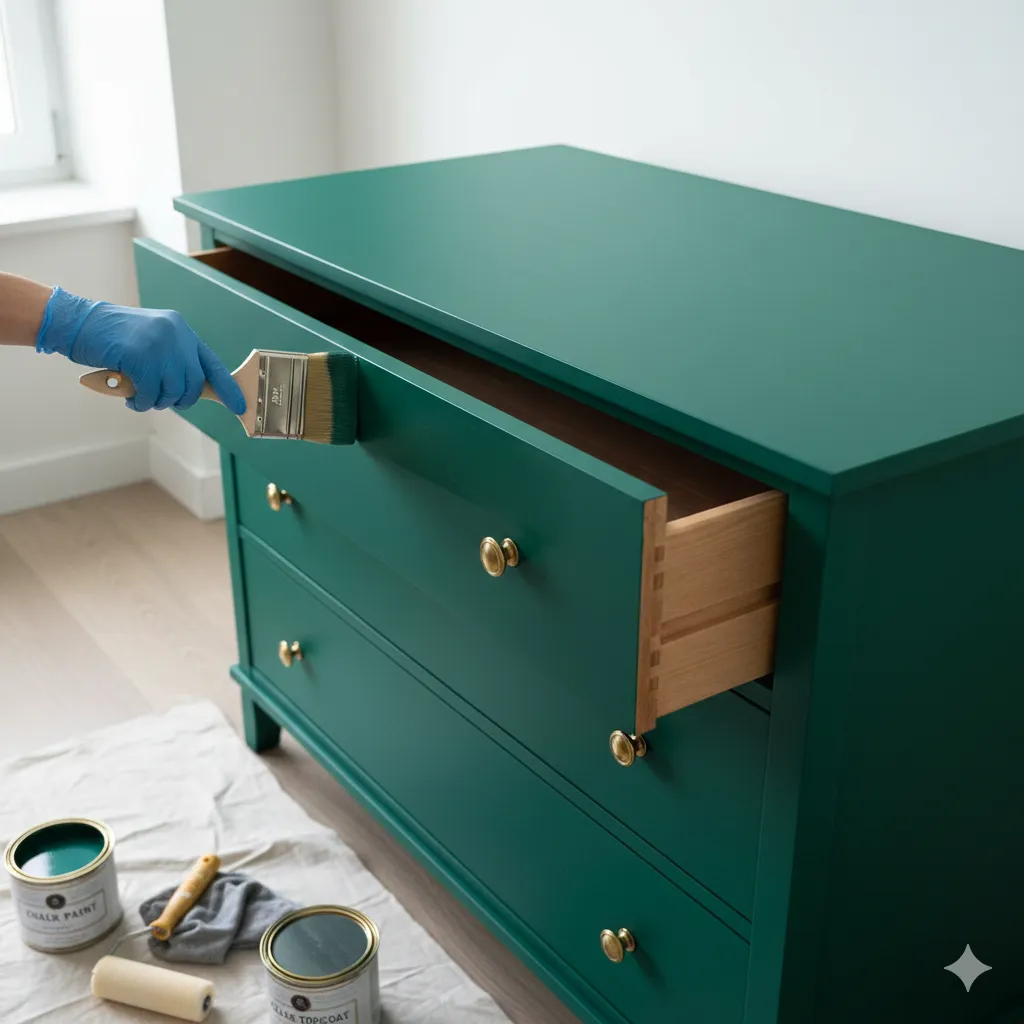
If you’ve ever started a furniture makeover and stopped at the word “sanding,” you’re not alone.
Sanding is messy, time-consuming, and honestly… intimidating. The good news? You can paint furniture without sanding — if you prep it properly and use the right products.
This video shows how to paint furniture without sanding:
Here’s exactly how to do it step by step.
Can You Really Paint Furniture Without Sanding?
Yes — but here’s the real reason some projects fail: poor prep.
Sanding normally helps paint stick by roughening the surface. When you skip sanding, you must replace that step with proper cleaning and bonding techniques.
If done correctly, your paint can adhere beautifully and last for years.
When Is It Okay to Skip Sanding?
You can usually skip sanding if:
- The furniture is in good structural condition
- The surface isn’t peeling or chipping badly
- It’s not heavily damaged or glossy with flaking finish
If the surface is severely peeling, warped, or damaged, light sanding may still be necessary.
Supplies You’ll Need
- Degreasing cleaner (dish soap or TSP substitute)
- Microfiber cloths
- Bonding primer (if needed)
- Chalk paint or mineral paint (great for no-sand projects)
- High-quality paintbrush or foam roller
- Drop cloth
- Painter’s tape
- Topcoat or sealer (polycrylic, wax, or polyurethane)
Optional:
- Liquid deglosser (also called liquid sandpaper)
Step-by-Step: How to Paint Furniture Without Sanding
Step 1: Clean Thoroughly
This step is non-negotiable.
- Remove dust, grease, and residue using warm water and mild dish soap.
- For kitchen furniture, use a degreaser.
- Wipe with a clean damp cloth to remove soap residue.
- Let dry completely.
Paint will not stick to dirt or oils.
Step 2: Use a Liquid Deglosser (Optional but Helpful)
If the furniture is glossy:
- Apply liquid deglosser according to product instructions.
- Wipe evenly across the surface.
- Let it dry fully.
This helps dull shiny finishes without sanding.
Step 3: Apply Bonding Primer (If Needed)
If painting:
- Over laminate
- Over glossy varnish
- Over dark stain with lighter paint
- Over oil-based finishes
Use a bonding primer.
Apply:
- Thin, even coat
- Let dry fully (follow label instructions)
Some chalk paints claim “no primer needed,” but primer increases durability.
Step 4: Paint in Thin Layers
Use:
- Chalk paint (great for beginners)
- Mineral paint
- High-quality acrylic furniture paint
Apply:
- Thin coat first
- Let dry completely
- Add second coat
- Add third coat if needed
Avoid thick coats — they cause drips and uneven drying.
Step 5: Seal the Paint
To protect your finish:
- Use clear wax for matte look
- Use polycrylic for durability
- Use polyurethane for high-traffic pieces
Apply thin layer. Let cure fully.
This step prevents scratches and peeling.
Best Paint Types for No-Sand Projects
Chalk Paint
- Adheres well without sanding
- Matte finish
- Beginner friendly
Mineral Paint
- Durable
- Smooth finish
- Good adhesion
Acrylic Furniture Paint
- Budget friendly
- Available in many colors
Avoid regular wall paint — it chips easily on furniture.
Surfaces You Can Paint Without Sanding
- Wood (sealed or stained)
- Laminate (with primer)
- MDF
- Metal (with metal primer)
- Veneer
Always clean thoroughly first.
How Long Should You Wait Before Using Furniture?
Dry to touch: 1–2 hours
Recoat: 4–6 hours (check product label)
Fully cured: 5–30 days depending on paint type
Be gentle during the curing period.
Quick Fixes for Common Problems
| Problem | Quick Solution | Pro Tip |
|---|---|---|
| Paint peeling | Clean surface better and use bonding primer | Adhesion problems usually mean poor prep |
| Brush strokes visible | Use thinner coats and high-quality brush | Light sanding between coats (optional) smooths finish |
| Paint not sticking to laminate | Apply bonding primer first | Deglosser improves grip |
| Streaky finish | Apply second thin coat evenly | Don’t overwork drying paint |
| Paint scratches easily | Add protective topcoat | Allow full curing time before heavy use |
| Bleed-through stains | Use stain-blocking primer | Common with dark wood or tannins |
Common Mistakes to Avoid
- Skipping cleaning
- Painting over grease
- Applying thick coats
- Ignoring drying times
- Skipping topcoat on high-use pieces
Preparation replaces sanding — don’t rush it.
Frequently Asked Questions
Can I paint glossy furniture without sanding?
Yes, but use liquid deglosser or bonding primer first for better adhesion.
Do I always need primer?
Not always. Chalk and mineral paints often work without it, but primer improves durability.
Can I paint kitchen cabinets without sanding?
Yes, but proper degreasing and bonding primer are critical.
Will the paint last without sanding?
Yes — if the surface is cleaned properly and sealed.
What’s the easiest paint for beginners?
Chalk paint is the most forgiving and easiest to use.
Final Thoughts
You don’t need to dread sanding to refresh old furniture.
With thorough cleaning, proper priming (when needed), and thin, even coats of quality paint, you can transform furniture beautifully — without the dust and mess of sanding.
Prep carefully. Paint patiently. Seal properly.
That’s the real secret to a long-lasting, no-sand furniture makeover.