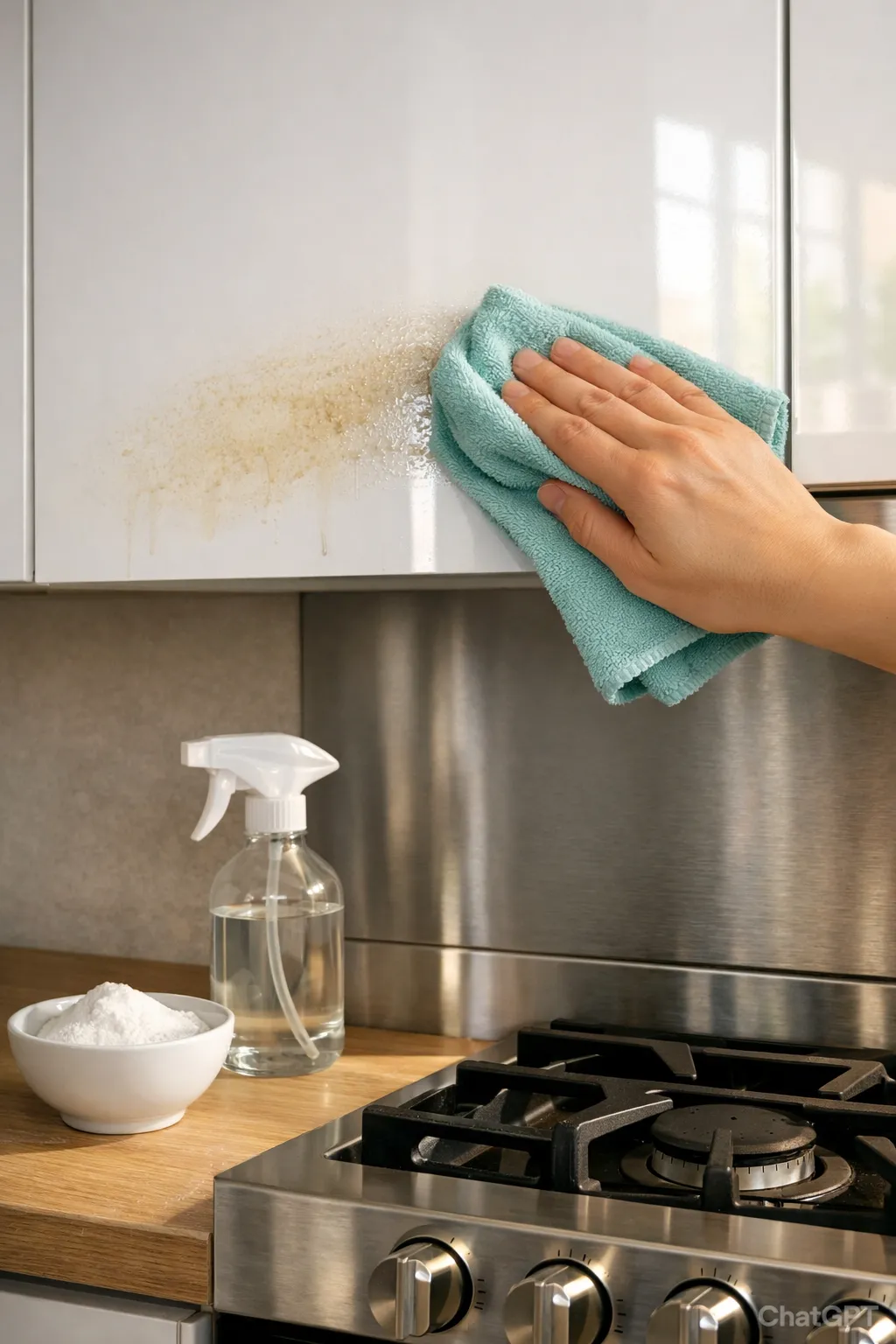
Over time, cooking oils, steam, and airborne food particles cling to cabinet surfaces, especially those near the stove. At first, it’s barely noticeable. But leave it long enough, and your beautiful cupboards start looking dull, yellowed, and permanently dirty. The good news? Grease buildup can be removed. The key isn’t scrubbing harder—it’s breaking down the oil properly without damaging the cabinet finish.
This short video explains how to remove grease from kitchen cupboards fast:
Let’s walk through exactly how to do it.
Know What You’re Dealing With: Why Grease Builds Up
Kitchen grease doesn’t stay in the pan. When you cook, tiny oil particles become airborne. They settle on nearby surfaces—especially cupboard doors above and beside your stove.
Over time, that oil:
- Mixes with dust
- Hardens into sticky residue
- Darkens cabinet surfaces
- Attracts even more dirt
Different cabinet materials react differently to cleaning solutions, so identifying your finish matters before you start.
Common cabinet materials include:
- Painted wood
- Laminate
- MDF with veneer
- Solid wood with varnish
- High-gloss finishes
Pro Tip: Always test your cleaning solution on a hidden area first, especially with painted or wood cabinets.
What You’ll Need
Gather everything before you begin so you can clean thoroughly in one go.
Basic Supplies
- Warm water (not hot)
- Mild dish soap (degreasing type works best)
- White vinegar
- Baking soda
- Microfiber cloths
- Soft sponge
Optional but Helpful
- Spray bottle
- Old toothbrush for corners
- Commercial degreaser (cabinet-safe)
- Dry towel for buffing
Avoid steel wool or abrasive scrubbers. They can scratch and permanently damage finishes.
Step-by-Step: How to Remove Grease from Kitchen Cupboards
Step 1: Dust First
Before using any liquid, wipe cabinets with a dry microfiber cloth to remove loose dust. Mixing dust with cleaner can create muddy streaks.
Step 2: Use Dish Soap and Warm Water
Mix a few drops of grease-cutting dish soap into warm water. Dip a cloth in the solution and wring it out well—you want damp, not dripping.
Wipe cabinets gently, focusing on high-touch areas near handles and above the stove.
Dish soap is designed to break down grease. It’s often all you need for light to moderate buildup.
Step 3: Tackle Sticky Spots with Vinegar
For tougher grease, spray a 50/50 mixture of white vinegar and warm water onto a cloth (not directly onto the cabinet).
Wipe the greasy area and let it sit for a few minutes before wiping again.
Vinegar cuts through oil and disinfects without leaving residue.
Step 4: Use Baking Soda for Thick Buildup
If grease feels thick and hardened:
- Mix baking soda with a small amount of water to form a paste.
- Apply gently with a soft cloth.
- Wipe in small circular motions.
- Remove residue with a damp cloth.
Never scrub aggressively. The goal is to lift grease, not strip finish.
Step 5: Rinse and Dry
After cleaning, wipe cabinets with a clean damp cloth to remove leftover cleaner.
Dry immediately with a soft towel. Leaving moisture on wood cabinets can cause warping over time.
How to Remove Heavy Grease from Kitchen Cupboards
If grease has been building up for years, you may need a stronger approach.
- Start with dish soap.
- Follow with vinegar solution.
- Use baking soda paste only on stubborn areas.
- Repeat gently if necessary.
For laminate cabinets, commercial degreasers labeled safe for kitchen cabinetry can help. Always follow manufacturer instructions.
If cabinets still feel sticky after cleaning, grease may have soaked into porous wood. In extreme cases, light refinishing may be required.
How to Remove Grease Without Harsh Chemicals
If you prefer natural cleaning:
- Dish soap + warm water
- White vinegar solution
- Baking soda paste
- Lemon juice for mild grease
Natural methods are usually effective if you clean regularly. The longer grease sits, the harder it is to remove without stronger solutions.
Stop Doing This…
Using Too Much Water
Excess moisture can seep into wood and cause swelling or peeling veneer.
Scrubbing with Abrasive Pads
They scratch painted or glossy surfaces permanently.
Spraying Cleaner Directly on Cabinets
Always spray onto a cloth first. Direct spraying can cause drips behind cabinet doors.
Ignoring Grease Near Handles
Handles collect body oils plus cooking grease. Clean them thoroughly.
Quick Fixes for Common Problems
| Problem | Potential Solution | Alternative Suggestion |
|---|---|---|
| Cabinets still feel sticky after cleaning | Repeat with dish soap and vinegar solution | Use a cabinet-safe commercial degreaser |
| Grease near stove won’t come off | Apply baking soda paste gently | Let vinegar sit longer before wiping |
| White cabinets look yellowed | Clean thoroughly and rinse residue | Consider repainting if discoloration is permanent |
| Streaks after drying | Buff with clean dry microfiber cloth | Use less soap solution next time |
| Grease inside cabinet doors | Wipe with damp cloth and mild soap | Use toothbrush for tight corners |
Preventing Grease Buildup in the Future
- Use your range hood fan every time you cook.
- Wipe cabinets weekly near the stove.
- Deep clean monthly.
- Keep cabinet doors closed while frying.
- Install a splatter guard when cooking with oil.
Regular light cleaning prevents heavy scrubbing later.
FAQ
Can I use vinegar on wood cabinets?
Yes, but diluted. Avoid soaking the surface and always dry immediately.
Does baking soda scratch cabinets?
If used gently with a soft cloth, it’s usually safe. Avoid heavy scrubbing.
How often should I clean kitchen cupboards?
Light wipe-down weekly, deep clean monthly for areas near the stove.
What’s the fastest way to remove grease?
Grease-cutting dish soap and warm water is often the quickest and safest solution.
When to Call a Professional
If:
- Cabinet finish is peeling
- Grease has penetrated unfinished wood
- Surfaces feel permanently tacky even after cleaning
A professional may recommend refinishing or resealing cabinets.
Conclusion
Learning how to remove grease from kitchen cupboards isn’t about brute force—it’s about using the right solution to break down oil safely. Start with dish soap, escalate to vinegar and baking soda when needed, and always dry thoroughly.
The longer grease sits, the harder it becomes to remove. Clean regularly, protect your surfaces, and your cupboards will stay bright, smooth, and grease-free long before buildup becomes a major problem.
You have not enough Humanizer words left. Upgrade your Surfer plan.