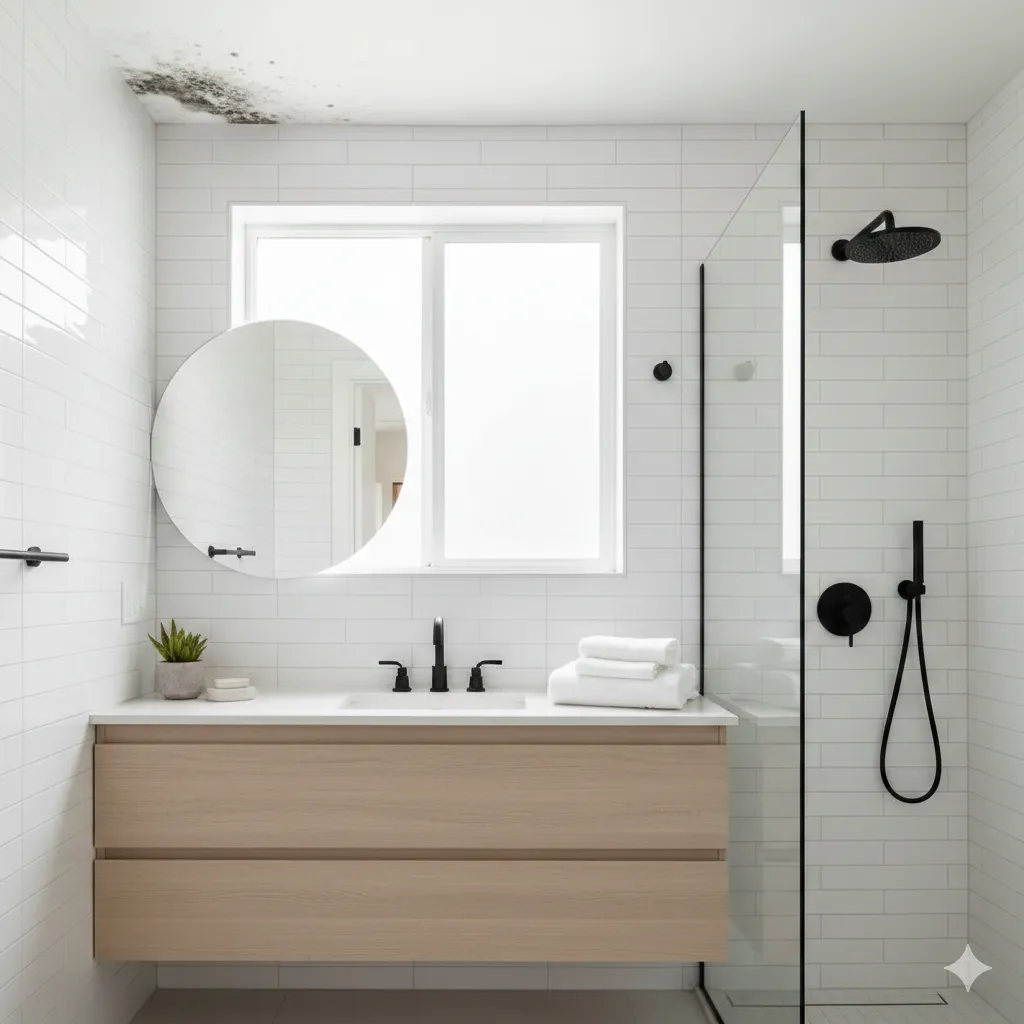
You look up one day while brushing your teeth and notice it — dark spots creeping across your bathroom ceiling. Mold loves warm, damp places, which makes bathrooms the perfect environment.
If you’re wondering how to remove mold from a bathroom ceiling, the good news is: in many cases, you can handle it yourself. The key is acting quickly and using the right method for your ceiling type.
This short video explains how to remove mold from your bathroom:
Let’s walk through exactly what to do — and how to stop it from coming back.
Why Mold Grows on Bathroom Ceilings
Bathrooms create moisture every single day. Hot showers release steam that rises and settles on the ceiling. If there isn’t proper ventilation, that moisture lingers — and mold spores begin to grow.
Common causes include:
- Poor ventilation or no exhaust fan
- Steamy showers with closed windows
- Ceiling paint that isn’t mold-resistant
- Roof leaks or plumbing leaks
- High humidity levels
Mold usually appears as black, gray, green, or even yellowish patches. Sometimes it looks fuzzy. Other times, it appears like small speckles.
The sooner you treat it, the easier it is to remove.
Before You Start: Safety First
Mold can irritate your lungs, skin, and eyes. Before cleaning:
- Wear gloves
- Use protective eyewear
- Wear a mask (preferably N95)
- Open windows for airflow
- Turn on the bathroom fan
If the mold covers a very large area (more than about 10 square feet), professional removal may be safer.
What You’ll Need
Gather your supplies before climbing up on a stool or ladder:
- Spray bottle
- White vinegar OR hydrogen peroxide OR bleach
- Dish soap (optional)
- Scrub brush or sponge
- Microfiber cloth
- Step stool or ladder
Choose your cleaning solution based on the severity of the mold.
Step-by-Step: How to Remove Mold from Bathroom Ceiling
1. Dry the Area First
If the ceiling is damp, let it dry before spraying anything. Cleaning works best on dry surfaces.
2. Apply Your Cleaning Solution
You have a few effective options:
White Vinegar (Natural Option)
Spray undiluted white vinegar directly on the mold. Let it sit for 30–60 minutes. Vinegar kills many types of mold at the root.
Hydrogen Peroxide (3%)
Spray directly and let sit for 10–15 minutes. It bubbles as it works.
Bleach Solution (For Tough Mold)
Mix 1 part bleach with 3 parts water. Spray lightly and allow it to sit for 10 minutes. Never mix bleach with vinegar or other cleaners.
3. Scrub Gently
Use a sponge or soft brush to scrub the affected area. Avoid damaging drywall or textured ceilings.
4. Wipe Clean
Use a damp microfiber cloth to remove residue.
5. Let It Dry Completely
Keep windows open and fans running until the ceiling is fully dry.
Does Vinegar or Bleach Work Better?
This is one of the most common questions.
- Vinegar penetrates porous surfaces and helps prevent regrowth.
- Bleach removes surface stains quickly but may not reach deep into drywall.
For painted ceilings, vinegar is often a safer long-term solution. Bleach is best for stubborn surface staining.
How to Remove Black Mold from Bathroom Ceiling
“Black mold” is often used as a general term. Not all black-colored mold is toxic, but it should still be treated seriously.
If the mold:
- Keeps returning quickly
- Has a strong musty smell
- Spreads despite cleaning
There may be a deeper moisture issue, like a leak behind the ceiling.
In those cases, cleaning alone won’t solve the problem. The moisture source must be fixed.
What If Mold Keeps Coming Back?
If you clean it and it returns within weeks, you likely have a humidity problem.
Try these solutions:
- Install or repair an exhaust fan
- Run the fan for 20–30 minutes after showers
- Keep the bathroom door open after bathing
- Use a dehumidifier
- Switch to mold-resistant ceiling paint
Prevention is just as important as removal.
Can You Paint Over Mold?
Painting over mold without cleaning it first is a temporary fix at best.
If you plan to repaint:
- Remove mold completely.
- Let the ceiling dry thoroughly.
- Apply a mold-resistant primer.
- Use mildew-resistant bathroom paint.
Skipping these steps can cause mold to reappear under the paint.
Common Problems and Solutions
| Problem | Likely Cause | What To Do |
|---|---|---|
| Mold stains remain | Surface discoloration | Use stain-blocking primer before repainting |
| Mold returns quickly | Poor ventilation | Improve airflow and reduce humidity |
| Paint peeling | Moisture trapped under paint | Scrape, dry, prime, repaint |
| Mold spreading | Hidden leak | Inspect roof or plumbing |
When to Call a Professional
DIY cleaning works for small areas. But consider professional help if:
- Mold covers a large section
- Ceiling feels soft or damaged
- You suspect structural issues
- You experience allergy symptoms during cleaning
Sometimes the real problem is behind the ceiling, not on it.
How to Prevent Mold on Bathroom Ceilings
Prevention is easier than repeated scrubbing.
Simple habits help:
- Use the exhaust fan every shower
- Take slightly cooler showers
- Wipe condensation off walls
- Keep humidity below 50%
- Clean ceilings lightly every few months
Regular maintenance keeps mold from taking hold.
FAQ
How long does it take to remove mold from a bathroom ceiling?
Cleaning usually takes under an hour. Drying may take a few hours depending on ventilation.
Is mold on the ceiling dangerous?
Small amounts are usually manageable, but prolonged exposure can trigger allergies or respiratory irritation.
Can I use baking soda to remove mold?
Yes. Mix baking soda with water into a paste or dissolve it in water and spray. It helps deodorize and clean mild mold.
Why is mold only on my bathroom ceiling?
Warm air rises. Steam settles on the ceiling first, making it the most moisture-prone surface.
Will mold go away on its own?
No. Without cleaning and moisture control, it will continue spreading.
Conclusion
Learning how to remove mold from a bathroom ceiling isn’t complicated, but it does require quick action and the right approach. Small patches can usually be handled with vinegar, hydrogen peroxide, or a diluted bleach solution.
The real secret, though, is moisture control. Improve ventilation, reduce humidity, and use mold-resistant paint to stop the problem from coming back.
Look up once in a while — your ceiling will thank you.