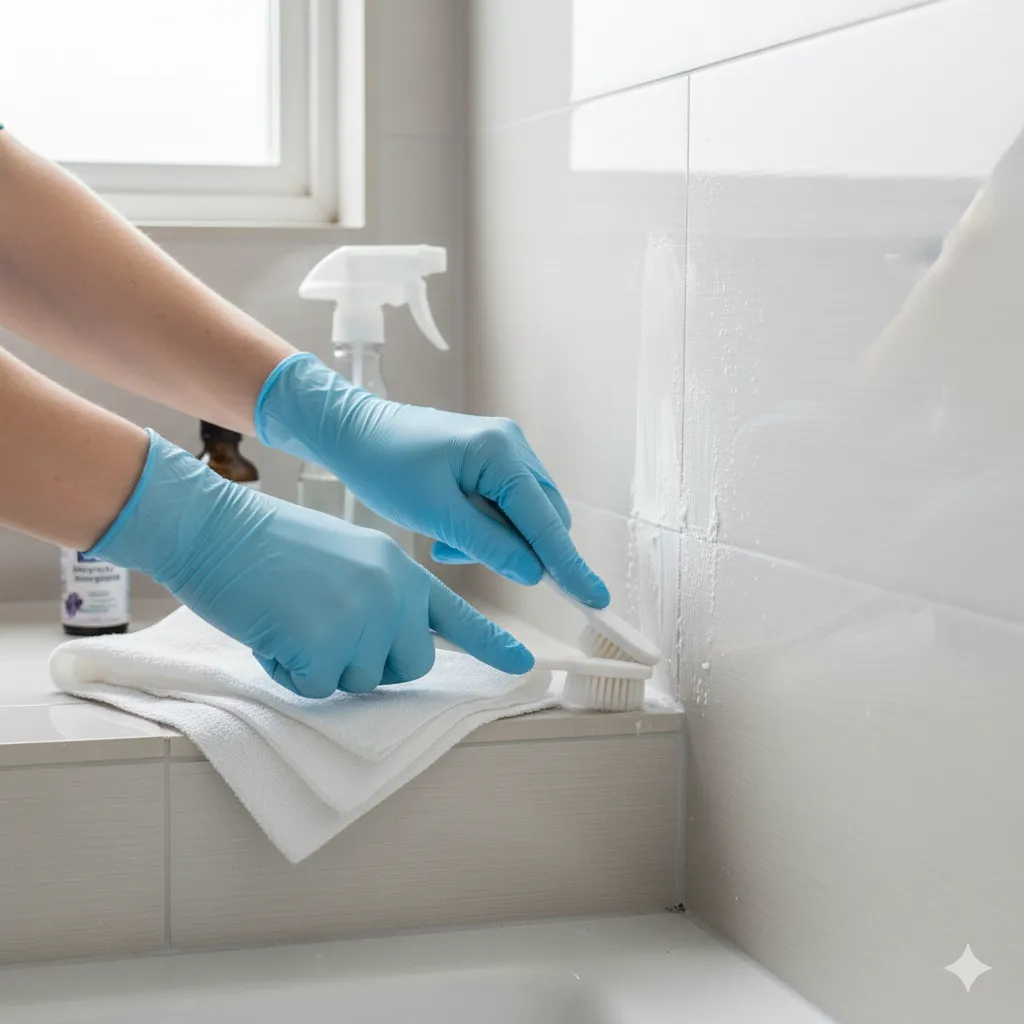
Mold in shower grout is a common problem that can make bathrooms look dirty and feel unhealthy. Damp environments, soap residue, and poor ventilation create the perfect conditions for mold growth. The good news is that mold on grout can be removed safely with the right approach and routine care.
In this guide, you’ll learn:
- How to identify mold in shower grout
- Step-by-step cleaning methods
- Natural and chemical-free options
- How to prevent mold from coming back
- Quick fixes for common grout cleaning issues
Why Mold Grows on Shower Grout
Grout is porous, which means it absorbs moisture easily. Over time, this moisture combines with soap scum, body oils, and bacteria, creating a breeding ground for mold. Left untreated, mold can:
- Stain grout permanently
- Cause unpleasant odors
- Trigger allergies or respiratory issues
Stop doing this: ignoring small black spots. Mold spreads quickly and becomes harder to remove if left untreated.
What You’ll Need
Gather these supplies before starting to clean moldy grout:
- White vinegar
- Baking soda
- Spray bottle
- Soft brush or old toothbrush
- Microfiber cloths
- Warm water
- Hydrogen peroxide (optional for stubborn mold)
- Gloves
- Protective eyewear (optional)
These household items make cleaning effective without harsh chemicals.
Step by Step: How to Remove Mold from Shower Grout
Follow this step-by-step method for safe and thorough cleaning:
- Prepare the area: Remove any personal items from the shower and ensure good ventilation. Open a window or turn on the exhaust fan.
- Spray vinegar on grout: Fill a spray bottle with white vinegar and spray directly onto moldy grout. Let it sit for 10–15 minutes.
- Make a baking soda paste: Mix baking soda with a little water to create a thick paste.
- Apply paste to grout: Spread the paste over moldy areas using a toothbrush. Focus on stained sections.
- Scrub gently: Use circular motions to scrub the grout. Avoid damaging the surrounding tiles.
- Rinse thoroughly: Wipe the area with warm water and a clean cloth to remove baking soda and loosened mold.
- Repeat if necessary: For stubborn mold, spray vinegar again, apply baking soda paste, and let it sit for 15–20 minutes before scrubbing and rinsing.
- Optional hydrogen peroxide treatment: For persistent mold, spray a 3% hydrogen peroxide solution onto grout, let it sit for 10 minutes, then scrub and rinse.
How to Remove Mold Naturally
Natural solutions are safe for frequent use and prevent damage to grout:
- Vinegar alone: Spray directly onto mold, let sit 15 minutes, scrub, and rinse.
- Baking soda and water paste: Gentle, odorless, and effective on light stains.
- Lemon juice: Natural acidity helps lift mild mold and leaves a fresh scent.
These methods are chemical-free, safe for families, and reduce exposure to harsh cleaners.
Quick Fixes for Common Problems
| Problem | Potential Solution | Alternative Suggestion |
|---|---|---|
| Mold returns quickly | Ensure proper ventilation after each shower | Use a squeegee to remove excess water daily |
| Stubborn black grout stains | Apply hydrogen peroxide directly, let sit 10 minutes | Combine vinegar and baking soda paste and repeat |
| Grout feels rough or chalky | Rinse thoroughly and wipe dry | Seal grout with a water-resistant sealer after cleaning |
| Cleaning solution drips on tiles | Wipe immediately with cloth | Use painter’s tape to protect sensitive tile surfaces |
| Mold in corners or behind fixtures | Use a small toothbrush or cotton swab for precise cleaning | Spray solution and cover with a damp cloth for 10 minutes to loosen mold |
How to Prevent Mold from Coming Back
- Wipe down grout with a squeegee after every shower.
- Keep the bathroom well-ventilated with fans or open windows.
- Use a daily shower spray (vinegar and water solution works well).
- Repair leaks or dripping faucets promptly.
- Consider applying a grout sealer every 6–12 months to reduce moisture absorption.
Consistent care prevents mold from becoming a recurring issue.
FAQ
Can I use bleach to remove mold?
Yes, but it’s not always necessary. Bleach may whiten mold temporarily but doesn’t penetrate grout and can be harsh on skin and surfaces. Natural methods often work just as well.
Is hydrogen peroxide safe for grout?
Yes, a 3% hydrogen peroxide solution is effective for stubborn mold and safe for most tile surfaces.
How often should I clean shower grout?
Weekly maintenance with vinegar or a mild daily spray is ideal. Deep cleaning can be done monthly.
Can mold damage grout permanently?
Yes, if left untreated for months or years. Mold can stain grout and degrade its structure.
Final Thoughts
Removing mold from shower grout is easier than it looks when you have a plan and the right tools. Using natural ingredients like vinegar, baking soda, and optional hydrogen peroxide allows you to clean effectively without harsh chemicals.
Don’t ignore small spots — early treatment prevents stubborn, long-term stains. Combine thorough cleaning with preventive habits like proper ventilation, daily squeegee use, and periodic sealing to keep your grout mold-free and your bathroom fresh.
A clean, mold-free shower isn’t just about aesthetics; it’s a healthier and more enjoyable space for your daily routine.