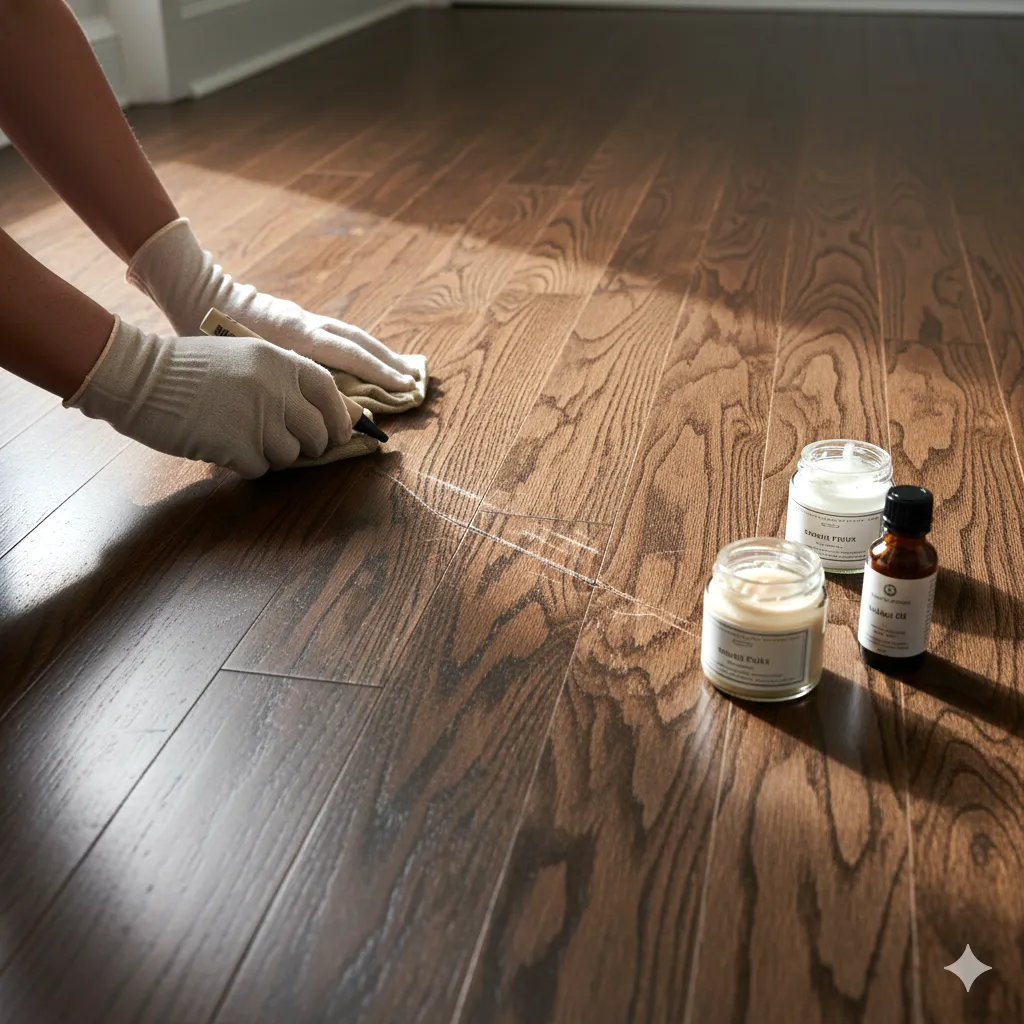
Scratches on your wood floor can make even the most beautiful flooring look worn and neglected. Whether it’s from furniture, pets, or everyday wear, those marks don’t have to be permanent.
With the right approach and materials, you can remove scratches from wood floors and even laminate wood floors effectively.
This video shows three ways to remove scratches from a wood floor:
This guide will show you simple techniques, from minor surface scratches to deeper marks, so your floors can shine again.
Can You Really Remove Scratches from Wood Floors?
Yes. Minor scratches and scuffs can often be buffed out or covered with natural remedies or commercial products. Deeper scratches may require refinishing or wood filler, but most everyday scratches can be fixed without professional help.
Knowing which method to use depends on:
- The depth of the scratch
- The type of wood or laminate
- Whether the floor is sealed, varnished, or unsealed
Supplies You’ll Need
- Soft cloths or microfiber cloths
- Wood cleaner or mild dish soap
- Wood stain markers or crayons (matching your floor color)
- Olive oil or walnut (for light scratches)
- Fine steel wool (#0000 grade)
- Paste wax or furniture polish
- Wood filler (for deep scratches)
- Sandpaper (optional, for deeper scratches on unfinished wood)
Step-by-Step: How to Remove Scratches from Wood Floor
Follow these detailed steps for minor and moderate scratches. Each step includes full sentences to guide you through the process.
Step 1: Clean the Area
- Begin by sweeping or vacuuming the floor to remove dust and dirt.
- Use a damp microfiber cloth with a small amount of wood cleaner or mild dish soap to clean the scratched area.
- Dry the area thoroughly before proceeding.
- Cleaning ensures that grit does not worsen the scratch during treatment.
Step 2: Use Olive Oil or a Walnut for Light Scratches
- Rub a soft cloth in olive oil or use the meat of a walnut.
- Gently rub the scratch in a circular motion until it blends with the surrounding wood.
- Wipe away excess oil with a clean, dry cloth.
- This works best on minor, superficial scratches and helps hide marks naturally.
Step 3: Apply a Wood Stain Marker or Crayon
- Choose a marker or crayon that closely matches your floor color.
- Apply the marker directly to the scratch, filling in the area carefully.
- Wipe off any excess with a soft cloth.
- Allow it to dry completely, and repeat if necessary for deeper scratches.
- This method works well for both hardwood and laminate wood floors.
Step 4: Buff the Scratch
- Use a microfiber cloth to gently buff the area in a circular motion.
- This blends the treated scratch with the surrounding floor.
- For slightly deeper scratches, rub lightly with fine steel wool in the direction of the wood grain.
- Always test steel wool in an inconspicuous spot first to prevent damage.
Step 5: Use Wood Filler for Deeper Scratches
- If the scratch is deep enough to catch your fingernail, use a wood filler.
- Apply the filler with a putty knife, pressing it into the scratch.
- Remove excess filler and smooth the surface.
- Allow the filler to dry according to the manufacturer’s instructions.
- Once dry, lightly sand the area and apply matching stain or finish.
Step 6: Finish with Polish or Wax
- Apply a thin layer of paste wax or furniture polish over the repaired area.
- Buff with a clean cloth to restore shine and blend the treated area with the rest of the floor.
- This step helps protect the wood and keeps scratches from appearing again.
How to Remove Scratches from Laminate Wood Floor
Laminate flooring cannot be sanded or refinished like hardwood. For laminate:
- Use a laminate floor repair kit that matches the floor color.
- Clean the scratched area thoroughly.
- Apply the colored putty or wax from the kit into the scratch.
- Smooth it with a plastic scraper or cloth.
- Buff lightly once dry to restore shine.
For very minor scratches, a mixture of vinegar and olive oil (50/50) can also reduce their visibility.
Quick Fixes for Common Problems
| Problem | Step-by-Step Solution | Pro Tip |
|---|---|---|
| Scratch still visible after oil | 1. Apply a matching stain marker. 2. Let dry fully. 3. Buff gently with microfiber cloth. | Layering treatments often hides scratches better than a single step. |
| Scratch too deep | 1. Clean the area thoroughly. 2. Apply wood filler with putty knife. 3. Let dry and lightly sand. 4. Apply matching stain and finish. | Deep scratches require filling for a smooth finish. |
| Laminate scratch not blending | 1. Use laminate repair kit color carefully. 2. Fill scratch and smooth edges. 3. Buff lightly. | Always choose the closest color match and test in a hidden spot first. |
| Floor looks dull after treatment | 1. Apply furniture polish or wax. 2. Buff in circular motion. | Buffing restores shine and helps the repair blend naturally. |
| Multiple scratches | 1. Clean entire area. 2. Treat each scratch individually. 3. Apply a coat of polish over the entire section. | Polishing the whole section evens out color differences. |
Common Mistakes to Avoid
- Using too much water on hardwood, which can warp the floor
- Applying oil or polish before cleaning the area
- Choosing the wrong color marker or filler
- Scrubbing too hard with steel wool on laminate
- Skipping the final buffing step, which affects blending
Frequently Asked Questions
Can scratches be completely removed?
Minor scratches can usually be hidden effectively. Deep scratches may require wood filler or professional refinishing.
Does this work on both hardwood and laminate?
Yes, but laminate cannot be sanded. Use a repair kit or wax for laminate scratches.
How often should I polish after repairing scratches?
Once the scratch is repaired, polish as part of your regular floor maintenance, usually every 2–3 months.
Is it safe to use household oils on floors?
Yes, for minor scratches. Olive oil or walnut can fill in shallow marks, but avoid excessive use to prevent buildup.
Final Thoughts
Removing scratches from wood floor or laminate wood floor is easier than many people think.
- Clean the area first
- Use oil or walnut for light scratches
- Apply stain markers or fillers for deeper marks
- Finish with polish for a smooth, shiny surface
With careful attention and the right materials, your floors can look refreshed, smooth, and well-maintained — restoring their natural beauty.