Urine stains on a toilet seat can make an otherwise clean bathroom look neglected. Those yellow marks often appear slowly, and before you know it, regular wiping isn’t enough to remove them.
The good news? Most urine stains can be removed permanently if you treat them correctly and early enough. You don’t need expensive cleaners or professional tools — just the right method and a little patience.
Let’s walk through exactly how to remove urine stains from toilet seat surfaces safely and effectively.
Why Do Urine Stains Appear on Toilet Seats?
Urine contains uric acid and minerals. When it sits on a toilet seat surface, especially plastic, it can:
- Penetrate tiny surface pores
- React with air and hard water minerals
- Gradually turn yellow or brown
Over time, the discoloration becomes more noticeable. The longer it sits, the more difficult it is to lift.
Plastic seats are especially prone to staining, while coated wooden seats can discolor if their protective layer wears down.
What You’ll Need
Before starting, gather your supplies.
Basic Supplies:
- Rubber gloves
- Microfiber cloth or paper towels
- Soft sponge
- Old toothbrush
Cleaning Options:
- Baking soda
- White vinegar
- Hydrogen peroxide (3%)
- Mild dish soap
Avoid metal scrubbers or abrasive pads. They scratch the surface and make future stains worse.
Step by Step: How to Remove Urine Stains from Toilet Seat
Step 1: Do a General Clean First
Always begin by removing surface dirt.
- Mix warm water with a few drops of dish soap
- Wipe the entire seat thoroughly (top, bottom, and hinges)
- Dry with a clean cloth
Sometimes what looks like staining is just residue buildup.
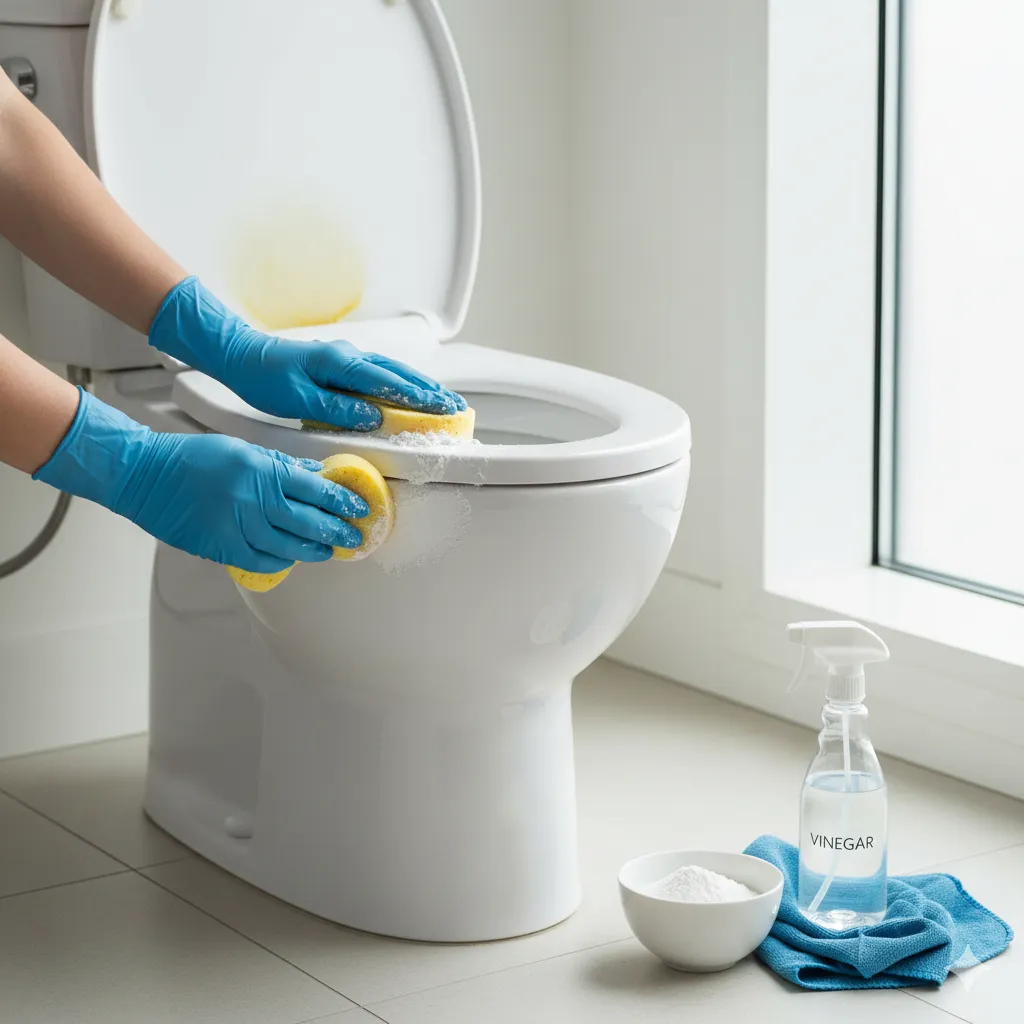
Step 2: Apply a Baking Soda Paste
If the stain remains, baking soda works well as a gentle stain lifter.
- Mix baking soda with a small amount of water
- Create a thick paste
- Spread it directly over the stained area
Let it sit for 15–20 minutes.
Gently scrub with a soft sponge or toothbrush. Wipe clean with a damp cloth.
Step 3: Boost with Vinegar
For more stubborn stains:
- Spray white vinegar over the baking soda paste
- Allow it to fizz for several minutes
- Lightly scrub and wipe away
The reaction helps break down uric acid and mineral buildup.
Step 4: Use Hydrogen Peroxide for Deep Yellowing
If the stain is older or darker:
- Soak paper towels in hydrogen peroxide
- Place them directly over the stain
- Leave for 30–60 minutes
Hydrogen peroxide acts as a mild whitening agent and can lighten deep discoloration.
Wipe clean and dry thoroughly afterward.
How to Remove Urine Stains from Plastic Toilet Seat
Plastic toilet seats stain easily because they are slightly porous.
Best approach:
- Start with baking soda paste
- Follow with hydrogen peroxide if needed
Avoid heavy bleach use, as repeated exposure can weaken plastic and cause uneven discoloration.
If the stain has penetrated deeply, repeated treatments may lighten it significantly, though complete removal depends on surface damage.
How to Remove Urine Stains from Wooden Toilet Seat
Wooden seats typically have a protective coating.
- Avoid soaking the surface
- Use minimal liquid
- Wipe dry immediately
Too much moisture can damage the finish or cause swelling.
If the protective layer is worn and staining has soaked into the wood itself, replacing the seat may be the most hygienic option.
Cleaning Around Hinges and Bolts
Stains often build up near hinges.
- Dip an old toothbrush in vinegar
- Scrub around bolts and crevices
- Wipe thoroughly
If possible, remove the seat for deeper cleaning. Many modern seats detach easily from the back.
When Stains Won’t Go Away
If you’ve tried multiple treatments and:
- The surface feels rough
- The discoloration doesn’t lighten
- The plastic looks aged
The stain may be permanent surface damage.
Toilet seats are inexpensive and easy to replace. Sometimes replacement is the simplest long-term solution.
Quick Problem & Solution Guide
Light yellow stains
Solution: Baking soda paste treatment
Dark or old stains
Solution: Hydrogen peroxide soak
Strong lingering odor
Solution: Vinegar and baking soda combination
Stains keep reappearing
Solution: Increase cleaning frequency
Sticky or dull surface
Solution: Rinse thoroughly to remove residue
What Not to Do
- Do not mix bleach and vinegar
- Do not use steel wool
- Do not let liquids sit too long on wooden seats
- Do not ignore small stains — they deepen over time
Gentle, consistent cleaning is more effective than aggressive scrubbing.
How to Prevent Urine Stains Permanently
Prevention is simple:
- Wipe the seat daily with mild cleaner
- Clean around hinges weekly
- Dry the seat after cleaning
- Avoid letting urine sit and dry
A quick daily wipe can prevent deep staining altogether.
FAQ
Can bleach remove urine stains?
Bleach can lighten stains but may damage plastic over time. Hydrogen peroxide is often a safer alternative.
Why does the toilet seat turn yellow even after cleaning?
Minerals and uric acid can slowly discolor plastic surfaces if not fully removed.
How often should I deep clean the toilet seat?
At least once per week, or more frequently in high-use bathrooms.
Is replacement sometimes necessary?
Yes. If staining has penetrated deeply or the surface is damaged, replacing the seat may be the most hygienic option.
Conclusion
If you want to remove urine stains from toilet seat surfaces permanently, the key is treating the stain early and using the right approach.
Start with gentle cleaning. Use baking soda for lifting. Add vinegar for buildup. Try hydrogen peroxide for deeper yellowing.
Stay consistent, and your toilet seat will stay bright, clean, and stain-free long term.