The thought of peeling it off often brings up visions of shredded drywall and endless sticky residue. Here’s the good news: Removing wallpaper doesn’t have to be a nightmare. Whether you’re dealing with stubborn vinyl or delicate drywall, the secret isn’t brute force; it’s the right technique. By identifying your wallpaper type and using a bit of patience, you can reveal a clean slate ready for a fresh coat of paint.
Watch this easy tutorial to learn how to remove wallpaper:
What You’ll Need
Before you start, gather your “survival kit.” Having everything on hand prevents you from running to the hardware store with half-peeled walls.
- Protection: Drop cloths or plastic sheeting (it’s about to get messy).
- The Basics: Putty knife or plastic scraper.
- Moisture Tools: Spray bottle or sponge, and a bucket of warm water.
- The “Secret Sauce”: Wallpaper remover solution (or a simple mix of warm water and dish soap).
- The Heavy Hitter: A steamer (optional, but a lifesaver for old glue).
- Cleanup: Plenty of towels and heavy-duty trash bags.
How to Remove Wallpaper from Any Wall
Regardless of the surface, always start with a test section. Pick an inconspicuous corner to see how the paper reacts.
- The “Dry Peel”: Try to get under a seam with your putty knife. If the top layer peels away easily, you’re in luck!
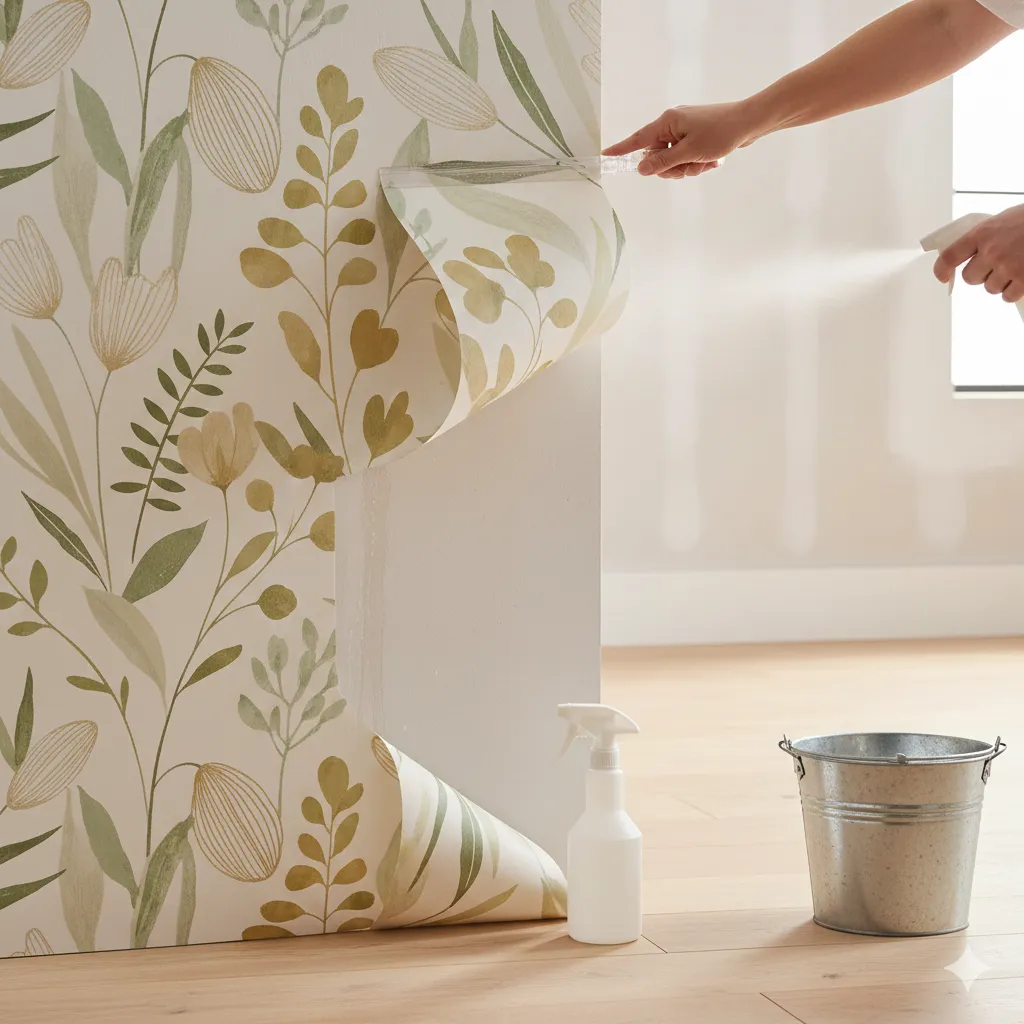
- Soak it Down: If it won’t budge, apply your warm water/solution mix. Let it sit for 10–15 minutes. The goal is to soften the glue, not drown the wall.
- The Gentle Scrape: Use your scraper at a shallow angle. Think of it like shaving—smooth, steady pressure is better than digging.
- Clean as You Go: Don’t let the loosened glue dry again. Wipe the residue off immediately.
Specialized Removal Tactics
For Drywall (Handle with Care)
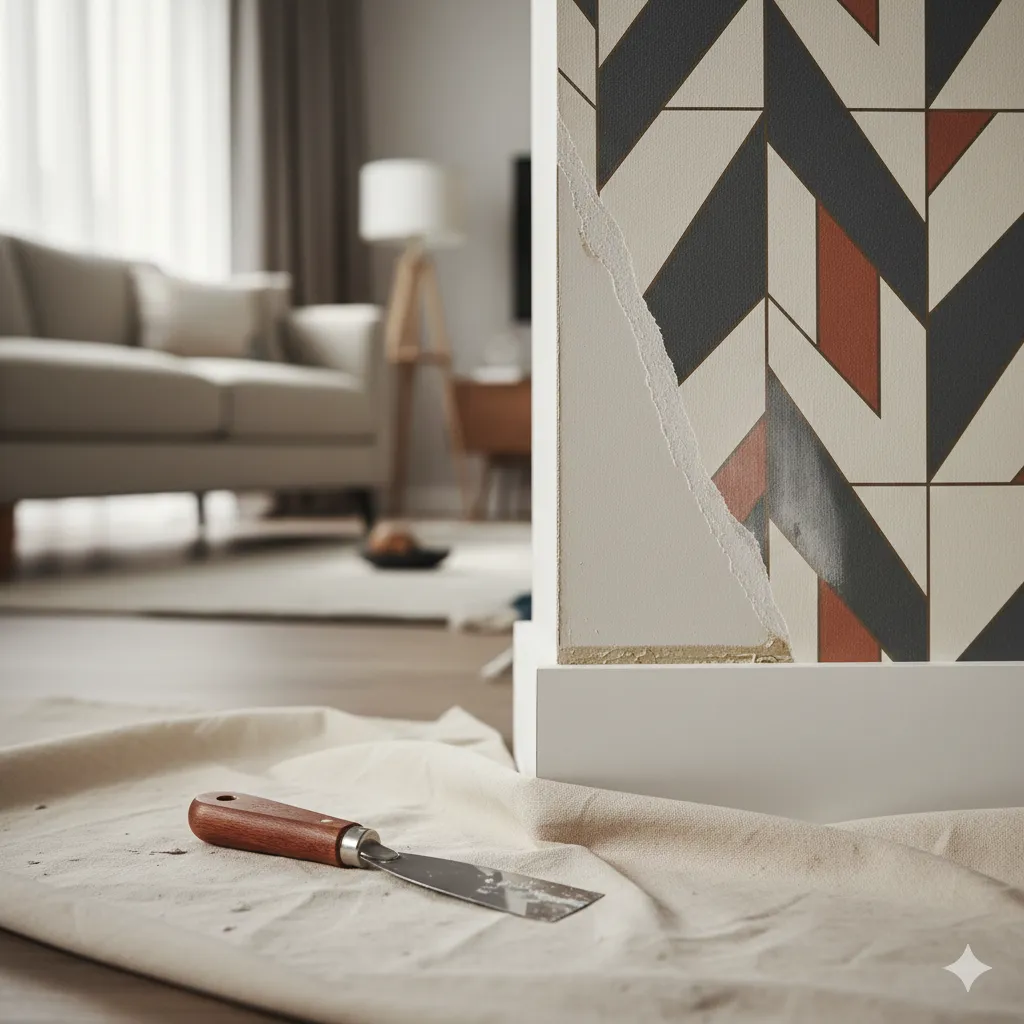
Drywall is essentially paper-covered gypsum. If it gets too wet, it softens and tears.
- Control the Water: Use a sponge instead of a heavy spray.
- Watch the Angle: Keep your scraper almost flat against the wall. If you see the brown paper backing of the drywall, stop, let it dry, and reduce your pressure.
For Vinyl Wallpaper
Vinyl is waterproof, which means your spray won’t soak through it.
- The “Two-Step”: Peel the plastic-like top layer off first. This usually leaves a paper backing behind.
- The Soak: Now that the vinyl is gone, soak the remaining paper backing. It should come off much easier.
For Wallpaper Borders
Borders are often applied with extra-strong adhesive over existing paint.
- Score Lightly: Use a scoring tool (or very gently use your knife) to create tiny holes so the solution can reach the glue.
- Heat it Up: Sometimes a hair dryer on a high setting can soften border glue enough to peel it without chemicals.
When to Bring in the Steamer
If the wallpaper feels like it’s become part of the structural integrity of the house, it’s time to steam.
- Process: Hold the steam plate over a section for about 30 seconds.
- Scrape Immediately: Work while the adhesive is hot and “gooey.”
- Safety Tip: Wear gloves! Steam burns are no joke, and the hot condensation will drip down your arms.
Common Problems & Quick Fixes
| The Problem | The Quick Fix |
| Wallpaper won’t peel | Score the surface and reapply solution; let it soak longer. |
| Sticky glue residue remains | Scrub with a mix of warm water, dish soap, and a pinch of baking soda. |
| Drywall is tearing | Stop immediately. Patch the gouge with joint compound once dry. |
| Uneven wall texture | Once fully dry, lightly sand the area with 120-grit sandpaper. |
FAQ
Is it better to remove or paint over wallpaper?
Always remove it if possible. Painting over it can cause the edges to curl later, and it leaves a visible texture that’s hard to hide.
How long does it take?
For a standard room, plan for a full weekend. One day for removal, one day for cleaning and prep.
What should I do after removal?
Wash the walls one last time with clean water to ensure all paste is gone. If you don’t, your new paint might crackle or peel.
Summing Up
Removing wallpaper is a test of patience, but the results are worth it. Remember: work in small sections, stay hydrated (both the walls and yourself), and don’t rush the scraper. Once the walls are dry and sanded, you’ll have a professional-grade surface ready for whatever modern look you have planned.