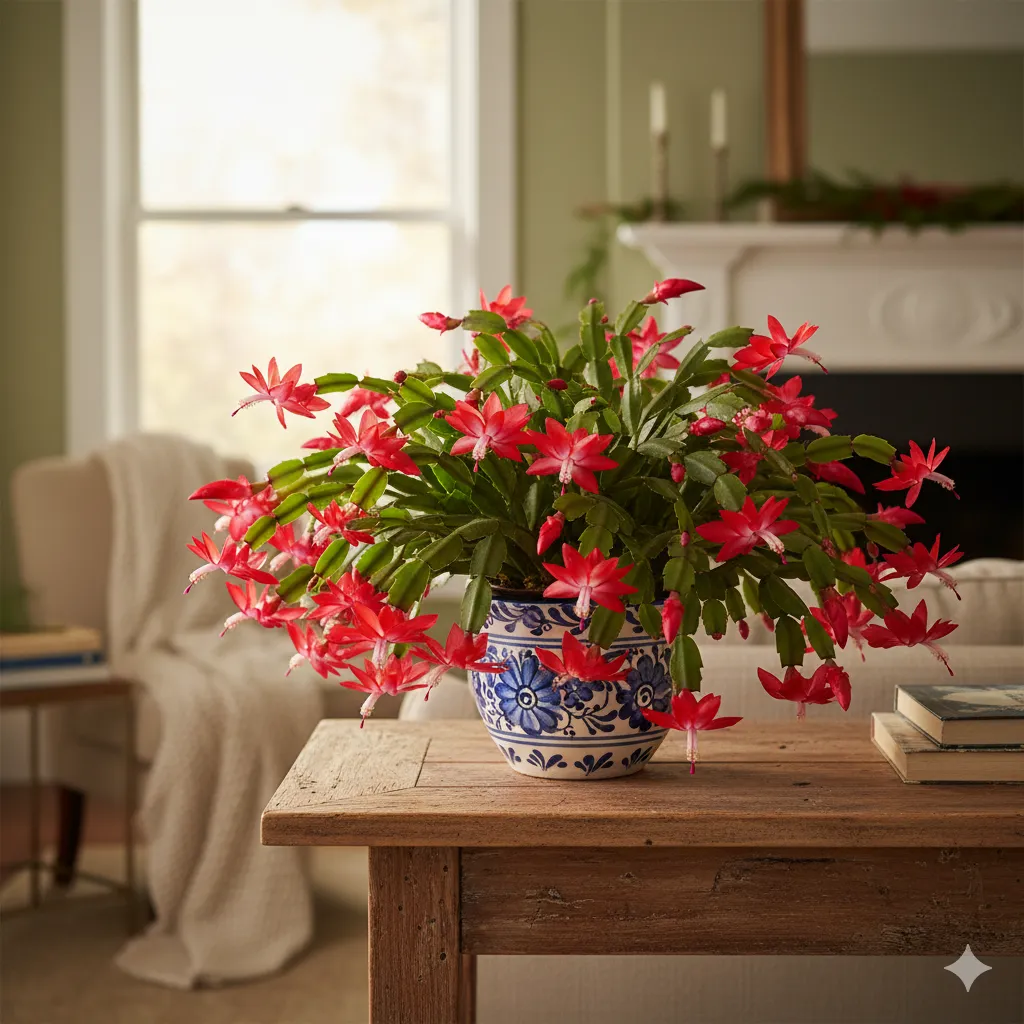
The Christmas cactus doesn’t care about your calendar. It blooms when you earn it. If your plant ghosts you every December, don’t panic—this drama queen just needs the right cues.
Give it a few strategic nudges, and you’ll get blooms that make your poinsettia jealous. Ready for flowers on repeat every year? Let’s hack this.
Know Your Plant’s Drama: It’s Not a Desert Cactus
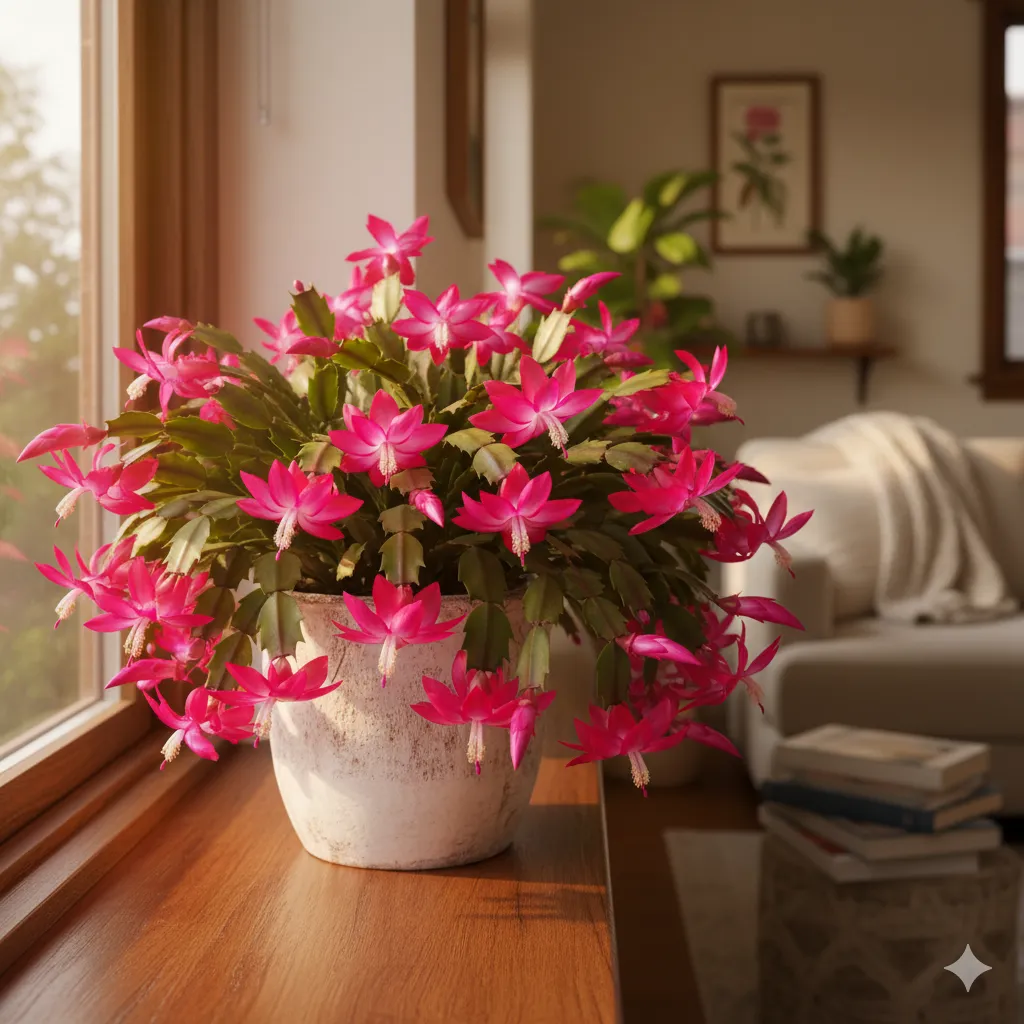
Christmas cactus (Schlumbergera) comes from Brazilian rainforests, not dunes.
So yeah, it loves humidity, filtered light, and actually enjoys a drink. Treat it like a succulent orchid, not a prickly pear. Key vibe check:
- Bright, indirect light beats direct scorch-fest sun.
- Even moisture during growth and bloom. No bone-dry soil for weeks.
- Cool nights and short days kickstart buds.
The Bloom Trigger: Darkness + Chilly Nights = Flowers
If you remember one hack, make it this: give your plant short days and cool nights for 4–6 weeks.
This sets the flower buds like clockwork. Bloom routine (the foolproof version):
- Mid-September to late October: 12–14 hours of darkness every day. Set it in a dark room or pop a lightproof box over it at 6–7 p.m., uncover at 8–9 a.m. FYI, streetlights and lamps can sabotage buds.
- Night temps: Keep nights at 55–65°F (13–18°C).
Cooler is better, but don’t freeze it.
- Water less: Slightly reduce water during this period—keep soil just barely moist.
When to Stop the Darkness Trick
Once you see tiny buds at the ends of segments, stop the daily darkness routine. Move the plant to bright, indirect light and resume normal watering. Then watch the fireworks.
Water Like a Pro: Not Too Much, Not Too Little
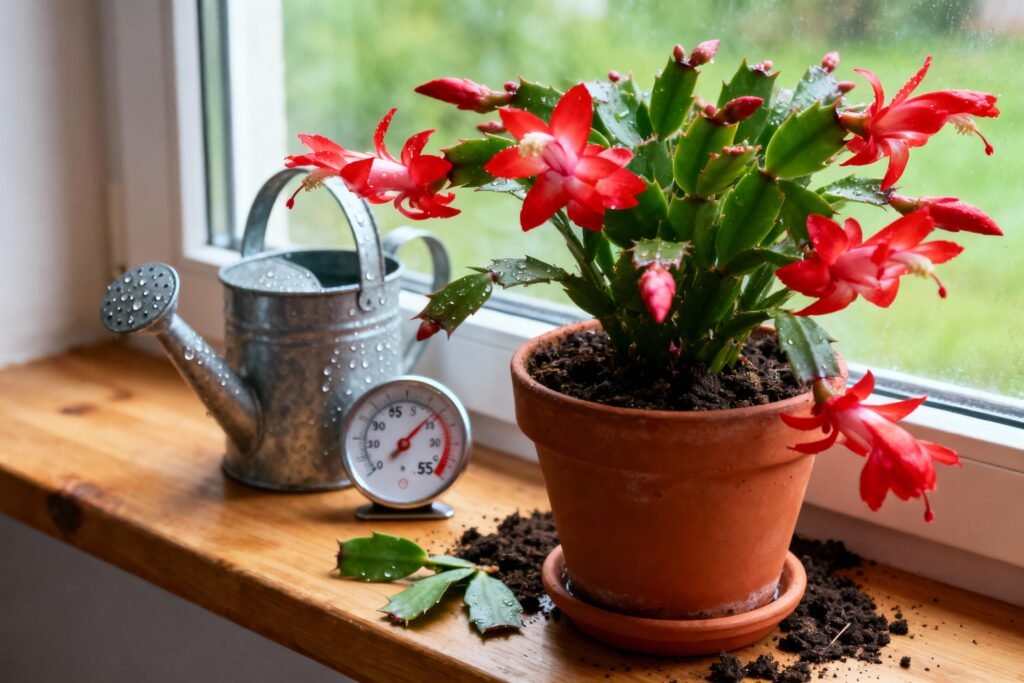
This plant forgives a lot, but inconsistent watering can cause buds to drop like confetti.
You can water without the anxiety spiral if you follow a simple rhythm. Easy watering rules:
- Spring to early fall: Water when the top inch feels dry.
- Budding/blooming: Don’t let it dry out completely. Keep it evenly moist.
- Post-bloom rest: Let it dry a bit more between waterings for 4–6 weeks to recover.
The Right Pot and Soil (Yes, It Matters)
Use a pot with drainage holes. Always.
Then give it a fast-draining mix:
- 2 parts high-quality potting mix
- 1 part orchid bark or perlite
- 1 part coarse sand or pumice
IMO, a chunky mix prevents root rot and keeps your cactus happy even if you over-love it a little.
Light without the Burn: The Sweet Spot
No plant wants a sunburn. Bright, indirect light keeps growth compact and flowering strong. Best placement ideas:
- East window: Morning sun, afternoon shade. Chef’s kiss.
- North window: Works, but supplement with a grow light in winter if it looks leggy.
- Sheer-curtained south/west: Filter that light or you’ll crisp the segments.
Grow Light Settings (If You’re Extra)
Use a full-spectrum LED 12 inches above the plant.
Run it 10–12 hours a day. During bud set, make sure it’s off for 12–14 hours at night—darkness still rules.
Feed for Flowers, Not Just Leaves
You don’t need a chemistry degree. Just feed lightly and consistently. Fertilizer plan:
- March to September: Use a balanced liquid fertilizer (like 10-10-10) at half strength every 4 weeks.
- Early fall (pre-bud): Switch to a bloom formula (low nitrogen, higher phosphorus/potassium) for 1–2 feeds.
- During bud and bloom: Pause feeding to avoid bud drop.
Magnesium Boost (Optional, but Nice)
A monthly Epsom salt solution (1 teaspoon per gallon of water) in summer helps with magnesium.
Don’t mix it with fertilizer week—alternate to avoid overdoing it.
Temperature and Humidity: Cozy, Not Tropical
These plants love slightly cooler air and moderate humidity. Your living room probably works; your swampy bathroom might not. Target range:
- Day temps: 65–75°F (18–24°C)
- Night temps: 55–65°F (13–18°C) during bud set
- Humidity: 40–60% works great
Pro tip: Set the pot on a pebble tray with water (not touching the pot) to bump humidity without drowning roots.
Repot, Prune, and Propagate Without Drama
These plants bloom better when a little snug. Resist the urge to repot every year like a helicopter plant parent. Timing and technique:
- Repot every 2–3 years in spring after blooming, only one pot size up.
- Prune lightly after flowering.
Twist off a few segments to shape and encourage branching.
- Propagate the prunings: Let cut ends callus 24 hours, then stick in moist, gritty mix. Boom, free plants.
Rescue Moves for Common Problems
- Bud drop: Usually drafts, sudden moves, underwatering, or lights at night. Stabilize environment and watering.
- Wrinkled segments: Could be too dry; water thoroughly.
If soggy and wrinkled, you overwatered—let it dry and check roots.
- Red/purple tinge: Too much light or cold stress. Move to softer light and moderate temps.
Advanced Hack: The Two-Season Bloom Trick
Want blooms in winter and again in spring? You can coax a second act. How to do it:
- After the winter bloom ends, rest the plant for 4 weeks: slightly less water, no feed, cooler nights.
- Resume normal watering and feeding in late winter.
- Give another short darkness/cool-night cycle for 3–4 weeks in early spring.
Not every plant cooperates, but when it does, it’s a flex.
FAQs
Why won’t my Christmas cactus bloom at all?
It probably never got consistent darkness and cool nights in fall.
Give it 12–14 hours of darkness plus 55–65°F nights for 4–6 weeks. Also check for nighttime light leaks, erratic watering, and too-warm rooms—all common bloom killers.
Can I keep it outside?
Yes, but only in mild weather. Bright shade outside in late spring and summer works great.
Bring it in when nights drop near 50°F (10°C). Avoid rain-soaked soil and blazing sun, or you’ll get stress instead of flowers.
How often should I water in winter?
During bud and bloom, keep it evenly moist—water when the top inch feels dry. After blooming, let it dry a bit more between waterings for a short rest.
Always empty saucers so roots don’t sit in water.
Do I need to mist it?
Not really. Misting raises humidity for five minutes, then poof. A pebble tray, a humidifier, or grouping plants together works better.
If you enjoy misting, go for it, but don’t rely on it as your only humidity source.
What’s the best pot type?
Any pot with drainage holes. Terra cotta breathes and helps prevent overwatering, IMO, but it dries faster. Glazed ceramic keeps moisture longer.
Adjust watering to match the pot’s behavior.
Is my plant a Thanksgiving cactus instead of a Christmas cactus?
Maybe! Thanksgiving cactus has sharper, claw-like segments; Christmas cactus has more rounded scallops. Care is basically the same, but Thanksgiving types often bloom a few weeks earlier.
FYI, many stores sell Thanksgiving cactus labeled as Christmas cactus.
Conclusion
Christmas cactus blooms on a schedule you control: short days, cool nights, steady moisture, and bright-but-gentle light. Dial in those basics and add a little fertilizer finesse, and you’ll get reliable flowers every year—maybe twice. Treat it like the rainforest diva it is, and it’ll repay you with bloom clusters that steal the holiday spotlight.
Your future self (and your windowsill) will thank you.
Next, learn Tips For Cactus Care That Even Beginners Can Master.