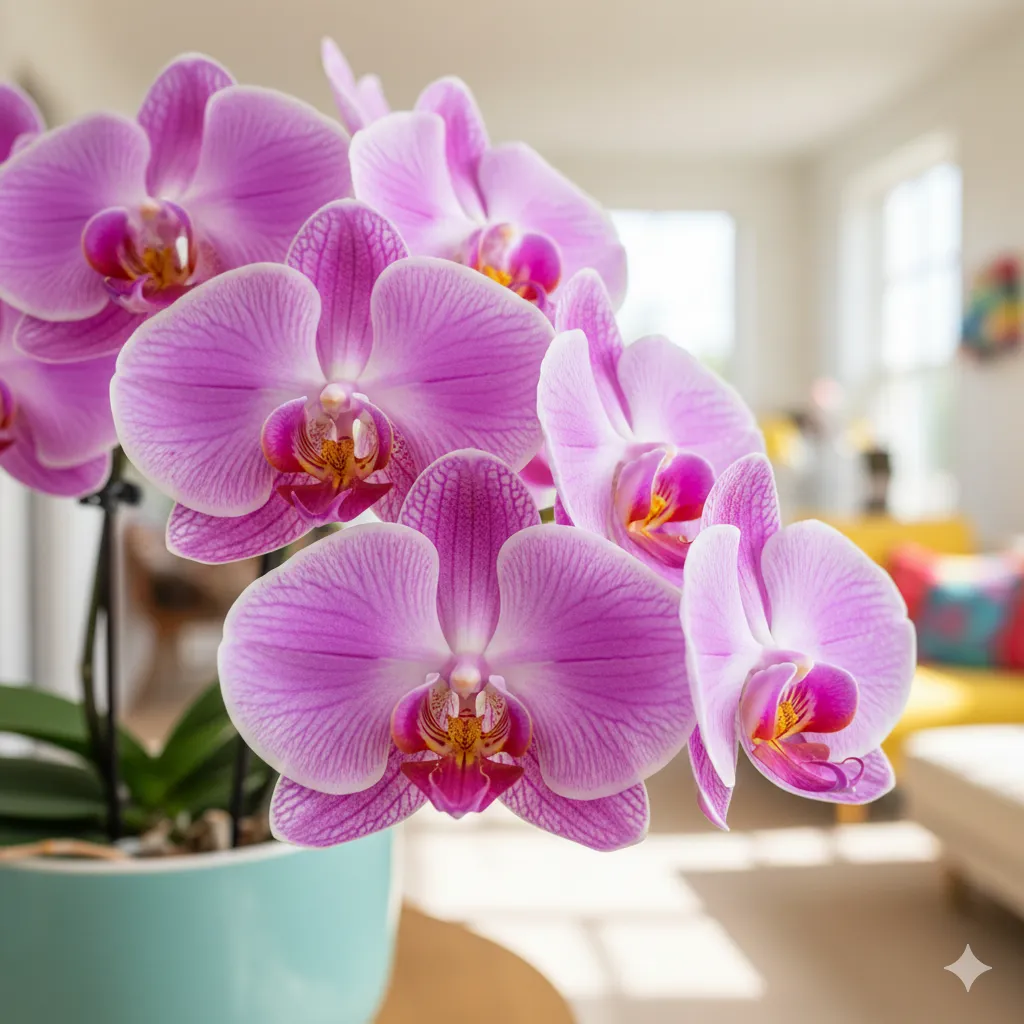
Orchids look like divas, but they’re not as high-maintenance as their reputation. You just need to learn their quirks, like that friend who only drinks oat milk and only on Tuesdays. Nail a few basics, and you’ll get blooms that make your other plants jealous.
Ready to keep those flowers coming instead of crying over a stick in a pot?
Meet Your Orchid: What You Actually Bought
Most people bring home a Phalaenopsis (aka moth orchid). Good call. It’s forgiving, blooms for months, and thrives indoors.
If your tag says something else—Cattleya, Dendrobium, Oncidium—no panic. The basics overlap, but knowing the type helps you fine-tune care.
Quick ID Clues
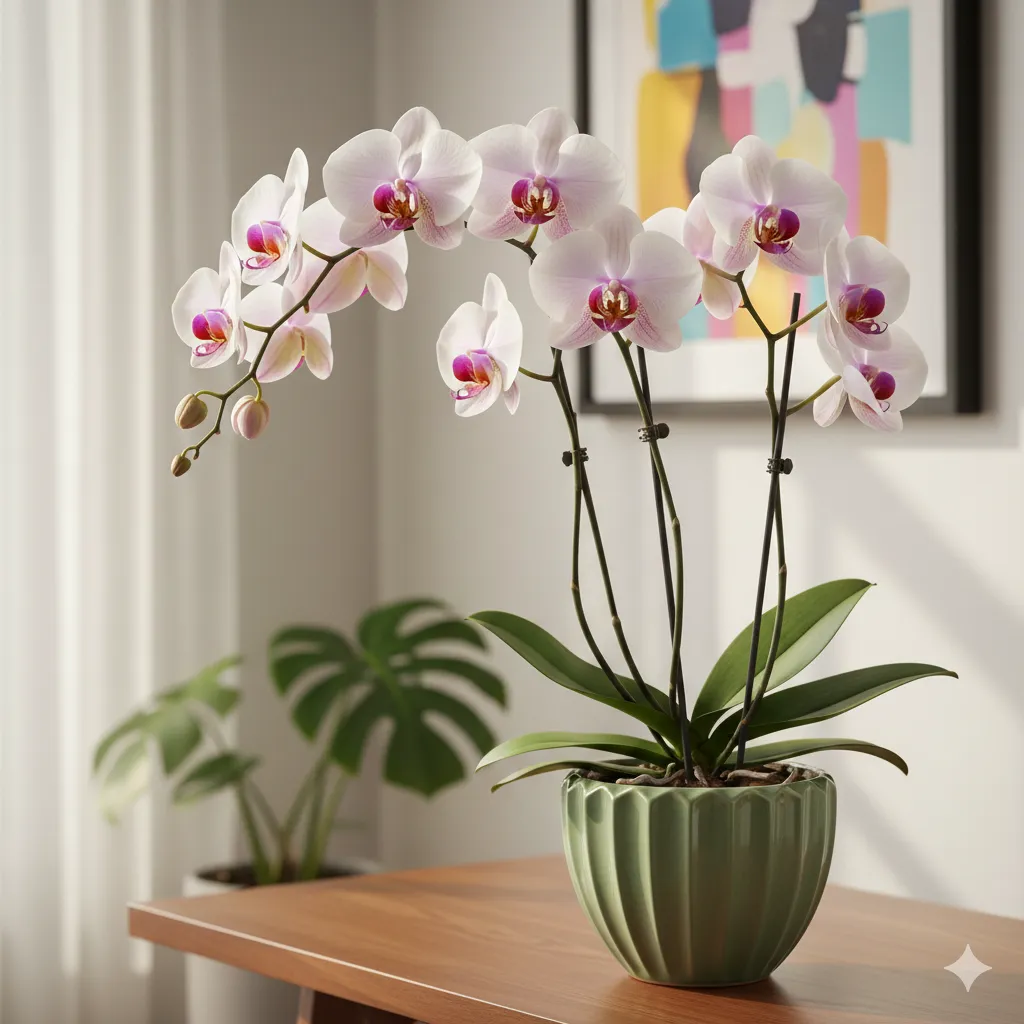
- Phalaenopsis: Big paddle-like leaves, arching spike with flat, moth-like flowers. Common in grocery stores.
- Cattleya: Thick pseudobulbs, ruffly, perfumed flowers.
Wants brighter light.
- Dendrobium: Canes with many smaller leaves; blooms along the cane. Likes a bit more light.
- Oncidium: Multiple thin pseudobulbs; sprays of many smaller flowers. Enjoys bright, indirect light.
FYI: Most orchids you buy are epiphytes.
They don’t grow in dirt; they cling to trees and grab moisture from the air. That’s why potting mix matters (more on that in a sec).
Light: Bright, But Not a Sunburn
Orchids want bright, indirect light. Think “well-lit room” not “beach at noon.” A north or east window usually works.
South or west windows can work with sheer curtains.
The Leaf Color Test
- Healthy light: Leaves look medium green.
- Too little light: Dark green, no blooms.
- Too much light: Yellowing or red blush, leathery look.
If you can read a book without squinting where the orchid sits, you’re in the zone. If your orchid could read without glasses, dial it back.
Watering: The Part Everyone Overthinks
Repeat after me: Let it dry slightly, then water well. Most orchids hate constant wet feet.
Watering schedule depends on your potting mix, pot type, and home climate.
Simple Watering Rules
- Check before you water: Stick a finger into the mix. If it feels dry 1-2 inches down, water. If cool/damp, wait.
- Clear plastic pots: Roots look silver/gray when thirsty, green when hydrated.
Easy mode.
- How to water: Take it to the sink, drench the mix until water runs out, then let it drain fully.
- Frequency: Usually every 7–10 days for bark, 10–14 for moss. Summer = more often. Winter = less.
Do not use ice cubes.
Orchids aren’t cocktails. Cold shocks roots and dries unevenly, IMO.
Potting Mix, Pots, and Repotting (Yes, You Should)
Orchids need air around their roots. Regular soil suffocates them.
Use a proper orchid mix—usually bark-based—or sphagnum moss if you’re a careful waterer.
Choosing the Right Setup
- Bark mix: Great airflow, dries faster, safer for beginners who overwater.
- Moss: Holds moisture longer; good for dry homes, but easy to overwater.
- Pot choice: Clear plastic with lots of holes = root health and easy monitoring. You can slip it into a decorative cachepot.
When to Repot
- Every 1–2 years, or when bark breaks down and looks like compost.
- After blooming, not during a flower show (unless root rot emergency).
- When roots look mushy or dead, or the plant wobbles like a loose tooth.
To repot, trim dead roots (brown/mushy), keep healthy ones (firm/green/silver), and tuck the plant into fresh mix. Don’t bury it like treasure—keep the crown above the medium.
Humidity, Temperature, and Airflow: The Comfort Trio
Orchids like the same temps you do: 65–80°F (18–27°C) during the day, a bit cooler at night.
They love humidity around 40–60% and gentle airflow.
Easy Upgrades
- Humidity: Use a pebble tray with water under (not touching) the pot, group plants, or run a small humidifier.
- Airflow: Small fan on low, not blasting directly. Stagnant air invites fungus.
- Night drop: A 5–10°F dip helps trigger blooms for many types.
If your home feels like the Sahara, your orchid will complain. Add humidity, and watch it relax.
Feeding: Light Meals, Often
Orchids don’t eat like teenagers.
They prefer weak fertilizer on a regular schedule. Use a balanced orchid fertilizer (like 20-20-20) or a urea-free blend.
Feeding Tips
- During growth: Fertilize every 2–4 weeks at 1/4 to 1/2 strength.
- During bloom or winter: Scale back to monthly or pause if growth slows.
- Flush monthly: Run clear water through the pot to wash away salt build-up.
More fertilizer won’t magically create blooms. It’ll just burn roots.
Less is more, FYI.
Blooming and Re-blooming: The Magic Trick
You bought it for the flowers, right? Here’s how to keep the show going.
Phalaenopsis Re-bloom Steps
- After blooms fade, cut the spike just above a node (little bump) halfway down. Sometimes it branches and reblooms.
- If the spike looks tired or brown, cut it down at the base and let the plant rest.
- Give it bright, indirect light and a slight nighttime temperature drop for a few weeks.
Other Orchids
- Cattleya: Needs bright light to bloom.
Repot after new growth matures.
- Dendrobium (nobile-type): Likes cooler, drier winter rest to set buds.
- Oncidium: Bright light and steady watering; don’t let pseudobulbs shrivel.
Patience, grasshopper. Orchids bloom on their own schedule, not yours.
Common Problems (And How to Not Panic)
Every orchid owner hits bumps. Good news: most have easy fixes.
Yellow Leaves
One old leaf yellowing?
Normal. Many leaves yellowing? Check light (too much) or watering (too much/too little).
Wrinkled or Shriveling Leaves/Bulbs
Usually dehydration from underwatering, dead roots, or super low humidity.
Inspect roots and adjust watering.
Root Rot
Mushy, brown roots. Solution: Unpot, trim dead roots, repot in fresh bark, and water less often. Increase airflow.
Buds Dropping (“Bud Blast”)
Caused by sudden changes—drafts, dry air, moving the plant, cold shock.
Keep conditions stable and boost humidity.
Pests
Mealybugs, scale, and spider mites love orchids. Wipe leaves with alcohol-dipped cotton swabs, then use insecticidal soap or neem. Repeat weekly until gone.
Consistency wins.
Orchid Care Routine: A Simple Weekly Game Plan
Want a no-brainer plan? Here you go.
- Light check: Leaves medium green, not squinting under sunbeams.
- Water check: Finger test; water thoroughly if dry. Drain well.
- Leaf wipe: Dust off with a damp cloth so they can breathe and photosynthesize like champs.
- Humidity: Keep that tray filled or humidifier going.
- Fertilize: Every 2–4 weeks at low strength; flush monthly.
- Monthly scan: Peek at roots, check for pests, and note new growth.
FAQ
Can I keep my orchid in the decorative pot it came in?
Yes, but make sure the inner plastic pot drains freely and doesn’t sit in water.
Slip the plastic grower pot into the pretty pot, and empty any collected water after you water. If it’s planted directly in a ceramic pot with no drainage, repot ASAP.
Why are my orchid’s roots growing out of the pot?
Aerial roots are normal. They help the plant grab moisture and air.
Don’t cut them. If they get wild, you can repot into a slightly larger pot with fresh mix, but never force roots down like spaghetti.
How do I get my Phalaenopsis to rebloom?
Give it bright, indirect light, steady care, and a small nighttime temp drop (about 5–10°F) for a few weeks. After the first bloom, cut the spike above a node to encourage a side branch, or cut it off to let the plant rest and put energy into new leaves and roots.
My orchid looks fine but won’t flower.
What gives?
Usually light or temperature. Increase light without burning the leaves, and provide a nightly cool-down. Also, make sure you’re not over-fertilizing—excess nitrogen can push leaves instead of blooms.
Is tap water okay?
Often yes, unless your water is extremely hard or softened with salts.
If tips burn or salt crusts appear, switch to rainwater, distilled, or filtered water. Flush the pot monthly regardless.
Do I need to stake the flower spike?
You don’t have to, but it keeps the display tidy. Insert a stake early and clip the spike loosely as it grows.
Let it arc naturally for a more organic look, IMO.
Conclusion
Orchids aren’t fussy—they’re particular. Meet their core needs—bright, indirect light, thorough but infrequent watering, airy mix, and a bit of humidity—and they’ll return the favor with long-lasting blooms. Keep it simple, observe your plant, and tweak as you go.
Do that, and your “diva” will become the easiest superstar in your house.