There’s something genuinely satisfying about handing a toddler a craft they can squish, roll, and snack on without any of the usual hesitation that comes with regular playdough. Peanut butter playdough solves that problem completely, and it does it with a recipe so simple it barely qualifies as cooking. A handful of pantry ingredients, no heat required in most versions, and a smell that fills the whole kitchen with something that resembles a fresh batch of cookie dough rather than a craft project.
What makes this version stand out from other edible playdoughs is the texture. Peanut butter already has a naturally smooth, slightly oily consistency, and once it’s combined with powdered sugar and a binding ingredient like dry milk powder or oats, it firms up into something that behaves remarkably like real playdough, holding shapes, rolling into balls, and stretching slightly without falling apart the way some edible recipes tend to.
Why Peanut Butter Works So Well as a Playdough Base
Peanut butter is naturally smooth and pliable straight out of the jar, which gives this recipe a head start that other edible playdough bases don’t have. Most other edible doughs need to build that pliable texture from scratch using ingredients like marshmallow or gelatin, but peanut butter already has the right consistency before anything else is even added.
Powdered sugar pulls moisture and oil out of the peanut butter as it’s kneaded in, firming the mixture into a dough-like texture rather than leaving it as a sticky paste. Adding a dry ingredient like nonfat dry milk powder or finely ground oats on top of that gives the dough even more structure and reduces the oiliness that pure peanut butter and sugar alone can sometimes have, particularly in warmer rooms where the peanut butter naturally softens more.
Important Safety Note Before You Start
This recipe contains peanuts and should only be made and used in households and settings where peanut allergies aren’t a concern. Given how widespread peanut allergies are, particularly among young children, this isn’t an appropriate activity for classroom settings, group playdates, or any situation where you can’t be completely certain every child present can safely have peanut butter. Always check with parents directly rather than assuming, and consider this strictly a recipe for use within a single household that has already confirmed peanut butter is safe for everyone involved.
What You’ll Need
- 1 cup of creamy peanut butter (avoid natural peanut butter with separated oil, since it makes the dough greasier and harder to work with)
- 1/3 cup of honey or light corn syrup
- 1 to 2 cups of powdered sugar
- 1/2 cup of nonfat dry milk powder, or finely ground oats as a substitute
- A large mixing bowl
- A spoon or spatula for stirring
- Food coloring (optional, gel food coloring works best)
How to Make Peanut Butter Playdough
Add the peanut butter and honey to a large mixing bowl and stir together until fully combined and smooth. The honey loosens the peanut butter slightly at this stage, which actually makes it easier to incorporate the dry ingredients in the next steps.
Add the dry milk powder, or ground oats if using that instead, and stir it into the peanut butter mixture thoroughly. This ingredient adds structure and helps absorb some of the natural oiliness of the peanut butter, so don’t skip it even if the mixture looks like it’s coming together fine without it.
Begin adding powdered sugar a half cup at a time, stirring well after each addition. The mixture will start to thicken noticeably and become less sticky as more sugar is incorporated.
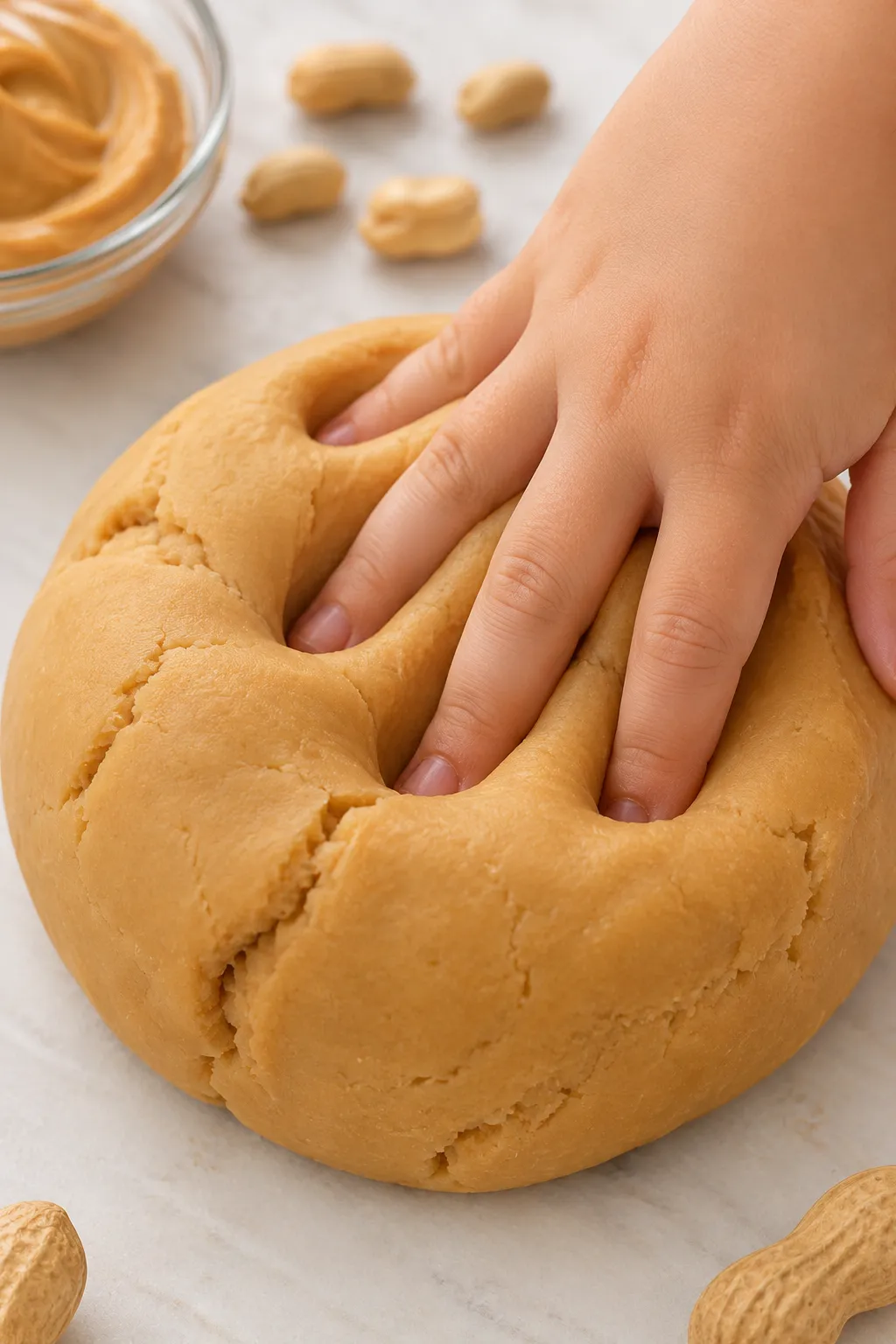
Once the mixture becomes too stiff to stir easily with a spoon, switch to kneading it directly with your hands, continuing to add powdered sugar gradually as needed until the dough reaches a firm, smooth, playdough-like consistency that doesn’t stick excessively to your hands.
If you’re adding food coloring, knead it in at this stage a small amount at a time, since the dough’s natural brown color from the peanut butter means brighter colors work better than pastels, which tend to get muddied by the base color.
Continue kneading for another minute or two once the color and consistency are right, since this final kneading step smooths out the texture and makes the dough easier to roll and shape during play.
How to Adjust the Texture If It’s Not Quite Right
Peanut butter brands vary quite a bit in oil content and consistency, so don’t be surprised if your first batch needs a little adjustment from the base recipe to get the texture exactly right.
If the dough feels too oily or greasy even after adding the full amount of powdered sugar, knead in a little more dry milk powder or ground oats, since this absorbs excess oil more effectively than sugar alone.
If the dough feels too dry, stiff, or crumbly and won’t hold together well, knead in a small amount of additional honey, just a teaspoon at a time, until it softens back up to a workable consistency.
If the dough is sticking heavily to your hands during kneading, dust your hands with a little extra powdered sugar between kneading sessions rather than adding it all directly into the dough at once, which can make it harder to judge how much you actually need.
Play and Sensory Ideas for Peanut Butter Playdough
Beyond simple squishing and molding, a few additions make this a richer sensory experience and extend how long kids stay engaged with it.
Press in mini chocolate chips, sprinkles, or crushed pretzel pieces for texture and visual interest, treating the playdough almost like a cookie dough kids get to decorate and play with at the same time.
Roll the dough into small balls and flatten them slightly to look like cookies, then use a fork to press a crosshatch pattern into the top, mimicking the classic peanut butter cookie look, which adds a fun pretend baking element to the activity.
Use cookie cutters to cut shapes from rolled-out portions of the dough, giving kids a chance to practice fine motor skills while still working with something they’re allowed to taste along the way.
Pair the activity with a few simple kitchen tools like a small rolling pin, a dull butter knife, or a garlic press, letting kids experiment with how the dough responds to different tools and textures.
Quick Fixes for Common Problems
| Problem | Potential Solution | Alternative Approach |
|---|---|---|
| Dough is too oily or greasy | Knead in more dry milk powder or ground oats to absorb the excess oil | Switch to a different peanut butter brand next time, since oil content varies significantly between brands |
| Dough is too dry and crumbly | Knead in a small amount of honey, a teaspoon at a time, until it softens | Add a few drops of water if honey isn’t available, though this can make the dough slightly stickier |
| Dough is sticking to hands during kneading | Dust hands generously with powdered sugar between kneading sessions | Let the dough rest for a few minutes, since some stickiness reduces naturally as it sits |
| Color looks muddy instead of vibrant | This is expected with peanut butter’s natural brown base—stick to darker, richer colors that show up better | Skip coloring altogether and lean into the natural tan color, which already looks like cookie dough |
| Dough hardened too much after storage | Knead in a small amount of honey or peanut butter to soften it back up | Let it sit at room temperature for a few minutes before kneading, since cold storage firms it up further |
| Kids are eating more than playing with it | This is completely normal for edible playdough—let them enjoy it as intended | Make a larger batch if you want enough left over for actual play after snacking |
How to Store Peanut Butter Playdough
Store the dough in an airtight container at room temperature, where it generally stays fresh and usable for about one to two weeks. Refrigeration isn’t necessary and can actually make the dough too firm to work with easily, requiring it to warm back up at room temperature before it’s pliable again.
If the dough firms up significantly after storage, a quick knead, sometimes with a small amount of added honey, typically brings it back to a workable texture without needing to start a new batch.
Discard the dough if it develops an off smell, visible mold, or any other sign that it’s gone bad, particularly if it’s been stored for longer than the typical one to two week window.
FAQ
Is this playdough actually safe to eat, or just technically non-toxic?
It’s genuinely fine to eat, since every ingredient is a standard food item found in many cookie and dessert recipes. It’s not a balanced snack by any means given the sugar content, but there’s no harm in a child eating a portion of it during play.
Can I make this without honey for younger babies?
Yes, since honey isn’t recommended for babies under one year old due to a small botulism risk. Substitute light corn syrup instead, which provides the same softening effect on the dough without the same risk for very young children.
What can I use instead of dry milk powder if I don’t have any?
Finely ground oats work as a good substitute and are easy to make at home by blending regular oats in a blender or food processor until they reach a fine, flour-like consistency. The texture and absorbency are similar enough that most people don’t notice much difference in the final dough.
Why does my dough taste overly sweet?
This can happen if a bit too much powdered sugar was added relative to the peanut butter. Try reducing the sugar slightly next time and compensating with a touch more honey for sweetness without quite as much of the powdery sugar taste.
Does this recipe work with other nut butters or seed butters for kids with peanut allergies?
Yes, the same basic method works well with sunflower seed butter or almond butter as substitutes, making it possible to recreate this activity safely for households avoiding peanuts specifically, though always confirm the substitute ingredient is appropriate for the specific allergy concerns in your household.
Conclusion
Peanut butter playdough earns its place as a favorite edible sensory activity because it comes together with almost no effort and delivers a texture and smell that genuinely rivals real cookie dough. It’s perfect for younger kids who are still likely to taste-test their craft supplies, and it requires nothing more than a few pantry staples and a couple of minutes of mixing and kneading. Just be sure it stays within a household where peanut allergies aren’t a concern, and you’ll have a reliable, smell-amazing activity ready whenever a rainy afternoon calls for something simple and squishy.
Enjoyed this project? Get even more DIY ideas that save (and make) you money.
Join our free newsletter for profitable DIY projects, clever cleaning hacks, home ideas, and creative crafts delivered straight to your inbox.
✓ Free forever • No spam • Unsubscribe anytime