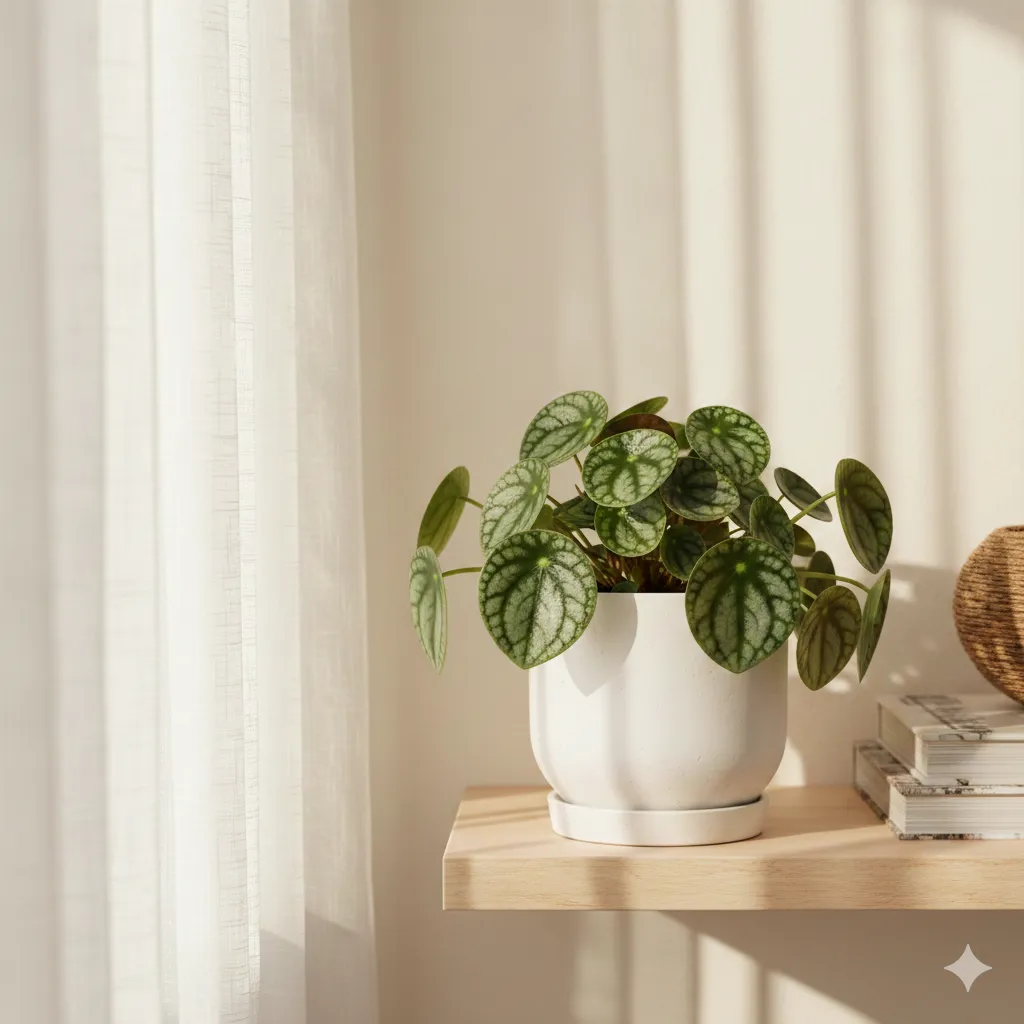
Peperomias are the plant world’s introverts: cute, low-drama, and totally fine doing their own thing on your shelf. They come in dozens of shapes and leaf patterns, so they look like you tried very hard even if you didn’t. The best part?
They forgive your oops moments—like that week you “forgot” to water. Let’s make your peperomia thrive with minimum fuss and maximum green vibes.
Meet the Peperomia: The Chill Roommate of Houseplants
Peperomia plants come from tropical forests where they grow under big trees, which explains a lot about what they want indoors. Think bright shade, gentle watering, and cozy humidity.
You’ll find varieties like the watermelon peperomia, ripple peperomia, and peperomia obtusifolia—all equally adorable, all equally manageable. Key vibe: Small plant, small root system, small care requirements. We love to see it.
Light: Bright, But Not Blinding
Peperomias love bright, indirect light. They’ll handle medium light too, but growth slows and colors fade.
Direct, harsh sun can scorch leaves, especially variegated types.
- Best spot: Near an east or north window, or a few feet back from a south or west window.
- Signs of too much light: Crispy edges, faded variegation.
- Signs of too little light: Leggy growth, stretched stems, smaller leaves.
Can They Handle Grow Lights?
Absolutely. Use full-spectrum LED grow lights for 10–12 hours daily. Keep them about 12–18 inches away to avoid leaf scorch.
FYI, your peperomia will look extra perky under a consistent light schedule.
Watering: Less Is More (Seriously)
This is where most peperomias get dramatic. Their thick, slightly succulent leaves store water, so they hate wet feet. Let the top 1–2 inches of soil dry out before watering.
Stick your finger in the pot—if it feels dry, go for it.
- Water method: Water thoroughly until it drains, then empty the saucer. No swamp vibes.
- Schedule: Every 1–2 weeks in spring/summer; every 2–3+ weeks in fall/winter. Adjust for your home’s humidity and light.
- Overwater alert: Yellowing leaves, mushy stems, and a funky smell.
Bottom Watering vs Top Watering
Bottom watering works great for peperomias because it protects the crown from staying wet.
Place the pot in a tray of water for 15–20 minutes, then let it drain. Top watering also works—just avoid splashing the leaves constantly, especially on fuzzy-leaved varieties.
Soil and Potting: Fast-Draining or Bust
Peperomias prefer an airy mix that dries quickly. Think of them like succulents’ cousin who went to art school—quirky, but practical.
- Recipe: 2 parts high-quality potting mix + 1 part perlite or pumice + 1 part orchid bark or coco chips.
- Pot choice: Terracotta if you overwater, plastic/ceramic if you forget watering too often.
- Drainage: Non-negotiable.
Always use a pot with drainage holes.
Repotting: Not Often
Peperomias have shallow roots and like being slightly snug. Repot every 2–3 years or when roots circle the pot or soil refuses to absorb water. Move up only one pot size.
IMO, these plants get offended if you give them a mansion.
Humidity and Temperature: Cozy, Not Tropical Sauna
You don’t need rainforest conditions. Normal home humidity (40–50%) works fine. If your air gets crispy in winter, run a small humidifier or group plants together.
- Temperature sweet spot: 65–80°F (18–27°C).
Keep away from cold drafts and heaters.
- Avoid: Sudden temperature swings and blasting AC vents.
Feeding and Growth: Keep It Light
Peperomias grow slowly and don’t need heavy feeding. Use a balanced, diluted liquid fertilizer during the growing season.
- When: Monthly in spring and summer, half-strength.
- Skip: Fall and winter—growth slows and they won’t use it.
- Signs of overfeeding: Crispy leaf edges, salt crust on soil.
Pruning for Shape
Pinch back leggy stems to encourage bushier growth. Use clean scissors and cut just above a node.
New shoots will pop from below the cut like magic. FYI, those cuttings can become new plants—two wins for one snip.
Propagation: Free Plants, Anyone?
Propagation is surprisingly easy, and yes, you can brag about it later. You can propagate from stem or leaf cuttings depending on the type.
Stem Cuttings (Best for vining or upright types like P. obtusifolia)
- Cut a 3–4 inch stem with at least one node and a few leaves.
- Remove the bottom leaves and let the cut end callus for an hour.
- Place in water or directly in moist propagation mix (perlite + peat/coco).
- Keep warm and bright (no direct sun).
Roots form in 3–6 weeks.
Leaf Cuttings (Great for watermelon and ripple peperomias)
- Cut a healthy leaf with a bit of petiole (stem) attached.
- Insert the petiole into moist mix or halve the leaf and stick the cut edge into soil.
- Cover with a clear dome for humidity, vent daily to prevent mold.
- Baby plants appear at the base in a few weeks to a couple months. Patience. Reward incoming.
Common Problems and Fixes
Let’s troubleshoot the usual suspects.
Most issues come down to light and water. Shocking, I know.
- Yellow leaves: Usually overwatering. Check roots and soil—repot if soggy.
- Droopy or curling leaves: Underwatering or chill.
Water thoroughly and move away from drafts.
- Brown crispy edges: Too much light or low humidity. Adjust placement and humidity.
- Leggy growth: Not enough light. Move closer to a window or add a grow light.
- Mushy stems: Root rot.
Cut healthy sections and propagate. Toss the mush.
Pests: The Drama We Didn’t Invite
Peperomias resist pests fairly well, but mealybugs and fungus gnats might try you. For mealybugs, dab with isopropyl alcohol and follow with neem oil or insecticidal soap weekly until gone.
For gnats, let soil dry more between waterings and add a layer of sand or use yellow sticky traps. IMO, prevention beats weekly battles.
Pet Safety and Toxicity
Good news for pet parents: peperomias are generally non-toxic to cats and dogs. That said, any plant can cause tummy upset if your pet eats half of it.
Keep plants elevated if you live with a leaf-munching goblin.
FAQ
Why are my peperomia leaves falling off?
Sudden leaf drop often means overwatering or cold stress. Check the soil—if it’s wet and heavy, let it dry out and adjust your schedule. Make sure the plant stays away from cold drafts and windows during winter.
Can peperomias live in low light?
They’ll survive in low light, but they won’t look their best.
Expect slower growth and leggy stems. For a compact, happy plant, aim for bright, indirect light or add a small grow light.
How do I make my peperomia bushier?
Give it more light and pinch back stems. Pruning above a node encourages branching, and steady light prevents stretching.
A light monthly feed in spring and summer helps too.
Do peperomias need special soil?
They need well-draining, airy soil. A mix with perlite and bark keeps roots happy and prevents rot. Avoid heavy, moisture-retentive soils that stay wet for days.
What’s the best way to water peperomia in winter?
Water less often and only when the top couple inches feel dry.
Homes run cooler and darker in winter, so soil dries slower. When in doubt, wait a few days—peperomias handle thirst better than soggy roots.
Why is my peperomia losing variegation?
Low light causes variegated leaves to revert to green. Move the plant to brighter indirect light.
New growth should show more color once light improves.
Conclusion
Peperomia care boils down to this: bright, indirect light, light watering, and fast-draining soil. Keep it warm, skip the swampy soil, and pinch it back when it stretches. Do that, and your peperomia will quietly look amazing with almost no drama—just how we like it, FYI.