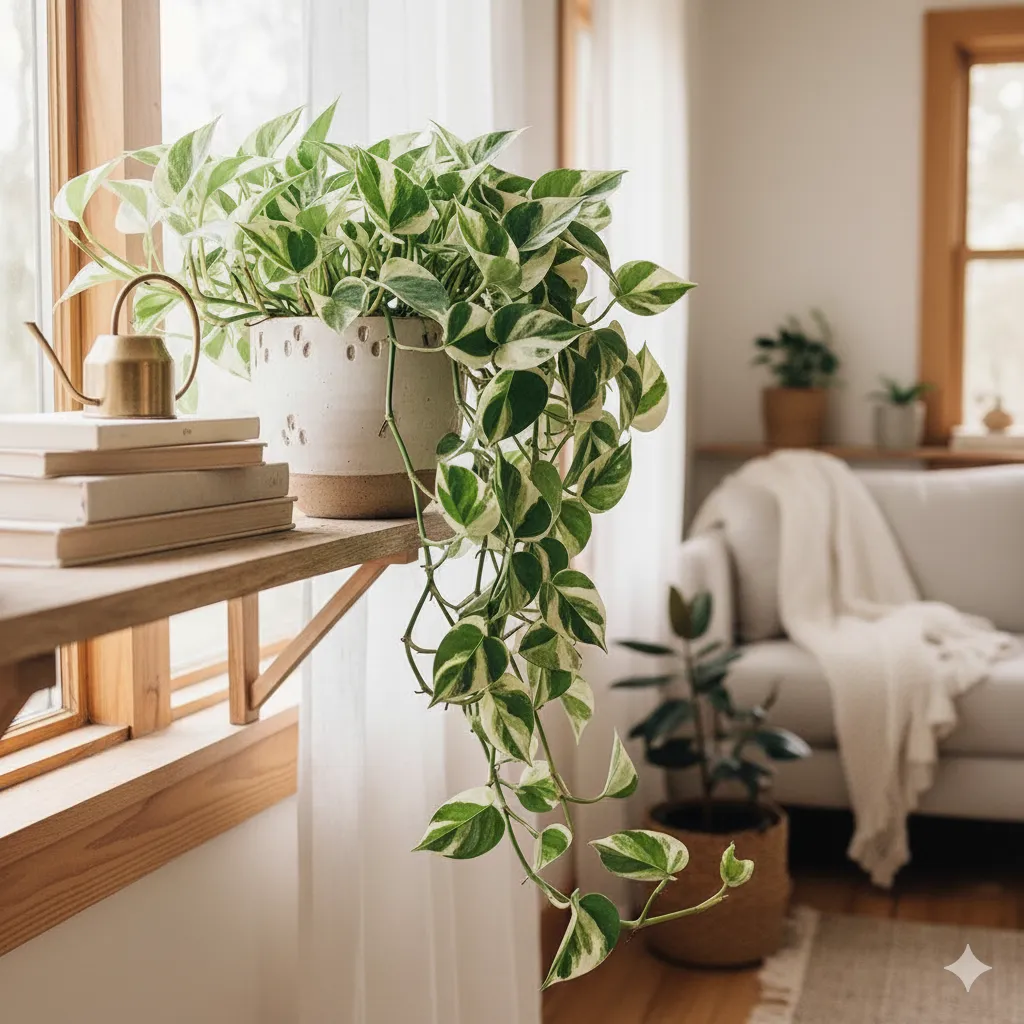
Pothos doesn’t ask for much, yet it delivers swoon-worthy vines that make your space look like a cozy jungle. You get easy-care, fast growth, and instant lush vibes—without babysitting. Want glossy leaves, longer trails, and fewer “uh oh” moments?
Let’s dial in the basics and help your pothos thrive, not just survive.
Meet Your Plant: Pothos 101
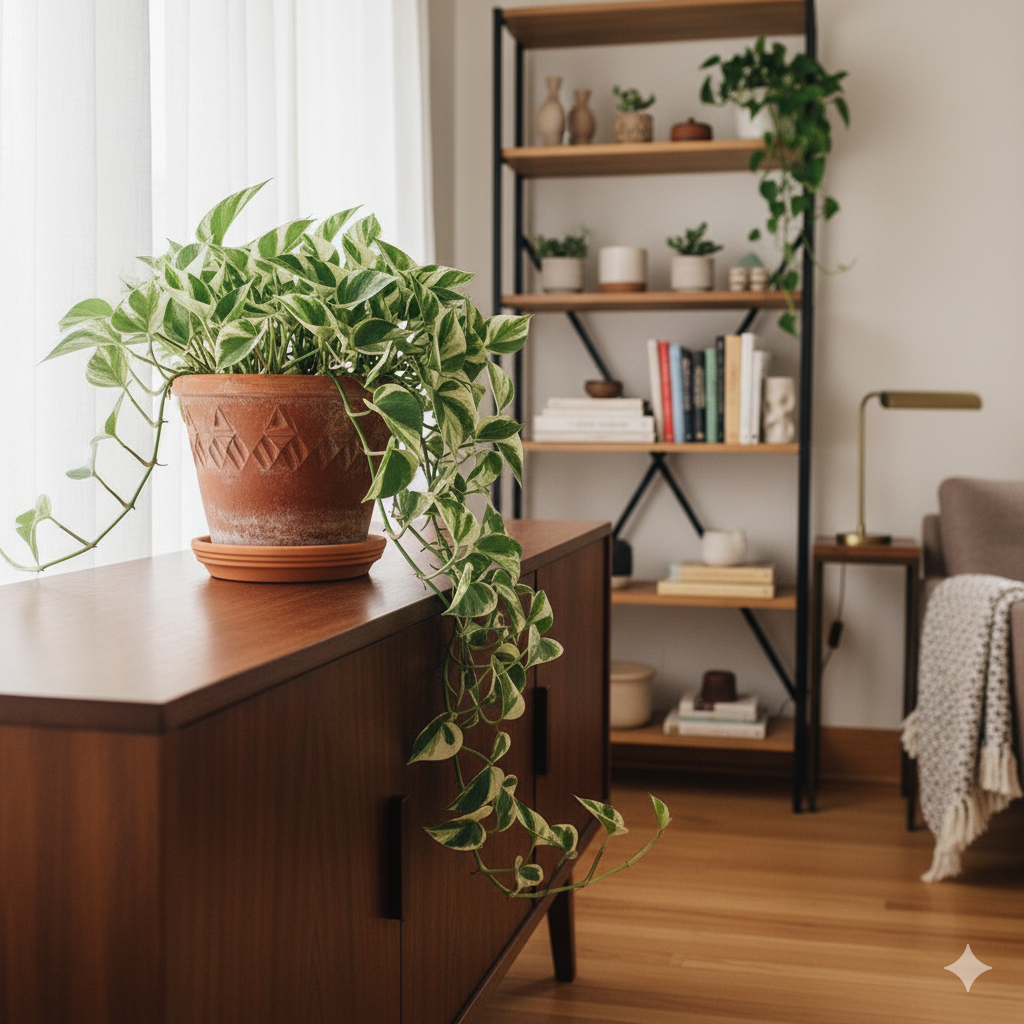
Pothos (Epipremnum aureum) goes by many names—devil’s ivy, golden pothos, “the plant that refuses to die.” You’ll find different varieties like Golden, Marble Queen, Neon, Jade, and Manjula, each with its own flair. Even if you forget a watering or two (or five), pothos usually forgives you. Want a quick win?
Pothos trails beautifully from shelves or climbs a moss pole for bigger, more dramatic leaves. It’s a choose-your-own-adventure plant.
Light: The Secret Sauce for Lush Growth
Pothos tolerates low light, but it doesn’t love it. Give it bright, indirect light for fuller vines and stronger variegation.
East or north windows? Perfect. South or west?
Pull it a few feet back or filter the light with a sheer curtain.
Signs Your Light Is Off
- Too little light: Smaller leaves, leggy growth, and variegation fading to solid green.
- Too much light: Crispy, bleached patches on leaves (sunburn—ouch).
FYI: Variegated types (Marble Queen, Manjula) need more light to keep those fancy patterns.
Watering: Don’t Love It to Death
Overwatering kills more pothos than anything else. Let the top 1-2 inches of soil dry out before watering again. When you do water, soak thoroughly until water runs from the drainage hole, then let it drain completely.
How Often Should You Water?
- Spring/Summer: Every 7-10 days, depending on light and pot size.
- Fall/Winter: Every 10-14 days, sometimes longer.
Use your finger, a moisture meter, or observe the leaves.
Slight droop = “I’m thirsty.” Dramatic droop + yellow leaves = “You forgot me for a while, didn’t you?”
Soil & Pots: Where the Magic Happens
Pothos likes a well-draining mix. Standard potting soil works, but mix in additives for happy roots:
- 2 parts potting mix
- 1 part perlite
- 1 part orchid bark or coco chips
Drainage holes are non-negotiable. Terracotta dries faster (great for heavy waterers). Plastic holds moisture longer (great if you forget).
Pick your poison based on your habits.
Repotting 101
Repot every 1-2 years or when roots circle the pot or peek out the drainage hole. Go up just one pot size to avoid soggy soil. Refreshing the soil alone can also give growth a boost.
Feeding & Growth: Speed Up Those Vines
Pothos grows quickly with light and nutrients.
Feed every 4-6 weeks in spring and summer with a balanced, water-soluble fertilizer at half strength. Skip feeding in winter—it won’t use it and you’ll risk buildup. Want bigger leaves?
Give your pothos something to climb. A moss pole, plank, or coir pole encourages larger, more mature foliage. Trail it for that cascading look, or train it up like a mini jungle wall—your call.
Pruning for Fullness
Snip leggy stems right above a node (where leaves emerge).
This encourages branching and a bushier plant. Bonus: Use those cuttings to propagate and fill out the pot. More plant for free?
Yes please.
Humidity & Temperature: Cozy, Not Tropical
Pothos handles normal indoor humidity just fine. If the air runs dry (winter radiators, I see you), occasional misting or a pebble tray helps, but it’s not mandatory. Keep temperatures between 65-85°F (18-29°C).
Avoid cold drafts and heat vents for obvious reasons.
Propagation: Multiply the Green
Pothos propagation is basically plant alchemy. Cut a vine just below a node with at least one leaf attached. Pop the cutting in water or directly into moist soil.
Roots appear in 2-4 weeks, sometimes faster if you give bright light.
Water vs. Soil Propagation
- Water: Easy to watch roots grow; transfer to soil after roots reach 2-3 inches.
- Soil: Less transplant shock; keep evenly moist until established.
IMO, water is more fun, soil is more practical. Do both and see what you like.
Common Problems (And Fast Fixes)
Let’s keep the drama low.
Here’s how to handle the usual suspects.
Yellow Leaves
Usually from overwatering or old age. Check drainage, adjust your schedule, and remove the yellow leaf. If several leaves yellow at once, inspect roots for rot (they’ll look mushy and smell bad).
Brown Tips/Edges
Low humidity, underwatering, or fertilizer salt buildup.
Trim crispy bits, flush soil with water to clear salts, and water consistently.
Pests
Spider mites, mealybugs, and scale occasionally move in like bad roommates. Wipe leaves with a damp cloth, then use insecticidal soap or neem oil weekly until you evict them. Quarantine the plant if you can.
Leggy Growth
Your plant wants more light or a haircut.
Move it closer to a window and prune above a node to encourage branching. You can also tuck propagated cuttings back into the pot for instant fullness.
Styling & Training: Make It a Statement
Why stop at “healthy” when you can do “wow”? Try these:
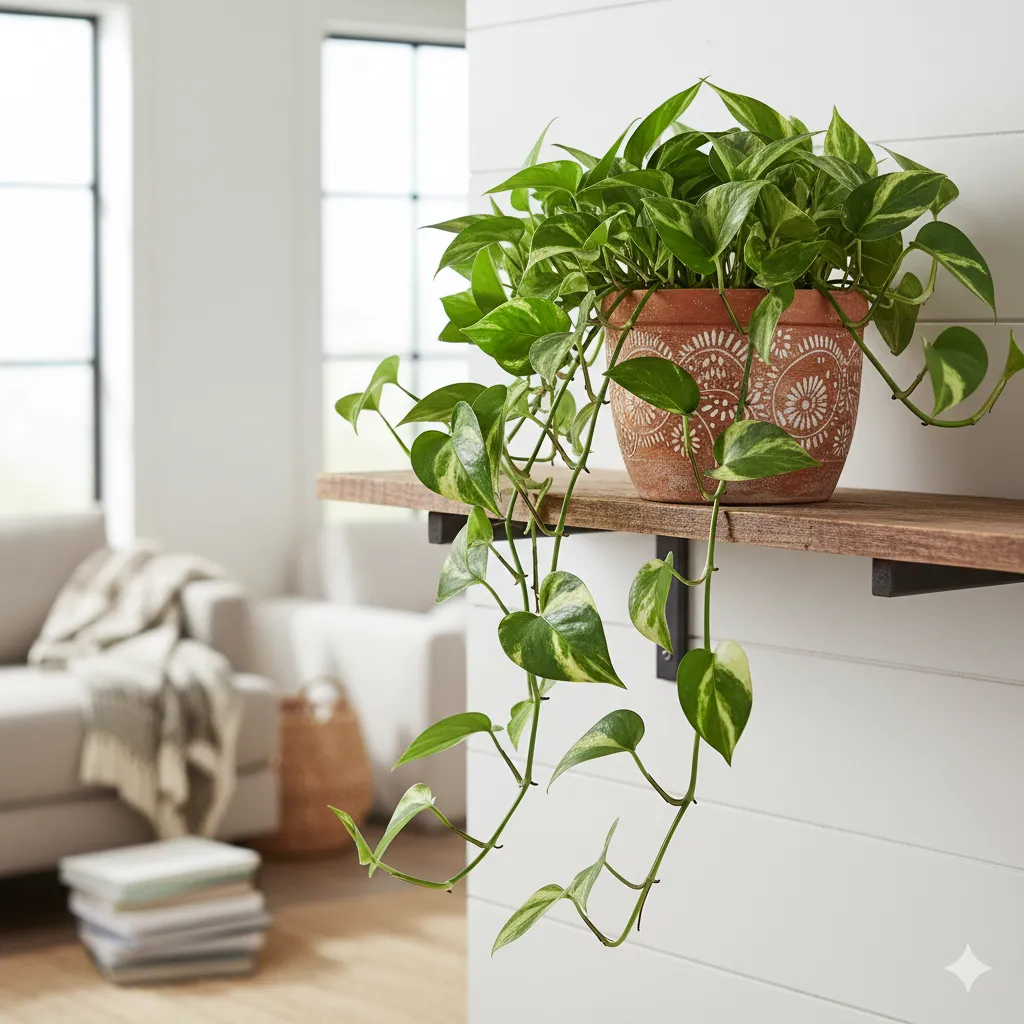
- Trailing shelf vibes: Let vines cascade from a bookcase or hanging basket.
Instant cozy.
- Climbing moment: Attach vines to a moss pole, trellis, or wall hooks for bigger leaves.
- Fuller pot hack: Plant 3-4 cuttings per pot for a lush, dense look.
- Mix and match: Combine varieties in one pot—Neon + Marble Queen looks ridiculously good.
FYI: Rotate your plant every couple of weeks. It prevents lopsided growth and makes it look like you know what you’re doing.
FAQs
Is pothos safe for pets?
Pothos contains calcium oxalate crystals that can irritate mouths and stomachs if ingested by cats, dogs, or curious humans. Keep it out of reach and call your vet if your pet chews it.
Why did my variegation fade?
Low light pushes pothos to produce more green for photosynthesis, so variegation fades.
Move it to brighter, indirect light. New growth should regain color, though individual leaves won’t revert once they turn green.
Can pothos grow in water permanently?
Yes, it can live in water long-term with clean water and a dash of hydro nutrients. But leaves usually grow smaller than soil-grown plants.
Change water every 1-2 weeks and rinse roots to prevent slime city.
What size pot should I use?
Choose a pot that’s 1-2 inches wider than the current one. Oversized pots hold too much moisture and risk root rot. Keep it snug, like comfy jeans, not a parachute.
Why are my pothos leaves small?
Small leaves usually signal low light, low nutrients, or no support if you want larger mature leaves.
Increase light, feed during the growing season, and offer a climbing support for bigger leaves.
Can I grow pothos outdoors?
If your climate stays warm (above 60°F/15°C), pothos can summer outside in shade or dappled light. Bring it inside before temps drop. Direct sun outdoors can scorch it fast.
Closing Thoughts
Pothos rewards the basics: bright, indirect light, thorough but infrequent watering, airy soil, and the occasional haircut.
Give it something to climb if you want bigger leaves, or let it trail and do its cascading thing. Keep it simple, stay consistent, and IMO you’ll have a plant that makes your space feel calm, lived-in, and just a little bit jungle-chic. Happy growing!