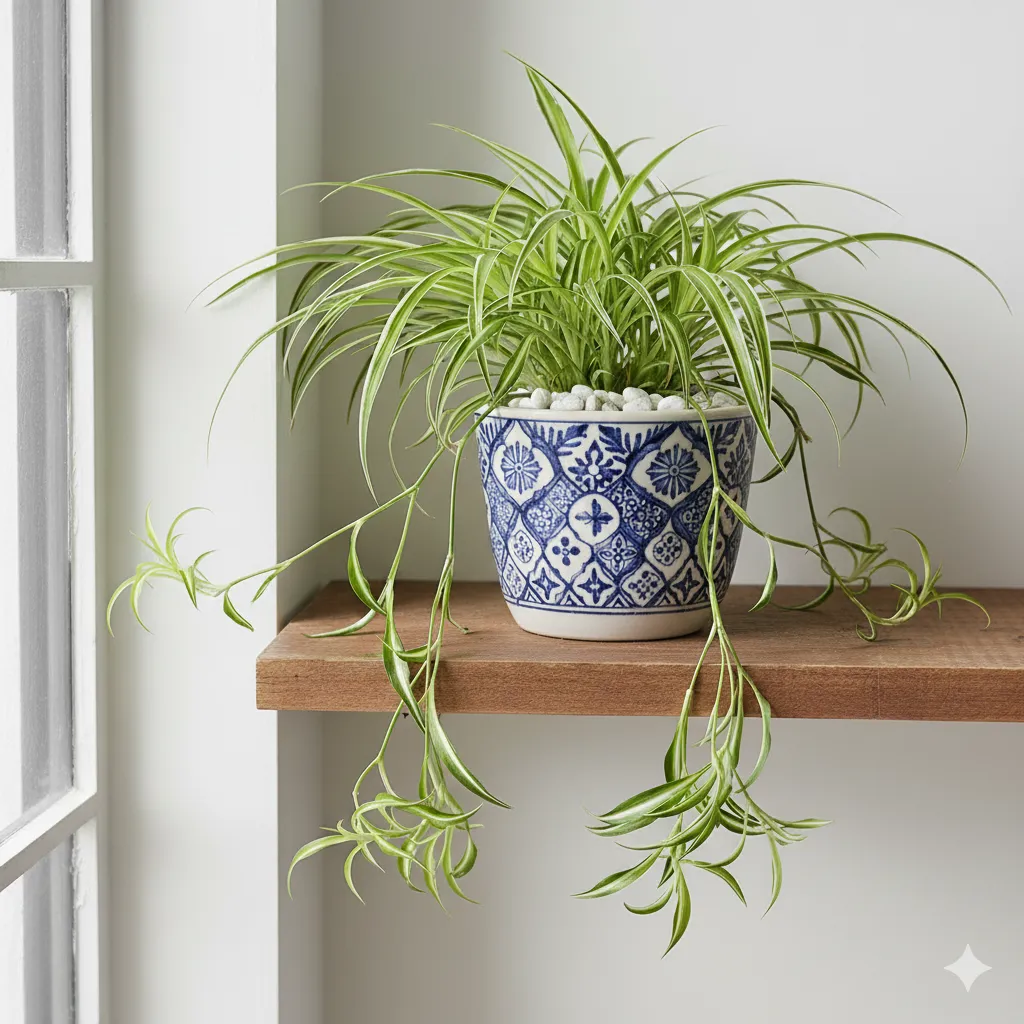
Spider plants don’t ask for much, but they will absolutely flex when you give them the right care. Those lush, arching leaves? Totally doable with a few tweaks you can implement today.
Skip the mythy fluff and let’s lock in real, repeatable results. You’ll go from “meh” to “wow” faster than a spiderette roots in water.
Light: Bright, Indirect, and Consistent
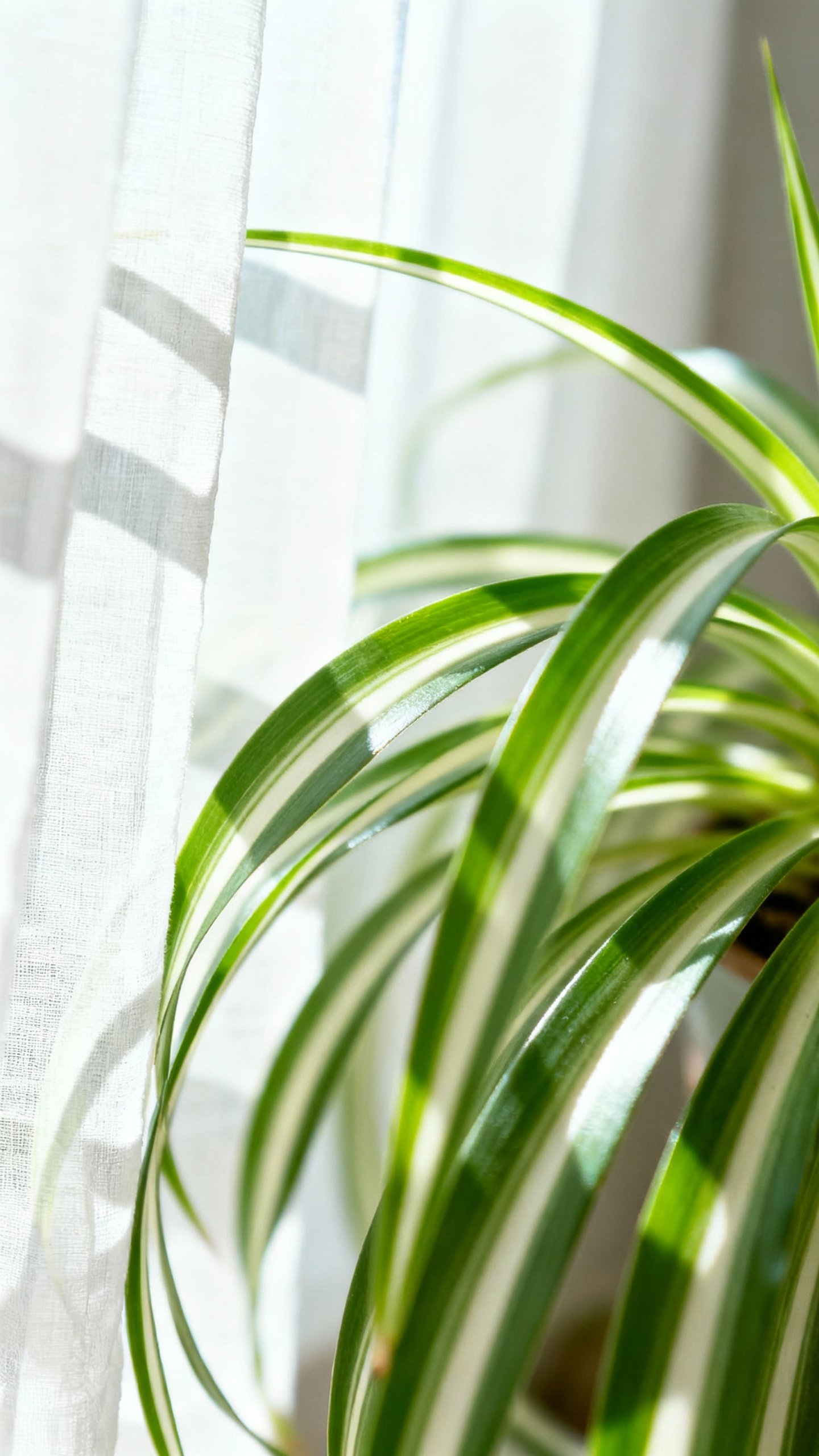
You want that sweet spot: bright, indirect light. Direct sun scorches tips, but low light turns leaves floppy and washed out.
Place your spider plant near an east or north window, or a few feet back from a sunny one.
- Tell-tale signs: Pale leaves = not enough light. Crispy brown patches = too much direct sun.
- Best move: Sheer curtains or a light-diffusing blind. Boom—instant “forest canopy” vibes.
- Winter hack: Move it closer to the window or add a grow light 12–18 inches above the plant.
Grow Light Settings That Actually Work
Run a full-spectrum LED at 30–40% intensity for 10–12 hours.
Aim for 200–400 PPFD if you’re nerdy with meters. No meter? If the leaves cast a soft shadow, you’re golden.
Watering: The Rhythm That Prevents Crispy Tips
Spider plants like evenly moist soil, then a brief dry-down.
Drown them and they sulk. Dry them to dust and they crisp. Find a rhythm your plant can count on.
- Finger test: Water when the top inch feels dry.
Simple, effective, IMO.
- Drainage matters: Use a pot with a drainage hole. If yours doesn’t have one, that pot is a decorative cachepot only.
- Water amount: Thoroughly soak until water drains out the bottom. Then let it rest.
FYI: Tap Water Can Be the Villain
Spider plants react to fluoride and high salts in tap water.
If tips keep browning:
- Switch to filtered, rain, or distilled water.
- Flush the soil monthly by running water through the pot for a minute to remove buildup.
Soil and Potting: Airy, Springy, and Quick-Draining
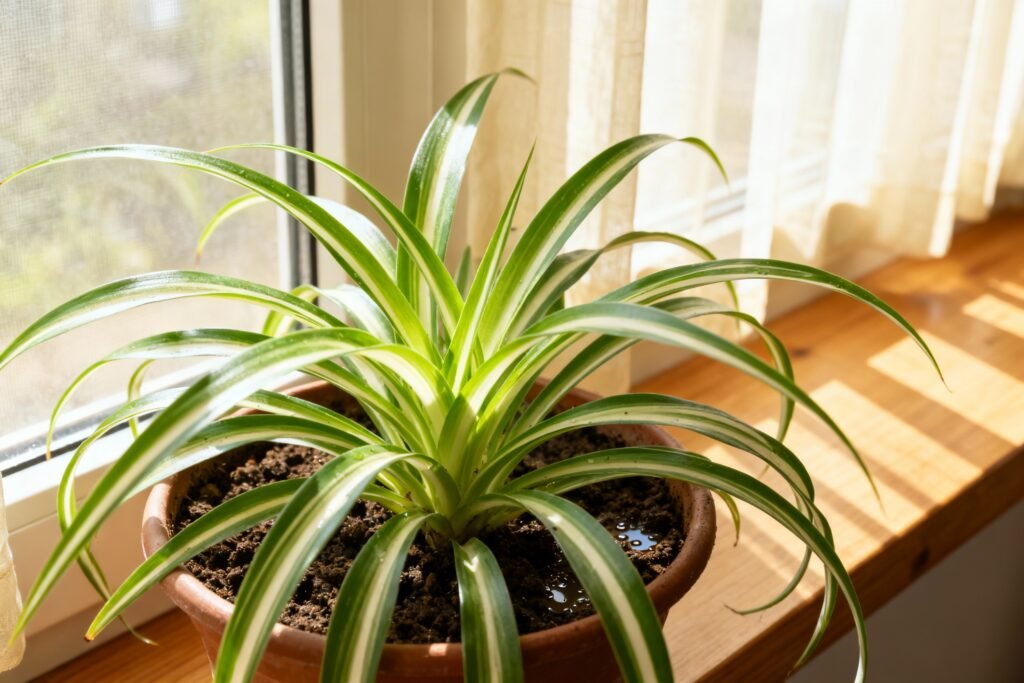
Heavy soil = sad spider plant. Go for a fluffy mix that drains fast but holds some moisture. You’re building a breathable bed, not cement.
- DIY mix: 2 parts all-purpose potting mix, 1 part perlite or pumice, 1 part coco coir or peat.
- Bonus add-ins: A small handful of orchid bark for airflow.
Your roots will throw a party.
- pH sweet spot: Slightly acidic to neutral (6.0–7.0). Most quality potting mixes sit here already.
Repotting Without Drama
Repot every 1–2 years, or when roots wrap tightly and water runs through too fast. Increase pot size by just 1–2 inches.
Oversized pots hold water too long—cue root rot.
Humidity and Temperature: Keep It Comfy
Spider plants enjoy typical indoor humidity but shine with a bit more. Keep temps between 60–80°F. Cold drafts?
Hard pass.
- Humidity boost: Group plants or set a pebble tray under the pot. Mist if you like, but don’t rely on it.
- Avoid extremes: Keep away from heater vents and AC blasts. No one thrives in a wind tunnel.
Brown Tips Checklist
Before you spiral, run this:
- Water quality: Switch to filtered if you see repeated browning.
- Salt buildup: Flush the soil monthly.
- Light: Bright, indirect—not direct sun.
- Fertilizer: Dial back if tips brown after feeding.
Feeding: Light Snacks, Not Buffets
Spider plants grow fast, but they don’t need heavy feeding.
Overdo it and you’ll get salt buildup and crispy tips.
- During spring–summer: Feed every 4 weeks with a balanced liquid fertilizer at half strength.
- Fall–winter: Feed every 6–8 weeks or pause if growth slows.
- Organic option: Worm castings sprinkled on top every 2–3 months provide a gentle, steady release.
Signs You Fed Too Much
White crust on soil, sudden tip burn, or leaves losing variegation. If that happens, flush the soil and skip the next feeding.
Pruning and Propagation: Shape It and Multiply
Pruning keeps your plant lush and encourages those iconic arches. Chop off dead tips and old leaves to refocus energy.
- Tip trim: Cut brown tips on a diagonal to mimic the natural leaf shape.
- Whole leaf removal: Snip at the base if the leaf looks more brown than green.
- Long runners: Trim some back if the parent plant looks tired.
It’ll rebound with fuller foliage.
Spiderette Propagation 101
Those little babies? Free plants, baby.
- Wait until spiderettes have tiny nubs or roots forming.
- Snip them off and place in water or directly into moist soil.
- If potting directly, keep soil evenly moist for two weeks while they establish.
- Once rooted, move to bright, indirect light and start bragging.
Pest Prevention and Troubleshooting
Spider plants rarely get ravaged, but watch for the usual suspects: spider mites, aphids, and mealybugs. Catch them early and you’ll never break a sweat.
- Weekly check: Look under leaves and along leaf bases.
- If you see pests: Spray with insecticidal soap or neem oil every 7 days for 3 rounds.
- Keep airflow: A small fan nearby reduces pest pressure and fungal drama.
Reviving a Sad Spider Plant
If yours looks like it just pulled an all-nighter:
- Trim damaged leaves to clean up the look.
- Repot into fresh, airy soil if the mix looks tired or compacted.
- Reset routine: bright, indirect light + consistent watering with filtered water.
Advanced Hacks for Extra-Archy Leaves
Want those dramatic, waterfall leaves?
You can encourage it.
- Raise the pot: Place on a stand or shelf so leaves can drape naturally.
- Rotate weekly: Quarter-turn the pot to keep growth even and prevent lopsided flopping.
- Calcium boost: If new leaves twist or tear easily, add a Cal-Mag supplement monthly at low dose. FYI, don’t mix with hard tap water unless you enjoy chemistry chaos.
- Cool nights: A slight night drop (5–10°F) can tighten growth and deepen color.
FAQs
Why do my spider plant’s leaf tips keep turning brown?
Usually it’s fluoride or salt buildup from tap water, inconsistent watering, or too much direct sun. Switch to filtered water, flush the soil monthly, and move the plant to bright, indirect light.
Also lighten up on fertilizer—less is more here.
Can spider plants live in low light?
They’ll survive, but they won’t thrive. Expect slower growth and duller leaves. For lush, arching foliage, give them bright, indirect light or supplement with a modest grow light.
How often should I repot my spider plant?
Every 1–2 years or when roots circle the pot and drainage speeds up.
Move up just one pot size and refresh the mix. Oversized pots invite soggy soil and root rot—hard pass, IMO.
Do I need to mist my spider plant?
Misting won’t change humidity much long-term, but it can help with dust and makes you feel like a plant parent, so go for it. For actual humidity boosts, use a pebble tray or group plants together.
Why has my variegated spider plant turned more green?
It’s chasing light.
In lower light, variegation fades so leaves can photosynthesize better. Increase bright, indirect light and new growth should show stronger stripes again.
How do I get more spiderettes (babies)?
Give the parent plant strong light, steady watering, and light feeding in spring and summer. Let runners grow, and resist pruning them all at once.
A content parent plant throws babies like confetti.
Closing Thoughts
Spider plants don’t demand perfection—they reward consistency. Give them bright, indirect light, an airy mix, filtered water, and light feeding, and those leaves will arch like a runway show. Tweak these hacks to your space, stay curious, and enjoy the jungle vibes without the drama.