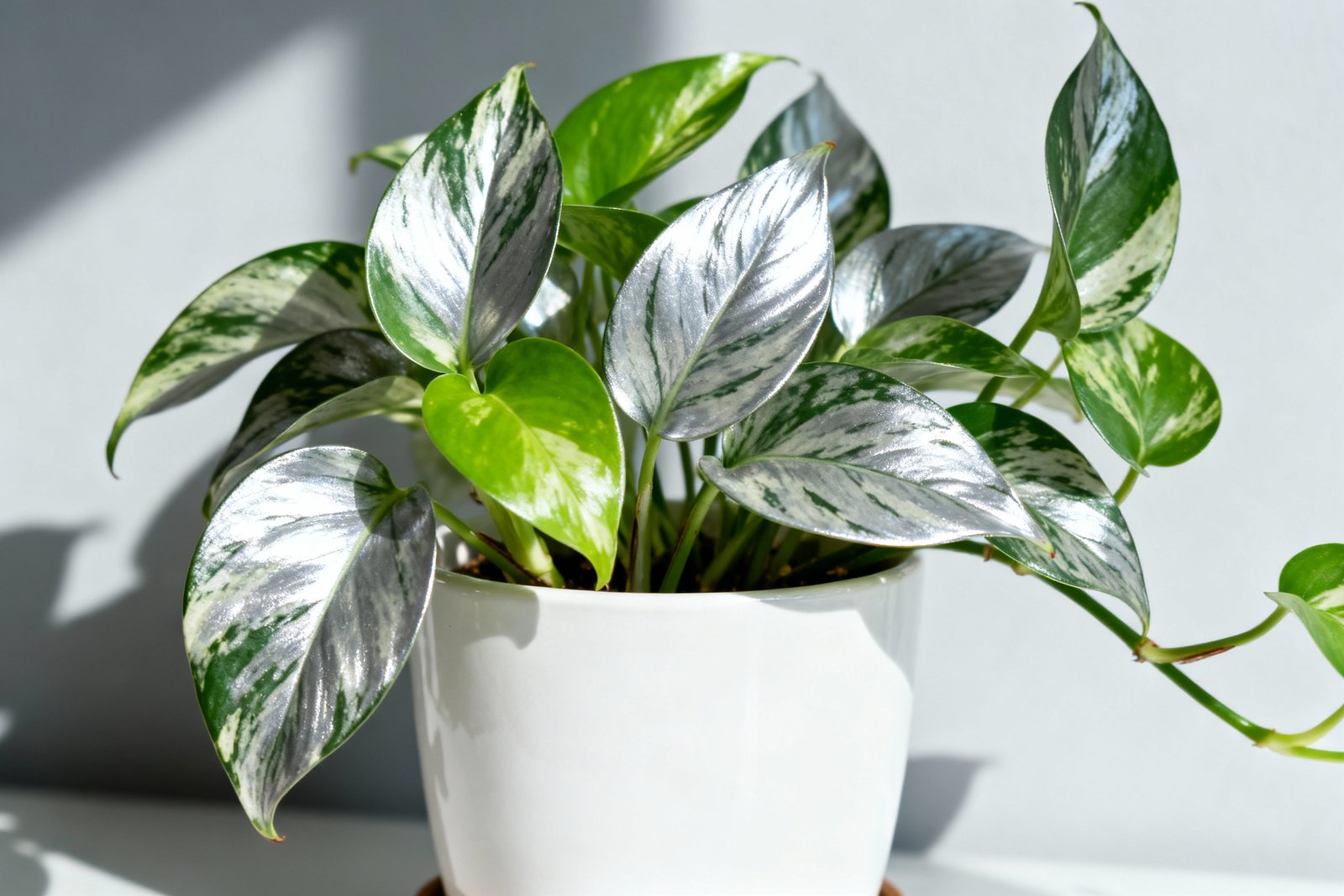
Silver Streak Pothos basically looks like someone hand-painted moonlight onto leaves. When it thrives, it glows. When it sulks, it droops and goes dull.
You didn’t buy a moody plant, though—you bought a show-off. Let’s unlock those vibrant, silvery streaks and keep them shining like chrome. You don’t need fancy gadgets.
You need a few smart tweaks that actually work. Ready to turn your plant into the star of your shelf?
Know Your Silver Streak: What Makes It Pop
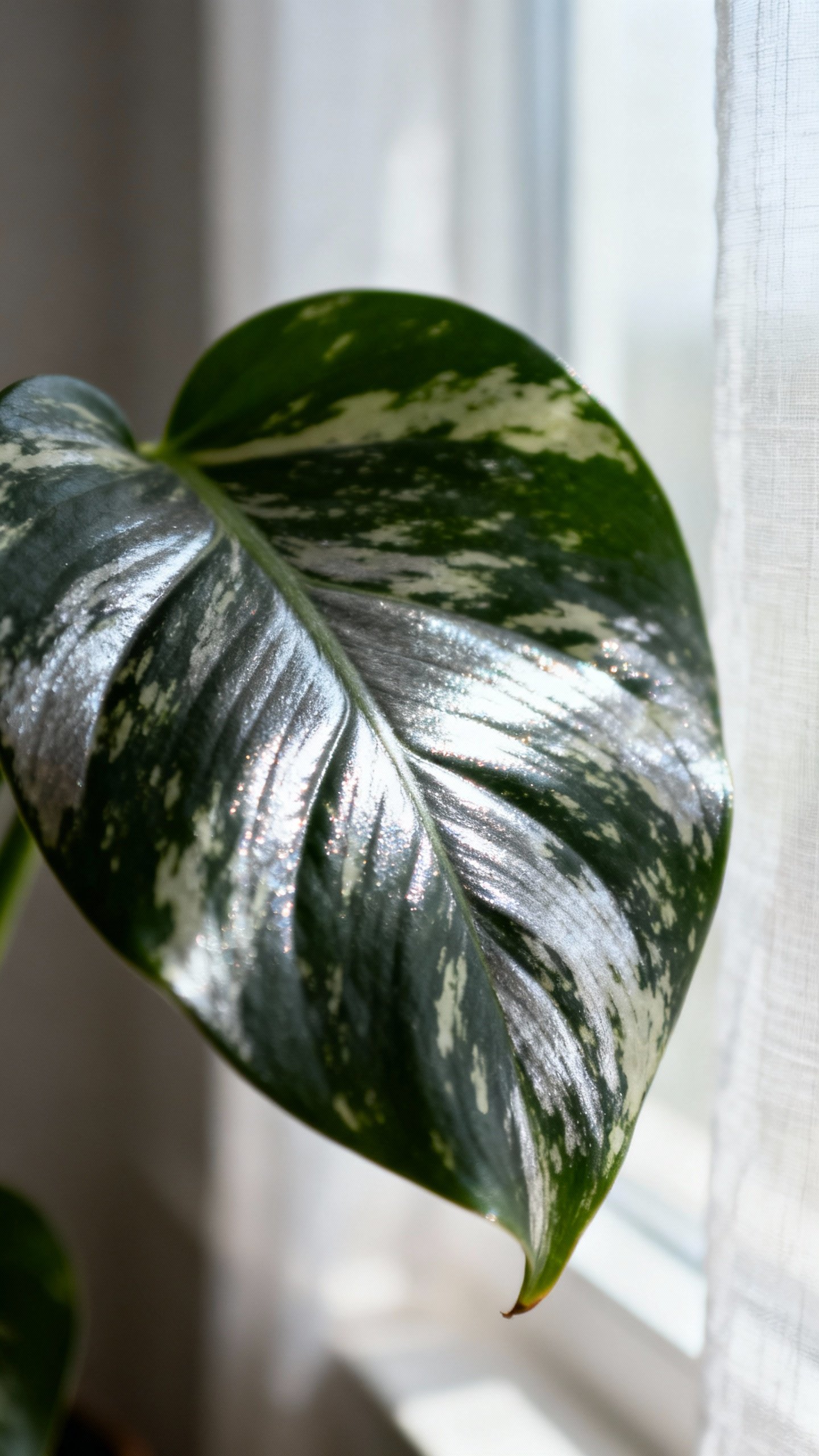
The Silver Streak Pothos (often a silver-splashed Epipremnum) loves bright, indirect light and consistent care. It rewards you with fat, velvety leaves and shimmering variegation when you nail the basics. Key takeaway: Variegation stays bold when the plant gets enough light, the right moisture rhythm, and just a pinch of nutrients.
Miss any of those and the leaves dull down. We don’t do dull.
Light That Makes the Silver Sparkle
Your plant wants that bright, indirect glow—think near an east window or pulled back from a south window. Direct afternoon sun scorches the silver.
Dim corners? That’s how you get tiny leaves and sleepy growth.
Light hacks that actually work
- Use a sheer curtain to soften strong sun. You get bright light without crispy edges.
- Rotate your plant 90° weekly so all sides shine.
FYI, it prevents lopsided vines.
- Supplement with a grow light if rooms run dark. Aim for 12–14 hours at a safe distance (12–18 inches).
- Watch the variegation. If the silver fades, your plant begs for more light.
If the leaves bleach, you gave it too much.
Water Like a Pro (Not a Fire Hose)
Silver Streaks hate wet feet but also sulk when bone-dry. Dramatic? A little.
But it’s easy to manage once you find the rhythm.
The fingertip test beats any schedule
- Water when the top 1–2 inches feel dry. In warm months, that might be weekly; in winter, every 10–14 days.
- Soak thoroughly until water runs from the drainage holes, then discard excess. No saucer soup.
- Use room-temperature water to avoid leaf shock.
Ice water is for your matcha, not your pothos.
Signs you nailed it (and when you didn’t)
- Overwatering: Droopy leaves plus yellowing and soggy soil.
- Underwatering: Curling leaves, crispy tips, and a pot that feels suspiciously light.
The Soil and Pot Combo That Speeds Growth
This plant wants airy soil that drains fast but still holds some moisture. Compact, heavy mixes suffocate roots and dull variegation.
My favorite mix (IMO, it’s the sweet spot)
- 40% high-quality potting soil
- 30% chunky perlite or pumice
- 20% orchid bark
- 10% coco coir or worm castings for moisture retention and gentle nutrients
Pot in a container with drainage holes—non-negotiable. Choose a pot just 1–2 inches wider than the root ball.
Overpotting means wet soil for too long, and that spells root rot. No thanks.
Fertilizer: Just Enough to Make It Shine
You don’t need a chemistry degree. You need consistency.
- Use a balanced liquid fertilizer (like 1-1-1 or 3-1-2) at half strength every 4–6 weeks in spring and summer.
- Skip feeding in winter when growth slows.
- Flush the soil with plain water every 2–3 months to prevent salt buildup.
Slow-release or liquid?
Both work.
I prefer liquid for control and quick results. If you forget, slow-release pellets scratched into the topsoil at the start of the season keep things easy. FYI, more fertilizer won’t create more silver—light does that.
Fertilizer just supports healthy, bigger leaves.
Humidity, Temp, and Airflow: The Underrated Trio
Silver Streaks enjoy cozy, tropical vibes. Not steamy-jungle levels, but not desert either.
- Humidity: Aim for 45–60%. A pebble tray or small humidifier helps in dry climates.
- Temperature: 65–80°F is ideal.
Keep it away from cold drafts and heat vents.
- Airflow: Gentle movement discourages fungus and keeps leaves blemish-free.
Leaf cleaning = instant glow-up
Dust dulls the silver. Wipe leaves monthly with a damp microfiber cloth. Skip leaf shine sprays—they clog pores and look fake-glossy.
Training, Pruning, and Propagating for Fuller Vibes
Want lush, fuller growth?
Give your pothos something to climb and a haircut now and then.
How to get bigger, showier leaves
- Stake to a moss pole or coco pole. Climbers make larger leaves when they can climb.
- Prune long, leggy vines just above a node. It triggers branching and bushier growth.
- Propagate the cuttings in water or moist perlite.
Rooted cuttings can go back into the pot for instant volume.
Water vs. soil propagation
- Water: Fast roots, easy to monitor, fun to watch. Transition to soil gently.
- Soil/perlite: Slower visibility, but you get stronger, soil-ready roots.
Pest Patrol and Leaf Troubleshooting
Even sturdy plants get occasional drama. Catch issues early and you’ll barely notice them.
Common pests and quick fixes
- Spider mites: Dusty webbing and tiny speckles.
Rinse leaves, then treat with neem or insecticidal soap weekly for 3 weeks.
- Mealybugs: Cottony clusters at nodes. Dab with alcohol on a cotton swab, then follow with a soap spray.
- Fungus gnats: Usually from soggy soil. Let the top dry out and use sticky traps or a thin layer of sand on top.
Leaf color complaints
- Dull variegation: Increase light.
That’s almost always the fix.
- Yellow leaves: Check roots and watering. Overwatering leads the suspect list.
- Brown tips: Low humidity, underwatering, or fertilizer burn. Adjust gently and trim tips if needed.
Seasonal Switch-Ups You Should Actually Do
Plants don’t read calendars, but they feel seasons.
You should tweak care accordingly.
- Spring: Repot if roots circle heavily. Restart fertilizing. Increase light exposure.
- Summer: Water more frequently, watch for pests, rotate weekly.
- Fall: Reduce feeding, keep light bright as days shorten.
- Winter: Cut watering frequency, move closer to windows or use a grow light, and avoid cold drafts.
FAQ
How do I keep the silver variegation from fading?
Give it bright, indirect light for most of the day.
That’s the main driver of bold variegation. Pair that with gentle fertilizing and clean leaves, and you’ll see the silver pop. If your plant sits in low light, the variegation naturally recedes—move it closer to the window or add a grow light.
Why are my leaves curling inward?
Curling usually means thirst or low humidity.
Check the soil first—if it’s dry a couple inches down, water thoroughly. If the soil feels fine, bump humidity and keep the plant away from hot vents. Leaves should relax within a day or two.
Can I grow Silver Streak Pothos in water long-term?
You can, but IMO it grows better in a chunky soil mix.
Water-grown plants look sleek but often make thinner, more fragile roots. If you go hydro, use a diluted nutrient solution and change the water weekly to avoid funkiness.
How often should I repot?
Every 1–2 years, or when roots circle the pot and growth slows. Move up just one size and refresh with an airy mix.
Repot in spring for the fastest recovery.
Are brown leaf edges normal?
Occasional browning happens. But frequent crispy tips signal low humidity, underwatering, or too much fertilizer. Address those, trim the ugly bits, and new growth should look clean.
Should I mist the leaves?
Light misting won’t raise humidity for long and can encourage spots if leaves stay wet.
I’d skip it and use a humidifier or pebble tray instead. Quick leaf wipes do more for health and shine, FYI.
Conclusion
You don’t need plant sorcery to keep a Silver Streak Pothos stunning. Give it bright, indirect light, water on a smart rhythm, use airy soil, and feed lightly.
Train it up a pole, prune for fullness, and wipe those leaves so the silver can flex. Do that, and your plant won’t just survive—it’ll strut. IMO, that’s the whole point.
Next, learn Philodendron Plant Care Secrets for Lush, Green Leaves.