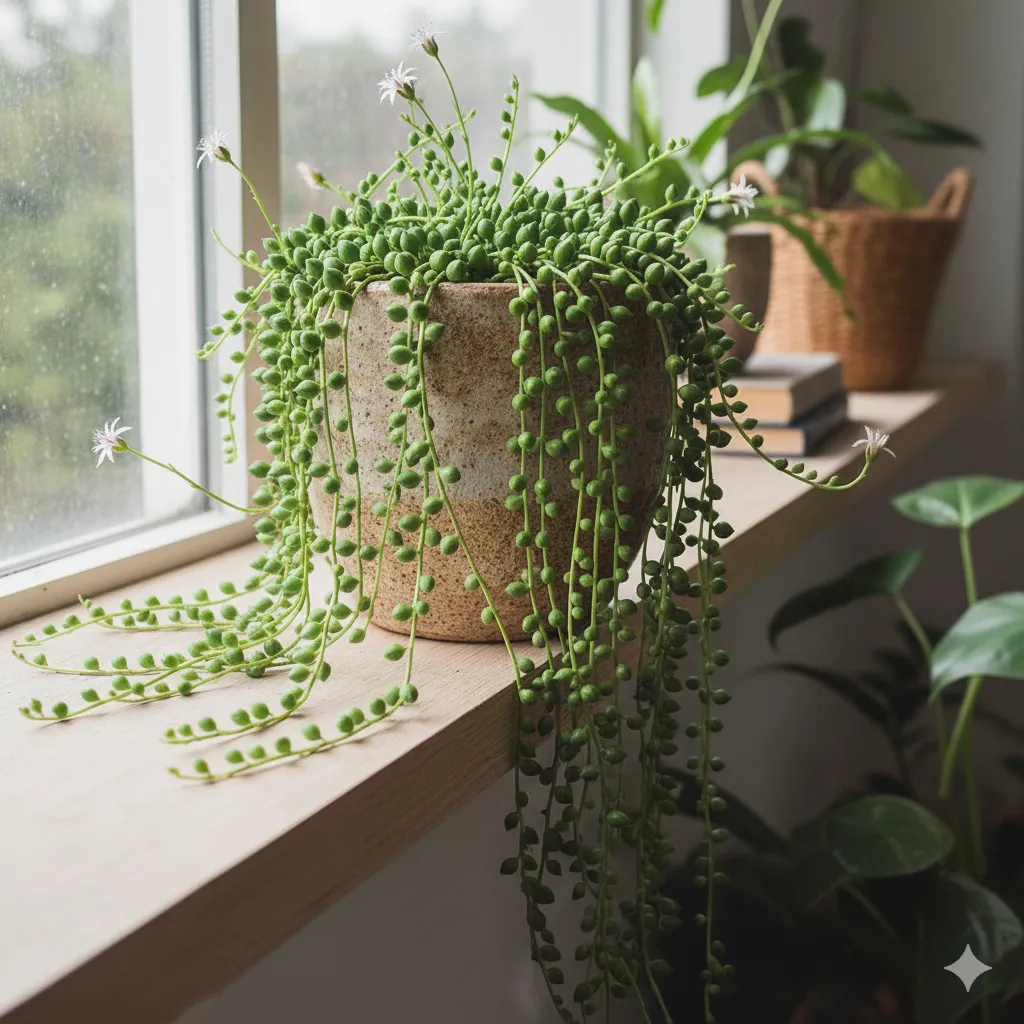
String of Pearls looks like a plant that belongs in a fairytale…and then it throws a fit if you water it wrong. If you’ve ever watched those plump little beads shrivel overnight, you’re not alone. The good news?
A few simple tweaks turn this trailing diva into a low-maintenance show-off. Let’s get you from “why is this dying?” to “wow, it’s thriving.”
Know Your Pearls: What This Plant Actually Wants
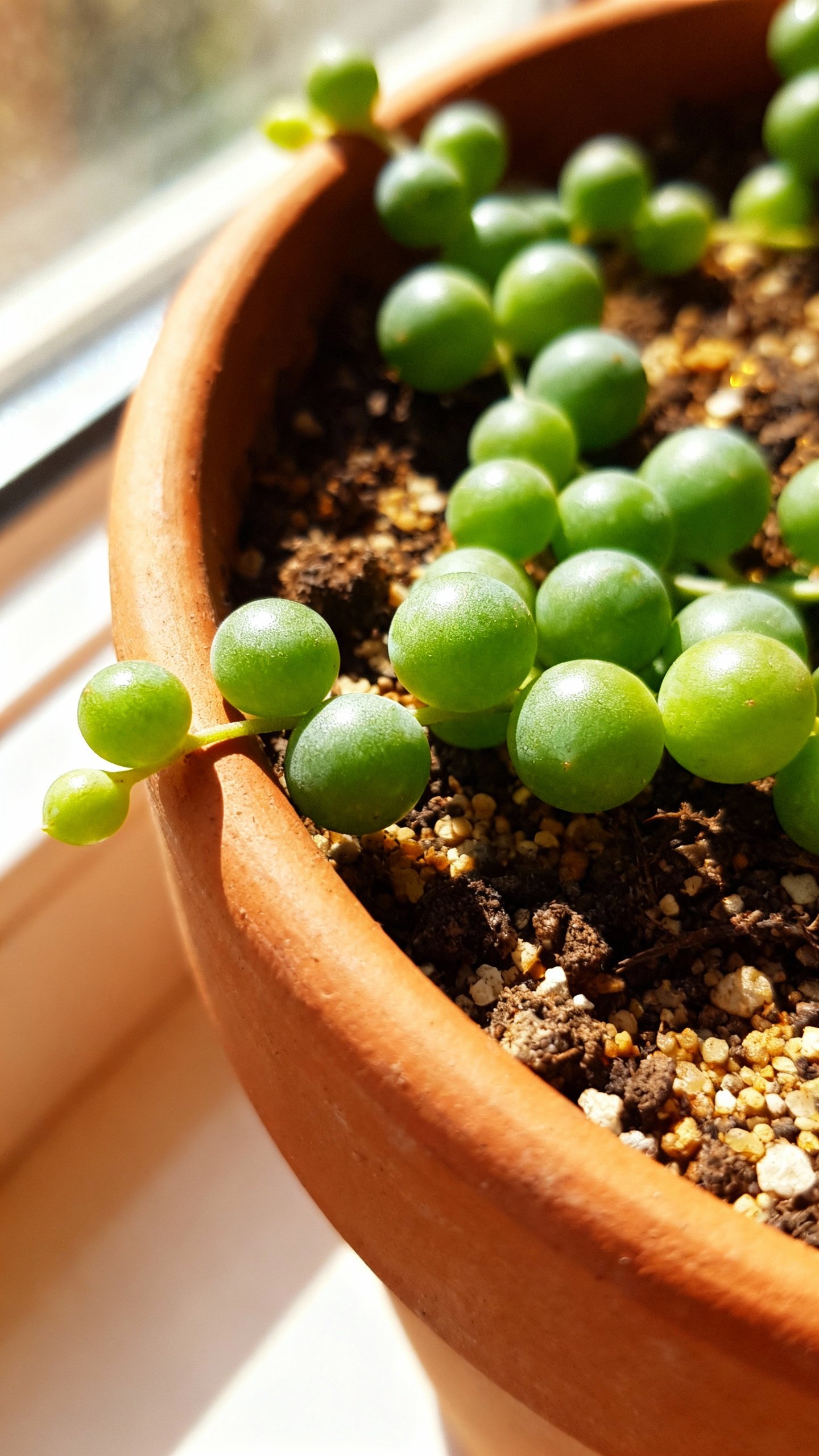
String of Pearls (Senecio/Curio rowleyanus) stores water in those cute beads. That means it prefers light, fast-draining soil, and careful watering.
Treat it like a succulent, not a fern. It wants bright light and air around the roots, and it sulks if you let it sit in soggy soil. Key idea: plump pearls mean happy plant, wrinkled pearls mean you missed the memo on light or water.
Light: The Make-or-Break Factor
You can’t fake sunlight with this one. Give it bright, indirect light for most of the day.
A few hours of gentle morning sun makes those strands grow long and thick. Afternoon sun can scorch the pearls, especially in summer. Best spots:
- East-facing window: chef’s kiss
- Bright south or west window: pull it back a foot or use sheer curtains
- Low light: nope, it will stretch and drop beads
Grow Light Hack (When Your Window Isn’t Enough)
Use a full-spectrum LED grow light 12–18 inches above the plant for 10–12 hours a day. Keep the light indirect, not blasting the plant like an interrogation lamp.
FYI: more light = tighter spacing between pearls = fuller look.
Watering: Less Often, More Smart
Here’s the rule: water thoroughly, then wait until the soil dries out. Don’t sip-water. Think “rainstorm, then drought.” Stick a finger into the soil; water when it feels dry at least an inch down.
In winter, cut watering almost in half. Signs you’re off-track:
- Wrinkled pearls: usually underwatering or not enough light
- Mushy, translucent pearls: overwatering or poor drainage
- Sudden drop of beads near the soil: roots are unhappy (often rot)
The Bottom-Watering Trick
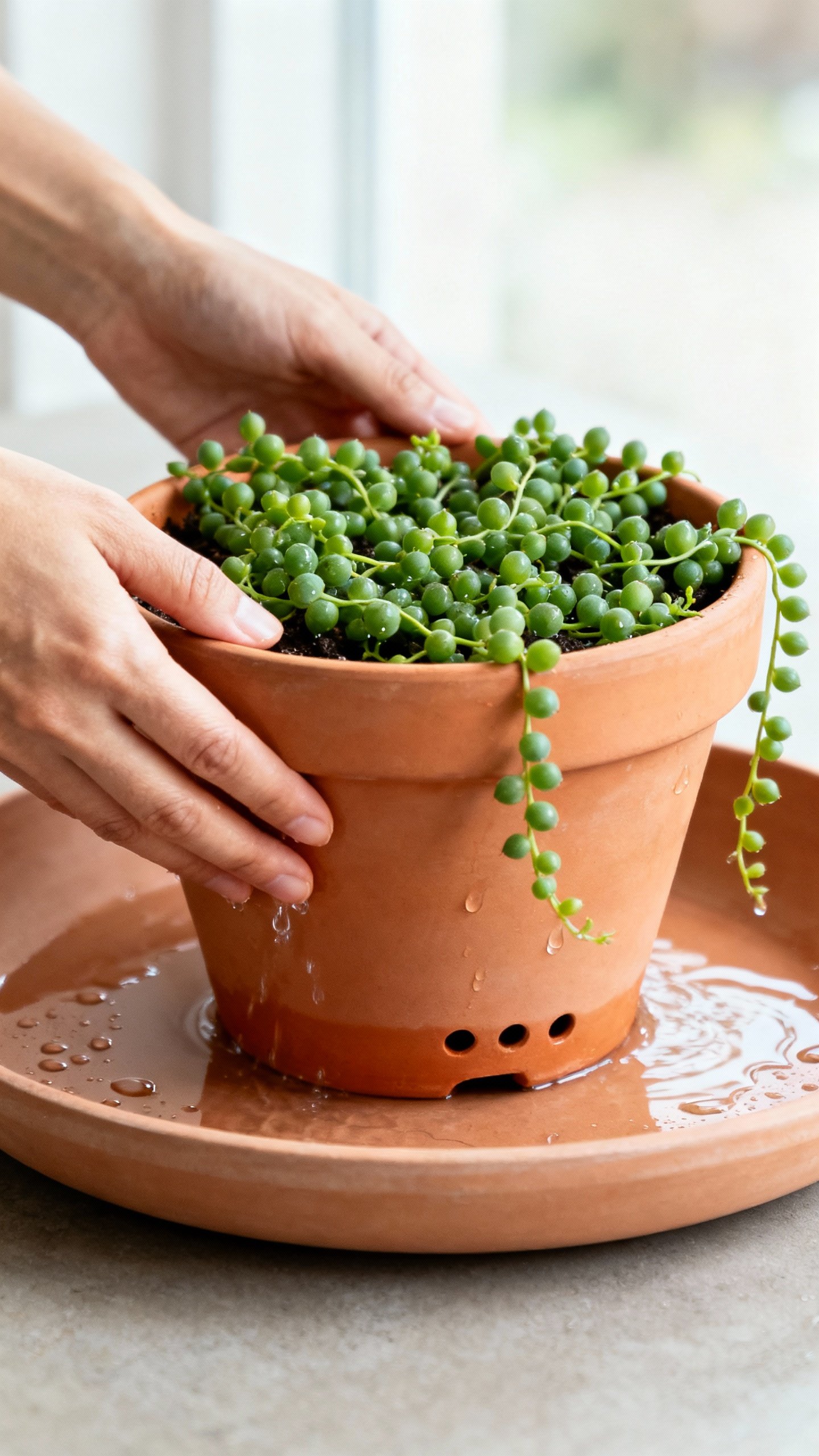
Place the pot in a tray of water for 10–15 minutes until the top feels slightly damp. Then drain completely. This encourages roots to dive deep and reduces rot risk.
IMO, it’s the easiest way to avoid overdoing it.
Soil & Pot: Don’t Skip This (Seriously)
Pearls hate heavy soil. Use a gritty succulent mix that drains fast. If you only have regular potting soil, amend it 1:1 with perlite, pumice, or coarse sand.
The goal? Water in, water out, roots breathe. Pot choices that help:
- Terracotta pot: wicks moisture, reduces rot risk
- Drainage holes: non-negotiable
- Shallow, wide pots: root system stays fairly shallow and spreads
DIY Soil Blend
Mix:
- 1 part cactus/succulent soil
- 1 part perlite or pumice
- Optional: a handful of orchid bark for extra airflow
Your plant will thank you by not collapsing dramatically for no reason.
Humidity, Temperature, and Airflow
Good news: it loves normal household humidity. Keep temps between 65–80°F (18–27°C).
Cool nights won’t hurt, but avoid drafts and sudden temperature swings. Provide gentle airflow—stagnant air plus moisture equals rot city. Winter tip: keep it bright and a bit cooler (around 60–65°F). Water less.
It’ll rest and gear up for spring growth.
Feeding and Pruning for Full, Lush Strands
You don’t need to baby it with fertilizer. Feed lightly during the growing season (spring through early fall) with a diluted succulent fertilizer once a month. Skip winter feedings. Pruning perks:
- Snip leggy or bare vines to encourage branching
- Use cuttings to fill the top of the pot for a fuller look
- Remove shriveled or damaged beads to refocus energy
How to Propagate (So Easy, It’s Silly)
– Take 3–6 inch cuttings and strip the bottom beads to expose the stem. – Lay them on top of/moistened soil and pin gently so stem contacts the soil. – Or coil the cutting on the soil surface for more rooting points. – Keep slightly moist (not wet) and bright.
You’ll see new growth in a few weeks. FYI: this is the fastest way to fix a sparse plant.
Hanging, Trailing, and Styling
Let those strands drape over a shelf or hanging pot for maximum drama. Turn the pot weekly so all sides get light.
If the top looks bald, plant a few fresh cuttings right on the soil surface. Instant hair plugs, plant edition. Pro move: layer multiple cuttings at the crown. You’ll get a dense, bead-heavy cascade instead of a few skinny strings.
Common Problems (And Fast Fixes)
Root rot: black mushy stems, translucent pearls.
Solution: unpot, trim rot, repot in dry gritty mix, water lightly after 5–7 days. Improve light and airflow. Stretching (etiolation): long spaces between pearls. Solution: more light, closer to window or add a grow light.
Prune and propagate. Shriveled beads: underwatered or poor roots. Solution: check soil dryness, soak thoroughly, switch to bottom-watering, verify soil drains well. Pests: mealybugs love hiding in the pearls. Dab with alcohol on a cotton swab, then treat with insecticidal soap weekly until gone.
Quarantine if you can. IMO, prevention via airflow and clean tools saves headaches.
Seasonal Rhythm: A Simple Care Calendar
Spring
– Increase light and resume monthly feeding. – Repot if roots circle the pot or soil compacts. – Start propagation to bulk up the crown.
Summer
– Bright light with protection from harsh afternoon sun. – Water when dry; heat may speed things up. – Check for pests; they party in summer.
Fall
– Reduce feeding as growth slows. – Keep bright light to prevent stretching. – Light pruning to shape.
Winter
– Water sparingly; let soil dry longer. – Keep it bright and cooler if possible. – No fertilizer. Relax.
Binge a show. Let the plant nap.
FAQ
Why do my pearls keep falling off?
They usually drop from overwatering or sudden changes in light and temperature. Check drainage, reduce watering, and move it to bright, indirect light.
Also avoid bumping or moving it constantly—those strands bruise easily.
Can String of Pearls live in low light?
Not happily. It will stretch, thin out, and eventually fade. Give it an east window or supplement with a grow light.
Low light is the fast lane to meh.
How often should I repot?
Every 1–2 years, or when the soil compacts and drains slowly. Use a slightly wider pot with fresh, gritty mix. Don’t size up too much; excess soil holds water and invites rot.
What’s the best way to get a fuller top?
Propagate cuttings and lay them on the soil surface at the crown.
Pin them down so the stem touches the soil, then keep slightly moist until rooted. This fills bald spots and creates a lush, cascading effect.
Are String of Pearls toxic to pets?
Yes. They’re considered mildly toxic if ingested.
Keep them out of reach of nibbling cats, dogs, and curious toddlers. Hanging planters help.
Why are my pearls wrinkled even though I watered?
If the roots got damaged or the soil doesn’t drain, water won’t reach the beads effectively. Check the root health, refresh the soil, and ensure you water thoroughly, then let it dry.
Also confirm it’s getting enough light to power growth.
Wrap-Up: Keep It Simple, Keep It Stunning
String of Pearls thrives when you nail the basics: bright indirect light, gritty soil, thorough-but-infrequent watering, and light feeding in season. Prune and propagate to keep it full and fabulous. Do that, and those elegant strands will trail like a chandelier—without the drama.
IMO, once you dial it in, this is one of the easiest statement plants you’ll ever grow.