Your monstera can go from “meh” to “magnificent” faster than you think. Those iconic split leaves—yeah, they don’t just happen because you asked nicely. Give your plant the right cues, and it will flex like a jungle celebrity.
Let’s cut the fluff and get into the tricks that actually transform your leaves quickly.
Light: The Fenestration Accelerator
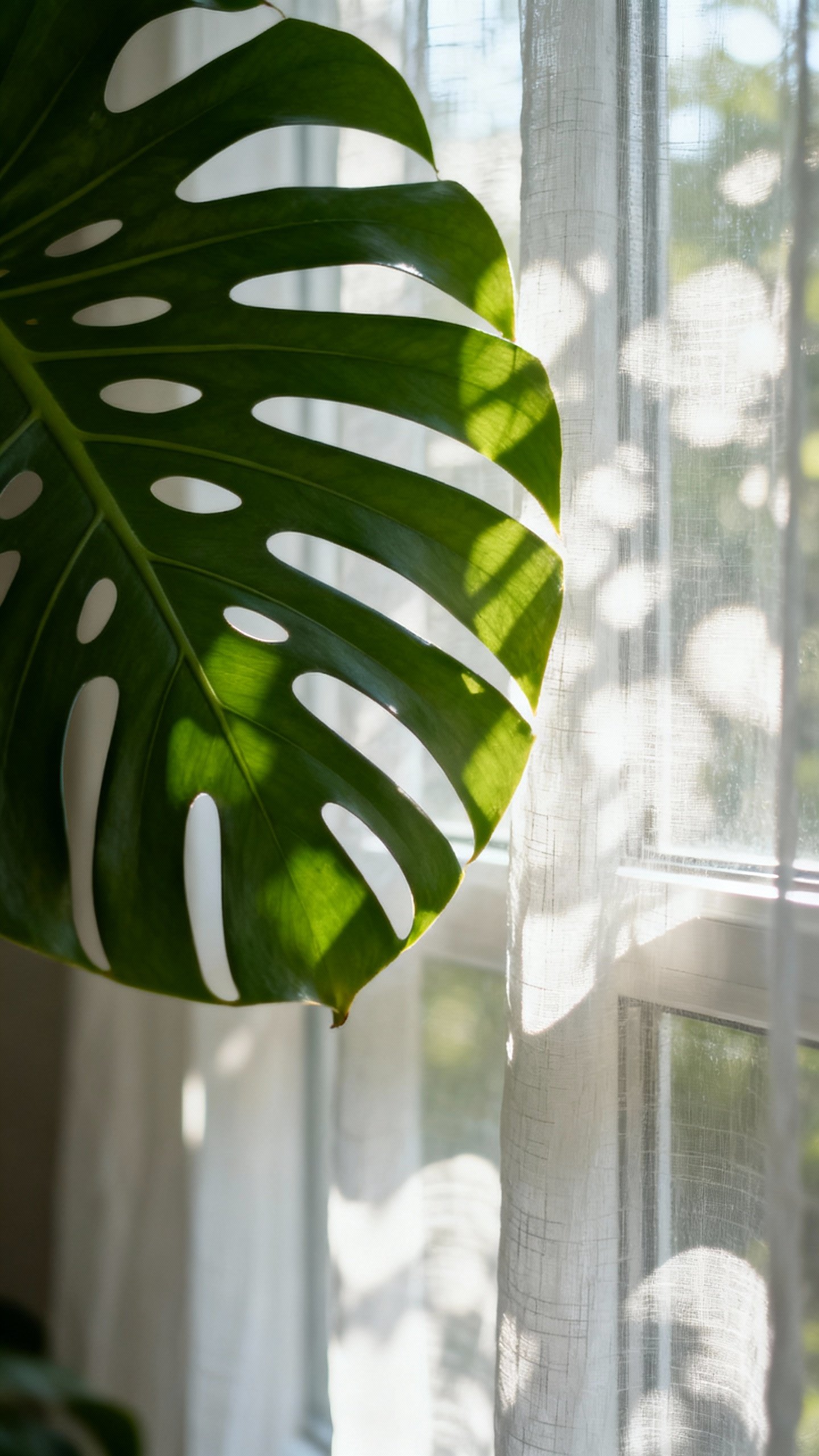
You want big leaves with dramatic splits? Light makes it happen. Monsteras crave bright, indirect light—think a few feet from a sunny window with filtered rays.
Direct midday sun can scorch, but too little light equals small, boring leaves (and IMO, that’s a crime).
Best Spots for Maximum Growth
- East or west-facing windows with sheer curtains: gentle morning or late afternoon light.
- South-facing rooms with the plant pulled back a few feet.
- Grow lights if your home leans cave-chic. Aim for 10–12 hours/day with a full-spectrum LED.
Light Mistakes to Avoid
- Low light corners—you’ll get leggy growth and no splits.
- Glass-baked sun during summer afternoons—hello crispy edges.
Watering: Consistency Over Guesswork
Monsteras don’t like drama in their soil. Keep the balance: slightly moist, never soggy.
Let the top 1–2 inches dry out before watering again.
How to Water Like a Pro
- Finger test: if the top inch feels dry, water thoroughly until excess drains.
- Use a moisture meter if you overthink everything (same).
- Empty saucers after 10–15 minutes to avoid root rot.
Signs You’re Off Track
- Yellow lower leaves = overwatering.
- Curling or crispy edges = underwatering or too much light.
- Wet soil + droop = roots suffocating. Time to adjust.
Soil and Potting: Give the Roots Air
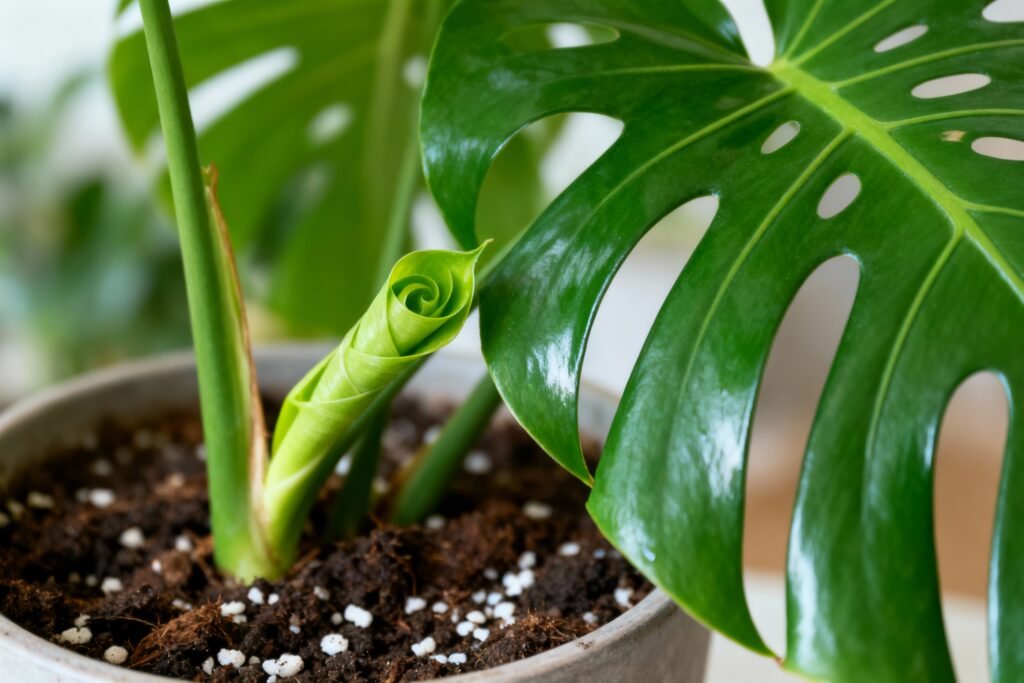
Monsteras are aroids. They need chunky, airy soil that drains fast and keeps oxygen flowing.
Regular potting soil compacts and chokes roots—no thanks.
DIY Monstera Mix
- 40% high-quality potting mix
- 30% perlite or pumice
- 20% orchid bark
- 10% coco coir or peat
- Optional: a pinch of horticultural charcoal for freshness
Repotting Timing
- Every 1–2 years or when roots circle the pot.
- Go up one pot size—not a bathtub. Too big = soggy soil.
Support = Bigger, Splitter Leaves
Here’s the secret sauce: give your monstera something to climb. In nature, they scale trees, and that vertical life triggers larger leaves and fenestrations.
Indoors, use a moss pole, coir pole, or plank.
How to Train It
- Install the pole close to the main stem.
- Tie stems loosely with garden tape.
- Moisten moss poles weekly to encourage aerial roots to attach.
Moss Pole vs. Coir vs. Plank
- Moss pole: great for humidity and rooting aerials fast.
- Coir pole: cleaner, dries out slower than moss.
- Wood plank: chic, stable, and roots grip well.
Feeding: Fuel Those Showy Leaves
You can’t build dramatic foliage out of thin air.
Feed during active growth (spring through early fall). Skip winter unless your plant sits under strong grow lights.
Fertilizer Options That Work
- Balanced liquid fertilizer (e.g., 3-1-2 or 20-20-20) every 2–4 weeks at half strength.
- Slow-release granules at the start of spring for set-and-forget energy.
- Supplement with kelp for trace minerals and stronger roots, FYI.
Deficiency Clues
- Pale new leaves = needs nitrogen or light upgrade.
- Stalled growth = check roots, pot size, and light before dumping more fertilizer.
Humidity and Temperature: Jungle Vibes Only
Monsteras forgive average home humidity, but they thrive with more. Boosting humidity speeds growth and reduces crispy tips.
- Humidity target: 50–65%.
Group plants, use a humidifier, or place near a bathroom with bright light.
- Temperature: 65–85°F. Avoid drafts and cold snaps.
- Airflow matters: gentle circulation prevents fungus and sad leaves.
Pruning and Propagation for Fast Upgrades
Cut to encourage growth where you want it. Pruning redirects energy to stronger stems and bigger leaves.
Plus, propagation gives you backup plants (or gifts, if you’re generous).
Where to Cut
- Find a node (the bump with an aerial root or leaf). Cut just below it.
- Remove yellow or damaged leaves to clean up the plant.
- Thin crowded stems so light reaches the center.
Easy Prop Methods
- Water propagation: root in water, then pot into airy soil once roots hit 2–3 inches.
- Moss wrap: wrap a node in moist sphagnum until roots form, then cut and pot.
- Perlite box: ridiculously fast and clean, IMO.
Quick Fixes That Make Leaves Pop
Sometimes you want results yesterday. Try these tweaks for visible improvements.
- Rotate weekly so growth stays even and leaves don’t lean like they paid rent elsewhere.
- Dust the leaves with a soft cloth.
Clean leaves photosynthesize better and just look fancy.
- Stop moving it constantly. Monsteras hate chaos. Pick a spot and commit.
- Address pests early—thrips and spider mites sabotage growth.
Use neem or insecticidal soap at first sight.
Troubleshooting: What’s Slowing Your Splits?
If you’ve got light, support, and feeding handled and still no fenestrations, run this quick check.
- Age: young plants need time. Look for thicker stems and aerial roots as a sign it’s ready.
- Pot-bound? If roots are strangling, growth stalls. Repot with airy mix.
- Season: expect faster growth in spring/summer.
Winter is chill mode, FYI.
- Genetics: some varieties split less than others. Monstera deliciosa splits more than adansonii wide form indoors, for example.
FAQs
How do I get splits in my monstera leaves faster?
Provide bright, indirect light, give it a climbing support, and feed during active growth. Pair that with consistent watering and higher humidity.
Those three—light, support, nutrition—do the heavy lifting.
Why are my monstera leaves small and solid?
Low light or no support usually causes solid leaves. Move it closer to bright light, add a moss or coir pole, and make sure the plant isn’t root-bound. With better conditions, new leaves will emerge larger and start to fenestrate.
Can I put my monstera in direct sun?
Morning sun?
Usually fine. Midday or early afternoon sun can scorch, especially through glass. If you want some direct rays, limit it to early morning and watch for crispy edges.
How often should I fertilize?
During spring and summer, feed every 2–4 weeks with a diluted balanced fertilizer.
In fall and winter, cut back or pause unless you use strong grow lights. Overfeeding won’t speed growth if light and roots aren’t right.
What’s the best pot for a monstera?
A pot with good drainage—terracotta if you overwater, plastic if you underwater. Size up only one step at a time.
The right pot plus chunky soil keeps roots happy and growth steady.
Do I need a humidifier?
Need? No. But if your air sits around 30–40%, a humidifier will reduce brown tips and help new leaves unfurl cleanly.
It’s a quality-of-life upgrade for both of you, IMO.
Conclusion
You don’t need magic—just a plan. Give your monstera bright, indirect light, a solid climbing support, airy soil, consistent watering, and regular feeding. Add humidity, prune with purpose, and keep pests in check.
Do that, and those stunning, split leaves will show up fast—like your plant finally got the memo it lives in a tropical penthouse.