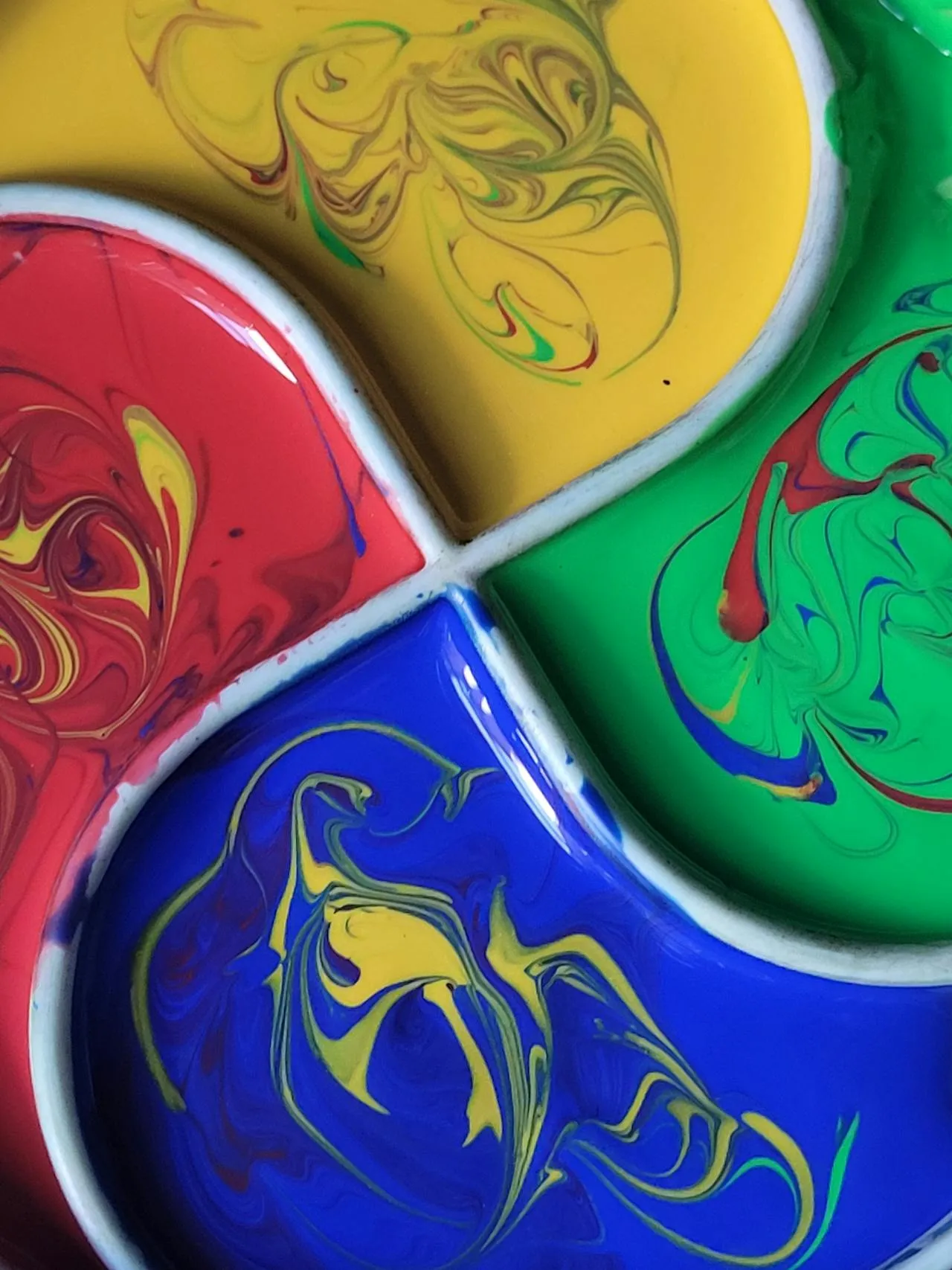
Picture this: you pour a drop of dish soap into a shallow bowl of milk swirled with food coloring, and suddenly — without touching anything — the colors explode outward in every direction like a fireworks show frozen in time. No tricks, no magnets, no sleight of hand. Just pure kitchen science.
The Magic Milk Experiment is one of those activities that looks impossibly cool but is absurdly simple to pull off. It takes about five minutes, uses things you almost certainly already have at home, and works for every age group from curious toddlers to skeptical teenagers. Best of all, it’s not just a pretty spectacle — there’s real, fascinating chemistry happening in that bowl.
Watch this short video to see the Magic Milk Experiment in action before you try it yourself:
What Is the Magic Milk Experiment?
The Magic Milk Experiment is a classic science demonstration that uses whole milk, food coloring, and a drop of dish soap to create a swirling, dancing explosion of color. The soap disrupts the fat molecules in the milk, causing the colors to race across the surface in a burst of movement before slowly settling into beautiful swirled patterns.
It’s a favorite in classrooms and homes alike because it illustrates two important scientific concepts — surface tension and the chemistry of fat and soap — without requiring any specialized equipment or chemistry knowledge. The experiment is often one of the first hands-on science activities kids try, and it tends to stick in their memory for years.
The Science Behind It: Why Does Milk Explode with Color?
Before you set up your bowl, it helps to understand what’s actually going on. Whole milk is mostly water, but it contains a significant amount of fat and protein. Fat molecules in milk are nonpolar, meaning they don’t mix with water-based substances. These fat molecules are floating throughout the liquid, and on the surface, they create a kind of invisible film held together by surface tension.
Dish soap is a surfactant — a substance made of molecules that have one water-loving end and one fat-loving end. When you drop soap into the milk, those soap molecules charge in two directions at once: the fat-loving ends grab onto the fat molecules in the milk, and the water-loving ends are pulled toward the water. This molecular tug-of-war generates rapid movement across the entire surface of the milk, dragging the food coloring along for the ride.
The food coloring doesn’t react with anything — it’s simply a visual tracer that lets you see the movement you otherwise couldn’t. Once the soap has bonded with all the nearby fat it can reach, the motion gradually slows, leaving you with a gorgeous swirled pattern.
The key takeaway: more fat = more drama. Skim milk produces very little movement because there’s almost no fat for the soap to react with. Whole milk or cream gives you the full explosive effect.
What You’ll Need
You only need four things to do this experiment, and the total cost is essentially zero if you have a kitchen:
- Whole milk — enough to cover the bottom of a shallow bowl or plate (about half a cup)
- Food coloring — at least two or three colors for the best visual effect
- Liquid dish soap — any brand works, but Dawn tends to give particularly dramatic results
- A shallow bowl or plate — the wider and flatter, the better
- Cotton swabs or a toothpick — for applying the soap with precision
Optional but fun: a dropper for more controlled soap placement, or a pipette for adding colors in specific spots.
Step-by-Step: How to Do the Magic Milk Experiment
Step 1: Pour the milk into the bowl.
Pour enough whole milk into your shallow bowl or plate to create an even layer that covers the entire bottom. You don’t need a deep pool — about half an inch of milk is plenty. Let the milk settle and stop moving before you add anything else; ripples in the milk will muddy your results.
Step 2: Add drops of food coloring.
Add four to six drops of food coloring to different spots across the surface of the milk. Place them near the center rather than right along the edge. Try to use at least two or three colors — the more contrast between the colors, the more spectacular the final swirl will look. Don’t stir, mix, or disturb the milk after adding the color.
Step 3: Touch a cotton swab to the soap.
Dip the tip of a cotton swab into your dish soap so that the very end has a small but visible amount of soap on it. You don’t need to load up the entire swab — a little soap goes a very long way in this experiment.
Step 4: Touch the soapy swab to the center of the milk.
Lower the soap-tipped swab slowly to the center of the bowl and gently hold it there for several seconds without stirring. Watch what happens: the colors will immediately begin shooting away from the point of contact in all directions, swirling and mixing as the soap reacts with the fat.
Step 5: Hold it still and observe.
Resist the urge to move the swab around. The most dramatic reaction happens when the soap is held in one place and allowed to react fully. You’ll typically see a burst of movement that lasts between 15 and 30 seconds before slowing down.
Step 6: Try different spots.
Once the first reaction slows, dip your swab in soap again and touch it to a different part of the bowl. You’ll get another burst of movement, though each subsequent reaction tends to be smaller as the available fat molecules in that area get used up.
Step 7: Let the pattern settle.
When the movement has fully stopped, take a moment to admire the pattern left behind. You can use a toothpick to gently trace designs through the color at this stage — the reaction is over, so now you’re just working with the pigment.
Best Way to Get the Most Dramatic Results
The single biggest variable in this experiment is the type of milk you use. Whole milk consistently outperforms low-fat or skim milk because of its higher fat content. If you want to go even bigger, use heavy cream — the fat content is so high that the reaction is almost violent, with colors shooting across the entire surface in seconds.
Room temperature milk also reacts more dramatically than cold milk straight from the fridge. Cold milk slows down the molecular movement, producing a gentler, less explosive reaction. If you want maximum drama, let your milk sit on the counter for 15–20 minutes before starting.
A shallow, wide bowl also helps. The flatter the surface, the more room the colors have to travel and spread, and the more impressive the resulting pattern.
How to Do the Magic Milk Experiment: Fun Variations to Try
Once you’ve nailed the basic version, there are several ways to extend the experiment and keep kids engaged longer.
Milk Fat Comparison: Set up three identical bowls — one with skim milk, one with 2% milk, and one with whole milk. Add the same colors and the same amount of soap to each, and compare the reactions side by side. This turns the activity into a proper scientific experiment with a hypothesis, variables, and observable results.
Color Mixing Exploration: Place primary colors (red, yellow, blue) next to each other in the milk rather than mixing them in advance. When the soap causes them to collide and swirl, kids can observe how secondary colors are formed naturally through the motion.
Multiple Soap Points: Instead of one cotton swab, try touching three swabs soaked in soap to three different points at the same time. The competing reactions create a much more complex and chaotic pattern.
Soap Concentration Test: Try extremely diluted soap versus full-strength dish soap and compare how the reactions differ. This teaches kids about concentration as a variable in chemistry.
Troubleshooting: Why Isn’t It Working?
The colors barely move. This almost always comes down to milk type. If you’re using skim or 1% milk, switch to whole milk. If you’re already using whole milk, try heavy cream.
The reaction stops almost immediately. This can happen if too much soap has already been introduced into the milk in a previous attempt. Start with a fresh bowl of milk for each new experiment.
The colors just sink and don’t swirl. You may be adding too much food coloring. Large drops of coloring can be heavy enough to partially sink through the fat layer. Use smaller drops placed gently on the surface.
Nothing happens at all. Check that your dish soap is actually soap and not just a hand sanitizer or water. Also make sure you’re touching the swab directly to the surface of the milk rather than dipping it below the surface.
Quick Fixes for Common Problems
| Problem | Potential Solution | Alternative Suggestion |
|---|---|---|
| Colors barely move | Switch to whole milk or heavy cream — skim milk won’t work. | Let cold milk warm to room temperature before starting. |
| Reaction stops almost instantly | The milk’s fat is spent — start with a fresh bowl. | Use less soap each time to extend the reaction. |
| Colors sink instead of swirling | You’re adding too much food coloring — use smaller drops. | Switch to gel food coloring, which sits on the surface better. |
| Nothing happens at all | Make sure your soap is liquid dish soap, not hand sanitizer. | Touch the swab directly to the milk surface, not below it. |
| Swirl pattern looks muddy | Too many colors mixed together — stick to 3–4 drops total. | Space your color drops further apart before adding soap. |
| Reaction is weak on second attempt | Same bowl of milk loses potency — replace it entirely. | Try a wider, shallower bowl for a more dramatic spread. |
Learning Extensions: Connecting the Magic Milk Experiment to School Concepts
For parents doing this at home or teachers using it in a classroom, the Magic Milk Experiment is a natural launch point for several science concepts.
Surface tension is the invisible force that holds the surface of a liquid together like a thin elastic skin. The soap breaks this tension, which is why the food coloring moves. You can extend this into other surface tension experiments like the penny water drop or floating a paperclip.
Hydrophilic vs. hydrophobic properties — the “water-loving” and “fat-loving” behavior of soap molecules — is an early introduction to polarity and chemistry that kids can understand intuitively from watching the reaction.
Fat and nutrition can be explored by connecting the experiment to a conversation about why fat is present in milk and why different milk varieties have different fat percentages.
Tips to Make the Most of This Experiment
Keep each bowl of milk to one use only — once the soap has bonded with the fat molecules in the milk, adding more soap produces a weaker reaction. Starting fresh every time guarantees a dramatic effect.
Use gel food coloring rather than liquid if you have it — the gel sits on the surface more reliably and produces crisper, more vibrant color trails.
For very young children, skip the cotton swab and try a toothpick — it gives more control and makes it easier for small hands to place the soap precisely.
FAQ
Can you use plant-based milk for the Magic Milk Experiment? You can try it, but results will be very disappointing. Most plant-based milks like oat, almond, or rice milk contain little to no fat, which means the soap has almost nothing to react with. Full-fat coconut milk is the one plant-based option that may produce a visible reaction due to its higher fat content.
Is the Magic Milk Experiment safe for young kids? Completely. Whole milk, food coloring, and dish soap are all non-toxic. Obviously, the goal is observation rather than eating the results, but even if a small child gets their hands in the bowl, there’s no risk. Just be mindful of food allergies if children have dairy sensitivities.
How long does the reaction last? The initial burst of movement typically lasts between 15 and 45 seconds, depending on the fat content of your milk and the amount of soap used. After the initial reaction, you can continue to trigger smaller movements by touching fresh soap to new spots in the bowl. The total experiment from setup to finish usually runs about 10 minutes.
Can you reset the experiment? Not with the same bowl of milk — once the soap has done its work, the chemistry is spent. But a fresh bowl of milk resets everything, and each new bowl produces exactly the same dramatic reaction as the first.
Conclusion
The Magic Milk Experiment is one of those rare activities that works on every level: it looks spectacular, it’s effortless to set up, it costs almost nothing, and it actually teaches something real and memorable about chemistry. Whether you’re doing it as a weekend activity with curious kids, a classroom demonstration, or just to satisfy your own scientific curiosity, a bowl of whole milk, some food coloring, and a drop of dish soap is all you need to make a little magic. The first time that color explodes across the surface, you’ll want to do it again immediately — and the good news is, a fresh bowl resets everything perfectly.
Enjoyed this project? Get even more DIY ideas that save (and make) you money.
Join our free newsletter for profitable DIY projects, clever cleaning hacks, home ideas, and creative crafts delivered straight to your inbox.
✓ Free forever • No spam • Unsubscribe anytime