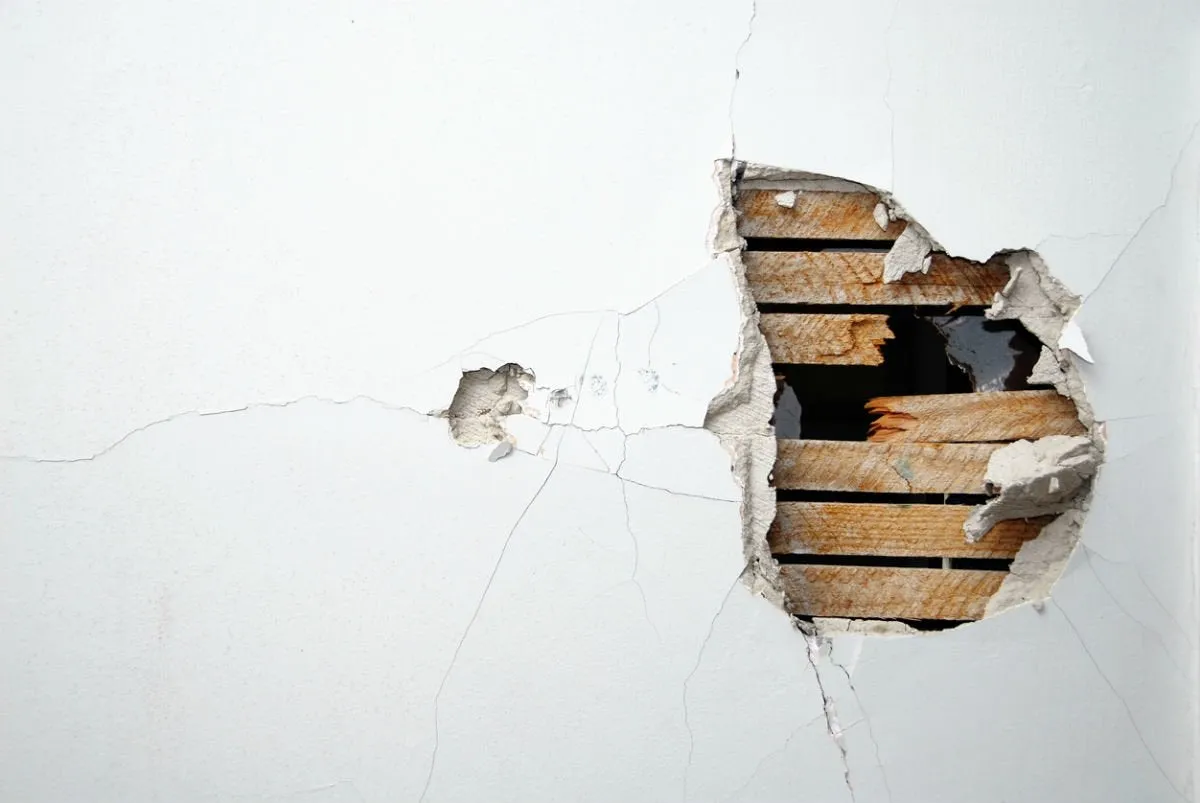
Plaster walls are not the same as drywall, and if you’ve ever tried to patch one the same way you’d patch drywall, you already know that. The repair cracked, shrank, or fell out entirely within a few weeks. That’s not bad luck—it’s just the wrong material for the job.
Plaster is a three-coat system applied over a wood or metal lath backing. It’s harder, denser, and more rigid than drywall, which means repairs need to account for that rigidity or they’ll fail. The good news is that once you understand what you’re working with, fixing a plaster wall is completely doable as a DIY job—even for larger holes.
The right method depends almost entirely on the size of the damage. A hairline crack needs a completely different approach than a fist-sized hole. Here’s how to handle five different scenarios, from the smallest surface cracks to full structural repairs.
Before You Start: Understanding What You’re Repairing
Before grabbing any filler, take a minute to assess the wall. Press gently around the damaged area. If the plaster feels solid and doesn’t flex or move, the lath behind it is intact and you’re doing a surface repair. If it feels soft, spongy, or shifts when you press it, the plaster has separated from the lath—that’s a more involved fix and you need to address the underlying instability first or your patch will fail.
Also check for the cause. A single impact hole is straightforward. Cracks that run along a wall in a pattern, or damage near windows and doors, can indicate settling or moisture issues. Patching over an active problem buys you time but doesn’t solve it. If the cracks keep coming back in the same spot, that’s worth investigating before repairing again.
What You’ll Need
Depending on which repair method you’re using, gather from this list:
- Setting-type joint compound (also called “hot mud”)—not the premixed kind for plaster repairs
- Premixed joint compound or spackling paste—for small surface repairs only
- Plaster of Paris or bonding plaster—for deeper traditional repairs
- Plaster bonding agent—critical for getting new plaster to stick to old
- Putty knife and wider taping knives (4-inch and 6-inch)
- Sanding sponge or fine-grit sandpaper (120–220 grit)
- Self-adhesive fiberglass mesh tape—for cracks and medium holes
- Plaster washers and screws—for reattaching loose plaster
- A piece of drywall or wire mesh—for large hole backing
- Primer—always prime before painting patched plaster
Method 1: Fixing Hairline Cracks in Plaster
Hairline cracks are the most common plaster complaint and the easiest to fix—but only if you do it correctly. The mistake most people make is filling them with standard premixed joint compound, which shrinks as it dries and opens the crack right back up.
Step 1: Widen the crack slightly before filling it. This sounds counterintuitive, but dragging a can opener or the corner of a putty knife along the crack to open it to about ⅛ inch wide gives the filler something to grip. A crack that’s been widened slightly holds a repair far better than one filled as-is.
Step 2: Vacuum or brush out any loose dust and debris from inside the crack so the filler bonds to solid plaster rather than powder.
Step 3: Dampen the crack with a wet brush or spray bottle. Dry plaster is very porous and will suck the moisture out of your filler too fast, causing it to dry too quickly and crack again. A slightly damp surface slows that absorption and gives the repair time to cure properly.
Step 4: Apply setting-type joint compound (hot mud) using a putty knife, pressing it firmly into the crack. Setting compound hardens through a chemical reaction rather than water evaporation, so it doesn’t shrink the way premixed compound does—that’s exactly what you need here.
Step 5: Feather the edges smooth with the putty knife and let it cure fully according to the package time. Don’t rush this step with a heat gun or fan—let it harden naturally.
Step 6: Sand lightly with a fine-grit sanding sponge, prime the area, and paint. For cracks that have come back more than once, embed a strip of fiberglass mesh tape into the compound before smoothing it flat—this bridges the crack and significantly reduces the chance of it reopening.
Method 2: Patching Small Holes (Nail Holes and Minor Chips)
Small holes from nails, screws, picture hooks, or minor chips are the quickest fix of all five methods. These don’t require mesh or backing—just the right filler and a little patience with sanding.
Step 1: Clean out the hole by removing any loose plaster around the edges. If the edges are crumbly, pick them back to solid material so you’re not filling over weakness.
Step 2: For holes up to about the size of a quarter, apply spackling paste or premixed joint compound directly with a putty knife. Press it in firmly and overfill slightly—it will shrink a little as it dries.
Step 3: Let it dry completely, which can take anywhere from 2–4 hours for spackling to overnight for joint compound depending on depth and humidity. Do not sand before it’s fully dry—it will drag and create a worse surface.
Step 4: Sand smooth with 120-grit sandpaper and check for any shrinkage. If the repair has sunk below the wall surface, apply a second thin coat, let it dry again, and sand.
Step 5: Prime before painting. Unprimed patches absorb paint differently than the surrounding plaster and will show as a dull spot even under multiple coats of paint. One coat of primer prevents this entirely.
Method 3: Repairing Medium Holes (Golf Ball to Fist-Sized)
Medium holes—the kind that come from a doorknob punching through, a shelf bracket ripping out, or a clumsy move with furniture—need a backing material before you can fill them. Without something for the compound to bond to, it’ll just fall through.
Step 1: Clear the edges of the hole back to solid plaster. If the edges feel soft or crumbly, chip them away until you reach material that’s firmly attached to the lath.
Step 2: Cut a piece of self-adhesive fiberglass mesh slightly larger than the hole and press it firmly over the opening. This creates the bridging surface your compound needs to grip.
Step 3: Apply a first coat of setting-type joint compound over the mesh, pressing it through the mesh slightly so it keys into the backing. Keep this coat thin—your goal here is adhesion, not fill.
Step 4: Let it cure fully, then apply a second coat that builds up to the wall surface level. Feather the edges out about 2–3 inches beyond the patch so the transition is gradual.
Step 5: Once fully cured, sand with a sanding sponge, working in circular motions. Check the surface with a light held at a low angle—a raking light reveals any unevenness that flat overhead light hides completely.
Step 6: Apply a final skim coat of premixed joint compound if needed to fill any texture differences, sand again, prime, and paint.
Method 4: Fixing Loose or Bulging Plaster
Sometimes the problem isn’t a hole—it’s that a section of plaster has separated from the lath behind it and is bulging outward. This is actually a structural failure of the plaster keys (the plaster that squeezed through the lath gaps and hardened to hold everything in place). If you ignore it, that section will eventually crack and fall off on its own.
Step 1: Test the extent of the loose area by pressing gently. Map out where the plaster is solid versus where it moves. Mark the boundaries lightly with a pencil.
Step 2: Do not remove the loose plaster unless it’s completely detached. If it’s still mostly intact and just separating, it can often be reattached.
Step 3: Drill small holes through the loose plaster in a grid pattern about 3 inches apart using a small drill bit. These holes let you inject consolidant and also receive the plaster washers.
Step 4: Inject plaster consolidant or bonding adhesive into the holes with a syringe or squeeze bottle. This reactivates adhesion between the plaster and lath.
Step 5: Press the plaster firmly back against the wall and secure it with plaster washers and drywall screws driven into the lath. These washers distribute the clamping force over a wide area without cracking the plaster further.
Step 6: Once the adhesive has cured, remove the screws and washers if desired (or leave them and skim over them), fill the drill holes with setting compound, sand, prime, and paint.
Method 5: Patching Large Holes in Plaster Walls
Large holes—anything bigger than your fist—typically mean the lath behind the plaster is also damaged or missing in that area. These need a solid backing installed before any filling can happen.
Step 1: Square off the hole using a utility knife or oscillating tool to create clean, straight edges. A clean geometric shape is much easier to patch than a ragged irregular hole.
Step 2: Cut a piece of drywall or cement board slightly smaller than the hole opening so it fits through, then can be turned to bridge the gap. Alternatively, attach wood furring strips or a piece of plywood behind the opening by inserting them through the hole and screwing them to the existing lath on either side—this creates a solid anchor for your patch piece.
Step 3: Cut your patch piece to fit snugly in the opening and screw it to your backing material. It should sit slightly recessed—about ⅛ inch below the plaster surface—to leave room for compound.
Step 4: Apply plaster bonding agent to the patch piece and the surrounding plaster edges and let it become tacky. This is a non-negotiable step for large repairs—without it, the new material won’t adhere to the old plaster properly.
Step 5: Apply a base coat of setting-type compound or bonding plaster, filling the recess to about half depth. Score the surface with a notched trowel while wet to create a key for the next coat.
Step 6: Once cured, apply a second coat building up to just below the wall surface. Let this cure, then apply a final skim coat to blend flush with the surrounding wall.
Step 7: Sand progressively with 80-grit to knock down high spots, then 120-grit to smooth, and finish with 220-grit for a surface ready for primer. Prime with a high-quality PVA primer and paint.
Quick Fixes for Common Problems
| Problem | Most Likely Fix | Alternative Approach |
|---|---|---|
| Patch keeps cracking after drying | Switch to setting-type compound—premixed shrinks and cracks | Embed fiberglass mesh tape for extra reinforcement |
| New plaster won’t stick to old surface | Apply bonding agent and let it get tacky before applying plaster | Dampen the old plaster surface before applying new material |
| Patch sinks below wall surface after drying | Apply a second thin coat once first coat is fully cured | Overfill slightly on first application to account for shrinkage |
| Edges of repair are visible after painting | Feather compound further out and apply a wider skim coat | Sand with a light held at a low angle to find and fix ridges |
| Repair shows as a dull spot through paint | Always prime patches before painting—skipping primer causes this | Apply two coats of primer if the patch is very porous |
| Crack keeps reopening in same spot | Investigate structural or moisture cause before repairing again | Use self-adhesive fiberglass mesh tape bridging the full crack length |
Tips for a Seamless Finish
Feather wide, not thick. The most common mistake in plaster repair is building up too much compound in one spot. Multiple thin coats feathered out wide will always look better than one thick coat.
Match the texture before painting. Old plaster often has a subtle texture—a skip trowel finish, a sand finish, or just slight irregularity from years of painting over it. If your patch is perfectly smooth on a textured wall, it will show. Add a little texture with a damp sponge, brush, or skip trowel before it fully cures.
Never skip the primer. A patched plaster surface is significantly more porous than the surrounding painted wall. Paint applied directly over an unprimed patch absorbs unevenly and shows as a sheen difference even after multiple coats.
Buy setting compound, not premixed, for plaster work. Premixed joint compound is designed for drywall where slight shrinkage is manageable. For plaster, the density and rigidity of setting compound is a much closer match to what you’re repairing into.
FAQ
Can I use spackle to fix a plaster wall? For very small nail holes and minor surface chips, yes. For anything larger than about a quarter, spackle isn’t the right tool—it shrinks too much and doesn’t have the hardness to hold up in a larger repair. Use setting-type joint compound instead.
How long does plaster repair take to dry? Setting compound hardens in 20–90 minutes depending on the type you buy (the number in the name—like “45” or “90”—refers to the working time in minutes). Premixed compound takes much longer—usually 24 hours per coat. Never rush drying with a heat gun; it causes cracking.
Why does my plaster patch keep falling out? Almost always a bonding issue. Either the surrounding plaster was too dry and pulled moisture from the repair too fast, or no bonding agent was used on a large repair. Dampen the surface before applying compound and use bonding agent on repairs over a few inches wide.
Is it worth repairing old plaster or should I replace it with drywall? If the majority of the plaster is solid and well-attached, repair it. Original plaster is thicker, harder, and better at soundproofing than drywall, and replacing it is a major project. If you have widespread failure—large sections that are soft, bulging, or already fallen—drywall replacement starts to make more sense economically.
Do I need special tools for plaster repair? Not really. A putty knife, a 6-inch taping knife, a sanding sponge, and the right compounds are enough for most repairs. Larger jobs benefit from a margin trowel and a hawk, but you can get professional results with basic tools if your technique is right.
Conclusion
Plaster repair has a reputation for being difficult, but most of that reputation comes from people using the wrong materials—specifically premixed joint compound that shrinks, cracks, and fails within months. Switch to setting-type compound, use a bonding agent on anything larger than a small hole, and take the time to feather your edges wide and sand carefully. The wall won’t look perfect after one coat—plaster repair is almost always a two or three coat job—but each coat gets you closer, and the final result on a well-done plaster repair is a wall that looks exactly as it did before.
Enjoyed this project? Get even more DIY ideas that save (and make) you money.
Join our free newsletter for profitable DIY projects, clever cleaning hacks, home ideas, and creative crafts delivered straight to your inbox.
✓ Free forever • No spam • Unsubscribe anytime