Ink on carpet feels like a disaster, but it doesn’t have to be permanent. The same quality that makes ink ideal for writing—its ability to bond quickly to surfaces—also means it responds well to the right solvents when you act with the right technique.
The problem most people run into isn’t a lack of cleaning products. It’s using the wrong one for the ink type, or making the classic mistake of scrubbing instead of blotting—which pushes the ink deeper into the carpet fibers and spreads it into a much larger stain. Do that once and you’ve turned a small problem into a big one.
This guide covers seven proven methods for removing ink from carpet, organized by ink type and severity—from a fresh ballpoint spill to a dried permanent marker stain that’s been sitting for days.
Know Your Ink Before You Start
Just like with clothes, not all ink behaves the same way on carpet:
- Ballpoint ink is oil-based and thick. It responds well to alcohol-based solvents.
- Gel ink is thicker and more pigment-heavy than ballpoint. It needs more aggressive treatment and multiple rounds.
- Permanent marker contains dye suspended in alcohol-based or solvent-based carriers. Rubbing alcohol is your first line of attack.
- Printer ink is highly concentrated and water-based. Act fast—once it dries, it sets deeply into fibers.
- Washable ink (from kids’ markers) is the most forgiving. Often warm water and dish soap alone will handle it.
Identifying the ink type before reaching for a cleaner saves time and prevents accidental setting of the stain.
What You’ll Need
Gather these before you start so you’re not hunting for supplies while the ink spreads:
- Clean white cloths or paper towels (white only—colored cloths can transfer dye)
- Rubbing alcohol (70% or higher)
- Dish soap
- Cold water
- Hydrogen peroxide (for light-colored carpets only)
- Commercial carpet stain remover
- Salt (for absorbing wet ink)
- Hairspray with alcohol content
- Baking soda
- A spray bottle
- A soft-bristle brush
The Golden Rules of Ink Removal on Carpet
Before getting into specific methods, these principles apply to every single approach:
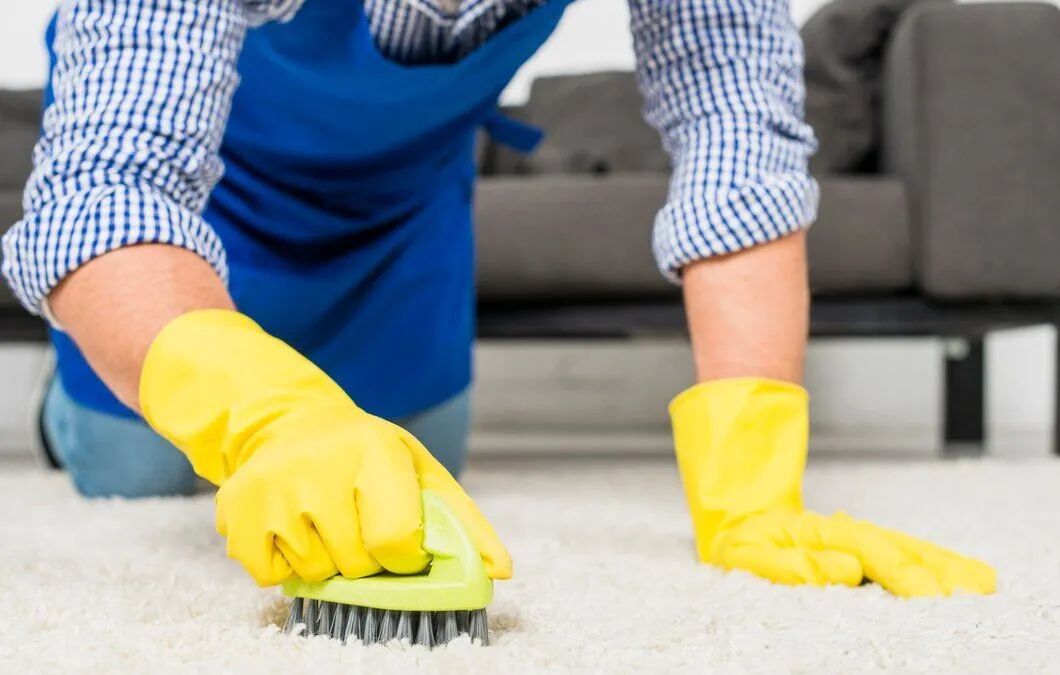
Never rub. Always blot. Rubbing unravels carpet fibers and drives the ink deeper. Every motion should be a firm, straight downward press and lift.
Work from the outside in. Start at the edges of the stain and work toward the center. This prevents the ink from spreading outward into a larger halo.
Use cold water only. Hot water opens carpet fibers and helps ink penetrate deeper. Cold water keeps the fibers tighter.
Test first. Before applying any solvent to the stain, dab a small amount on a hidden section of carpet to check for color bleeding or fiber damage.
Method 1: Rubbing Alcohol (Best All-Around First Response)
Rubbing alcohol is the most effective first-response treatment for the majority of ink types on carpet—particularly ballpoint, gel, and permanent marker. It dissolves the ink’s binders without setting the stain the way heat or hot water would.
- Act immediately if the ink is fresh. Place a clean white cloth over the stain and press firmly to absorb as much ink as possible before it penetrates deeper into the carpet fibers. Do not rub—just press, hold for a few seconds, and lift.
- Pour a small amount of rubbing alcohol onto a clean white cloth—never directly onto the carpet. Direct application can over-saturate the area and push ink down to the carpet backing.
- Blot the stain firmly, starting from the outer edge and working inward in a slow, deliberate spiral toward the center. You should see ink transferring onto the cloth with each blot.
- Switch to a clean section of cloth every few blots. Reusing the same area just redistributes ink back onto the carpet.
- Continue blotting and rotating to fresh cloth sections until no more ink is transferring. This may take more rounds than you expect—don’t rush it.
- Rinse the area with cold water by blotting with a damp cloth to remove any alcohol residue from the fibers.
- Blot dry with a clean dry cloth, pressing firmly to absorb as much moisture as possible. Place a stack of paper towels over the area and weigh them down with a heavy book for 30 minutes to draw out remaining moisture.
Method 2: Dish Soap and Cold Water (Best for Fresh Washable Ink)
For washable markers, water-based ink, and very fresh spills caught within the first few minutes, dish soap and cold water is often all you need—and it’s the gentlest option for delicate or colored carpet.
- Blot up as much wet ink as possible with a clean white cloth immediately. The more you remove before introducing any cleaning solution, the easier the rest of the process becomes.
- Sprinkle a small amount of table salt over the wet stain if it’s still very fresh and wet. Salt absorbs liquid ink before it can settle into the fibers. Leave it for two to three minutes, then vacuum or brush away.
- Mix one teaspoon of dish soap with two cups of cold water in a bowl. Stir gently—you want it mixed but not overly sudsy.
- Apply the solution to a clean white cloth and blot the stain from the outside edge toward the center. Press firmly and hold for a few seconds with each blot rather than dabbing rapidly.
- Rinse by blotting with a clean cloth dampened with plain cold water to remove soap residue. Soap left in carpet fibers attracts dirt over time and can cause resoiling.
- Blot dry thoroughly and weigh down paper towels over the area to absorb remaining moisture while the carpet dries.
Method 3: Hairspray (Quick Fix for Ballpoint Ink)
This is an older method that still works—with a caveat. It only works with hairspray that contains alcohol. Modern alcohol-free hairsprays won’t do anything for ink. Check the ingredients before reaching for the can.
- Spray a small amount of hairspray directly onto the ink stain—just enough to dampen it, not soak it.
- Wait 30 seconds to let the alcohol in the hairspray begin breaking down the ink binders.
- Blot firmly with a clean white cloth, working from the outer edge toward the center. You should see ink lifting almost immediately on the cloth.
- Repeat the spray-wait-blot process until the stain stops transferring onto the cloth.
- Follow up with a dish soap and cold water rinse to remove hairspray residue from the carpet fibers, then blot dry completely.
Method 4: Hydrogen Peroxide (For Light-Colored Carpets and Stubborn Stains)
Hydrogen peroxide is a mild bleaching agent that works well on stubborn ink stains—but it can lighten carpet color, so it should only be used on white, cream, or very light-colored carpets. Always test on a hidden area first.
- Pre-treat the stain with rubbing alcohol first to lift as much ink as possible before introducing hydrogen peroxide. This reduces how much bleaching action is needed.
- Apply 3% hydrogen peroxide (standard drugstore concentration) directly to a clean white cloth and blot onto the stain—never pour directly onto the carpet.
- Allow it to sit for 5–10 minutes. You may see slight bubbling, which indicates it’s reacting with the stain.
- Blot firmly with a clean cloth to lift the loosened ink. Work from the outside edge inward.
- Rinse thoroughly with cold water, blotting with a damp cloth to remove all peroxide residue.
- Blot dry completely and allow the carpet to air dry fully before assessing whether a second treatment is needed.
Method 5: Commercial Carpet Stain Remover (Best for Gel and Printer Ink)
For thick gel ink or highly concentrated printer ink—both of which are more resistant to household solvents—a dedicated commercial carpet stain remover formulated for ink is often the most reliable option.
- Blot up as much ink as possible first with a clean dry cloth before applying any product. Removing excess ink before treating means the cleaner can work on what remains rather than being diluted by excess ink.
- Read the product instructions carefully. Different formulas have different dwell times and application methods. Following the specific directions for your product will get better results than guessing.
- Apply the cleaner to a cloth rather than directly to the carpet unless the product specifically instructs otherwise. This gives you more control over saturation.
- Blot from the outside in, using firm, deliberate pressure. Switch to a clean cloth section frequently to avoid redepositing ink.
- Allow the product to dwell for the time specified on the label—usually two to five minutes.
- Rinse with cold water by blotting with a damp cloth, then blot dry and allow to air dry fully.
Look for products containing enzymes or oxidizing agents, which are most effective on ink specifically.
Method 6: How to Get Dried Ink Out of Carpet
Dried ink is significantly harder to remove than fresh ink—but not impossible. The key is rehydrating the stain before attempting to lift it, which loosens the ink’s bond with the carpet fibers.
- Dampen the dried stain with rubbing alcohol and allow it to sit for five to ten minutes. This is the rehydration step—the alcohol begins breaking down the dried ink binders and making them mobile again.
- Blot firmly with a clean white cloth once the stain has softened. You may see only a little ink transfer at first—that’s normal with dried stains. Be patient.
- Apply a fresh amount of rubbing alcohol to the cloth and blot again, repeating the process. Dried ink often requires five to ten rounds of treatment rather than the two or three a fresh stain needs.
- Follow up with a dish soap and cold water solution once most of the ink has lifted, to clean the residue left by the alcohol and any remaining ink particles.
- For particularly stubborn dried stains, apply a baking soda paste (baking soda mixed with just enough water to form a thick paste) over the treated area. Let it dry completely, then vacuum it up. The baking soda pulls residual pigment out of the fibers as it dries.
- Rinse, blot dry, and allow to air dry fully before assessing. A dried stain almost always requires a second treatment session the following day.
Method 7: How to Get Permanent Marker Out of Carpet
Permanent marker is the toughest ink challenge on carpet because it’s specifically formulated to resist water and many common solvents. It requires a stronger approach.
- Apply rubbing alcohol generously to a clean white cloth and blot the stain immediately and repeatedly. Permanent marker responds to alcohol more than anything else—but it takes persistence.
- Try acetone (nail polish remover) if rubbing alcohol alone isn’t cutting it. Dab a small amount onto a cloth and blot carefully. Test on a hidden area first—acetone can damage certain synthetic carpet fibers.
- Apply a commercial ink or permanent marker remover such as Goo Gone or an acetone-based product specifically formulated for carpet if household options aren’t making sufficient progress.
- Use a soft-bristle brush very gently to work the solvent slightly into the top layer of fibers if the stain has been there for a while—but only light pressure, and only after soaking with solvent first.
- Rinse thoroughly with cold water after any solvent treatment, blotting rather than pouring, to remove chemical residue from the carpet backing.
- Repeat the process over multiple sessions if needed. Permanent marker rarely comes fully out in one treatment—each round should visibly reduce the stain even if it doesn’t eliminate it entirely.
Ink Type vs. Best Method Quick Reference
| Ink Type | Best Method | Backup Method |
|---|---|---|
| Ballpoint (fresh) | Rubbing alcohol | Hairspray |
| Ballpoint (dried) | Rubbing alcohol soak | Commercial remover |
| Gel ink | Commercial remover | Rubbing alcohol |
| Washable marker | Dish soap and cold water | Rubbing alcohol |
| Permanent marker | Rubbing alcohol + acetone | Commercial ink remover |
| Printer ink (fresh) | Dish soap and cold water | Rubbing alcohol |
| Printer ink (dried) | Commercial remover | Hydrogen peroxide |
Tips to Prevent Further Damage While Treating
- Never use a circular scrubbing motion. Every stroke should be a straight blot—press down and lift straight up.
- Don’t over-wet the carpet. Excess moisture soaks into the backing and padding, leading to mold and mildew. Use the minimum amount of liquid needed.
- Change your cloth frequently. A cloth saturated with ink just moves the stain around rather than removing it.
- Don’t use a steam cleaner on an ink stain. The heat will permanently set it into the fibers before you have a chance to lift it.
- Work quickly but deliberately. Speed matters for fresh stains, but not at the expense of technique.
FAQ
Does WD-40 remove ink from carpet? It can help loosen oil-based ballpoint ink, but it leaves an oily residue in the carpet that’s difficult to remove and attracts dirt over time. Rubbing alcohol is a cleaner, more effective option.
Can I use bleach on ink stains in carpet? Only on white carpet, and only as a true last resort. Bleach is highly concentrated and can permanently damage carpet fibers and backing if not diluted and rinsed extremely carefully.
What if the ink stain has already been scrubbed? Scrubbing spreads and sets the stain, but it’s not irreversible. Treat the larger affected area with rubbing alcohol, working from the new outer edges inward. It will take more rounds, but most of it can still be lifted.
Will professional carpet cleaning remove ink? For large, stubborn, or deeply set stains—particularly permanent marker—professional hot water extraction with commercial-grade solvents is often the most reliable solution. It’s worth considering before replacing the carpet.
The Bottom Line
Ink stains on carpet are solvable in most cases—the key is acting fast, using the right solvent for the ink type, and blotting with patience rather than scrubbing in frustration. Rubbing alcohol handles the majority of situations on its own. For dried or permanent stains, expect multiple treatment sessions and don’t mistake slow progress for failure—every round that visibly reduces the stain is a round worth doing.
Enjoyed this project? Get even more DIY ideas that save (and make) you money.
Join our free newsletter for profitable DIY projects, clever cleaning hacks, home ideas, and creative crafts delivered straight to your inbox.
✓ Free forever • No spam • Unsubscribe anytime