Every kid has dreamed of sending a secret message. There’s something undeniably magical about writing something nobody can see — until the right moment reveals it. Invisible ink isn’t just a cool trick; it’s a genuine chemistry lesson hiding in plain sight, and the best part is that you almost certainly have everything you need sitting in your kitchen right now.
The problem? Most parents and teachers set up this experiment the wrong way, either choosing the wrong “ink” for the reveal method, skipping the science explanation entirely, or picking an approach that just doesn’t work reliably. This guide covers all the best methods, the real science behind why they work, and exactly how to pull off a satisfying, educational reveal every single time.
Here’s the Real Reason Invisible Ink Actually Works
Before you grab a lemon, it helps to understand what’s actually happening. Invisible ink relies on one of three basic scientific principles:
Oxidation: Some substances, like lemon juice or milk, are made of organic carbon compounds. When you apply heat, those compounds break down and oxidize — meaning they react with oxygen — faster than the surrounding paper does. This causes them to turn brown before the paper does, making the writing suddenly visible.
pH Indicators: Certain substances are acidic or alkaline. When a pH-sensitive dye (like red cabbage juice or turmeric) comes into contact with an invisible acidic or alkaline ink, a chemical reaction changes the color of the dye, revealing the message.
Fluorescence: Some substances, like tonic water (which contains quinine) or laundry detergent, absorb ultraviolet (UV) light and re-emit it as visible light. Hold a UV blacklight over the paper, and the message glows.
Understanding which science is at work helps kids connect the dots between the experiment and real chemistry concepts taught in school — making this far more than just a party trick.
What You’ll Need
You don’t need a lab coat for this. Most invisible ink experiments use completely safe, household ingredients. Here’s a general supply list:
- Ink options: Lemon juice, white vinegar, milk, baking soda solution, or tonic water
- Writing tools: Cotton swabs, a thin paintbrush, or a toothpick
- Paper: Plain white printer paper (thicker paper works better for wet inks)
- Reveal tools: A lamp or candle (for heat methods), red cabbage juice or grape juice (for pH methods), or a UV blacklight torch (for fluorescence methods)
- Optional extras: A small bowl or cup to hold the ink, and a hair dryer to speed up drying
Step-by-Step: How to Do the Lemon Juice Invisible Ink Experiment
This is the classic method and the most satisfying for younger kids because the reveal — watching brown letters appear over heat — feels genuinely dramatic.
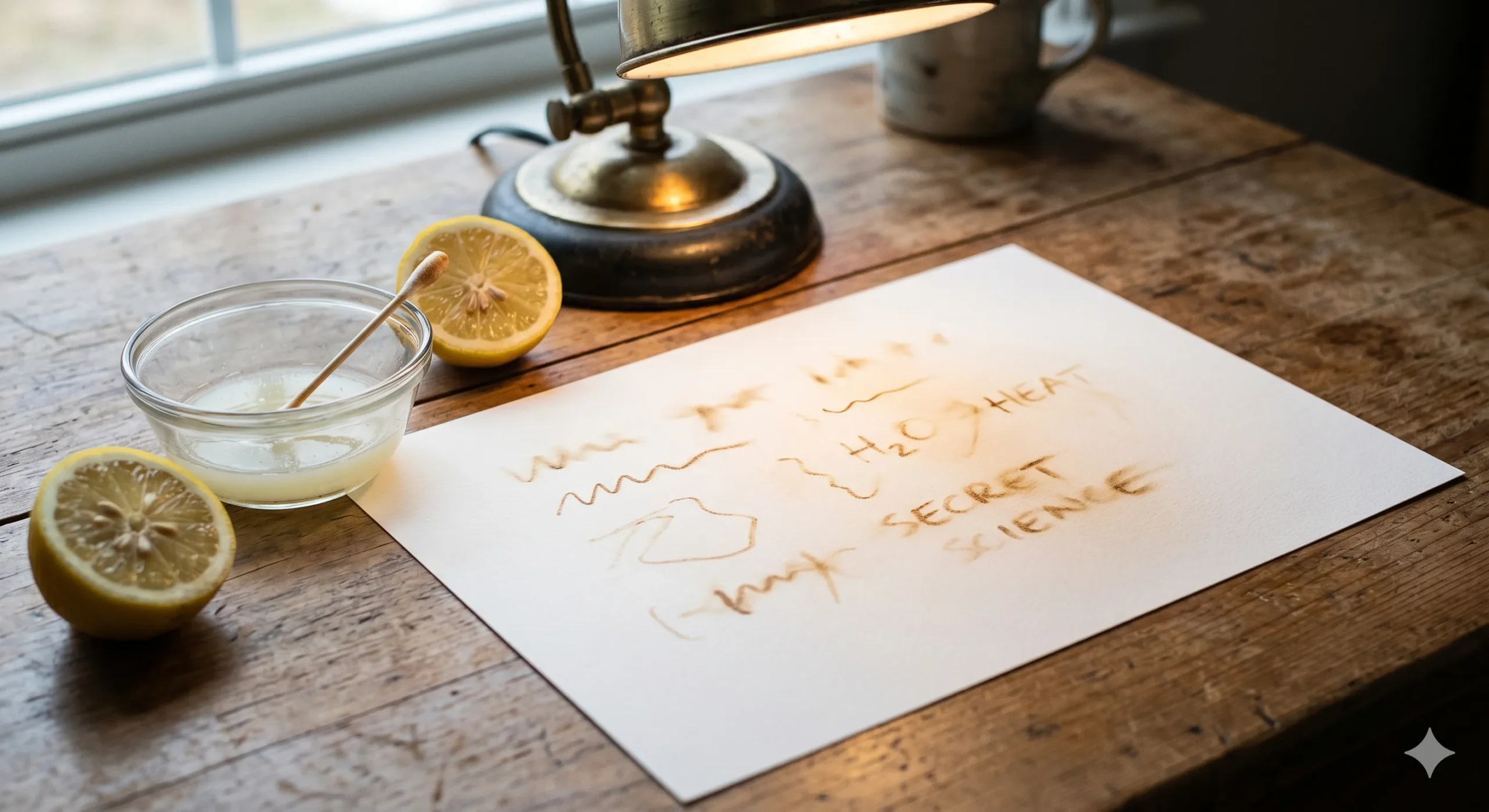
Step 1: Squeeze fresh lemon juice into a small bowl. You only need a tablespoon or two. Bottled lemon juice works, but fresh juice gives a stronger, more reliable result because it contains more citric acid.
Step 2: Dip your cotton swab or thin paintbrush into the lemon juice. Make sure it’s well-coated but not dripping, as too much liquid can cause the paper to wrinkle and make the writing harder to see once it dries.
Step 3: Write your secret message on the paper. Keep your letters reasonably large — tiny writing is harder to reveal cleanly. Write slowly and reload your swab with juice often so the lines stay consistent.
Step 4: Let the paper dry completely before attempting the reveal. This is the step most people rush, and it’s the most important one. Hold the paper up to light — you should see almost nothing. If you can still see shiny wet marks, give it more time. A hair dryer on a low setting can speed this up safely.
Step 5: To reveal the message, hold the paper a few inches above a warm lamp bulb or ask an adult to carefully pass it above a candle flame. Move the paper in slow, circular motions rather than holding it in one spot, which can scorch or catch the paper. Within seconds, brown letters will begin to appear as the lemon juice oxidizes faster than the surrounding paper.
Step 6: Read the secret message! Once the reveal is done, encourage kids to explain why the letters turned brown. This is the perfect teachable moment about oxidation and organic chemistry.
Other Invisible Ink Methods to Try
Baking Soda and Grape Juice Method
Mix one teaspoon of baking soda with a teaspoon of water to create your ink. Write the message and let it dry. To reveal, paint diluted grape juice or red cabbage juice over the paper using a wide brush. The grape juice acts as a pH indicator — the alkaline baking soda will turn the juice a different color (usually green or blue-green), making the writing pop against the rest of the paper, which stays purple or red.
Milk Invisible Ink
Plain whole milk works almost identically to lemon juice. Write with milk, let it dry completely, and apply gentle heat. The sugars and proteins in the milk caramelize and brown under heat, revealing the message. This method is great for very young children since there’s no acid involved at all.
Tonic Water Under a Blacklight
This method feels the most “spy-like.” Write your message using tonic water (which contains quinine, a naturally fluorescent compound). Let it dry — the paper will look completely blank. Shine a UV blacklight torch over it in a darkened room and the message will glow bright blue. This one is best for older kids who can appreciate the fluorescence concept.
Don’t Ignore the Safety Side of This Experiment
Even though these methods use food-safe ingredients, a few important reminders keep the experiment safe and successful:
- Heat reveals should always involve adult supervision. Candles and incandescent bulbs are hot enough to ignite paper if held too close or for too long.
- UV blacklights are safe for this experiment, but kids shouldn’t stare directly into the light source.
- Avoid using anything other than food-safe, known substances as your ink — some online suggestions recommend bleach or other household chemicals that are genuinely dangerous and completely unnecessary.
Why This Experiment Is So Valuable for Kids
The invisible ink experiment quietly teaches several real science concepts: oxidation and combustion (lemon/heat method), acid-base chemistry and pH indicators (baking soda/grape juice method), and the electromagnetic spectrum and fluorescence (tonic water/UV method). Children who do this experiment are engaging with the same foundational ideas they’ll encounter in middle school and high school chemistry — they just don’t know it yet because they’re too busy having fun.
It also teaches patience (waiting for the ink to dry properly) and scientific thinking (forming a hypothesis about which ink will work best before testing it).
Quick Comparison: Which Invisible Ink Method Should You Choose?
| Method | Age Range | Reveal Tool Needed | Difficulty |
|---|---|---|---|
| Lemon juice + heat | 5 and up | Lamp or candle (adult supervision) | Easy |
| Milk + heat | 4 and up | Lamp or candle (adult supervision) | Easy |
| Baking soda + grape juice | 6 and up | Grape juice or cabbage juice | Easy-Medium |
| Tonic water + UV light | 7 and up | UV blacklight torch | Easy (but needs equipment) |
FAQ
Does the paper need to be completely dry before the reveal? Yes, absolutely. Wet ink on paper looks shiny and is still faintly visible. A properly dried message should be completely invisible to the naked eye before you attempt the reveal.
Can I use lemon juice from a bottle instead of fresh lemons? You can, but fresh juice works better. Bottled lemon juice is often more diluted and may contain preservatives that slightly reduce the acid content and weaken the reveal.
Why didn’t my message appear clearly? The most common reason is that the ink was applied too lightly or the paper was moved away from the heat source too quickly. Try going over the writing twice with your swab, and hold the paper closer to (but not touching) the heat source for a longer, slower pass.
Is this experiment safe for toddlers? The ingredients are safe, but the heat reveal step is not suitable for very young children. Stick to the grape juice pH method with toddlers — no heat required, and the color change is still very dramatic and exciting.
Conclusion
The invisible ink science experiment is one of those rare activities that manages to be genuinely exciting and genuinely educational at the same time. The key is choosing the right method for your child’s age, understanding the science behind the reveal, and — most importantly — letting the ink dry completely before you ruin the surprise. Start with the classic lemon juice method, nail the technique, and then branch out into the pH and fluorescence methods to explore all three branches of chemistry hidden inside this one simple experiment. The secret message is just the beginning.
Enjoyed this project? Get even more DIY ideas that save (and make) you money.
Join our free newsletter for profitable DIY projects, clever cleaning hacks, home ideas, and creative crafts delivered straight to your inbox.
✓ Free forever • No spam • Unsubscribe anytime