You turn around and there it is — a blood stain on the carpet. Whether it’s from a scraped knee, a nosebleed, or a minor kitchen accident, the panic sets in almost immediately. And honestly, that panic is warranted, because blood is one of the most stubborn stains a carpet can absorb.
Here’s the thing most people don’t realize: blood stains are protein-based. That means the usual instincts — like reaching for hot water or scrubbing hard — actually work against you. Heat causes the proteins in blood to bond tightly to carpet fibers, essentially cooking the stain in place. Scrubbing spreads it further and pushes it deeper. So if you’ve been doing either of those things, you’re not alone — but it’s time to stop.
The good news is that with the right method and a bit of patience, blood can absolutely be removed from carpet. Fresh stains are the easiest, but even dried, set-in blood is no match for the right approach.
What You’ll Need
Before you start treating the stain, pull these supplies together so you’re not running around mid-clean while the blood sets further.
- Cold water — always cold, never warm or hot
- Clean white cloths or paper towels — white is important so dye doesn’t transfer
- Dish soap — plain, clear dish liquid works best
- Hydrogen peroxide (3%) — the standard pharmacy variety
- Baking soda — a gentle abrasive and deodorizer
- Salt — helpful for absorbing moisture from fresh stains
- Enzyme-based cleaner — optional but excellent for stubborn spots
- Spray bottle — for controlled application of liquids
- Soft-bristled brush — for gentle agitation without spreading
Step-by-Step: How to Get Blood Out of Carpet
For Fresh Blood Stains
Act quickly — the longer blood sits, the more it bonds with the fibers.
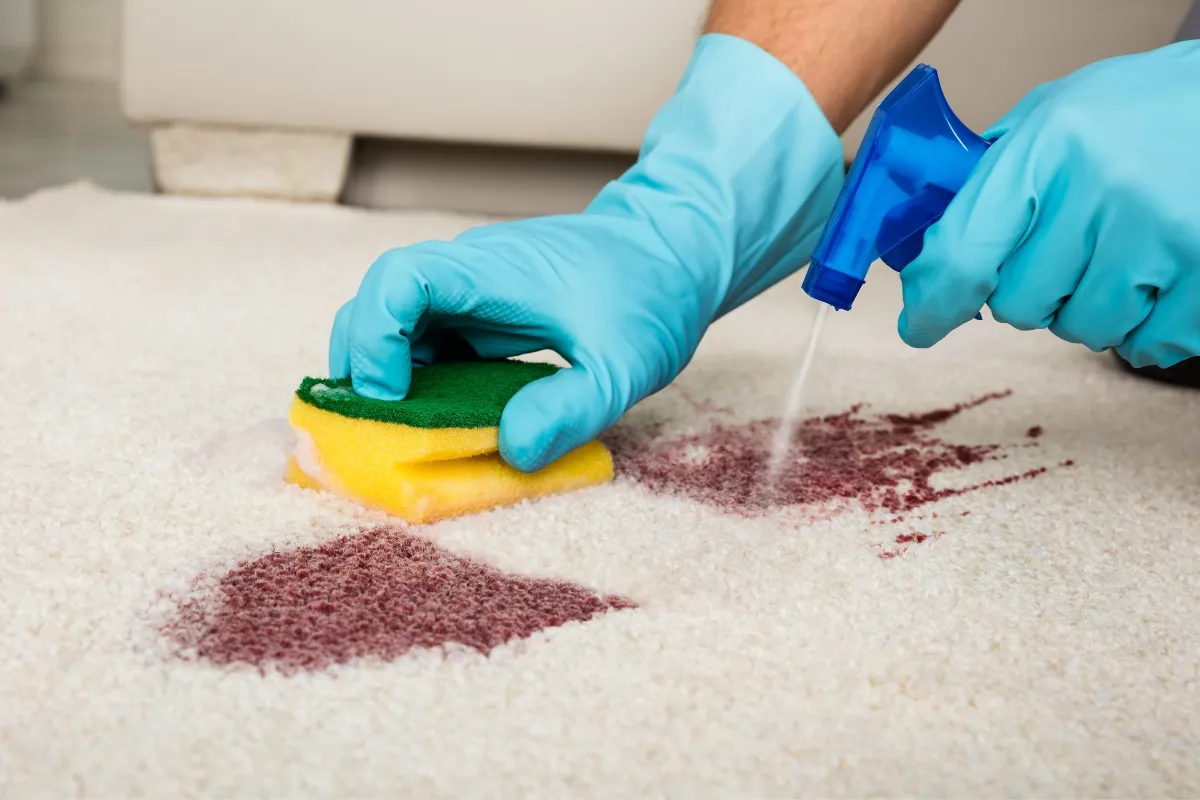
- Blot, don’t rub. Use a clean white cloth or stack of paper towels and press firmly down onto the stain to absorb as much blood as possible. Lift straight up and move to a clean section of the cloth each time. Rubbing will push the blood deeper and spread it wider.
- Work from the outside in. Start blotting at the outer edge of the stain and gradually move toward the center. This prevents the stain from spreading into a larger ring.
- Apply cold water and blot again. Dampen a clean cloth with cold water and press it onto the stain. Blot repeatedly until no more color transfers onto the cloth.
- Mix a cleaning solution. Combine one tablespoon of dish soap with two cups of cold water in a spray bottle or small bowl. Stir gently.
- Apply and blot. Spray or dab the soapy solution onto the stain, let it sit for about two minutes, then blot again with a clean cloth. Repeat this step two or three times until the stain is mostly gone.
- Rinse the area. Dampen a fresh cloth with plain cold water and blot the area to remove any soap residue. Leftover soap can attract dirt and make the spot look worse over time.
- Dry the carpet. Blot up as much moisture as possible, then let the area air dry completely. You can place a layer of paper towels over the damp spot and weigh them down with a heavy object to help absorb remaining moisture.
How to Get Dried Blood Out of Carpet
Dried blood is a different challenge. The proteins have had time to bond with the fibers, so you need to rehydrate and break them down before you can lift them out.
The Hydrogen Peroxide Method
This is the most effective approach for dried blood stains, especially on lighter-colored carpets.
- Loosen the dried blood first. Mix a small amount of dish soap with cold water and apply it to the stain. Let it sit for five minutes to soften the dried blood. Gently blot — do not scrub.
- Apply hydrogen peroxide carefully. Pour a small amount of 3% hydrogen peroxide directly onto the stain. You’ll likely see it fizz — that’s the reaction breaking down the blood proteins. Let it sit for five to ten minutes.
- Blot thoroughly. Use a clean white cloth to blot up the hydrogen peroxide along with the loosened blood. Work from the edges inward.
- Repeat if necessary. Dried blood often requires two or three treatments. Be patient. Apply again, wait, blot, and check your progress.
- Rinse and dry. Once the stain is gone, blot the area with cold water to remove any residue, then dry it thoroughly.
Important note on hydrogen peroxide: Always do a spot test in a hidden area first. Hydrogen peroxide can lighten or discolor certain carpet fibers, particularly darker colors. If your carpet is dark, skip this method and use the baking soda method below instead.
The Baking Soda and Cold Water Method
This is the gentler, carpet-safe option — especially good for darker carpets or more delicate fibers.
- Dampen the stain with cold water to rehydrate the dried blood.
- Make a paste by mixing two tablespoons of baking soda with one tablespoon of cold water.
- Apply the paste directly onto the stain and let it sit for 30 minutes. The baking soda helps lift the stain while deodorizing the carpet.
- Blot and remove the paste with a damp cloth. Then blot with dry towels to soak up moisture.
- Finish with dish soap solution if any stain remains, following the same soap-and-blot steps from the fresh stain section.
The Salt Method
Salt works best when the stain is still somewhat moist or has been re-dampened.
- Sprinkle a generous amount of table salt directly over the stain.
- Let it sit for five minutes — the salt will draw moisture and blood up out of the fibers.
- Blot and vacuum the salt away, then follow up with the dish soap solution.
Quick Fixes for Common Problems
| Problem | Solution | Alternative |
|---|---|---|
| Blood spreads while blotting | Place more towels underneath the carpet if possible | Create a salt “barrier” around the stain |
| Stain remains after first treatment | Re-apply hydrogen peroxide or enzyme cleaner | Let solution sit longer before blotting |
| Faint shadow (ghosting) left behind | Baking soda paste left for 30 minutes | Commercial enzyme-based carpet cleaner |
| Carpet color looks affected | Rinse thoroughly with cold water | Stop using hydrogen peroxide; switch to dish soap only |
| Stain has a lingering odor | Sprinkle baking soda, let sit overnight, vacuum | Use an enzyme cleaner designed for organic stains |
When to Use an Enzyme Cleaner
Enzyme-based carpet cleaners are specifically designed to break down organic stains — blood, urine, and similar proteins. They work by introducing natural enzymes that essentially “eat” the proteins causing the stain and odor. For stubborn, old, or large blood stains, an enzyme cleaner can be more effective than DIY methods alone.
Apply it according to the product directions, allow sufficient dwell time (usually 10 to 15 minutes), and blot clean. These cleaners are generally safe for most carpet types, but always check the label and test in an inconspicuous area first.
Tips to Prevent Blood Stains from Setting
- Cold water is your immediate best friend. If you can get cold water onto a fresh blood stain within the first few minutes, you’ll have a much easier cleanup.
- Never use hot water or steam. This is the single most common mistake. Heat sets protein stains permanently into fibers.
- Keep paper towels nearby. Having them in the bathroom or first-aid area means you can respond instantly.
- Don’t scrub when panicked. It’s a natural response, but scrubbing always makes carpet stains worse. Press and lift, press and lift.
- Address the stain before it dries if at all possible. Even a quick cold water blot before you’re ready to do a full clean will make the final removal much easier.
FAQ
Can blood stains come out of carpet after they’ve dried?
Yes, absolutely — but it takes more effort than treating a fresh stain. The key is rehydrating the dried blood before attempting to lift it. Methods like hydrogen peroxide, baking soda paste, or enzyme cleaners are specifically effective at breaking down dried blood proteins.
Does hot water help remove blood from carpet?
No — this is one of the most important things to remember. Hot water causes blood proteins to coagulate and bond permanently with carpet fibers. Always use cold water for any blood stain treatment.
Is hydrogen peroxide safe to use on carpet?
It’s effective but needs caution. Standard 3% hydrogen peroxide (the pharmacy variety) is generally safe on light-colored or white carpets. On darker carpets, it can cause fading or discoloration. Always spot test first.
What if the blood stain has been there for weeks or months?
Very old stains are harder to remove but not necessarily impossible. Start with re-hydrating using cold water and dish soap, then try an enzyme cleaner with a longer dwell time. You may need to repeat treatments over several days. If home methods fail, a professional carpet cleaning service can sometimes lift stains that home treatments can’t.
Will baking soda remove blood from carpet?
Yes, especially when combined with cold water or hydrogen peroxide. On its own, baking soda acts as a gentle abrasive and deodorizer. As a paste, it helps pull the stain out of the fibers as it dries.
Conclusion
The secret to getting blood out of carpet isn’t an expensive product or a specialty tool — it’s knowing what not to do. Skip the hot water. Skip the hard scrubbing. Stay calm, work from the outside in, and give your chosen solution enough time to actually work.
Fresh stains will come out with dish soap and cold water alone. For dried blood, hydrogen peroxide or a baking soda paste is your best bet. And if you’re dealing with a particularly stubborn or large stain, an enzyme-based cleaner can do the heavy lifting.
However old or fresh the stain is, patience and the right technique will almost always get you there. Just remember: never let any moisture sit in the carpet too long, and always blot dry completely to prevent mold or mildew from forming beneath the surface.
Enjoyed this project? Get even more DIY ideas that save (and make) you money.
Join our free newsletter for profitable DIY projects, clever cleaning hacks, home ideas, and creative crafts delivered straight to your inbox.
✓ Free forever • No spam • Unsubscribe anytime