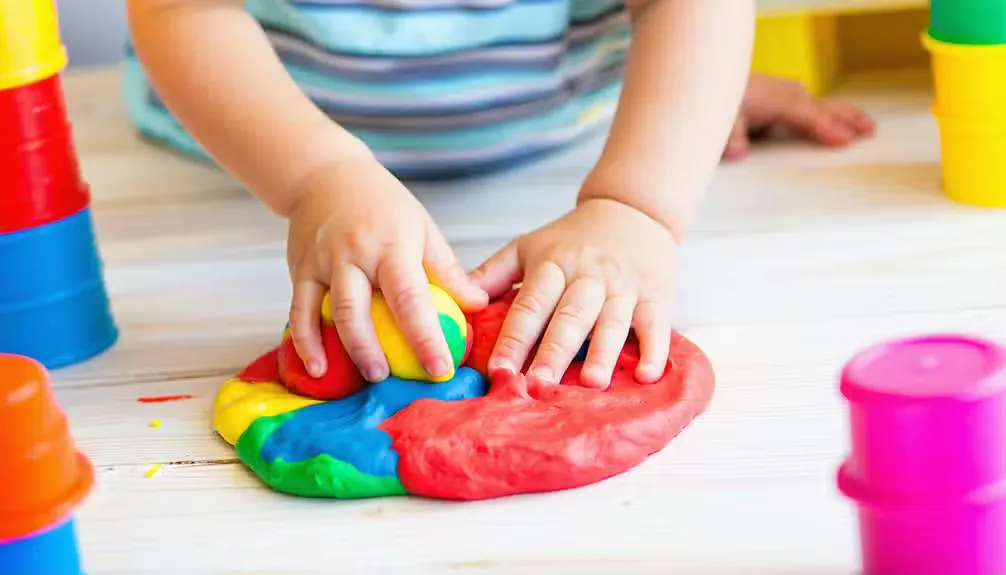
Kool-Aid playdough takes everything good about regular homemade playdough and turns the dial all the way up. The colors are more vivid. The scent is genuinely wonderful — sweet and fruity in a way that makes the whole activity feel like more of an experience than just craft time. And because the color and scent come built into the Kool-Aid packet itself, there’s no fussing with food coloring drops or separate scent additives. One packet does everything at once.
It’s also one of those recipes where the process is just as fun as the result. Kids love watching the dough change color as it comes together, and the smell that fills the kitchen while you’re mixing is half the fun. Whether you’re making it with a toddler on a Tuesday afternoon or putting together activity bags for a classroom, Kool-Aid playdough consistently delivers.
Watch this short video to learn how to make Kool-Aid playdough:
Why Kool-Aid Playdough Works So Well
The secret isn’t magic — it’s the citric acid in Kool-Aid. Most playdough recipes that call for cream of tartar use it precisely because it’s a mild acid that improves the dough’s texture and acts as a natural preservative. Kool-Aid contains citric acid that does exactly the same job, which means you don’t need to add cream of tartar separately. The Kool-Aid is pulling double duty: color, scent, and chemistry all in one little packet.
The result is a dough that’s smooth, elastic, and long-lasting — and one that smells like a childhood summer afternoon every single time you open the container.
Cooked vs. No Cook: Which Method Is Better?
There are two ways to make Kool-Aid playdough, and both produce excellent results. The method you choose mostly depends on how much time you have and how involved you want the process to be.
The cooked stovetop method produces the silkiest, smoothest texture of the two. The heat fully gelatinizes the flour and creates a dough that’s remarkably soft and elastic, almost identical to commercial playdough. It takes about ten minutes of active stirring over the stove and a short cooling period before it’s ready to use.
The no cook method is faster and easier — everything comes together in a bowl with boiling water, no stovetop required. The texture is slightly less silky than the cooked version but still excellent, and most kids won’t notice the difference at all. It’s the better choice when you’re in a hurry or making it with young children who don’t want to wait.
Both recipes are included below. Start with whichever suits your situation, and try the other one next time.
The No Cook Kool-Aid Playdough Recipe
Ingredients
- 2 cups all-purpose flour
- ½ cup salt
- 2 tablespoons vegetable oil
- 1 packet unsweetened Kool-Aid (any flavor — one packet colors and scents one batch)
- 1 to 1½ cups boiling water
Step-by-Step Instructions
- Combine the dry ingredients in a large mixing bowl. Add the flour, salt, and the entire Kool-Aid packet to the bowl and whisk them together until the Kool-Aid powder is fully distributed through the flour. You should see the flour take on a light tint of the Kool-Aid color at this stage — that’s a good sign the powder is evenly mixed in.
- Add the vegetable oil. Pour the oil into the dry mixture and stir to combine. The mixture will look crumbly and slightly uneven at this point, which is exactly right before the water goes in.
- Add the boiling water gradually. Start by pouring in one cup of boiling water and stirring quickly as you pour. The dough will begin coming together almost immediately, and the color will deepen dramatically as the hot water activates the Kool-Aid. Add more water a tablespoon at a time until the dough forms a single, cohesive ball that pulls away from the sides of the bowl cleanly.
- Let it cool for two minutes. The boiling water makes the dough very hot right after mixing. Give it just a couple of minutes before handling — it doesn’t need to fully cool, just reach a comfortable temperature.
- Knead on a clean surface for one to two minutes. Turn the dough out and knead it until it’s completely smooth. If it’s sticking to your hands or the surface, dust lightly with flour and keep going. If it feels dry or crumbly at the edges, dampen your hands slightly and continue kneading.
- Use immediately or store for later. The dough is ready to play with right away. If storing, let it cool completely before sealing in an airtight bag or container.
The Cooked Kool-Aid Playdough Recipe
Ingredients
- 2 cups all-purpose flour
- ½ cup salt
- 2 tablespoons vegetable oil
- 2 tablespoons cream of tartar (optional — the Kool-Aid provides acidity, but cream of tartar makes the texture even better)
- 1 packet unsweetened Kool-Aid
- 2 cups water
Step-by-Step Instructions
- Combine everything in a medium saucepan. Add the flour, salt, cream of tartar, Kool-Aid packet, oil, and water all at once to a saucepan. Stir everything together before turning on the heat so there are no dry pockets of flour sitting at the bottom.
- Cook over medium heat, stirring constantly. Keep stirring as the mixture heats up — don’t walk away from the stove at this stage. Within three to five minutes, the mixture will begin to thicken noticeably. Keep stirring to prevent it from sticking or burning at the bottom of the pan.
- Watch for the dough to pull away from the sides. The moment the mixture transforms from a thick batter into a dough that pulls away from the sides of the pan and forms a ball in the center, it’s done. This usually happens around the five to seven minute mark. Remove it from the heat immediately.
- Turn out and knead once cooled enough to handle. Transfer the dough to a clean surface and let it sit for three to five minutes. It will be very hot straight from the pan. Once it’s cool enough to touch comfortably, knead it for one to two minutes until completely smooth and uniform in color.
- Check the texture and adjust if needed. Well-cooked Kool-Aid playdough should feel incredibly soft and smooth — almost velvety. If it feels sticky, it likely needed another minute or two on the heat. Knead in a small amount of flour to correct it. If it feels dry, a few drops of oil kneaded in will restore it.
- Cool completely before storing. Unlike the no cook version, the cooked dough retains heat for a while. Let it cool fully to room temperature before placing it in a sealed container — sealing it warm can create condensation that makes the dough sticky.
Best Kool-Aid Flavors to Use (and What Colors They Make)
One of the best parts of Kool-Aid playdough is that the flavor determines the color, and mixing and matching flavors across batches creates a rainbow set that kids go absolutely wild for.
- Cherry — deep, rich red; classic and always popular
- Strawberry — bright pink; great for spring or Valentine’s Day themed play
- Orange — vivid orange; pairs beautifully with a yellow batch
- Lemonade — pale, sunny yellow; lighter in color but wonderfully scented
- Grape — deep purple; one of the most satisfying colors in the lineup
- Berry Blue — bright cobalt blue; produces a striking, bold color
- Lime — bright green; perfect for nature and dinosaur themed sensory play
- Watermelon — soft pink-red with a fantastic scent
- Tropical Punch — bright red-orange with a complex fruity smell
Make a full rainbow set by mixing one batch per color on the same afternoon. Store each color separately and present them together in a set — it makes a genuinely impressive gift for birthdays or holidays.
How to Store Kool-Aid Playdough
Proper storage is what separates a batch that lasts a week from one that lasts two months. The rules are simple but important.
Always let the dough cool completely before sealing it. Warm dough releases steam inside a sealed container, and that moisture will make the dough sticky and unpleasant.
Store each color in its own zip-lock bag or small airtight container, with as much air pressed out as possible. Keeping colors separate prevents them from staining each other and keeps the scents distinct and strong.
Stored correctly at room temperature, Kool-Aid playdough keeps for eight to twelve weeks — often longer. If a batch starts to feel slightly dry after lots of use, knead in a few drops of vegetable oil to restore softness. If it smells off or develops any mold — usually from kids playing with damp hands — discard it and make a fresh batch.
Do not refrigerate. Cold temperatures can make the dough stiff and change the texture in ways that are hard to reverse.
Fun Activities and Play Ideas
Rainbow color mixing. Give kids two colors of Kool-Aid playdough and let them mix them together to make a third color. Mixing red and yellow makes orange, blue and yellow makes green, red and blue makes purple. It’s a hands-on color theory lesson that doubles as sensory play.
Scented sensory bins. Press Kool-Aid playdough into the bottom of a tray, scatter small figurines or gems across it, and let kids create scenes. The scent adds a lovely dimension to the imaginative play.
Alphabet and number practice. Roll thin ropes of dough and shape them into letters and numbers. The pliable texture makes it easy for little hands to form shapes, and it’s a much more engaging way to practice than worksheets.
Pretend bakery. Give kids cookie cutters, a small rolling pin, and a muffin tin and let them run an imaginary bakery. Multiple colors make for very convincing “frosted cupcakes” and “decorated cookies.”
Smell and guess game. Make several different flavors and let kids smell each one with their eyes closed and try to guess the flavor. It’s a surprisingly tricky and genuinely fun sensory game for older kids.
Troubleshooting Common Problems
| Problem | Likely Cause | Fix |
|---|---|---|
| Dough is sticky and wet | Too much water added | Knead in flour a little at a time until balanced |
| Dough is dry and crumbly | Not enough water, or water wasn’t hot enough | Wet hands and knead slowly; add water a few drops at a time |
| Color is pale or washed out | Only one packet used for a double batch | Use one full packet per standard batch for best color |
| Dough smells faint after a few weeks | Normal scent fade over time | Add a tiny drop of matching extract (e.g. strawberry) when kneading |
| Dough feels stiff after storage | Dried out slightly in container | Knead in a few drops of vegetable oil to restore softness |
| Colors bleed into each other | Stored together in the same container | Always store each color in a separate sealed bag |
FAQ
Is Kool-Aid playdough safe for toddlers? The ingredients are all non-toxic, but the high salt content means it’s not meant to be eaten in any quantity. Always supervise young children who tend to mouth things. The Kool-Aid scent can be very appealing to toddlers, so this one warrants a little extra watchfulness with the youngest kids.
Do I need unsweetened Kool-Aid specifically? Yes — always use the unsweetened, unflavored-with-sugar packets. The pre-sweetened versions add unnecessary stickiness to the dough and can affect the texture. The small unsweetened packets (the ones that cost about twenty cents each) are exactly what you want.
Can I use one packet for a double batch? You can, but the color will be noticeably paler and the scent much fainter. For the best results — vivid color and strong scent — use one packet per standard two-cup-of-flour batch.
Why does my cooked dough feel sticky even after kneading? Sticky cooked dough usually means it was taken off the heat a little too early. Next time, leave it on the heat until it’s clearly pulling away from the pan sides. To fix an already-made sticky batch, knead in flour a tablespoon at a time until the stickiness resolves.
How is Kool-Aid playdough different from regular playdough? The core recipe is almost identical, but the Kool-Aid replaces both the food coloring and the cream of tartar in a standard recipe. The citric acid in Kool-Aid mimics what cream of tartar does for texture and preservation, while simultaneously adding color and a genuinely lovely scent that plain food coloring can’t provide.
Conclusion
Kool-Aid playdough is one of those recipes that earns a permanent spot in the rotation not because it’s complicated or impressive, but because it consistently works and consistently delights. The colors are brighter than regular food-coloring playdough. The scent makes it feel special. And the fact that one humble little packet replaces two separate ingredients makes the whole process feel almost effortlessly simple.
Make a single color the first time, get comfortable with the texture and method, and then work your way up to a full rainbow set. Once you have five or six colors lined up in their little bags, smelling like a fruit stand and looking like a paint palette, you’ll understand exactly why people keep coming back to this recipe.
Enjoyed this project? Get even more DIY ideas that save (and make) you money.
Join our free newsletter for profitable DIY projects, clever cleaning hacks, home ideas, and creative crafts delivered straight to your inbox.
✓ Free forever • No spam • Unsubscribe anytime