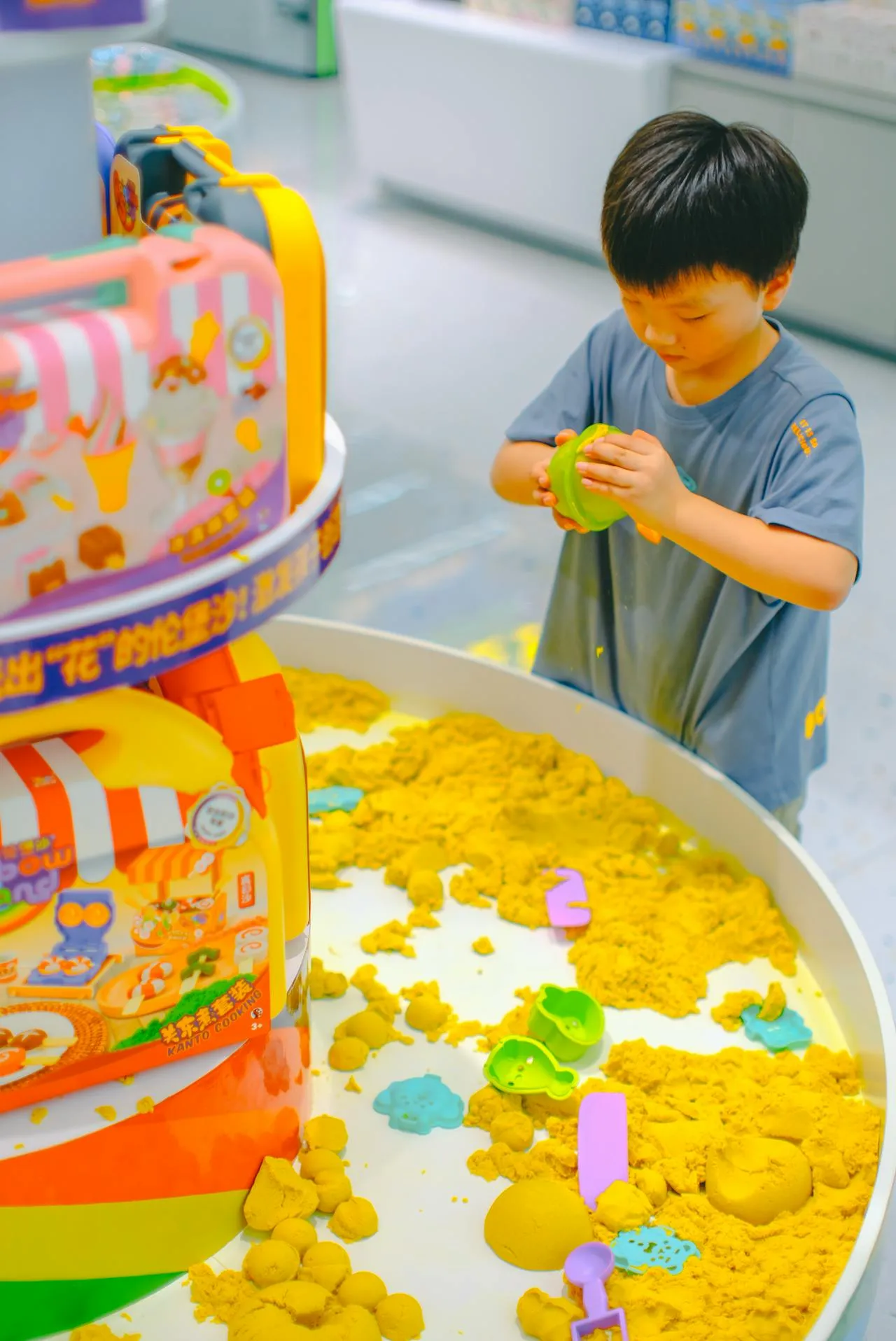
If you’ve ever watched a child play with kinetic sand at a toy store and then looked at the price tag, you already know why homemade moon sand exists. The store-bought version is magical, yes — but it’s also expensive, comes in small quantities, and somehow ends up embedded in the carpet within the first twenty minutes.
Homemade moon sand gives you all of that satisfying, moldable, crumbly-yet-clumping texture for almost nothing. Two ingredients. No cooking. No special equipment. And you can make a huge batch of it for the cost of a bag of flour.
The texture is what makes moon sand so compelling — for kids and adults alike, honestly. It’s dry enough to pour through fingers and crumble apart, but dense enough to hold a shape when you press it into a mold. It sits right in that perfect sensory sweet spot between sand and dough, which is exactly why children find it so hard to put down.
What Is Moon Sand, Exactly?
Moon sand is a moldable sensory material made from a mixture of fine particles and a binding oil or fat. The oil coats each particle of flour or sand, creating a substance that clumps together under pressure but falls apart with a gentle touch — mimicking the behavior of wet beach sand in a way that’s deeply satisfying to handle.
It’s a staple of sensory play therapy, early childhood classrooms, and rainy afternoon activities at home. Unlike playdough, it doesn’t dry out quickly when left out. Unlike real sand, it doesn’t get tracked everywhere in quite the same way. And unlike kinetic sand, it costs almost nothing to make.
The Basic 2-Ingredient Moon Sand Recipe
This is the version most families start with — simple, effective, and made entirely from things you probably already have.
Ingredients:
- 8 cups all-purpose flour
- 1 cup baby oil (or any light mineral oil)
That’s it. The ratio is 8 parts flour to 1 part oil, and it scales up or down perfectly if you want to make more or less.
What You’ll Need
- A large mixing bowl or a plastic storage bin (bigger is better — gives kids room to play directly in it)
- Measuring cups
- A spoon or your hands for mixing
- Food coloring — optional, but adds a lot to the visual experience
- Sand molds, cookie cutters, or small cups for shaping
- A tray or tablecloth to define the play area and make cleanup easier
Step-by-Step: How to Make Moon Sand
Mixing the Moon Sand
- Pour the flour into your large bowl or bin. Use a container that’s big enough to mix in comfortably without flour spilling over the sides. A large plastic storage tub works perfectly and doubles as the play container once the moon sand is ready — no need to transfer it.
- Add the baby oil gradually. Pour the baby oil over the flour slowly, distributing it as evenly as possible rather than dumping it all in one spot. This makes it easier to incorporate evenly throughout the flour without creating oily clumps.
- Mix thoroughly with your hands. This is the step where hands work far better than any spoon. Rub the oil into the flour using your fingers, breaking up any clumps and working the oil through until every part of the flour feels consistently coated. The mixture will go from looking like oily, uneven lumps to a fine, uniform, slightly damp-looking powder. This takes about two to three minutes of active mixing.
- Test the texture. Grab a handful and squeeze it firmly. It should hold the shape of your fist when you open your hand. Then poke it gently — it should crumble apart at the lightest touch. If it doesn’t hold a shape at all, add a tiny bit more oil and mix again. If it feels too wet or greasy, add a little more flour.
- Add color if desired. To make colored moon sand, add a few drops of food coloring to the baby oil before combining it with the flour. Gel food coloring gives the most vibrant result. Mix the color into the oil first so it distributes evenly throughout the batch. For multiple colors, divide the flour into separate bowls and color each portion individually.
- It’s ready immediately. There’s no waiting, no resting time, no cooling required. The moment the texture feels right, you can hand it straight to the kids.
The Cornstarch Version (Extra Silky Texture)
For a slightly different sensory experience — smoother, silkier, and a little more moldable — replace the all-purpose flour with cornstarch. The ratio stays the same: 8 cups of cornstarch to 1 cup of baby oil.
Cornstarch moon sand has a finer, almost powdery quality that many kids prefer. It molds a little more crisply than the flour version and produces sharper shapes when pressed into molds or cookie cutters. The trade-off is that it can feel slightly messier and creates more fine dust when it crumbles, so it’s better suited to outdoor play or a well-contained tray.
Both versions are wonderful — it’s worth trying each one to see which texture your kids respond to most.
The Colored Sand Version
If you want moon sand that looks like actual beach sand with color, swap the flour for fine play sand (available at hardware stores or garden centers) and mix in a small amount of cornstarch along with the oil. The ratio here is slightly different:
- 4 cups fine play sand
- 2 tablespoons cornstarch
- ½ teaspoon water
Mix the cornstarch and water together first, then work the mixture through the sand until evenly coated. This version looks the most like real kinetic sand and is especially good for outdoor sensory bins.
How to Store Moon Sand
One of the best things about moon sand is how well it keeps. Unlike playdough, it doesn’t dry out and harden — the oil keeps the flour moist indefinitely as long as it’s stored properly.
Transfer the moon sand into a large zip-lock bag or an airtight plastic container with a lid. Stored this way, it will stay fresh and playable for up to six weeks, sometimes longer. If it starts to feel a little dry after repeated use, drizzle in a few drops of baby oil and work it through with your hands to restore the texture.
Keep it at room temperature — there’s no need to refrigerate it. Avoid storing it anywhere very warm, like in a hot car, as the oil can separate slightly in high heat (it’ll mix back in fine, but it’s worth avoiding).
Sensory Play Ideas with Moon Sand
Moon sand is wonderful on its own, but a few simple additions can transform it into an entire imaginative world.
Build a sensory bin. Pour a large batch into a plastic storage tub and add small toys — dinosaurs, farm animals, shells, or gems — for kids to bury, discover, and play with. This kind of open-ended sensory bin can hold a child’s attention for a remarkably long time.
Use molds and cutters. Cookie cutters, sandcastle molds, silicone baking molds, and even plastic cups all produce satisfying shapes. Press the moon sand firmly in, invert it, and tap — it should hold the shape cleanly for a moment before slowly crumbling.
Make a moon landscape. Give kids small figurines, toy trees, and rocks and let them sculpt mountains, craters, and valleys in a large tray of moon sand. The moldable quality makes it perfect for building miniature scenes.
Add small world elements. Bury plastic gems, coins, or small figures and let kids “excavate” them with spoons and brushes. This is a particularly popular activity for kids going through a dinosaur fossil phase.
Combine colors. Make several small batches in different colors. Kids love layering them in a container, swirling them together, or keeping them separate in divided trays.
Variations to Try
Scented moon sand: Add a few drops of essential oil — lavender, citrus, or vanilla — to the baby oil before mixing. Scented moon sand adds a wonderful extra layer to the sensory experience, especially for younger toddlers.
Glow-in-the-dark moon sand: Mix glow-in-the-dark powder (from any craft store) into the flour before adding the oil. Charge it under a bright light and bring it somewhere dim for a genuinely impressive effect.
Sparkle moon sand: Add a tablespoon of fine glitter to the flour before mixing. The glitter catches the light as kids play with it and makes the whole texture feel extra magical.
Cloud sand: Mix equal parts cornstarch and baking soda with baby oil for a cloud-like texture that’s even lighter and fluffier than standard moon sand. It’s less moldable but incredibly soft and satisfying to run through fingers.
Troubleshooting Common Problems
| Problem | Likely Cause | Fix |
|---|---|---|
| Moon sand won’t hold a shape | Not enough oil | Add a small amount of oil at a time and mix thoroughly |
| Moon sand feels greasy or wet | Too much oil added | Work in more flour gradually until balance is restored |
| Color is streaky or uneven | Color added to flour instead of oil | Next time, mix color into oil first; knead longer this time |
| Texture feels too coarse | Flour has large lumps | Sift flour before mixing; break up any clumps by hand |
| Moon sand dries out quickly | Stored in an unsealed container | Transfer to an airtight bag or container immediately after use |
| Oil separates after storage | Stored somewhere warm | Mix back together by hand; store at room temperature |
Safety Notes
- The ingredients in homemade moon sand — flour, baby oil — are non-toxic, but moon sand is not intended to be eaten. Supervise toddlers who are still mouthing objects.
- Baby oil and flour can create a slippery surface if spilled on hard floors, so it’s worth playing on a mat or tray and cleaning up spills promptly.
- Children with flour or gluten sensitivities can use cornstarch as a substitute in the same ratio.
- For children with very sensitive skin, unscented baby oil or plain mineral oil is the safest choice.
FAQ
How long does homemade moon sand last? Stored in an airtight container or zip-lock bag at room temperature, homemade moon sand typically lasts four to six weeks. The oil acts as a preservative that keeps the flour from drying out or going stale quickly.
Can I use vegetable oil instead of baby oil? You can, but the result won’t be quite as good. Vegetable oil has a stronger smell that becomes more noticeable over time and can eventually go rancid. Baby oil (mineral oil) is odorless and doesn’t spoil, making it the far better choice for a long-lasting batch.
Is moon sand the same as kinetic sand? They’re similar in concept but not identical. Commercial kinetic sand uses a specific polymer coating on fine sand to create its stretchy, almost wet-looking texture. Homemade moon sand mimics the moldable, clumping behavior without the polymer chemistry — it’s not quite as stretchy, but it’s close enough for most kids and infinitely cheaper.
What age is moon sand appropriate for? Moon sand is suitable for children from around 18 months and up, with supervision. The open-ended, sensory nature of the play is valuable at virtually every age through early childhood. Older kids enjoy using it for more structured sculpting and building activities.
Can I make a large batch for a classroom or party? Absolutely — the recipe scales up perfectly. Simply multiply all quantities by however much you need. For a classroom sensory bin, a triple or quadruple batch fills a large storage tub nicely and keeps the whole class engaged.
Conclusion
Moon sand is one of those humble, simple activities that punches well above its weight. Two ingredients, five minutes, and you have a sensory material that kids return to again and again — one that encourages creativity, builds fine motor skills, and provides the kind of calming, tactile focus that screens simply can’t replicate.
Start with the basic flour and baby oil version, get the texture right, and then let the variations carry you forward. Scents, colors, glitter, sensory bins, small world play — the possibilities expand as far as your kids’ imaginations will take them.
And the next time you’re tempted by an expensive bag of kinetic sand at the toy store, remember that a far larger, fully customizable version of it is sitting in your pantry right now.
Enjoyed this project? Get even more DIY ideas that save (and make) you money.
Join our free newsletter for profitable DIY projects, clever cleaning hacks, home ideas, and creative crafts delivered straight to your inbox.
✓ Free forever • No spam • Unsubscribe anytime