There’s no good time to deal with vomit on a mattress, but how you handle it in the first few minutes determines whether you end up with a clean, odor-free bed or a mattress that smells like sickness for weeks. The smell is almost always the harder problem—the stain you can usually see and treat, but odor hides in the mattress layers beneath the surface where most cleaning methods never reach.
The reason vomit smells so persistent on mattresses specifically is that foam and fiber absorb liquid quickly and deeply. By the time you’ve cleaned the surface, the acidic compounds in vomit have already started working their way into the layers below. That’s why surface cleaning alone rarely eliminates the smell—and why method and sequence matter more than which product you use.
Here are seven methods that address both the stain and the odor, organized from the simplest to the most heavy-duty.
Before You Start: Remove as Much as Possible First
No matter which method you use, these first steps apply to every situation:
- Remove solid or semi-solid material immediately using a spoon, spatula, or piece of cardboard. Work from the outside edges inward to avoid spreading. The more you remove physically before adding any liquid, the shallower the remaining stain will be.
- Blot—never scrub—remaining moisture with thick paper towels or a clean white cloth. Press firmly, hold for a few seconds, and lift straight up. Repeat with fresh paper towels until you’ve absorbed as much liquid as possible.
- Strip all bedding immediately and put it straight in the washing machine on a hot cycle with laundry detergent and a cup of white vinegar.
- Never use hot water on the mattress. Vomit is protein-based, and heat sets proteins into fabric and foam permanently—both the stain and the smell. Use cold or lukewarm water only at every stage.
With the bulk removed and excess moisture blotted, you’re ready to treat what remains.
What You’ll Need (Depending on the Method)
- Paper towels and clean white cloths
- Baking soda
- White vinegar
- Dish soap
- Hydrogen peroxide (for light-colored mattresses)
- Rubbing alcohol
- Enzymatic pet or stain cleaner
- Cold water
- A spray bottle
- A soft brush
- A fan or hairdryer (cool setting only)
- Rubber gloves
Method 1: Dish Soap and Cold Water (Best Gentle First Response)
This is the right starting point for a fresh accident—gentle enough for all mattress types, effective at lifting the bulk of the stain, and something you can do immediately without needing any special products.
- After removing solids and blotting up excess moisture, mix one tablespoon of dish soap with two cups of cold water. Stir gently until just combined—you don’t want excessive suds, which are harder to rinse out of a mattress.
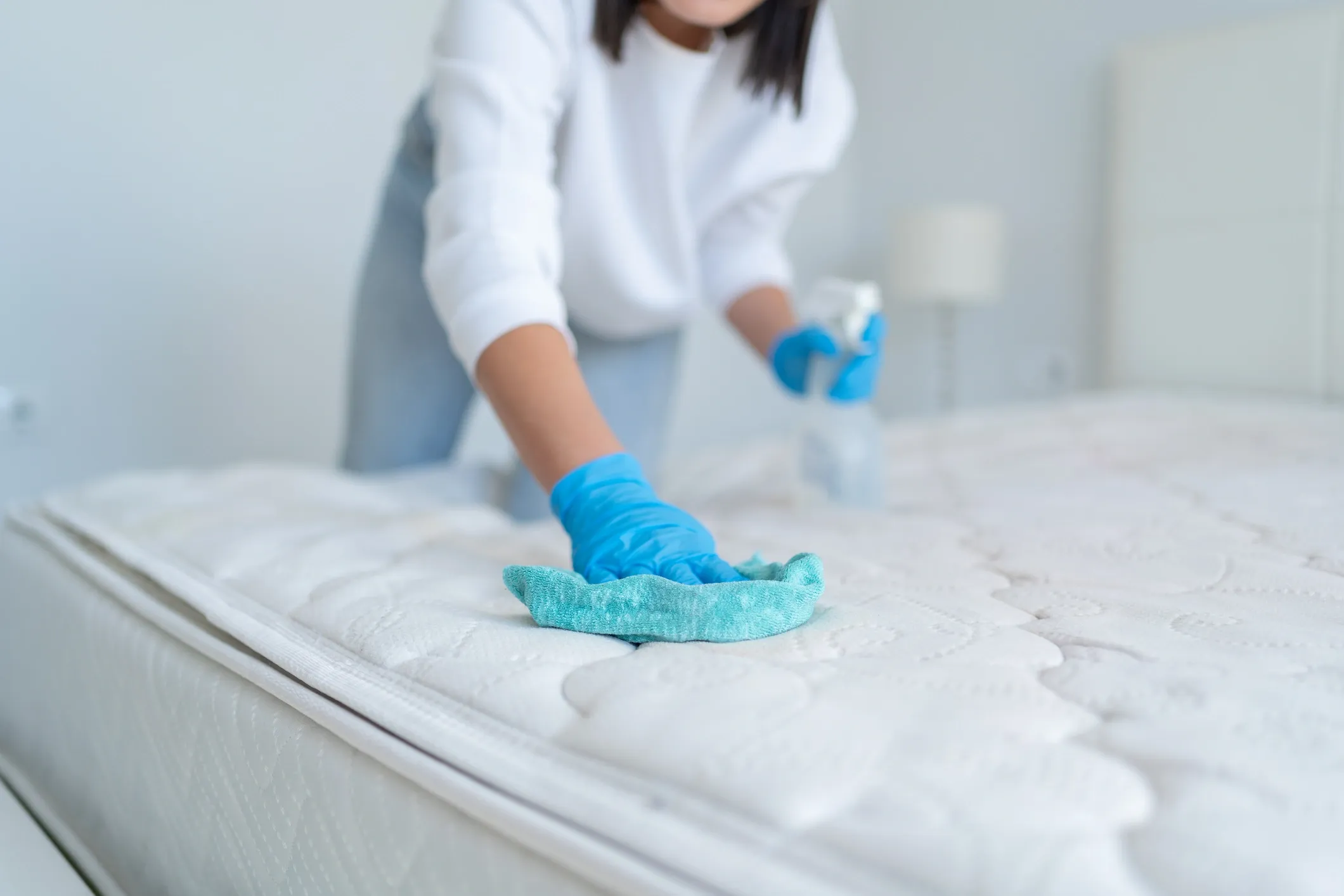
- Apply the solution to a clean white cloth, not directly to the mattress. A mattress absorbs liquid far more readily than carpet, and direct application can push the stain deeper into the foam layers.
- Blot the stained area firmly, starting at the outer edge and working inward in slow, deliberate motions. Press down, hold for a few seconds, and lift straight up each time.
- Switch to a clean section of cloth with every few blots to avoid redepositing the vomit back onto the mattress surface.
- Continue blotting until no more stain transfers onto the cloth. This is likely to take more rounds than you expect—stick with it.
- Rinse by blotting with a clean cloth dampened with plain cold water. Removing all soap residue from the mattress is important—soap left in the foam breaks down slowly and can cause an unpleasant smell over time.
- Blot as dry as possible with a clean dry cloth, pressing firmly. Then move to Method 2 (baking soda) immediately to draw out remaining moisture and begin odor neutralization—dish soap alone won’t eliminate the smell.
Method 2: Baking Soda (Best for Moisture Absorption and Odor Neutralization)
Baking soda is the single most important tool in mattress vomit cleanup—not because it aggressively removes stains, but because it draws moisture out of the foam and neutralizes the acidic odor compounds in vomit simultaneously. It should follow every wet cleaning method as the drying and deodorizing step.
- After blotting the area as dry as possible, sprinkle a thick, even layer of baking soda directly over the entire affected area—and a few inches beyond it, since moisture spreads further than the visible stain.
- Press the baking soda lightly into the mattress surface with a clean cloth or gloved hand so it’s in contact with the damp material rather than just sitting on top.
- Leave it for a minimum of one hour for a fresh stain. For anything with noticeable odor, leave it for several hours. For a severe or dried stain, leave it overnight—the longer it sits, the more moisture and odor it absorbs.
- Vacuum thoroughly once the baking soda has dried completely. Use the upholstery attachment and make several slow passes to pull all the powder out of the mattress surface.
- Assess the area. If odor or staining remains, follow up with one of the stronger methods below before considering the job done.
Method 3: White Vinegar Spray (Best for Odor on Its Own)
White vinegar is an acid that neutralizes the alkaline odor compounds in vomit directly. It doesn’t mask the smell—it chemically changes the compounds responsible for it. The vinegar smell itself dissipates as it dries, leaving the mattress neutral rather than perfumed. This method works well on its own for mild odor, or as a step between the dish soap treatment and baking soda application for more serious cases.
- After blotting up as much moisture as possible, mix equal parts white vinegar and cold water in a spray bottle.
- Spray the solution lightly but evenly over the entire affected area. You want the surface damp—not saturated. Mattresses don’t dry as easily as carpet, so using too much liquid creates its own problem.
- Blot gently with a clean cloth to work the solution lightly into the surface fibers without pushing it deeper.
- Allow to air dry partially—about 10–15 minutes—so the vinegar can work before you cover it.
- Apply a generous layer of baking soda over the vinegar-treated area immediately after. The baking soda will absorb the remaining vinegar and moisture while continuing to neutralize odor.
- Leave the baking soda for several hours or overnight, then vacuum thoroughly.
Method 4: Baking Soda and Vinegar Combined (Best for Stain and Odor Together)
This method uses the same two ingredients as Methods 2 and 3 but applies them sequentially to get the stain-lifting benefit of the fizzing reaction alongside the odor-neutralizing effect of both ingredients. It’s more aggressive than either alone and works well on stains that have a strong odor alongside visible discoloration.
- Remove solids and blot dry, then sprinkle a generous layer of baking soda over the stained area. Let it sit for five minutes to begin absorbing surface moisture.
- Spray a 50/50 white vinegar and cold water solution directly over the baking soda. It will fizz—this reaction helps lift stain particles upward out of the mattress fibers.
- Let the fizzing reaction complete without disturbing it—usually one to two minutes. Don’t blot during this phase.
- Once fizzing subsides, blot firmly with a clean white cloth, working from the outer edges inward. You should see stain transferring onto the cloth.
- Continue blotting with fresh cloth sections until no more stain or moisture transfers.
- Sprinkle a second, fresh layer of baking soda over the treated area once blotting is complete. This second application draws out the remaining moisture from the reaction and continues neutralizing odor.
- Leave overnight if possible, then vacuum thoroughly in the morning.
Method 5: Hydrogen Peroxide Solution (Best for Stubborn Stains on Light Mattresses)
Hydrogen peroxide breaks down the organic compounds in vomit stains through oxidation—it’s particularly effective on the yellowish discoloration vomit leaves behind. Because it has a mild bleaching effect, it’s best reserved for white or light-colored mattresses. Always test on a hidden area first.
- Complete initial removal and blotting, then treat with dish soap and cold water first to remove as much of the stain as possible before bringing in hydrogen peroxide.
- Mix one part 3% hydrogen peroxide (standard drugstore concentration) with two parts cold water. For a more aggressive treatment on white mattresses, you can add one teaspoon of dish soap to the mixture.
- Apply the solution to a clean cloth and blot onto the stained area—never pour or spray directly onto the mattress, which risks over-saturation.
- Allow to sit for 5–10 minutes. Slight bubbling indicates the oxidizing reaction is breaking down organic compounds.
- Blot firmly with a clean cloth, switching to fresh sections frequently.
- Rinse by blotting with a cold damp cloth to remove all peroxide residue—hydrogen peroxide left in mattress fibers can continue to lighten them.
- Follow up with baking soda (Method 2) to draw out remaining moisture and neutralize any remaining odor. Allow to dry completely.
Method 6: Enzymatic Cleaner (Best for Eliminating Smell Completely)
If the odor is the main problem—especially if previous cleaning attempts have left a lingering smell, or the vomit has been on the mattress for hours before being discovered—an enzymatic cleaner is the most effective solution available. Unlike every other method on this list, enzymatic cleaners don’t dilute or mask odor compounds. They contain live enzymes that biologically break down the organic matter causing the smell at a molecular level. No organic compound, no odor.
- Complete the initial removal and blotting steps, and ideally treat with dish soap and cold water first to remove the bulk of the stain before applying the enzymatic cleaner.
- Read the product label carefully. Enzymatic cleaners vary in concentration and required dwell time. Some need dilution; others are used full strength. Following the specific instructions for your product matters more with enzymatic cleaners than with any other method.
- Apply the cleaner generously to the affected area, making sure it penetrates beyond just the surface fibers. The odor-causing compounds have likely soaked into the foam layers—a superficial application won’t reach them.
- Allow the cleaner to dwell for the time specified—usually 10–15 minutes minimum, longer for severe or dried vomit. Don’t rush this. The enzymes need adequate time to fully break down the organic compounds.
- Blot up excess cleaner with clean cloths, working from the outside in.
- Allow to air dry naturally rather than rinsing immediately. Enzymatic cleaners continue working while wet—letting them dry in place produces better results.
- Follow up with baking soda once the cleaner has partially dried, leave for several hours, then vacuum. This absorbs residual moisture and ensures complete odor elimination.
- Repeat if any smell remains after the mattress fully dries. Severe or deeply soaked vomit may need two applications.
Method 7: How to Clean Dried Vomit from a Mattress
Dried vomit that’s been sitting for hours—or that you discovered the next morning—needs a different starting point. Trying to clean it as if it were fresh doesn’t work. The material has hardened into the fibers and needs to be rehydrated and loosened before any cleaning agent can get to the stain beneath.
- Rehydrate the dried vomit by spraying cold water lightly over the area—just enough to soften the dried material without soaking the mattress. Let it sit for three to five minutes.
- Loosen the softened material with a stiff brush or spoon, working from the outer edges inward. You’re loosening the dried material, not scrubbing—keep the pressure controlled.
- Remove the loosened material by scooping carefully with a spoon or folded paper towel. Vacuum the area with an upholstery attachment once the loosened material is mostly dry and crumbly.
- Apply baking soda over the rehydrated area and allow to sit for 15–20 minutes to absorb the moisture you just reintroduced. Vacuum up.
- Treat the remaining stain with the dish soap and cold water method (Method 1) or the baking soda and vinegar method (Method 4), blotting carefully throughout.
- Apply an enzymatic cleaner (Method 6) as a final step. Dried vomit that has been in the mattress for an extended period almost always has odor compounds that have penetrated the foam—enzymatic treatment is the only method that fully reaches and eliminates them.
- Finish with a final baking soda application, leave for several hours or overnight, then vacuum completely.
Method Comparison at a Glance
| Method | Best For | Addresses Odor | Safe for All Mattresses |
|---|---|---|---|
| Dish soap + cold water | Fresh stains, all mattress types | Partially | Yes |
| Baking soda | Moisture absorption, mild odor | Yes | Yes |
| White vinegar spray | Odor neutralization | Yes | Yes |
| Baking soda + vinegar | Stain and odor together | Yes | Yes |
| Hydrogen peroxide | Stubborn stains, discoloration | Partially | Light mattresses only |
| Enzymatic cleaner | Complete odor elimination | Fully | Yes |
| Dried vomit method | Old, set-in messes | With follow-up | Yes |
Drying the Mattress Properly (This Step Is Non-Negotiable)
Getting the mattress fully dry after cleaning is just as important as the cleaning itself. A damp mattress grows mold and mildew—which smells far worse than vomit and is a genuine health concern.
- Use a fan directed at the mattress surface to accelerate drying. A box fan on high pointed directly at the treated area cuts drying time significantly.
- A hairdryer on the cool setting can be used for targeted drying of a specific area—never use the hot setting, which sets stains and odors.
- Open windows to improve air circulation in the room.
- Don’t replace bedding until the mattress is completely dry—not just surface dry, but dry throughout. Press a dry cloth firmly into the treated area and check for any residual dampness. For thick foam mattresses, this can take several hours.
- Stand the mattress on its side if possible to allow air circulation on both sides simultaneously.
Protecting Your Mattress Going Forward
A waterproof mattress protector is the single most effective thing you can do to prevent future damage. A quality protector creates a waterproof barrier between spills and the mattress, meaning any future accident—vomit, spilled drinks, anything—stays on the surface and never penetrates the foam. They’re washable, inexpensive relative to a mattress, and eliminate the entire problem of deep staining and odor.
If you don’t have one, buy one now—before the next incident.
FAQ
Why does my mattress still smell after cleaning? The most common reason is that the vomit penetrated into the foam layers beneath the surface, and surface cleaning didn’t reach it. An enzymatic cleaner applied generously enough to reach the deeper layers—not just the surface—is the solution. If the smell persists after two enzymatic treatments, the vomit may have soaked into the mattress core, which likely requires professional cleaning.
Can I use a steam cleaner on mattress vomit? No. Steam uses heat, and heat permanently sets protein-based stains and odors into foam and fabric. It will make both the stain and the smell significantly worse and harder to remove.
How long does it take for the smell to go away? With proper treatment—particularly an enzymatic cleaner followed by a thorough baking soda application—the smell should be gone or nearly gone once the mattress is fully dry. If the smell remains after the mattress has dried completely, repeat the enzymatic treatment.
Is it safe to sleep on the mattress after cleaning? Once the mattress is completely dry and any cleaning product residue has been fully removed or neutralized, yes. Make sure the baking soda has been thoroughly vacuumed and the mattress is dry all the way through before replacing bedding.
The Bottom Line
Vomit on a mattress is manageable if you work through it systematically. Remove the solids first, blot—never scrub—and never use hot water at any stage. Dish soap handles the initial stain, baking soda draws out moisture and neutralizes surface odor, and an enzymatic cleaner is what eliminates smell that’s penetrated the foam. Get the mattress fully dry before replacing bedding, and invest in a waterproof mattress protector so the next incident stays on the surface where it’s easy to handle.
Enjoyed this project? Get even more DIY ideas that save (and make) you money.
Join our free newsletter for profitable DIY projects, clever cleaning hacks, home ideas, and creative crafts delivered straight to your inbox.
✓ Free forever • No spam • Unsubscribe anytime