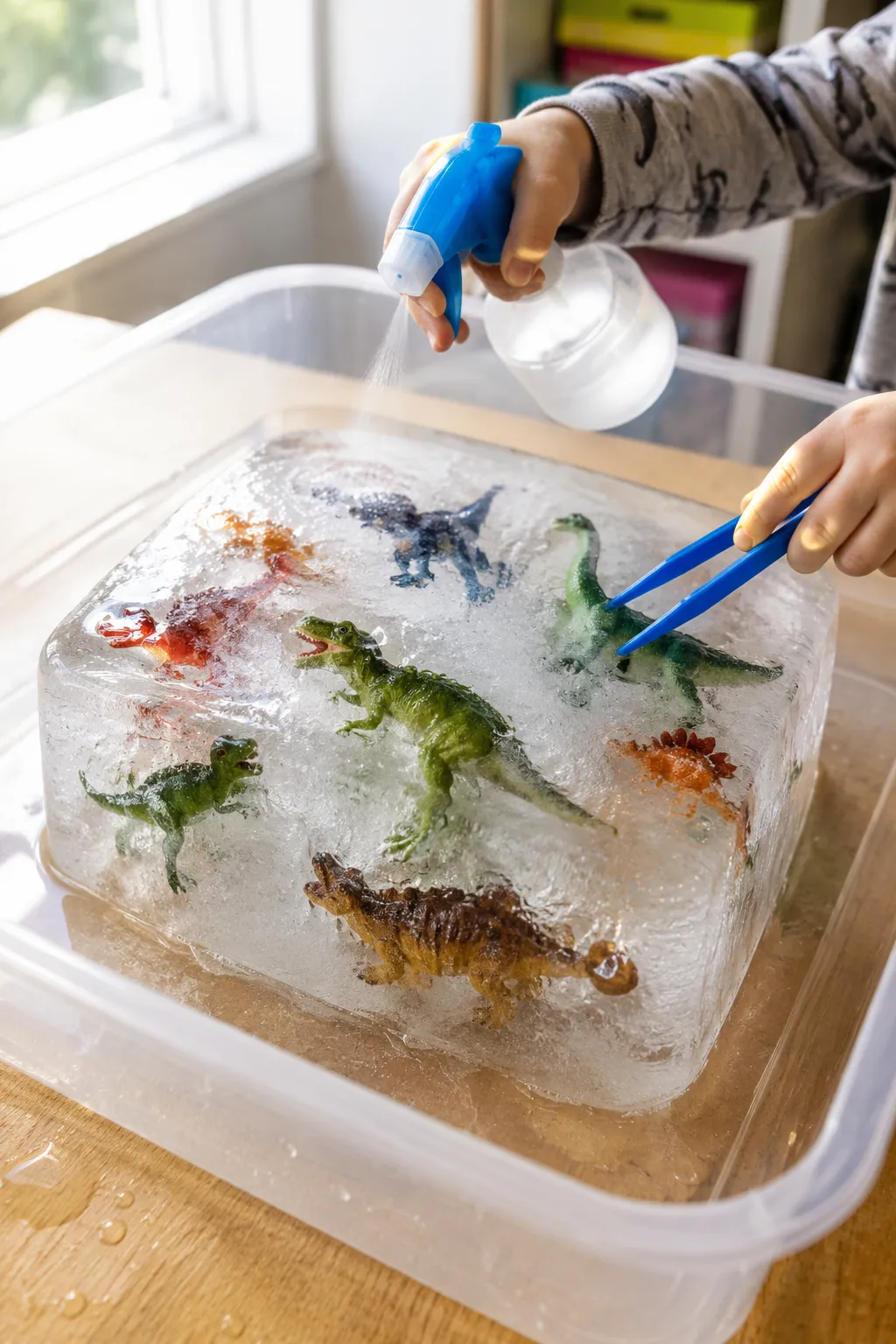
If you’ve ever needed 45 minutes of genuine, screen-free focus from a toddler or preschooler, this is it. The frozen toy rescue activity is exactly what it sounds like: small toys frozen inside a block of ice, and kids have to “rescue” them using tools and warm water. Simple premise. Wildly effective results.
What makes it work isn’t just the novelty—it’s the combination of sensory play, problem-solving, and that irresistible feeling of being on a mission. Kids aren’t just splashing in water; they’re rescuing something. That narrative hook changes everything about how long they stay engaged.
It also costs almost nothing. You’re working with water, a freezer, and toys you already own. No kit to buy, no complicated setup—just a little planning the night before.
What Is the Frozen Toy Rescue Activity?
At its core, this is a sensory bin meets science experiment. You freeze small plastic toys inside water (in a container, muffin tin, or individual cups), then give kids tools to melt or chip the ice away and free the toys. The “rescue” framing turns it from a simple sensory activity into dramatic play—and dramatically increases how long they stay engaged.
It works beautifully for ages 2 through 7, though older kids can get more involved in the science side of things. Why does salt melt ice faster? Why does warm water work better than cold? These aren’t just fun questions—they’re real chemistry, and kids absorb it naturally when they’re the ones running the experiment.
What You’ll Need
You don’t need much, and most of it you probably already own:
- Small plastic toys – dinosaurs, animals, LEGO figures, or foam letters work great
- A container – a loaf pan, silicone muffin tray, or large plastic cups
- Water – enough to fully submerge the toys
- Tools for rescue – spray bottles, droppers, spoons, small brushes, plastic tweezers
- Melting agents – warm water, salt, or both
- A tray or bin to contain the mess (don’t skip this step)
Optional add-ons: food coloring in the water before freezing for extra visual drama, or small plastic gems mixed in to increase the treasure-hunt feeling.
How to Set Up the Frozen Toy Rescue Activity
Step 1: Choose and place your toys. Pick small plastic toys that won’t be damaged by prolonged water exposure. Place them in your container spread out so each one becomes its own individual rescue mission rather than a frozen clump. This small detail makes the activity last significantly longer because kids feel a sense of completion with each toy they free.
Step 2: Add water slowly and carefully. Pour water over the toys gently so they don’t all float to one side of the container. If toys keep floating up, weigh them down lightly with a spoon while the water freezes into a slushy consistency, then remove the spoon before it freezes solid.
Step 3: Freeze in layers for maximum drama. For the best results, don’t just fill the container and freeze once. Add a thin layer of water, freeze until slushy, press toys into position, then add another layer of water and freeze again. Layered ice looks stunning when it starts melting and dramatically extends the rescue session.
Step 4: Freeze completely overnight. This takes a minimum of 4–6 hours, but overnight is strongly preferred. A shallow freeze will melt within minutes—you want solid, thick blocks that take real effort and time to work through.
Step 5: Release the ice block cleanly. Run the outside of the container under warm water for 10–15 seconds until you feel it loosen. Flip it gently into your sensory bin or onto a rimmed baking sheet. It should slide out in one satisfying block.
Step 6: Set up the rescue station before calling the kids over. Fill spray bottles with warm water. Put salt in a small bowl with a spoon. Set out any digging tools and let your child choose their own strategy. Resist the urge to over-explain—part of the deep engagement comes from kids figuring out what works through trial and error.
Step 7: Step back and let them rescue. They’ll experiment, get frustrated, problem-solve, and cheer loudly when a toy breaks free. Your job is mostly to refill the warm water when the bottle runs out and watch the focus happen.
Frozen Toy Rescue Science: What Kids Are Actually Learning
This isn’t just a way to burn time—though it does that beautifully. When kids spray warm water on ice and watch it melt faster than cold water does, they’re observing heat transfer in action. When they sprinkle salt and see the surface pit and crack almost immediately, they’re watching freezing point depression happen in real time—the exact same science behind why roads get salted in winter.
For toddlers, the learning is entirely sensory: the cold, the wet, the texture change as smooth ice becomes rough and pitted. For older preschoolers and kindergarteners, you can introduce simple hypothesis questions: “Which do you think will melt it faster—salt or warm water? Let’s test it.” Suddenly it’s a controlled experiment, and they came up with the idea themselves.
Best Toys to Freeze for This Activity
Not all toys are created equal here. The best ones give kids enough emotional investment that they’re genuinely motivated to do the work of freeing them:
- Dinosaurs and jungle animals – classic for a reason; kids are emotionally invested in “saving” creatures
- Foam letters or numbers – sneaks in early literacy without feeling like a lesson
- Superhero or LEGO minifigures – perfect for the rescue mission narrative
- Plastic gems and “treasure” – turns it into a pirate treasure hunt; works especially well for ages 4 and up
- Avoid anything with paper stickers, painted details that chip easily, or any electronic components
Quick Fixes for Common Problems
| Problem | Most Likely Fix | Alternative Approach |
|---|---|---|
| Toys float to the top during freezing | Freeze in thin layers, pressing toys down between each stage | Use heavier toys like chunky rubber animals |
| Ice melts too fast (activity ends in 10 minutes) | Use a deeper container next time; freeze a thicker block | Make 3–4 smaller blocks and introduce them one at a time |
| Child loses interest quickly | Add a “rescue log” — draw each freed toy on paper | Switch to a themed framing (dino rescue, treasure hunt) |
| Too much water mess indoors | Set a large rimmed baking sheet inside a plastic storage bin | Move setup outside or into the bathtub |
| Salt irritates sensitive skin | Skip the salt and use only warm water spray bottles | Offer silicone gloves as “rescue gear” |
| Ice sticks to the container | Run warm water over outside of mold for 15–20 seconds before releasing | Lightly grease the mold with cooking spray before filling |
Frozen Toy Rescue Variations Worth Trying
Color-layered ice: Add different food coloring to each layer of water before freezing. As kids melt through each layer, they discover new colors underneath—it doubles as color mixing play and makes the ice visually gorgeous.
Dino egg rescue: Freeze small dinosaurs inside water balloons instead of a container. Peel away the balloon once frozen and kids have a smooth “dino egg” to crack open. Very dramatic, very popular, endlessly repeatable.
Arctic animal rescue: Freeze polar bear and penguin toys with blue food coloring in the water and frame the whole session as a rescue mission from a melting ice cap. An easy, natural conversation starter about animals and habitats.
Winter sensory bin combo: Set up the ice blocks inside a bin filled with fake snow (two parts baking soda, one part hair conditioner) for a full Arctic sensory experience. The contrast between the soft snow texture and hard ice makes it even richer.
Tips to Make the Activity Last Longer
The most common complaint is that it ends too quickly. A few small changes at the prep stage fix this almost completely.
Freeze your toys deep inside a large, thick block rather than a shallow layer. A loaf pan or large yogurt container creates a block that can hold a child’s attention for 45 minutes to an hour, while a thin layer in a dish melts in under 10.
Introduce multiple small blocks one at a time rather than all at once. Each completed rescue feels like a win, and pulling out the next block resets the excitement.
Add a “rescue log” — a simple sheet of paper where kids draw or write the name of each toy they free. This extends the activity by 15–20 minutes and transitions naturally into fine motor and literacy practice.
FAQ
How far in advance can I prep the frozen blocks? Days or even weeks ahead. Once frozen solid, pop them out of the mold, seal them in a zip-lock bag, and store them in the freezer. Pull one out whenever you need it—no advance planning required on the day.
Is this activity safe for 18-month-olds? With supervision, yes. Skip the salt for very young toddlers and use only large toys with no small detachable parts. Chunky rubber ducks or large plastic animals are ideal for this age group.
What’s the easiest cleanup method? Set up outside whenever weather allows. Indoors, a large rimmed baking sheet sitting inside a plastic storage bin catches nearly everything. Keep a stack of old towels nearby for hands and floor drips.
Can I refreeze the toys and do it again? Absolutely—and kids will ask you to. Wash the toys, dry them, and freeze a fresh block. Many families keep a rotation of frozen blocks in the freezer and pull them out as needed throughout the week.
Conclusion
The frozen toy rescue activity earns its reputation because it works on every level: it’s independent, it’s deeply engaging, it teaches real science concepts without feeling like school, and it requires almost zero skill to set up. Freeze the blocks the night before, set everything out in the morning, and watch a preschooler stay completely absorbed while you drink an entire hot cup of coffee uninterrupted. Set it up once and you’ll be making frozen blocks on permanent rotation.
Enjoyed this project? Get even more DIY ideas that save (and make) you money.
Join our free newsletter for profitable DIY projects, clever cleaning hacks, home ideas, and creative crafts delivered straight to your inbox.
✓ Free forever • No spam • Unsubscribe anytime