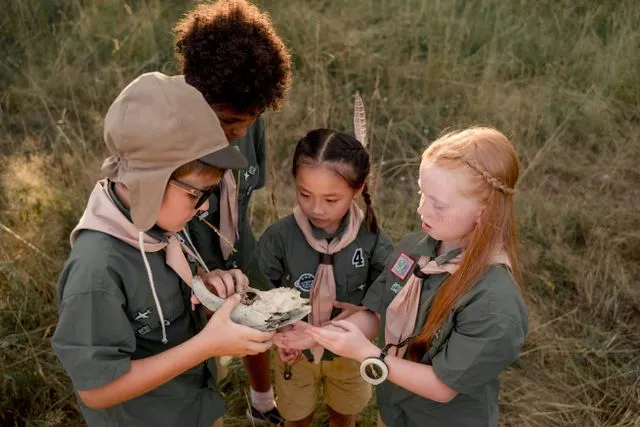
Getting kids genuinely excited about going outside is one of those parenting wins that feels disproportionately satisfying. Not “fine, I’ll go outside” excited—actually running-to-put-their-shoes-on excited. A nature scavenger hunt does that reliably in a way that just saying “go play outside” rarely does, because it gives kids a mission. And kids with a mission are a completely different creature from kids without one.
The best part is that this activity works almost anywhere. Your backyard, a local park, a hiking trail, a beach, even a neighborhood walk—nature is everywhere once you start looking for it, and that’s exactly the mindset a scavenger hunt builds.
Why Nature Scavenger Hunts Are So Good for Kids
Before diving into the how, it’s worth understanding why this activity punches so far above its weight in terms of developmental value—because it genuinely does, and knowing that makes it easier to prioritize over easier alternatives.
Scavenger hunts build observation skills that most kids don’t develop naturally in a world full of screens. Looking carefully at the ground, under leaves, at tree bark, and up into branches requires a quality of attention that’s genuinely rare in childhood today. Kids who do this regularly start noticing things everywhere—on the way to school, in parking lots, in the garden—because the habit of looking carries over.
They also build scientific thinking without feeling like school. When a child picks up a rock and turns it over, notices the texture, wonders why it’s that color, or finds a bug underneath it—that’s science. No worksheet required.
For mixed-age groups, scavenger hunts are one of the rare activities where a 4-year-old and a 9-year-old can genuinely play together because the list can have items accessible to both.
Nature Scavenger Hunt Ideas by Age Group
One list does not fit all ages, and this is where most scavenger hunts fall flat. A list written for a 7-year-old overwhelms a toddler and bores a 10-year-old. Here’s how to calibrate by age.
Toddlers and Preschoolers (Ages 2–4)
Keep it visual and concrete. Draw pictures instead of writing words, or print photo cards. Focus on things that are easy to find and satisfying to touch.
- Something soft
- A yellow flower
- A rock
- A leaf bigger than your hand
- A stick
- Something that smells good
- A bug (find it, don’t catch it)
- Something round
- Mud or dirt
- A bird (spot one flying or sitting)
Early Elementary (Ages 5–7)
This age group can handle a written list and loves checking things off. Add a little challenge but keep the items findable.
- Three different shaped leaves
- An animal home (nest, burrow, or hole)
- Something a bird might eat
- A feather
- Two rocks that look completely different
- A spider web
- Something that makes a sound in the wind
- A seed or seed pod
- Bark with an interesting texture
- Something that was once alive but isn’t anymore
Older Kids (Ages 8–12)
Add observation challenges that require looking more carefully and thinking more critically.
- An insect that isn’t an ant or a bee
- Evidence that an animal has been here (tracks, droppings, nibbled leaves)
- Three types of clouds
- A plant growing where it probably shouldn’t
- Something that shows decomposition
- A natural pattern (spirals, stripes, symmetry)
- A living thing smaller than your thumbnail
- Two plants competing for the same space
- Something that doesn’t belong in nature (human-made litter counts)
- Sounds you can hear but not see the source of—name them all
How to Run a Nature Scavenger Hunt
The setup takes about five minutes, and the payoff is usually 30–60 minutes of engaged outdoor time with very little adult involvement required. Here’s how to run it well.
Decide on collecting vs. observing before you start. Some scavenger hunts have kids bring items back—a leaf, a rock, a seed. Others ask kids to find, observe, and check off without taking anything. Both work, but decide in advance so kids aren’t confused. For protected nature areas like national parks or nature reserves, observing only is the right call.
Print or draw the list and give each child their own copy. Sharing a single list causes conflict within about four minutes. Each child having their own list—even an identical one—changes the dynamic entirely and turns it into a personal quest.
Set a clear boundary for the search area before kids run off. In a park this might be “between the big oak tree and the fence.” In a backyard it’s the whole yard. Kids do better with defined space than open-ended roaming, and it keeps younger ones safe.
Use a clipboard and pencil or a small bag for collecting. The physical act of checking something off or dropping a found item in a bag is deeply satisfying and keeps momentum going. A phone with a checklist app technically works but loses something in the tactile experience.
Don’t hover. The whole point is that kids are looking, exploring, and noticing independently. Stay nearby for safety but resist the urge to point things out. If a child is stuck, ask “where haven’t you looked yet?” rather than leading them to the answer.
How to Make It Work in Different Locations
Backyard: Perfect for a quick 20-minute version on a Tuesday afternoon. Keep the list short (8–10 items) and focus on things you know are present. A backyard hunt can become a weekly ritual with a rotating list.
Local park or nature trail: More variety means a longer, more ambitious list is appropriate. This is the ideal setting for the older-kids list above. Bring a field guide or download a free plant/insect ID app on your phone for when curiosity goes beyond the list.
Beach or coastal area: Swap standard nature items for beach-specific ones—a shell with something still living in it, something smooth from the waves, seaweed, a crab hole, something transparent, a piece of driftwood. The list needs to match the environment completely.
Urban neighborhood walk: Yes, this works in a city too. Look for cracks in pavement where plants are growing, pigeons, ants, cloud shapes, moss on a wall, a tree with interesting bark, a spider web in a corner. Nature is genuinely everywhere once you’re looking for it.
Rainy day version (just after rain): Puddles, worms on the pavement, snails, the smell of wet earth, water droplets on leaves, mud. Rain changes the whole ecosystem temporarily and kids find completely different things than they would on a dry day.
Ways to Make It More Exciting
A basic list is enough for most kids, but a few small additions dramatically increase engagement—especially for repeat plays or for kids who are initially reluctant.
Add a camera challenge. Give older kids a phone or basic digital camera and ask them to photograph each item instead of (or in addition to) checking it off. This adds a creative layer and gives them something to look back on.
Make it a team competition. Two teams, identical lists, first team to find everything wins. This works brilliantly for birthday parties or groups of kids who need a little competitive energy to stay engaged.
Add bonus mystery items. Include 2–3 items on the list that are deliberately vague or poetic—”something that feels like time has passed,” “something that surprised you,” “the most beautiful thing you can find.” These spark real thinking and generate the best conversations afterward.
Create a nature journal entry after. When kids get back inside, ask them to draw one thing they found that they’d never noticed before. This locks in the observation and gives the hunt a satisfying conclusion.
Seasonal versions keep it fresh. A spring hunt looks for new growth, insects waking up, and birds building nests. A fall hunt looks for changing colors, seed pods, animal preparation for winter. Same format, completely different content—and it builds seasonal awareness over time.
Quick Fixes for Common Problems
| Problem | Most Likely Fix | Alternative Approach |
|---|---|---|
| Kids lose interest after 10 minutes | List is too long or too hard—simplify and shorten it | Add a small reward for completion to maintain motivation |
| Younger kids frustrated they can’t find items | Swap written lists for picture-based cards they can match visually | Pair them with an older child as a “nature buddy” |
| Kids argue over who found something first | Give each child an identical personal list—no shared hunting | Assign each child different colored items to find |
| One child races through while others fall behind | Add a “describe it in detail” rule before checking off each item | Give the fast finisher bonus challenge items to find |
| Kids start collecting everything and overpicking plants | Set collecting rules before you start—max one of each item | Switch to an observe-and-photograph-only format |
| Hunt ends too fast for older kids | Add location-based clues that turn it into a mini treasure hunt | Require kids to sketch each item found before moving on |
What to Do With What They Find
If you did a collecting version, don’t just let the items get abandoned on the doorstep. A few minutes of follow-up extends the value of the whole activity and makes kids feel like their finds actually mattered.
Lay everything out on a table and sort it together by size, texture, color, or type. This turns into a natural science conversation without any effort. Look up one thing that surprised them—what type of seed is that? What insect left those marks on the leaf? A free app like iNaturalist can identify almost anything from a photo in seconds and genuinely amazes kids every time.
Press interesting leaves or flowers between the pages of a heavy book and check on them in two weeks. Make a nature display on a windowsill. Keep a running tally of how many different types of insects or birds you’ve spotted across multiple hunts. These small rituals turn a one-off activity into an ongoing relationship with the natural world around them.
FAQ
What is the best age to start nature scavenger hunts? As young as 2, with a picture-based list and a grown-up alongside them. The activity scales up beautifully with age—there’s no point at which kids outgrow it if the list is calibrated correctly. Many families do versions of this well into the teenage years on camping trips and hikes.
How long should a nature scavenger hunt last? Aim for 20–30 minutes for toddlers and preschoolers before attention starts to waver. Older kids can sustain 45–60 minutes easily, especially on a trail or in a varied environment. A list of 10–12 items is about right for most age groups.
Do I need to buy anything to run a nature scavenger hunt? Nothing at all. A piece of paper with a handwritten or printed list and a pencil is enough. A small paper bag for collecting adds to the experience but isn’t required. This is genuinely one of the most zero-cost activities that exists.
What if kids can’t find everything on the list? That’s fine—and worth saying out loud to kids before you start. Not finding something is still observation. “We didn’t find a feather today—why do you think that is?” is a more interesting conversation than just finding the feather. Make clear that the goal is looking carefully, not checking off every single box.
Can this work for one child alone? Absolutely. Solo scavenger hunts are actually great for independent play and work especially well for kids who need a little structure to feel comfortable playing outside on their own. Give them their list, set the boundary, and let them go.
Conclusion
A nature scavenger hunt for kids works because it transforms aimless time outside into purposeful exploration—and purposeful exploration is where real curiosity grows. You don’t need a forest or a national park. You need a list, a pencil, and about five minutes to set it up. The rest takes care of itself. Do it once and you’ll find yourself keeping a stack of lists ready to pull out on any afternoon that needs rescuing.
Enjoyed this project? Get even more DIY ideas that save (and make) you money.
Join our free newsletter for profitable DIY projects, clever cleaning hacks, home ideas, and creative crafts delivered straight to your inbox.
✓ Free forever • No spam • Unsubscribe anytime