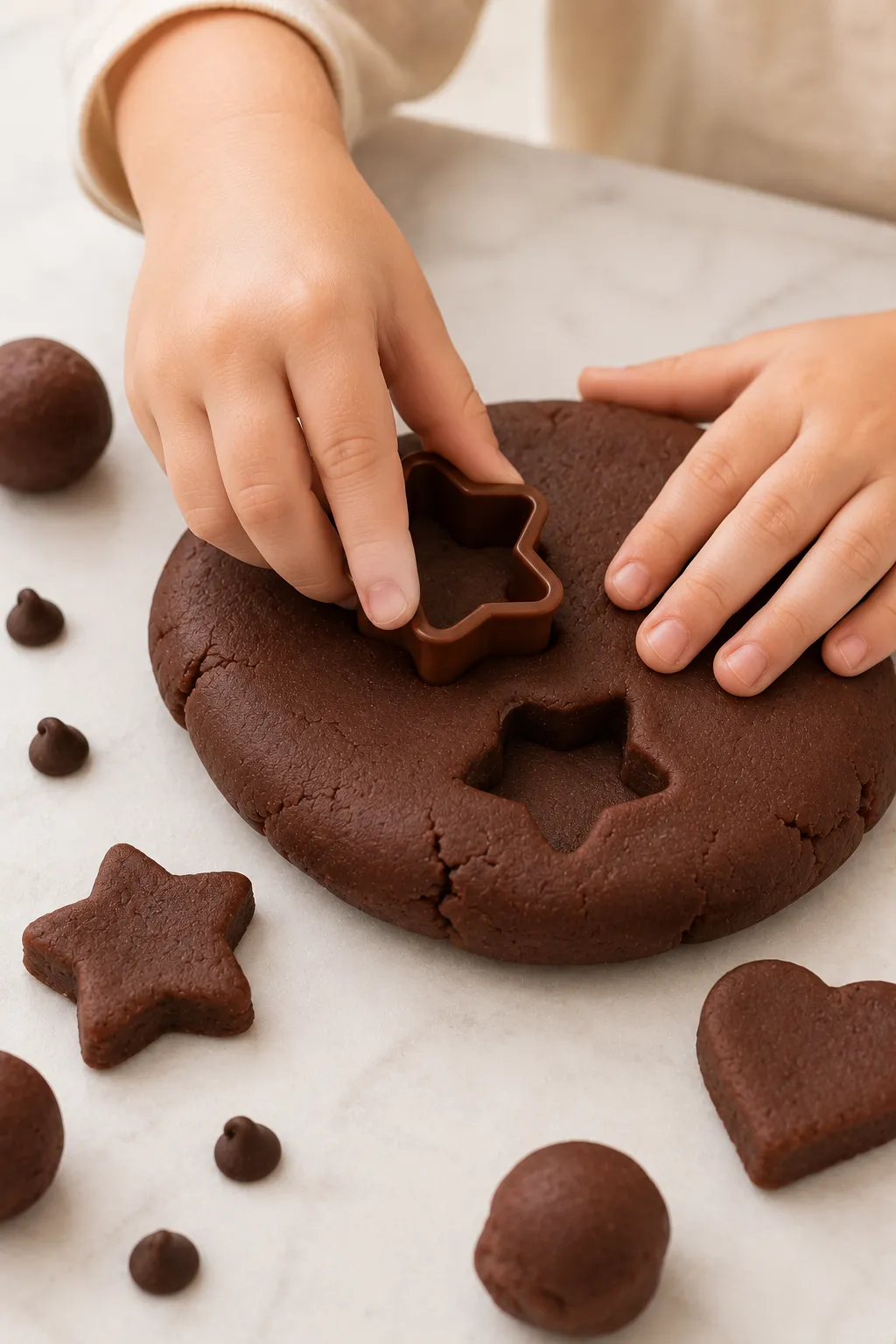
There’s a specific kind of magic that happens the moment you mix cocoa powder into a basic playdough recipe. The whole room suddenly smells like a bakery, the dough turns a rich, deep brown that looks almost exactly like actual chocolate, and kids who were lukewarm about regular playdough suddenly can’t stop touching, smelling, and yes, occasionally tasting this version. It’s one of those crafts that engages more senses at once than most others, which is part of why it tends to hold attention longer than a standard batch of playdough.
This version comes together two different ways depending on what you’re looking for. A no-cook edible version made with peanut butter or a similar base gives you something genuinely safe to eat, perfect for younger kids who still mouth everything during play. A stovetop version made the traditional playdough way, with flour, cream of tartar, and oil, isn’t meant to be eaten but produces a smoother, longer-lasting dough with a more classic playdough texture. Here’s how to make both.
Edible Chocolate Playdough (Safe to Eat)
This version is built on the same principle as peanut butter playdough, just with cocoa powder added for that rich chocolate color and smell. It’s the better choice for babies, toddlers, or any kid still likely to put their craft supplies in their mouth.
A quick safety note before starting: this recipe contains peanut butter, so it should only be made in households where peanut allergies aren’t a concern, the same way any peanut butter-based recipe needs that consideration before it’s handed to a group of kids outside your own home.
What you’ll need:
- 1 cup of creamy peanut butter
- 1/3 cup of honey or light corn syrup
- 1/4 cup of unsweetened cocoa powder
- 1 to 2 cups of powdered sugar
- 1/2 cup of nonfat dry milk powder, or finely ground oats as a substitute
How to make it:
Add the peanut butter and honey to a large mixing bowl and stir until fully smooth and combined. This loosens the peanut butter slightly, which makes the next steps easier to work through.
Add the cocoa powder and stir it in thoroughly, making sure there are no dry clumps left sitting in the mixture before moving on. The color should already start looking rich and chocolatey at this point.
Add the dry milk powder, or ground oats if that’s what you’re using instead, and stir until fully incorporated. This step gives the dough structure and helps cut down on the oiliness peanut butter naturally has.
Begin adding powdered sugar a half cup at a time, stirring well after each addition, until the mixture becomes too stiff to stir with a spoon and needs to be kneaded by hand instead.
Switch to kneading directly with your hands, continuing to add powdered sugar gradually until the dough reaches a firm, smooth consistency that doesn’t stick excessively to your fingers.
Knead for another minute or two once the texture feels right, since this final bit of kneading smooths everything out and makes the dough easier to roll, shape, and play with.
Stovetop Chocolate Playdough (Not Edible, But Smoother and Longer-Lasting)
This version follows the same basic method as classic homemade playdough, just with cocoa powder mixed into the dry ingredients before cooking. It’s not meant to be eaten, but it produces a noticeably smoother, more elastic dough that holds up to repeated play for weeks, which makes it the better choice for older kids or for anyone wanting a dough that lasts beyond a single afternoon.
What you’ll need:
- 2 cups of all-purpose flour
- 3/4 cup of unsweetened cocoa powder
- 3/4 cup of salt
- 4 teaspoons of cream of tartar
- 2 cups of water
- 2 tablespoons of vegetable oil
- A few drops of chocolate or vanilla extract (optional, for extra scent)
How to make it:
Combine the flour, cocoa powder, salt, and cream of tartar in a large pot, whisking them together while the pot is still off the heat to make sure the cocoa powder is evenly distributed before any liquid is added.
Add the water and oil to the pot and stir everything together until the dry ingredients are fully incorporated and there are no large lumps remaining.
Place the pot over medium heat and stir continuously. The mixture will start out thin and will gradually thicken as it heats, eventually pulling together into a dough-like mass.
Keep stirring as the dough thickens, since it goes from liquid to a sticky, clumpy texture and then fairly quickly into a solid dough that pulls away from the sides and bottom of the pot. This usually happens within 3 to 5 minutes of consistent stirring over medium heat.
Once the dough has fully come together and is no longer sticky to the pot, remove it from the heat and let it cool for a few minutes, since it will be quite hot directly off the stove.
Once cool enough to handle, knead the dough on a clean surface for a minute or two, which smooths out the texture and gives it that classic stretchy, springy playdough feel.
Add a few drops of chocolate or vanilla extract during this kneading step if you want extra scent beyond what the cocoa powder alone provides.
Why the Two Versions Feel So Different
The peanut butter version stays soft, slightly oily, and pliable because of the fat content in the peanut butter itself, and it never fully dries out the way flour-based dough can, which is part of why it’s better suited to shorter play sessions rather than long-term storage. The stovetop version develops its texture through the cooking process, where the cream of tartar acts as a preservative and the heat changes the starch structure in the flour, creating that smooth, elastic, slightly bouncy texture most people associate with classic store-bought playdough. Neither version is better than the other, they’re just suited to different situations, edible and short-term versus inedible and long-lasting.
Sensory and Play Ideas for Chocolate Playdough
Both versions lend themselves well to a pretend bakery setup, since the color and smell already do most of the imaginative work without needing much extra setup.
Set out small rolling pins, cookie cutters, and a few toy baking trays, and let kids “bake” pretend cookies, cakes, or pastries using the chocolate dough as their base ingredient.
Add a few drops of peppermint extract to a portion of the edible version for a mint chocolate variation, or knead in a small amount of cinnamon for a spiced chocolate version that smells even more like an actual bakery.
For the inedible stovetop version, mix in things like rolled into the dough or pressed onto the surface with play buttons, fake sprinkles, or small plastic beads to mimic chocolate chips or decorative toppings on a pretend dessert.
Pair the dough with small toy bakery tools, like a play whisk, mixing bowl, or piping bag, for a more complete pretend bakery sensory bin.
Quick Fixes for Common Problems
| Problem | Potential Solution | Alternative Approach |
|---|---|---|
| Edible version feels too oily | Knead in more dry milk powder or ground oats to absorb the excess oil | Try a different peanut butter brand, since oil content varies between brands |
| Edible version is dry and crumbly | Knead in a small amount of honey, a teaspoon at a time, until it softens | Add a few drops of water if honey isn’t on hand |
| Stovetop version turned out sticky after cooking | Cook for another minute or two over medium heat, stirring constantly, until it fully pulls together | Knead in a small amount of extra flour once cooled if it’s still tacky |
| Stovetop dough feels dry and cracks when shaped | Knead in a small amount of water or oil, a few drops at a time | Store it in an airtight container right away, since cracking often happens from too much air exposure |
| Cocoa color looks patchy instead of even | Whisk the cocoa powder thoroughly into the dry ingredients before adding any liquid | Knead the finished dough longer, since extra kneading helps even out any remaining color streaks |
| Chocolate smell fades after a few days of storage | Add a few extra drops of chocolate or vanilla extract and knead it through again | Store the dough in a well-sealed container, since exposure to air causes scent to fade faster |
How to Store Chocolate Playdough
The edible peanut butter version stores well in an airtight container at room temperature for about one to two weeks, the same as other peanut butter-based playdoughs. Avoid refrigerating it, since the cold makes it firm up significantly and the texture doesn’t fully recover once it warms back up.
The stovetop version lasts considerably longer, often a month or more, when stored in an airtight container or a sealed zip-top bag at room temperature. If it starts to feel dry or crumbly over time, kneading in a small amount of water usually restores its texture without needing to make an entirely new batch.
FAQ
Is the stovetop version safe if a toddler accidentally eats a small bit?
It won’t cause serious harm in a small accidental amount, since the ingredients themselves are food items, but it’s not intended to be eaten and contains a large amount of salt, which makes it unpleasant tasting and not something kids typically want to eat more than a tiny accidental bite of.
Why does my edible version taste more like peanut butter than chocolate?
This usually means a bit more cocoa powder would help balance the flavor, since peanut butter has a strong taste of its own. Try increasing the cocoa powder slightly next time, or add a touch more powdered sugar to round out the chocolate flavor further.
Can I make the stovetop version without cream of tartar?
Cream of tartar helps the dough hold together and last longer, but a common substitute is doubling the amount of lemon juice or vinegar in place of it, though the texture and shelf life may not be quite as good as the version made with cream of tartar specifically.
Does the chocolate smell fade over time in either version?
Yes, in both versions, though the edible version tends to fade a bit faster given its shorter overall shelf life. Keeping either version in a well-sealed airtight container slows this down significantly compared to leaving it exposed to air between uses.
Can I use dark cocoa powder instead of regular unsweetened cocoa powder?
Yes, dark cocoa powder works in both versions and actually deepens the color even further for a richer, darker chocolate look, though it doesn’t significantly change the texture or how the dough behaves either way.
Conclusion
Chocolate playdough delivers on smell and color in a way that regular playdough just doesn’t, and having two versions, one edible and one not, means you can pick the right one based on the age of the kids you’re making it for and how long you want the dough to last. The edible peanut butter version is perfect for younger kids still prone to tasting their crafts, while the stovetop version gives older kids a smoother, longer-lasting dough that holds up to weeks of play. Either way, expect the kitchen to smell incredible for the next hour, and expect to be asked to make it again pretty soon after.
Enjoyed this project? Get even more DIY ideas that save (and make) you money.
Join our free newsletter for profitable DIY projects, clever cleaning hacks, home ideas, and creative crafts delivered straight to your inbox.
✓ Free forever • No spam • Unsubscribe anytime