Most slime doesn’t have a short lifespan because of anything wrong with the recipe. It goes bad because of how it’s stored between play sessions. Leave it sitting out uncovered for a few hours and it starts drying on the surface. Store it in a container that isn’t fully airtight and it slowly stiffens over days. Leave it damp and sealed in a warm spot and mold shows up within a week. None of these are inevitable, and all of them are preventable with the right storage approach.
The good news is that most slimes, stored correctly, can last anywhere from two weeks to several months depending on the type. Here’s exactly how to do it for every common slime type, what causes each type of deterioration, and how to revive slime that’s already started to go wrong.
Why Slime Goes Bad
Understanding the cause of deterioration makes the storage advice make sense rather than feeling like arbitrary rules.
Drying out is the most common problem and happens when slime is exposed to air. The water component in the slime base evaporates over time, leaving the polymer network stiff and eventually crumbly. This is completely preventable with proper sealing.
Mold growth happens when slime retains too much surface moisture in a sealed container, particularly in warm environments. The damp, nutrient-rich surface of certain slime types (especially fluffy slime made with shaving cream, or any slime that gets handled with dirty or slightly wet hands) is a surprisingly hospitable environment for mold. Mold appears as fuzzy spots, usually black, green, or white, and at that point the slime should be discarded.
Texture changes happen over time even in well-stored slime. Activator concentration continues shifting slowly after the slime is made, which can make it progressively stiffer or stickier over weeks. This is partly inevitable but can be significantly slowed with proper storage.
Contamination from food residue, dirty hands, or mixing incompatible slimes together accelerates both mold growth and texture breakdown faster than anything else.
The Golden Rules of Slime Storage
Regardless of slime type, these principles apply universally.
- Always seal slime completely airtight. This is the single most impactful storage decision. Even a small gap in a container seal dramatically accelerates drying.
- Store at room temperature. Refrigeration stiffens most slimes in ways that are difficult to reverse. Heat accelerates texture breakdown and mold growth.
- Keep slime away from direct sunlight. UV exposure degrades both the polymer structure and any colorants in the slime over time.
- Make sure hands are clean and dry before playing. Dirty or damp hands introduce contaminants and excess moisture that accelerate deterioration more than any storage decision.
- Never mix old slime with new slime. Adding fresh slime to a deteriorating batch just contaminates the fresh batch.
- Store each slime separately. Different slime types stored together can transfer moisture, color, and contaminants between batches.
Best Containers for Storing Slime
The container choice matters more than most people realize.
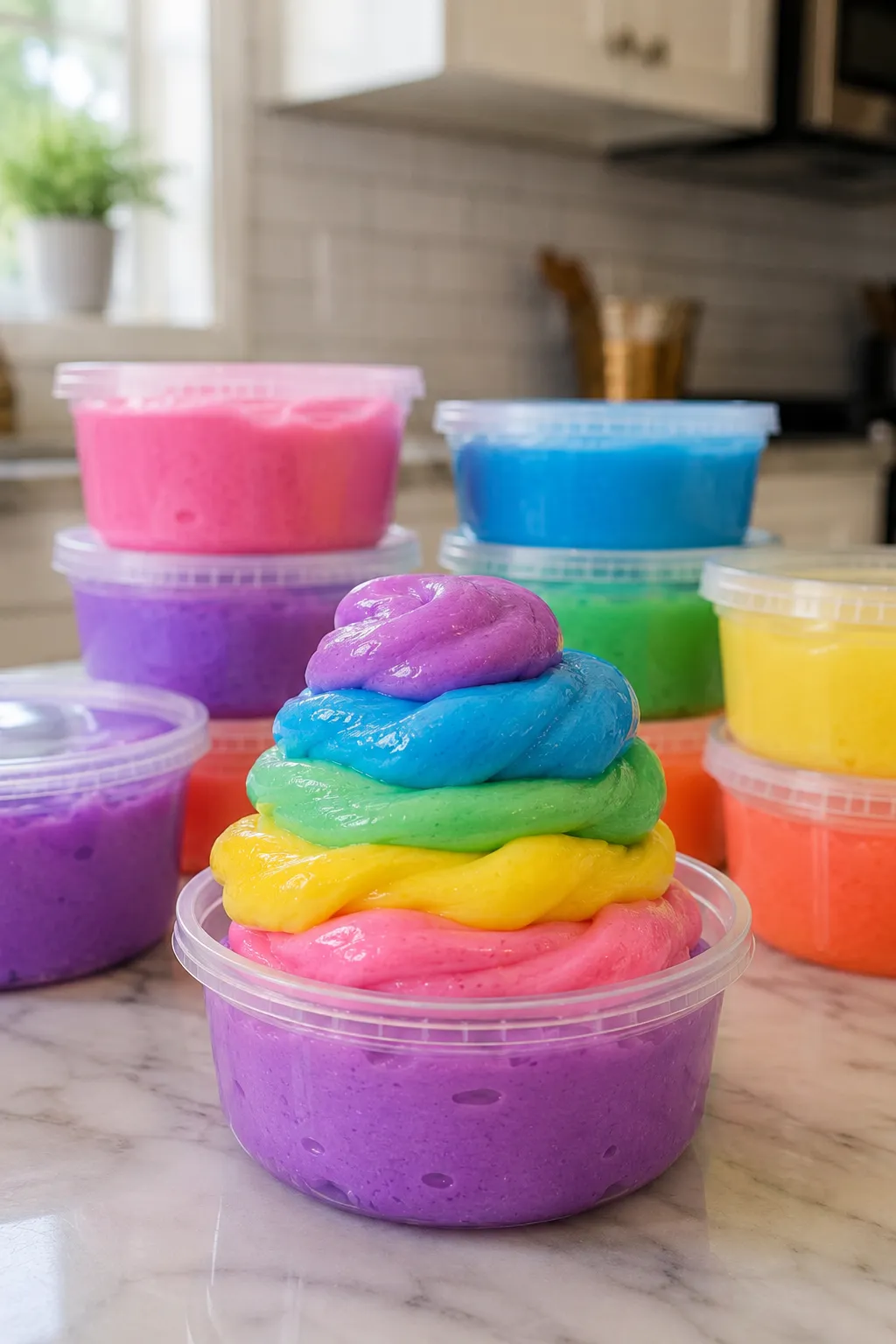
Plastic containers with snap-on lids are the most practical everyday option. Look for containers where the lid clicks firmly shut with no flex when pressure is applied. If you can feel the lid move when you press on it, it isn’t airtight enough for long-term slime storage.
Glass jars with rubber-sealed lids provide the best airtight seal of any container type and are particularly good for display-worthy slimes like galaxy slime or unicorn slime where visual presentation matters. Mason jars with two-piece lids create an excellent seal.
Zip-lock freezer bags with the air pressed out before sealing work well for short-term storage and for flat slimes that don’t need to hold a particular shape. Freezer-grade bags are significantly more airtight than regular zip-lock bags and are worth using for slime specifically.
Original store containers are often not airtight enough for long-term storage, since many are designed to be opened easily rather than sealed completely. Transfer slime from its original packaging to a better container for storage beyond a week.
Avoid: Loosely covered bowls, containers with ill-fitting lids, sandwich bags with weak seals, and any container with a visible gap between lid and body.
How to Store Each Slime Type
Basic White or Clear Glue Slime
Standard white or clear glue slime is the most straightforward to store and the most forgiving if storage isn’t perfect. Drying out is the primary risk.
- Store in a fully airtight plastic container or glass jar.
- Clear glue slime that was left to clear for 24 to 48 hours should be stored with minimal air in the container, since oxygen exposure reverses the clearing process.
- White glue slime stored correctly lasts four to six weeks without significant texture change.
- Clear glue slime stored correctly lasts three to five weeks before beginning to stiffen.
Fluffy Slime
Fluffy slime is the most vulnerable type to storage problems because the shaving cream incorporated into the base contains water and surfactants that continue interacting with the polymer network over time. The foam structure also gradually deflates even in sealed storage.
- Store in an airtight container immediately after making, since fluffy slime begins deflating within hours of air exposure.
- Expect some natural texture change over time regardless of storage quality, since the shaving cream continues breaking down slowly.
- Fluffy slime stored correctly lasts two to three weeks before deflating noticeably.
- If fluffy slime has stiffened during storage, add a small amount of shaving cream and knead through to temporarily restore the fluffy texture.
Butter Slime
Butter slime contains clay or model magic in addition to the standard glue base, which makes it slightly less prone to drying out than regular slime but more prone to stiffening if the clay continues curing inside the sealed container.
- Store in an airtight container.
- Butter slime lasts three to five weeks with proper storage.
- If it stiffens, knead in a small amount of lotion to restore spreadability.
Floam and Fishbowl Slime
Both of these bead-based slimes require the same basic approach as their respective base slimes, with one additional consideration: the beads themselves.
- Store in airtight containers with enough space that the beads aren’t compressed against the lid, since sustained compression can deform foam beads over time.
- Fishbowl slime (hard plastic beads) stores as well as the clear glue base alone, typically three to five weeks.
- Floam (foam micro beads) stores similarly to fluffy slime given the beads’ foam composition, lasting two to three weeks before noticeable texture changes.
Orbeez and Water Bead Slime
Water bead slime is the most perishable type on this list due to the moisture continuously migrating from the beads into the slime base.
- Store in a fully airtight container.
- Expect the base to become progressively thinner over the storage period as bead moisture migrates into it.
- Properly stored water bead slime is at its best for approximately one week.
- When the slime becomes too runny to play with, the beads can be removed, rinsed, and re-soaked for use in a fresh batch.
Galaxy, Unicorn, and Layered Slimes
Multi-color slimes have the same storage needs as their base (usually clear glue), with additional considerations around color preservation.
- Store each color separately if you want to rebuild the layered effect for next time.
- Colors stored together in their layered form will continue slowly blending at boundaries even without play.
- Store in a wide-mouthed jar or container that allows the layered presentation to be visible, since these slimes are partly display pieces.
- Properly stored, these last three to five weeks before significant color blending or texture changes.
Slime With Add-Ins (Glitter, Charms, Confetti)
Add-ins like glitter, confetti, and small charms don’t significantly affect the storage lifespan of the base slime, but a few specific considerations apply.
- Metallic glitter can occasionally cause slight discoloration of the slime over extended storage, since some metallic pigments react slowly with the polymer network.
- Plastic charms and confetti store indefinitely within the slime without any issues.
- Organic or paper-based add-ins like pressed flowers or paper confetti can become a mold risk over time in sealed, slightly moist slime and are best avoided for slimes intended for long storage.
How to Revive Slime That’s Gone Stiff
Slime that has dried out and stiffened during storage can often be revived rather than discarded, particularly if it’s only been stiff for a short period rather than completely dried out.
- Add a few drops of warm water to the stiff slime and begin kneading slowly.
- Continue kneading, adding water one drop at a time, until the slime begins softening and becoming pliable again.
- If the texture improves but becomes sticky, add one drop of contact lens solution at a time while continuing to knead until the stickiness resolves.
- For fluffy slime that has deflated, knead in a small amount of fresh shaving cream after rehydrating with water.
- For butter slime that has stiffened, knead in a small amount of lotion rather than water, since lotion restores the smooth spreadable quality butter slime is known for.
- If the slime is so dried out that it crumbles rather than stretching even after water addition, it’s beyond revival and should be discarded.
How to Tell When Slime Should Be Thrown Away
Not all slime deterioration is reversible, and some signs indicate that a batch should be discarded regardless of how recently it was made.
- Visible mold of any color is an immediate discard. There’s no cleaning mold out of slime.
- Foul or sour smell indicates bacterial or mold growth even if nothing is visible yet.
- Complete crumbling with no cohesion even after water addition means the polymer network has broken down irreversibly.
- Contamination with food or other non-slime substances that can’t be removed.
- Slime that has been played with during illness should be discarded out of basic hygiene caution.
Extending Slime Lifespan: Extra Tips
Beyond the core storage approach, a few additional habits consistently extend how long slime stays in good condition.
Always wash and fully dry hands before playing. The oils, moisture, and bacteria from hands are the biggest external contributors to slime deterioration, and this single habit makes a more significant difference to lifespan than almost any storage decision.
Add a tiny drop of antibacterial hand soap to the slime during kneading, particularly for fluffy slime or any slime made with organic add-ins. This doesn’t affect texture noticeably but significantly slows mold development.
Keep a dedicated slime tool, like a small silicone spatula, for retrieving slime from containers rather than digging in directly with fingers. This reduces hand contamination of the batch significantly compared to direct finger contact with stored slime.
Label containers with the date the slime was made so you always know how old each batch is and can prioritize playing with older batches first.
Store slimes in a consistent location away from temperature changes, since a shelf that heats up in afternoon sun or a spot near a radiator that cycles on and off creates the kind of temperature fluctuation that accelerates texture breakdown.
Quick Fixes for Common Problems
| Problem | Potential Solution | Alternative Approach |
|---|---|---|
| Slime dried out and stiff | Knead in warm water one drop at a time until pliable, then add one drop of activator if it becomes sticky | For fluffy slime specifically, add a small amount of fresh shaving cream after rehydrating |
| Mold appeared on the surface | Discard immediately—mold cannot be safely removed from slime | Prevent by ensuring hands are clean and dry before every play session |
| Slime became sticky during storage | Add one drop of contact lens solution at a time while kneading until stickiness resolves | The container may not have been fully airtight—moisture from the environment was likely absorbed |
| Colors faded or shifted during storage | Store away from direct sunlight which degrades colorants over time | Use gel food coloring rather than liquid, since gel colorants are more lightfast in slime |
| Layered slime blended during storage | Store each color batch separately next time and re-layer before play | Accept that some blending is inevitable in stored layered slime and re-layer from separate batches |
| Slime smells off but no visible mold | The smell indicates bacterial growth—discard the batch | Prevent by washing hands before play and adding a drop of hand soap during the next batch |
| Fluffy slime deflated completely | Add fresh shaving cream and knead through to partially restore fluffiness | The foam structure in fluffy slime deflates inevitably over time regardless of storage quality |
| Container lid isn’t sealing properly | Transfer to a better container with a tighter seal | Place a strip of plastic wrap directly over the slime surface before closing the lid to create a secondary moisture barrier |
FAQs
How long does homemade slime last compared to store-bought?
Store-bought slime often contains preservatives that extend its shelf life beyond what homemade versions achieve, sometimes lasting six months or more unopened. Homemade slime stored correctly typically lasts two to six weeks depending on the type, with standard clear or white glue slime lasting the longest and water bead slime lasting the shortest.
Can I freeze slime to make it last longer?
Freezing isn’t recommended. The freezing and thawing process disrupts the polymer network in slime in ways that typically change the texture permanently, making it either much stiffer or much stickier than it was before freezing. Airtight room temperature storage is consistently better than freezing for all slime types.
Is it safe to store multiple slimes in the same container?
Only if they’re the same type and you don’t mind them blending. Different slime types stored together can transfer moisture and texture characteristics between batches, and different colors will inevitably blend at their contact points. Individual containers per batch is always the better approach.
Why does my slime always seem to get sticky after storage even when I seal it?
Stickiness developing during storage usually means the container isn’t fully airtight and humidity from the environment is being absorbed into the slime, which increases the water content and makes it stickier. Switch to a better-sealing container and the problem typically resolves.
Can I add preservatives to make slime last longer?
A small drop of antibacterial hand soap or a tiny amount of tea tree oil added during the kneading stage acts as a mild preservative that slows mold growth without significantly affecting texture. These aren’t true preservatives but they extend the safe usable lifespan noticeably for slimes prone to mold, particularly fluffy slime.
Closing Thoughts
Slime lasts as long as it does because of what happens between play sessions, not during them. Seal it completely airtight, keep it at room temperature, play with clean dry hands, and store each batch separately. Follow those four principles consistently and most slimes will still be in good condition weeks or even months after being made, rather than turning into a stiff, moldy disappointment three days after the effort of making them.
Enjoyed this project? Get even more DIY ideas that save (and make) you money.
Join our free newsletter for profitable DIY projects, clever cleaning hacks, home ideas, and creative crafts delivered straight to your inbox.
✓ Free forever • No spam • Unsubscribe anytime