You just stripped the bed to wash the sheets and noticed it—a mysterious stain, a faint musty smell, or that general dinginess that creeps in over months of use. Your first instinct might be to reach for the vacuum. But what if you don’t own one, yours is broken, or you’re cleaning a mattress in a spare room where lugging the machine feels like overkill?
Here’s the thing most people don’t realize: a vacuum is convenient, but it’s not actually essential. People were keeping mattresses clean long before vacuums became a household staple, and with the right techniques, you can get a genuinely fresh, clean mattress using nothing more than what’s already in your kitchen or bathroom cabinet.
This guide walks you through everything—from daily freshening to deep-cleaning tough stains—without a vacuum in sight.
Here’s the Real Reason Your Mattress Gets Dirty So Fast
Before jumping into methods, it helps to understand what you’re actually dealing with. A mattress collects grime from multiple sources simultaneously, which is why regular cleaning matters more than most people think.
Every night, the average person sheds about 30,000 to 40,000 dead skin cells per hour. Those cells settle into the fabric, foam, and fibers of your mattress and become a food source for dust mites—microscopic creatures that live in virtually every mattress on earth. Their waste particles are one of the most common household allergens and can trigger sneezing, congestion, and even asthma symptoms.
On top of that, sweat, body oils, and spilled drinks soak into the mattress layers over time, creating the conditions for bacterial growth and that unmistakable stale odor that no amount of fresh bedding can quite mask. Stains—from sweat, blood, or spilled food—oxidize and set deeper the longer they’re left untreated.
The good news: all of this is addressable without a vacuum, using simple household staples that work on the chemistry of what’s trapped in your mattress.
What You’ll Need
Before you start, gather these items—most are already in your home:
- Baking soda (the single most important ingredient in this whole process)
- White vinegar
- Cold water
- Dish soap or laundry detergent
- Hydrogen peroxide (3%, available at any pharmacy)
- Table salt
- Clean white cloths or microfiber towels
- A stiff-bristled brush or clean scrubbing brush
- A spray bottle
- Optional: Essential oils (lavender or tea tree), corn starch, enzyme-based stain remover
Stop Doing This to Your Mattress Before It’s Too Late
A few habits quietly damage mattresses and make cleaning them much harder. If any of these sound familiar, it’s worth changing them now:
Rubbing stains instead of blotting. Rubbing drives liquid deeper into the mattress layers and spreads the stain outward. Always blot—press down and lift, never scrub side to side.
Using hot water on stains. Hot water sets protein-based stains (like blood, sweat, and milk) permanently by denaturing the proteins and bonding them to the fibers. Always use cold or cool water.
Soaking the mattress. A mattress is extremely slow to dry. Saturating it with liquid encourages mold and mildew growth deep inside the foam or springs where air can’t circulate. Use moisture sparingly and always dry thoroughly.
Ignoring it until it smells. By the time a mattress has a noticeable odor, there’s a significant buildup of sweat, bacteria, and mite waste inside it. Cleaning every three to six months prevents the problem from reaching that stage.
Step-by-Step: How to Clean a Mattress Without a Vacuum
Method 1: The Baking Soda Refresh (Best for Odors and General Freshening)
This is your baseline cleaning routine—something you can do every one to three months to keep the mattress smelling clean and reduce allergen buildup. It requires almost no effort and works beautifully even on mattresses that don’t have visible stains.
- Strip all bedding and wash it separately on the hottest setting the fabric allows. Washing sheets and pillowcases in hot water kills dust mites that have migrated there from the mattress surface.
- Bring the mattress outside into direct sunlight if possible, or at minimum open all the windows in the room to maximize airflow. Sunlight is a natural disinfectant and kills a significant portion of bacteria and dust mites on the surface without any chemicals.
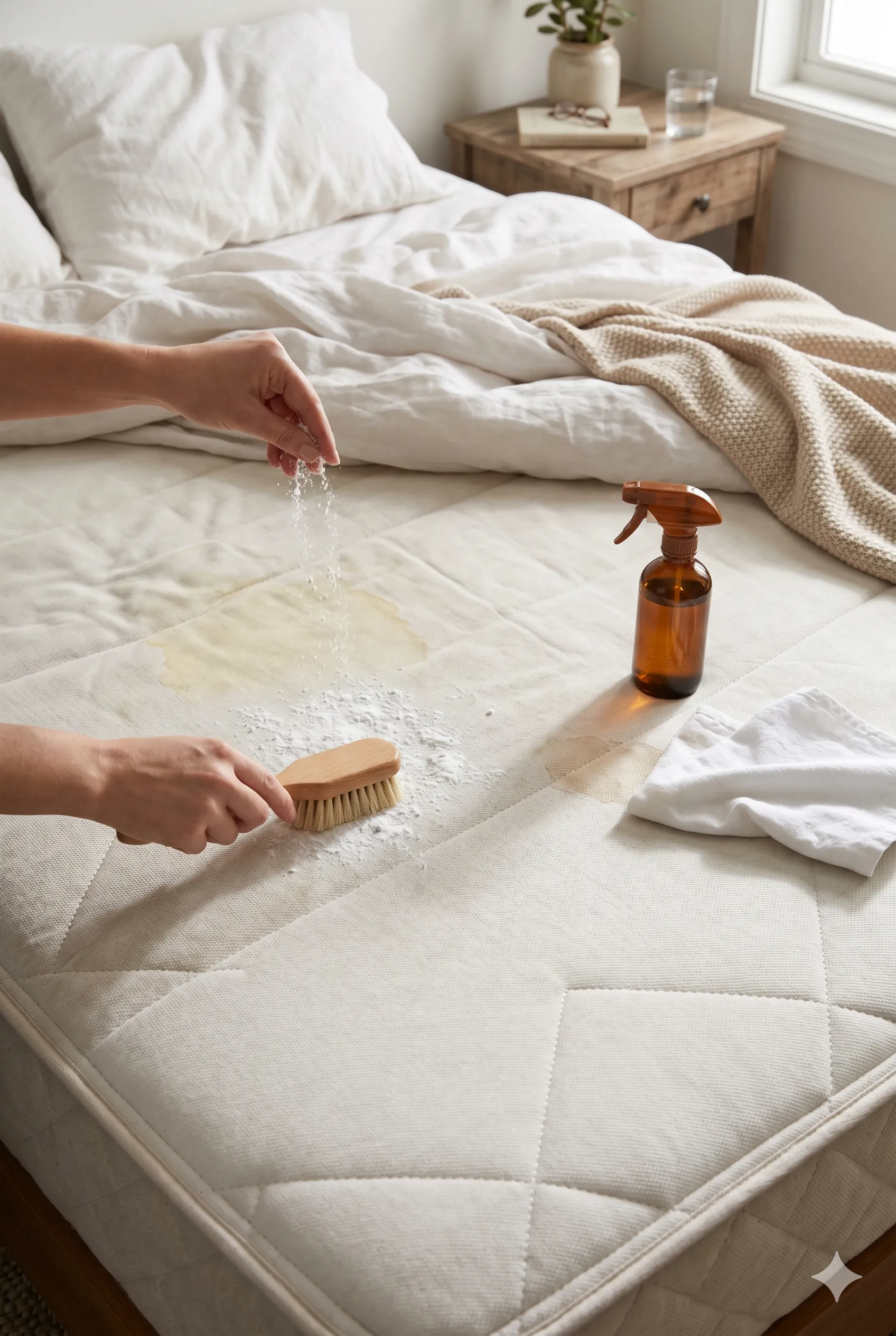
- Sprinkle a generous, even layer of baking soda across the entire surface of the mattress. Don’t be shy—you want a light but visible coating across the whole top. Baking soda is an odor absorber that works by neutralizing acidic and alkaline odor molecules rather than simply masking them.
- For extra freshness, mix five to ten drops of lavender or tea tree essential oil into the baking soda before sprinkling, and stir it well so the oil is distributed evenly. Tea tree oil has natural antimicrobial properties. Lavender adds a pleasant, calming scent and has mild antibacterial qualities as well.
- Use a clean, dry stiff-bristled brush to gently work the baking soda into the fabric surface using light circular motions. This pushes the baking soda into the upper layers of the mattress where odors and moisture accumulate, rather than leaving it sitting purely on top.
- Let the baking soda sit for a minimum of 30 minutes. For a deeper treatment—especially if the mattress has a noticeable odor—leave it for several hours or even a full day. The longer it sits, the more it can absorb.
- Remove the baking soda using a clean, dry stiff brush and brush the powder firmly toward one edge of the mattress, then use a clean cloth to wipe it away. If you have a lint roller, this works excellently for picking up the residue. You can also use the upholstery attachment of a handheld fan to blow the powder loose before brushing.
- Flip the mattress if it’s double-sided and repeat the process on the other side. Single-sided mattresses don’t need flipping, but rotating them 180 degrees (head to foot) every few months extends their lifespan.
Method 2: Dish Soap and Cold Water (Best for Surface Stains)
This gentle method handles light staining from food, drink spills, and general grime without saturating the mattress.
- Mix one teaspoon of dish soap into a cup of cold water and stir gently to create a light foam. You want suds, not a thick soapy mixture—too much soap leaves a residue that attracts more dirt over time.
- Dampen a clean white cloth in the soapy water, wringing it out thoroughly so it’s just barely damp rather than wet. The goal is to apply as little moisture to the mattress as possible while still cleaning effectively.
- Blot the stained area gently, working from the outside edges of the stain inward to prevent spreading. Press down firmly with the cloth and lift—never rub or scrub in a circular motion at this stage.
- Repeat with a fresh section of the cloth as each section picks up the stain. Using a dirty section of cloth just redistributes the stain rather than removing it.
- Once the stain has lifted, dampen a second clean cloth with plain cold water and blot the area again to rinse out any soap residue. Leaving soap in the mattress creates a sticky patch that attracts dirt and can cause skin irritation.
- Press a dry towel firmly against the cleaned area and hold it for 30 seconds to absorb as much remaining moisture as possible. Repeat with a fresh dry section of the towel.
- Allow the area to air dry completely before replacing bedding. Point a fan directly at the spot to speed up drying. Do not put sheets back on a damp mattress.
Method 3: Hydrogen Peroxide and Baking Soda Paste (Best for Tough Set Stains)
For older, set-in stains that have had time to oxidize—particularly sweat stains that have turned yellow—this more powerful method delivers strong results.
- Mix together two tablespoons of hydrogen peroxide (3%), one tablespoon of baking soda, and one teaspoon of dish soap in a small bowl to form a paste. Stir until the baking soda is mostly dissolved. The hydrogen peroxide acts as a mild bleaching agent that breaks down the chromophores (color-carrying molecules) in the stain.
- Apply the paste directly onto the stain using a clean cloth or your fingers, spreading it in an even layer over and slightly beyond the edges of the stain.
- Let the paste sit on the stain for 30 minutes. As it dries, it will pull the stain upward out of the fabric fibers. Do not rub or agitate it while it’s working.
- Once the paste has dried to a powder-like crust, use a stiff dry brush to gently break it apart and sweep the residue away from the surface.
- Blot any remaining residue with a barely damp cold cloth, then follow with a dry towel to absorb moisture.
- Note: Test hydrogen peroxide on a hidden corner of the mattress before using it on a prominent area, as it can lighten some darker fabric colors. It is safe for the vast majority of white or light-colored mattress fabrics.
Method 4: Salt and Cold Water (Best for Fresh Blood Stains)
Blood stains require their own approach because blood contains proteins and iron that react poorly to heat or alkaline cleaners.
- Act immediately while the stain is still wet. The faster you treat a blood stain, the easier it is to remove.
- Pour a small amount of cold water directly onto the stain to dilute it, then blot firmly with a clean white cloth to lift as much of the blood as possible before it soaks deeper.
- Mix two tablespoons of table salt into a cup of cold water until dissolved. Salt draws moisture and dissolved proteins out of fabric by osmosis, helping pull the blood out of the fibers.
- Dampen a cloth in the salt solution and dab it onto the stain, pressing and lifting without rubbing. The stain should begin to transfer to the cloth.
- Rinse with a cloth dampened in plain cold water, then press a dry towel against the area to absorb remaining moisture.
- For dried blood stains, apply a paste of meat tenderizer (which contains the enzyme papain) and cold water to the stain, leave it for an hour, then blot away. The enzymes break down the proteins in the dried blood, loosening the bond with the fabric.
Method 5: White Vinegar Spray (Best for Urine Stains and Strong Odors)
Urine—whether from a child, a pet, or an accident—is one of the most challenging mattress stains because it contains uric acid, ammonia, and bacteria that cause an intense, persistent odor.
- Blot up as much fresh urine as possible immediately with a thick stack of dry towels, pressing down with your body weight to absorb the moisture from deeper layers. Replace towels as they saturate and keep blotting until no more liquid transfers.
- Fill a spray bottle with undiluted white vinegar and spray the affected area generously. Vinegar’s acidity neutralizes the alkaline ammonia compounds in urine that cause the odor. Don’t be shy here—this is one instance where you want to penetrate the area thoroughly.
- Sprinkle a thick layer of baking soda directly over the vinegar-soaked area. The two ingredients will react and fizz—this is intentional. The reaction helps lift the urine compounds out of the fabric while the baking soda begins absorbing the moisture and odor.
- Cover the area loosely with a clean cloth and leave it for at least three to four hours, or ideally overnight. The longer it sits, the more completely the odor is neutralized.
- Use a stiff brush to break up and remove the dried baking soda crust, then wipe with a barely damp cloth and follow with a dry towel.
- For old, dried urine stains, an enzyme-based cleaner (available at pet stores and pharmacies) is the most effective option. Enzymes biologically break down the uric acid crystals that form as urine dries—no other method fully eliminates them.
How to Dry a Mattress Quickly After Cleaning
Proper drying is just as important as the cleaning itself. A damp mattress left to sit is an invitation for mold and mildew.
Place a fan directly on the cleaned area and run it on high. If it’s a warm, dry day, move the mattress near a window or outside into sunlight. Use a clean, dry towel to press and absorb any remaining surface moisture before the fan stage. In humid conditions or during colder months, a dehumidifier running nearby significantly speeds up the drying process.
Never replace bedding until the mattress is completely dry to the touch—and then some. What feels dry on the surface can still hold moisture an inch below.
Don’t Ignore These Signs You Need a New Mattress
Cleaning can do a lot, but it has limits. There are a few signs that point to a mattress that’s beyond what any cleaning method can fix:
A persistent mold or mildew smell that returns after cleaning is a sign that mold has grown inside the mattress layers where surface treatment can’t reach. Visible black, green, or grey spots on or around the mattress are a health hazard and the mattress should be replaced promptly.
Deep body indentations that don’t spring back, sagging in the middle, or visible spring damage affect sleep quality and cannot be cleaned away. If you’re waking up with unexplained back pain or stiffness, the mattress itself may be the culprit.
Most mattresses have a lifespan of seven to ten years with proper care. A mattress protector—a washable waterproof cover—is the single best investment you can make to extend that lifespan and reduce how often deep cleaning is needed.
Quick-Reference Stain Guide
| Stain Type | Best Method | Key Ingredient |
|---|---|---|
| General odor and freshening | Baking soda dry treatment | Baking soda |
| Light food or drink stain | Dish soap and cold water | Dish soap |
| Yellow sweat stains | Hydrogen peroxide paste | Hydrogen peroxide |
| Fresh blood | Salt and cold water | Table salt |
| Dried blood | Enzyme paste | Meat tenderizer or enzyme cleaner |
| Urine (fresh) | Vinegar spray + baking soda | White vinegar |
| Urine (dried) | Enzyme-based cleaner | Enzyme cleaner |
Tips to Keep Your Mattress Cleaner for Longer
Use a mattress protector. A waterproof, washable mattress protector is the single most effective tool for keeping a mattress clean. It catches spills, sweat, and skin cells before they reach the mattress itself, and it takes five minutes to throw in the wash.
Wash bedding weekly. Sheets and pillowcases trap the majority of sweat, oil, and skin cells before they reach the mattress. Weekly washing at a high temperature keeps this layer clean and significantly reduces what migrates down to the mattress surface.
Air the mattress regularly. Once a month, strip the bed and let the mattress breathe for a few hours with the windows open. This alone reduces moisture buildup and keeps minor odors from developing.
Don’t eat in bed. Crumbs attract pests and create staining that’s difficult to remove. It’s a hard habit to break, but your mattress will thank you.
Rotate your mattress every three to six months. Rotating head-to-foot distributes wear evenly and prevents the deep body impressions that make a mattress feel old long before it is.
FAQ
Can I clean a mattress with just baking soda and no vacuum?
Absolutely. Baking soda can be worked into the mattress surface with a stiff brush and removed the same way—by brushing it toward the edge and wiping with a lint roller or dry cloth. It won’t capture every last particle that a vacuum would, but for freshening and odor control it’s highly effective.
How do you get the smell out of a mattress without a vacuum?
Baking soda is the most effective odor-neutralizing agent for mattresses. Sprinkle it generously, leave it for several hours (the longer, the better), and brush it away. For stronger odors from urine or sweat, the white vinegar spray followed by baking soda treatment works best.
How long does it take for a mattress to dry after cleaning?
This depends on how wet the mattress got and the airflow in the room. A spot-cleaned area with minimal moisture should dry within one to two hours with a fan running. A more saturated area—especially after treating urine stains—may take four to eight hours or longer. Always err on the side of more drying time before replacing bedding.
Is it safe to spray vinegar directly on a mattress?
Yes, white vinegar diluted with water is safe for most mattress fabrics and foams. However, avoid saturating the mattress. Use a spray bottle to apply a controlled amount and follow up with baking soda and thorough drying.
How often should you clean a mattress without a vacuum?
A baking soda freshening every one to three months is ideal for routine maintenance. Stains should be treated as soon as they happen. A deeper cleaning with the hydrogen peroxide paste or vinegar method is appropriate every six months or whenever a significant stain or odor develops.
Conclusion
A vacuum is a useful tool, but it’s never been a requirement for a clean mattress—and now you have everything you need to prove it. Baking soda handles the odors. White vinegar handles the urine and bacteria. Hydrogen peroxide handles the tough set stains. Cold water and dish soap handle the everyday spills. Work with these simple ingredients, respect the golden rule of blotting over rubbing, keep moisture to a minimum, and give everything enough time to dry completely. Your mattress—and your sleep quality—will be noticeably better for it.
Enjoyed this project? Get even more DIY ideas that save (and make) you money.
Join our free newsletter for profitable DIY projects, clever cleaning hacks, home ideas, and creative crafts delivered straight to your inbox.
✓ Free forever • No spam • Unsubscribe anytime