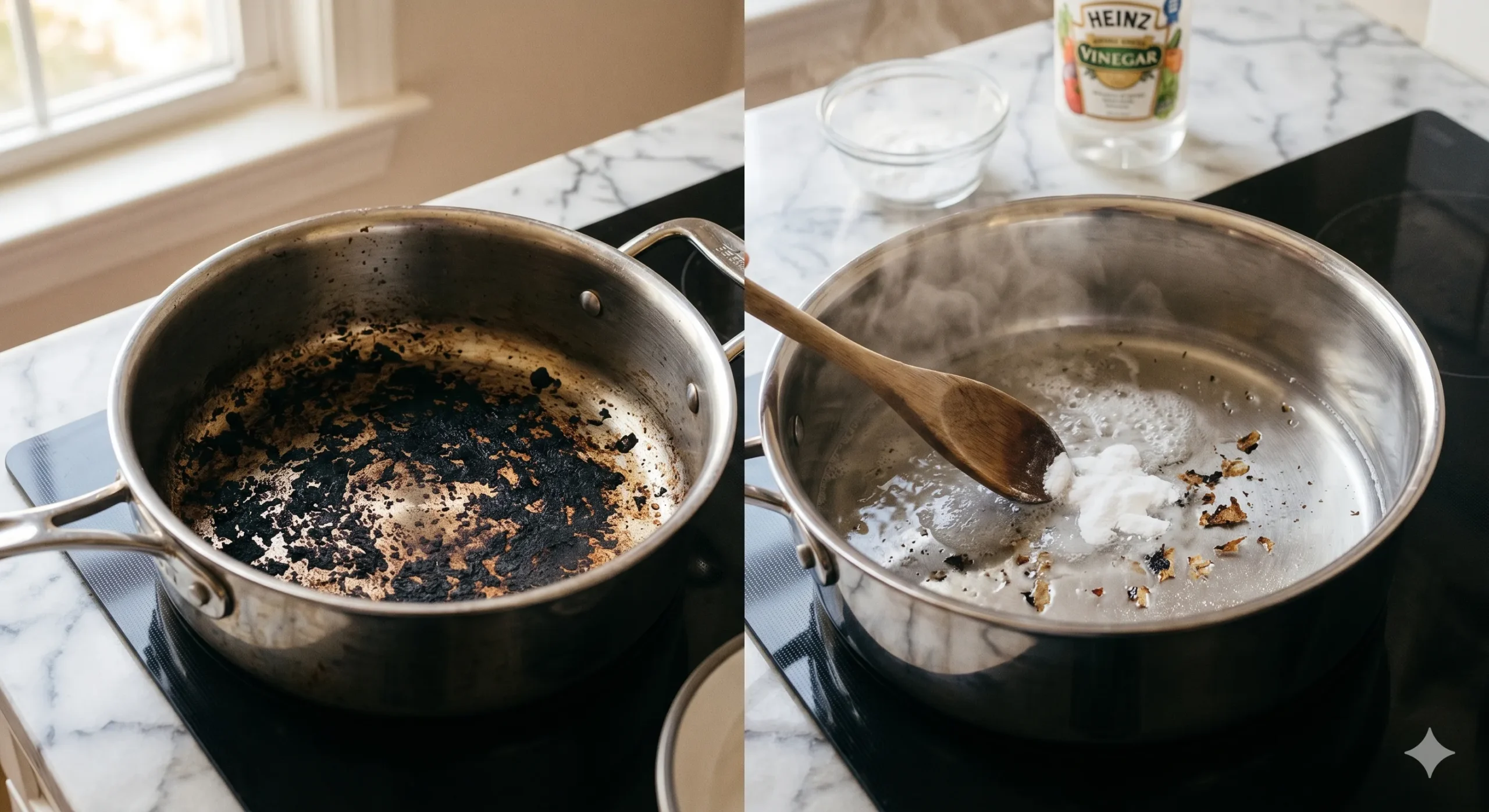
We’ve all done it. You put a pot on the stove, get distracted by a phone call, a hungry toddler, or a gripping show, and come back to a kitchen full of smoke and a pot that looks like the inside of a volcano. The burnt residue clings to the bottom like it’s been welded there, and your first instinct is to grab the harshest scrubber you own and go to war.
Stop right there. Aggressive scrubbing is one of the worst things you can do to a stainless steel pot. The good news is you almost certainly have everything you need in your pantry to restore that pot to its former glory—without chemicals, without destroying the surface, and faster than you might think.
Here’s the Real Reason Burnt Stainless Steel Is So Hard to Clean
Before you reach for the steel wool, it helps to understand why burnt food bonds so stubbornly to stainless steel in the first place. Stainless steel is made from an alloy that includes chromium, which creates an invisible protective oxide layer on the surface. This is what gives it that signature shine and makes it rust-resistant.
When food burns, the sugars, proteins, and fats undergo a chemical transformation called the Maillard reaction and eventually carbonize. These carbon deposits bond directly to the metal surface at a molecular level—which is why they don’t just rinse off. Trying to scrape them dry can scratch the protective oxide layer, dulling the finish permanently.
The key insight: you need to rehydrate and lift the burnt layer, not scrape it away. Heat, moisture, and a mild abrasive (like baking soda) do the work so you don’t have to.
What You’ll Need
You don’t need a trip to the hardware store. These are everyday pantry and kitchen staples:
- Baking soda (the MVP of this whole process)
- White vinegar
- Dish soap
- Water
- A wooden spoon or silicone spatula
- A non-scratch sponge or soft cloth
- Optional: Cream of tartar, Bar Keepers Friend, or dryer sheets (for stubborn cases)
You’re Probably Doing This Wrong: Common Mistakes to Avoid
Before the step-by-step guide, let’s clear up a few habits that make cleaning burnt stainless steel harder than it needs to be:
Scrubbing dry. Trying to scrub off burnt residue without soaking first is like trying to sand a wet piece of wood. You’ll exhaust yourself and scratch the surface.
Using steel wool or abrasive pads. These scratch the protective layer of stainless steel, leaving it more vulnerable to staining and rust in the future.
Putting the hot pot straight into cold water. This can cause thermal shock and warp your pot, especially at the base.
Reaching straight for bleach or harsh oven cleaners. These can permanently discolor stainless steel and may leave residue that’s unsafe for cooking.
Step-by-Step: How to Clean a Burnt Stainless Steel Pot
Method 1: The Boiling Water and Baking Soda Method (Best for Most Burns)
This is the go-to starting point. It works on most burnt-on food residue, it’s cheap, and it uses no harsh chemicals.
- Let the pot cool completely before you do anything. Never place a hot pot directly under cold running water or submerge it in cold water, as this risks warping the metal.
- Fill the pot with enough water to cover all the burnt areas, then bring the water to a boil on the stove. The heat and steam begin to loosen the carbonized layer from the bottom.
- Once the water is boiling, add two to three tablespoons of baking soda directly into the pot. You’ll see it fizz—this is normal. The baking soda creates an alkaline solution that chemically breaks down the burnt residue.
- Reduce the heat and let the mixture simmer for 10 to 15 minutes. Use a wooden spoon or silicone spatula to gently scrape along the bottom and sides. You should see chunks of burnt food beginning to lift and float in the water.
- Pour out the water carefully (it will be very hot) and let the pot cool for five minutes.
- Sprinkle a fresh layer of baking soda onto the remaining residue and add just enough water to make a thick paste. Use a non-scratch sponge to gently scrub in circular motions—most of what remains should come off with minimal effort.
- Rinse thoroughly with warm water and dry immediately with a clean cloth to prevent water spots.
Method 2: White Vinegar Soak (Best for Discoloration and Light Burns)
If your pot has rainbow-colored heat stains or a thin layer of light burn marks, white vinegar is your best friend.
- Pour enough white vinegar into the pot to cover the stained area and let it sit for five to ten minutes at room temperature.
- Add an equal amount of water to dilute slightly, then place the pot on the stove and bring the mixture to a gentle simmer for five minutes.
- Turn off the heat and let the pot cool, then use a non-scratch sponge to wipe away any remaining residue. The acidic vinegar dissolves mineral deposits and discoloration without any scrubbing.
- Follow up with a rinse of warm soapy water and dry immediately. The vinegar smell will dissipate quickly once the pot is clean and dry.
Method 3: Vinegar and Baking Soda Combo (For Stubborn, Thick Burns)
For truly stubborn, thick carbonized deposits—the kind that have been sitting for a while—combining both ingredients gives you extra cleaning power.
- Pour a thin layer of white vinegar into the pot and swirl it to coat the burnt surface. Let it sit for a few minutes.
- Sprinkle a generous amount of baking soda over the vinegar. The mixture will bubble and fizz vigorously. This reaction helps break apart the tough carbonized layer.
- Let the fizzing subside, which takes about three to four minutes, then add a cup of warm water.
- Place the pot on the stove and heat the mixture to a gentle simmer for 5 minutes. The heat activates the cleaning reaction further and helps loosen debris from the pot’s walls and base.
- Remove from heat, allow to cool slightly, then use a wooden spoon to scrape away the loosened residue. Most of it should come off in satisfying sheets or chunks.
- Wash normally with dish soap and a soft sponge, rinse well, and dry.
Method 4: The Overnight Soak (For the Worst-Case Scenario)
If the pot has been sitting with a severe burn for days and nothing else is working, an overnight soak is the most hands-off approach available.
- Fill the pot with warm water and add two to three tablespoons of baking soda and a generous squirt of dish soap.
- Let the pot soak overnight (at least eight hours). This extended soak time allows the solution to fully penetrate and loosen even the most stubborn carbonized deposits.
- In the morning, bring the soaking mixture to a boil for five minutes on the stove to finish the job.
- Drain and gently scrub with a non-scratch sponge. The burnt residue should lift away easily.
How to Remove Burnt Stainless Steel Discoloration (The Blue and Gold Tinge)
If your pot has developed a rainbow or golden-blue discoloration—usually from overheating on the stove—that’s actually oxidation of the chromium in the steel, not a burn stain. It won’t come off with dish soap alone.
Fortunately, white vinegar handles this perfectly. Dampen a soft cloth with undiluted white vinegar and rub the discolored area in circular motions. You should see the discoloration fade within a minute. For larger patches, use the vinegar simmer method from Method 2. A small amount of Bar Keepers Friend (a mild oxalic-acid-based cleaner) on a damp cloth also works exceptionally well for this type of stain.
How to Remove Burnt Stainless Steel Without Chemicals
If you prefer to keep things as natural as possible, plain boiling water with baking soda is all you truly need in most cases. Baking soda (sodium bicarbonate) is a naturally occurring mineral compound and perfectly safe for food-contact surfaces.
Another surprisingly effective chemical-free option: a dryer sheet. Fill your burnt pot with warm water, drop in one dryer sheet, and let it soak for one hour. The surfactants in the dryer sheet bond with the burnt residue and lift it from the surface. After soaking, the residue should wipe away with a soft cloth. Give the pot a thorough rinse and a wash with dish soap before using it again to remove any dryer sheet residue.
How to Clean Burnt Stainless Steel Pot Bottoms (The Outside)
Don’t forget the outside. Burnt-on grease and discoloration on the exterior base of the pot can be addressed with a paste of baking soda and a small amount of dish soap. Apply the paste to the exterior base, let it sit for 15 minutes, then scrub with a non-scratch pad in circular motions. For extremely stubborn exterior staining, Bar Keepers Friend applied with a damp cloth is very effective on the outside of pots where you don’t need to worry about food contact.
Don’t Ignore Scratched or Pitted Surfaces
If, after cleaning, you notice fine scratches or small pits in the surface of the pot, take note. While stainless steel is highly durable, deep scratches can harbor bacteria if the pot isn’t cleaned properly after each use. Fortunately, minor scratches on stainless steel can be buffed out with a small amount of Bar Keepers Friend and a cloth, rubbing in the direction of the grain (the faint linear texture visible on most stainless steel pots).
If the base of the pot has begun to warp—visible if the pot rocks on a flat surface—that’s a more serious issue. Continued use of a warped pot on an induction or electric stove can damage the heating element. If the damage is significant, it may be time to replace the pot.
Quick-Reference Cleaning Guide
| Burn Type | Best Method | Time Required |
|---|---|---|
| Light discoloration or heat stains | White vinegar simmer | 15–20 minutes |
| Moderate food burn | Baking soda boil | 20–30 minutes |
| Thick, stubborn burn | Vinegar + baking soda combo | 30–45 minutes |
| Severe or old burn | Overnight soak | 8+ hours |
| Rainbow oxidation tint | White vinegar rub or Bar Keepers Friend | 5–10 minutes |
| Exterior grease and burn | Baking soda paste | 20–30 minutes |
Tips to Prevent Burning Your Stainless Steel Pot
Prevention is always easier than cleaning—here are a few habits that make a real difference:
Never heat an empty pot. Stainless steel can discolor rapidly when heated dry. Always add oil, water, or food before turning on the heat.
Use medium heat for most cooking. Stainless steel distributes heat very efficiently. High heat is rarely necessary and is the main cause of burns and discoloration.
Deglaze the pot immediately after cooking. If you notice food starting to stick or brown at the bottom, add a splash of water, wine, or broth while the pot is still on the heat. This loosens the residue instantly and actually adds flavor to sauces.
Never leave a pot unattended on high heat. Most kitchen burns happen in the few minutes you step away. Use a timer if you’re prone to getting distracted.
Dry your pots immediately after washing. Water spots and mineral deposits are much easier to prevent than to remove.
FAQ
Can I use steel wool to clean a burnt stainless steel pot?
You technically can, but you really shouldn’t. Steel wool scratches the protective oxide layer on the surface, dulling the finish and making the pot more susceptible to rust and staining over time. Stick to non-scratch sponges and baking soda paste for effective cleaning without the damage.
How do you get the black burnt residue off the bottom of a stainless steel pot?
The boiling water and baking soda method is the most reliable approach. The combination of heat, moisture, and the alkaline solution from baking soda breaks down the carbonized layer from the inside out, lifting it without aggressive scrubbing.
Is it safe to cook in a stainless steel pot that has been burnt?
Yes, as long as the pot is thoroughly cleaned. Carbonized food residue can impart a bitter taste to whatever you cook next, so it’s important to remove it completely before cooking again. The steel itself is not damaged by burning.
Does boiling water alone clean a burnt stainless steel pot?
Boiling water alone provides some help by rehydrating and loosening the burnt layer, but it works significantly better when combined with baking soda, which provides the chemical reaction needed to break down carbon deposits.
How do I get rid of the white chalky spots inside my stainless steel pot?
White spots are mineral deposits from hard water, not burns. A short soak or simmer with white vinegar will dissolve them quickly—they are not carbon-based and don’t need the baking soda treatment.
Conclusion
Cleaning a burnt stainless steel pot is far less dramatic than it looks in the moment. The secret is not brute force—it’s chemistry and patience. Let the baking soda and water do the heavy lifting, give it enough time to work, and most pots will come clean without any serious scrubbing. Start with the boiling baking soda method for most burns, reach for vinegar when you see discoloration, and leave the overnight soak as your nuclear option for the really stubborn cases. And remember: the moment you see a pot starting to burn, a splash of water and a wooden spoon can save you twenty minutes of cleaning later.
Enjoyed this project? Get even more DIY ideas that save (and make) you money.
Join our free newsletter for profitable DIY projects, clever cleaning hacks, home ideas, and creative crafts delivered straight to your inbox.
✓ Free forever • No spam • Unsubscribe anytime