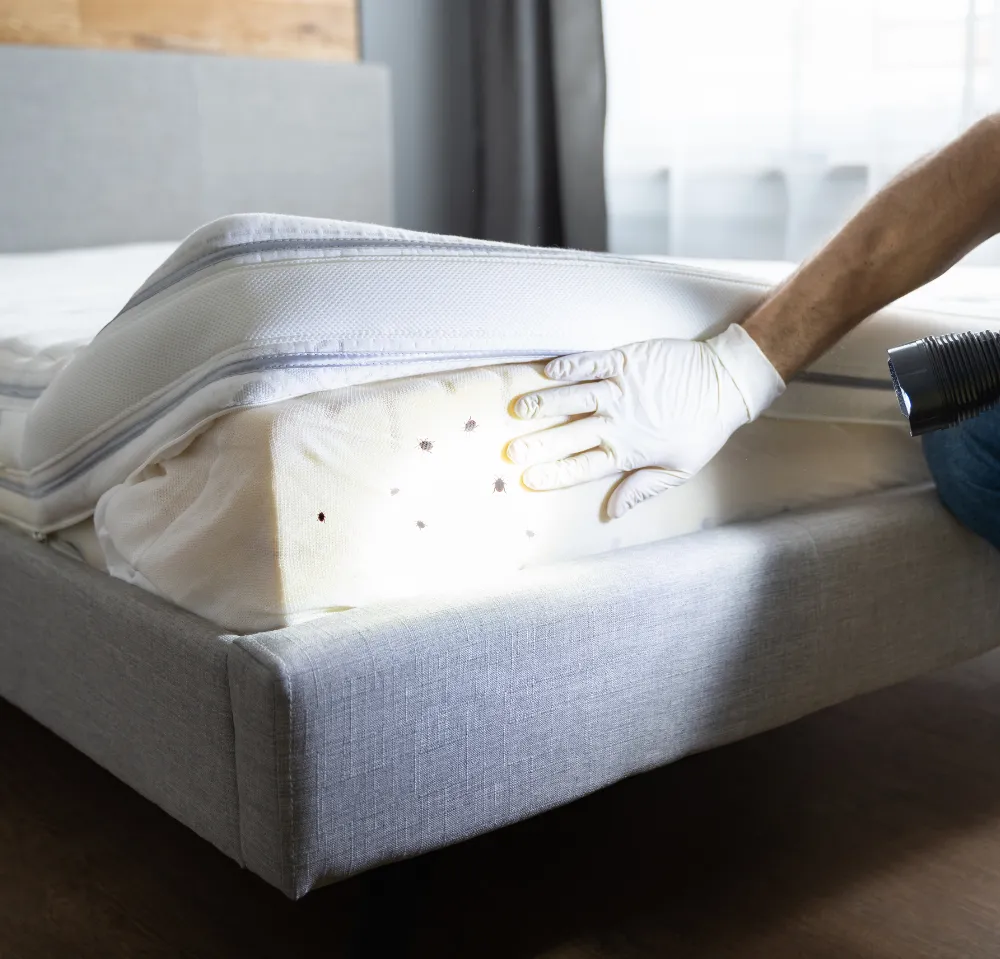
Bed bugs are one of the most anxiety-inducing pest problems a home can have—partly because of the psychological discomfort of being bitten while you sleep, and partly because they’re genuinely difficult to detect until an infestation is already established. A single female bed bug can lay one to five eggs per day. By the time most people notice something is wrong, the population in their bedroom is already in the dozens or hundreds.
The challenge is that most of the early signs of bed bugs are easy to misidentify. The bites look like mosquito bites or allergic reactions. The dark spots on the mattress look like dirt. The shed skins look like dust. And because bed bugs are nocturnal, flat, and expert at hiding in the narrowest crevices, seeing an actual live bug requires knowing exactly where to look and when.
This guide covers ten specific methods for detecting bed bugs—from examining bite patterns to using detection tools—organized so you can work through them systematically and build a complete picture of whether you have bed bugs or something else entirely.
Before You Start: What Bed Bugs Actually Are
Bed bugs (Cimex lectularius) are small, wingless, parasitic insects that feed exclusively on blood—primarily human blood, though they’ll feed on other mammals and birds. Key physical characteristics:
- Size: 1–7mm depending on age and whether recently fed. Adults are roughly the size of an apple seed.
- Shape: Flat and oval when unfed; rounded and elongated after feeding.
- Color: Translucent white to pale yellow as juveniles (nymphs); reddish-brown as adults; dark reddish-brown to almost black immediately after feeding.
- Movement: They don’t jump or fly—they crawl quickly across surfaces.
- Activity pattern: Almost exclusively nocturnal. They feed for three to ten minutes while a host is sleeping, then retreat to their hiding spots.
Knowing what you’re looking for makes identification significantly more reliable.
Sign 1: Examine Your Bite Pattern and Symptoms
Bed bug bites are often the first thing people notice—but they’re also the most unreliable sign on their own. About 30% of people don’t react to bed bug bites at all, meaning they can have a significant infestation without ever noticing a bite. And for those who do react, the bites look similar to many other insect bites and skin reactions.
What bed bug bites typically look like:
- Small, raised, red welts—similar in size and appearance to mosquito bites
- Often itchy, sometimes intensely so—the reaction can develop immediately or up to 14 days after the bite
- Flat or slightly raised with a darker red center
- Sometimes with a small blister at the center in people with stronger reactions
Patterns that suggest bed bugs specifically:
- Linear or clustered arrangement. Bed bug bites frequently appear in a line of three to five bites—sometimes described as “breakfast, lunch, and dinner”—because a single bug feeds, repositions slightly, and feeds again. Bites in a straight line or tight cluster rather than randomly distributed across the body is one of the more distinctive bite patterns.
- Exposed skin only. Bed bugs don’t go under clothing to feed—they bite whatever skin is exposed during sleep. Bites consistently appearing on arms, neck, shoulders, face, and hands but not on areas covered by pajamas suggests bed bugs rather than other insects.
- Bites present in the morning that weren’t there the night before. Bed bugs feed at night while you sleep—waking with bites you didn’t have when you went to bed is a characteristic timing pattern.
- Bites on multiple people sharing the same sleeping space. If two people sharing a bed both have unexplained bites in similar locations, bed bugs are significantly more likely than other explanations.
What bed bug bites are not:
- They’re not painful during the feeding—bed bug saliva contains an anesthetic that numbs the skin during the bite
- They don’t have a distinctive center hole like some spider bites
- They don’t typically cause severe allergic reactions in most people—significant swelling, hives, or anaphylaxis from insect bites in bed suggests something other than bed bugs
Important limitation: Never diagnose a bed bug infestation based on bites alone. Bite patterns are supporting evidence, not confirmation. Many people don’t react to bed bug bites at all, and many other insects, skin conditions, and allergic reactions produce similar-looking marks. Always investigate the physical environment before drawing conclusions.
Sign 2: Check for Dark Spots and Staining on Your Mattress
Bed bug excrement—fecal matter deposited after feeding—is one of the most reliable physical signs of bed bugs. It appears as small dark spots, typically dark brown to black, that bleed into fabric slightly rather than sitting on the surface the way a dried droplet would. The bleeding effect on fabric is caused by the liquid nature of fresh bug excrement before it dries.
Where to look:
- Strip the bed completely and remove all pillowcases, sheets, and mattress protectors.
- Examine the mattress surface thoroughly, focusing on the seams and edges first—bed bugs prefer the piped seams along the top and sides of the mattress where fabric folds provide concealment.
- Look along every seam with a flashlight, pulling the piping back slightly to see into the fold. Dark spotting concentrated along the seams is highly characteristic of bed bug activity.
- Check the tag area of the mattress—the law tag or information label on the side or underside is a common hiding and feeding area.
- Look at the underside of the mattress by lifting or flipping it. The underside, particularly near the edges, often shows more extensive staining than the top surface.
- Examine the box spring or bed base if applicable—remove any fabric covering the underside of the box spring and inspect the interior. Box springs are one of the most common bed bug harborage sites and often have more evidence than the mattress itself.
What the spots look like:
- Dark brown to black spots ranging from pinpoint-sized to roughly 2mm across
- Often in clusters or streaks rather than isolated individual spots
- The bleeding-into-fabric quality distinguishes them from other stains
- Fresh spots are darker; older spots may have a rusty-brown appearance
How to confirm it’s not something else:
Wet a white cloth and dab the spots—bed bug fecal matter rewets and smears a reddish-brown color when dampened, because it contains digested blood. Ink spots don’t smear the same way; dirt leaves a grey-brown smear without the reddish component.
Sign 3: Look for Shed Skins (Exuviae)
Bed bugs shed their outer skin (exoskeleton) five times during their development from egg to adult. Each shed skin—called an exuvia—is left behind in the hiding spots where bed bugs congregate. In an established infestation, shed skins are often more numerous and easier to find than the live bugs themselves.
What shed skins look like:
- Translucent to pale golden-yellow in color
- Hollow, fragile, and papery—they crumble easily when touched
- The exact shape and size of a bed bug but empty and lighter in color
- Ranging from 1mm (first-stage nymph skins) to 5mm (final nymph stage before adult)
Where to find them:
- In the seams and folds of the mattress—the same locations as fecal spotting, since bugs shed where they congregate.
- Along the bed frame where it meets the mattress, in screw holes and joints.
- Behind the headboard and in the gap between the headboard and the wall.
- In furniture joints and recesses near the bed—nightstand drawers, under bedside lamps, in the crevices of upholstered furniture.
Shed skins in combination with fecal spotting is strong evidence of an established infestation rather than an isolated bug or two.
Sign 4: Look for Eggs and Egg Casings
Bed bug eggs and the casings left after hatching are small but identifiable with a flashlight and a magnifying glass. Finding eggs confirms that reproduction is occurring—important for assessing infestation severity and timeline.
What to look for:
- Eggs: Pearlescent white, oval, approximately 1mm long (roughly the size of a pinhead). They’re sticky when fresh and are glued to surfaces by the female, meaning they don’t roll or move when disturbed.
- Egg casings: After hatching, the casings remain attached to the surface—translucent, slightly darker than unhatched eggs, and often more flattened.
- Location: Females preferentially deposit eggs in the most protected, dark areas of bed bug harborage zones—deep in mattress seams, inside box springs, in the joints of the bed frame, behind baseboards.
A magnifying glass is practically necessary for finding eggs—1mm is small enough to miss without magnification. A flashlight with a focused beam rather than a broad flood helps by highlighting the sticky surface texture of fresh eggs.
Sign 5: Inspect the Bed Frame, Headboard, and Furniture
The mattress is the obvious starting point but often not where the highest concentration of bed bugs is found—particularly in established infestations where the mattress has become crowded and bugs have spread to adjacent harborage sites.
Bed frame inspection:
- Disassemble the bed frame if possible—unscrew the headboard from the frame and separate the side rails. Bed bugs congregate in the joints, screw holes, and connection points where pieces meet.
- Examine every joint, screw hole, and crevice with a flashlight. Look for live bugs, shed skins, fecal spotting, and eggs.
- Check wooden slats if present—both the top surface and the underside, and where the slat sits on the frame rail.
Headboard inspection:
The headboard is one of the highest-priority inspection areas. Mounted headboards with a gap between the headboard and the wall create ideal harborage conditions—dark, undisturbed, and close to the sleeping area.
- Remove the headboard from the wall if it’s wall-mounted and inspect the back surface and the wall behind it.
- Check all fabric if upholstered—pressing the seams and tufting areas firmly with a credit card or flat tool to force any bugs hiding in the fabric folds into view.
- Check all joints and decorative recesses on wooden headboards.
Nightstands and nearby furniture:
Bed bugs prefer to remain within 1.5–2 meters of their host when not feeding. Furniture within this radius from the bed is a secondary harborage site.
- Pull nightstands away from the wall and inspect the back panel and the wall behind.
- Check drawer runners, joints, and the underside of nightstand surfaces.
- Check the legs of nearby furniture—the junction where furniture legs meet the floor is a common hiding spot.
- Examine upholstered chairs or sofas in the bedroom—check all seams, cushion zippers, and the underside of cushions.
Sign 6: Check Walls, Baseboards, and Electrical Outlets
In severe infestations, bed bugs spread beyond furniture and textiles to wall surfaces, baseboards, and electrical outlets. Finding bugs in these locations indicates a significant, established infestation rather than an early one.
Where to inspect:
- Baseboards along the wall closest to the bed—run a credit card or flat tool along the gap between the baseboard and the floor.
- Electrical outlets and switch plates near the bed—remove the cover plate (with the breaker off for safety) and inspect the gap between the outlet and the wall cavity.
- Picture frames and wall art above or near the bed—the gap between the frame and the wall is a harborage site.
- Loose wallpaper edges or cracks in plaster—bed bugs exploit any gap in wall surfaces.
- Behind wall-mounted items including shelves, clocks, and headboards.
Finding bed bugs in walls and outlets requires professional treatment—by the time bugs have spread this far from the sleeping area, the infestation is too established for surface treatments to reach.
Sign 7: Use a Flashlight and Credit Card Inspection Method
A systematic physical inspection using a bright flashlight and a thin flat tool—a credit card, a putty knife, or a purpose-made bed bug detection card—is the most thorough manual detection method. The flat tool is used to probe crevices too narrow to see into directly, forcing bed bugs into visible areas where the flashlight reveals them.
The inspection protocol:
- Time the inspection correctly. Bed bugs are most active in the two hours before dawn—a 3–4am inspection with a flashlight catches them in active movement.
- Use a bright, focused flashlight rather than overhead room lighting—the focused beam creates shadows that make small objects like eggs, shed skins, and bugs easier to see on fabric.
- Work the credit card into every seam, fold, gap, and crevice around the entire sleeping area. The card forces bugs out of gaps too narrow to see into directly—watch the exit point of the gap with the flashlight as you insert the card.
- Work systematically from the mattress outward: mattress seams → box spring → bed frame → headboard → baseboards → nightstands → adjacent furniture.
- Use white paper or a white cloth held under crevices as you probe them—live bugs, shed skins, and eggs that fall from their harborage spots are much more visible against white than against the floor or carpet.
Sign 8: Use a Bed Bug Interceptor or Detection Device
Bed bug interceptors are passive monitoring devices placed under bed legs that catch bed bugs as they travel between their harborage spots and the sleeping host. They’re the most objective and evidence-based detection method available—if bed bugs are present and using the bed, interceptors will capture them within a few nights.
How interceptors work:
Interceptors are small trays with two concentric sections. The outer section catches bugs climbing up the bed leg toward the sleeping host; the inner section catches bugs descending after feeding. Both sections have smooth sides that bed bugs can’t climb out of once they’ve fallen in.
How to use them:
- Place one interceptor under each leg of the bed. All legs need to be covered—bugs will bypass the interceptors and climb an unprotected leg if any are left uncovered.
- Move the bed away from the wall so it’s not touching at any point—if the bed contacts the wall anywhere, bugs can bypass the interceptors entirely.
- Check the interceptors daily with a flashlight for the first week.
- Don’t treat the bed or room with any pesticide while using interceptors—treatment disrupts normal bug movement patterns and reduces interceptor catch rates.
Other detection devices:
- CO2 traps: Lure bed bugs with carbon dioxide into a sticky trap.
- Heat detection devices: Attract bugs using warmth simulating a sleeping host.
- Professional canine detection: Trained dogs can detect bed bugs by scent with accuracy rates higher than human visual inspection.
Sign 9: Check Your Clothing, Luggage, and Belongings
Bed bugs hitchhike on clothing, luggage, secondhand furniture, and personal belongings—and finding them in these items rather than (or in addition to) the bed indicates either how an infestation was introduced or how far it has spread.
What to inspect:
- Luggage and travel bags stored in or near the bedroom—particularly bags that have recently been used for travel. Inspect all seams, pockets, and folds. Bed bugs in luggage is one of the primary vectors for spreading infestations between locations.
- Clothing stored near the bed—particularly clothing stored on the floor, in open laundry baskets, or in drawers in an infested room. Check seams and folds, particularly in heavier items like jeans and jackets where folds provide concealment.
- Books and paper items kept on or near the bed—bed bugs shelter in the spines of books and between stacked papers stored near harborage areas.
- Electronics near the bed—alarm clocks, phone chargers, and electronic devices on nightstands. Bed bugs shelter in the vents and gaps of electronic devices and are particularly difficult to eliminate from electronics.
- Secondhand furniture recently brought into the home—any upholstered secondhand item should be thoroughly inspected before being brought indoors. Check all seams, cushion folds, and the underside before bringing into the sleeping area.
Why this matters for detection:
Finding bed bugs in luggage or on clothing confirms an active infestation and also indicates spread risk—bags that have been in an infested room and then traveled elsewhere may have introduced bed bugs to hotels, friends’ homes, or other rooms in the same building.
Sign 10: Smell for the Characteristic Bed Bug Odor
A large or established bed bug infestation produces a distinctive smell that people who have encountered it describe consistently—sweet, musty, and slightly sickly, often compared to overripe berries, coriander, or almonds. The smell comes from the bed bugs’ scent glands, which they use for communication and alarm signaling, and from the accumulated fecal matter in heavily infested areas.
How to use smell as a detection method:
- Strip the bed and bring your face close to the mattress seams—sniff specifically along the seam lines where bugs and fecal matter concentrate. A faint sweet-musty smell that doesn’t match any detergent or fabric odor you’d expect is significant.
- Sniff the box spring if accessible—the interior of a heavily infested box spring often smells more strongly than the mattress surface.
- Smell the gap between the headboard and the wall—if bugs are concentrated behind the headboard, the smell is often most detectable in this location.
- Smell the bed frame joints after disassembly—concentrated fecal matter in frame joints has a more detectable odor than dispersed spots on fabric.
Important limitations:
The smell is only detectable in established, sizeable infestations—early-stage infestations with small populations don’t produce enough scent to be detected by human smell. If you can smell the characteristic odor, the infestation is already significant. The smell is most useful as confirmation of a detection made by other methods rather than as a standalone early detection tool.
Professional scent detection:
If you suspect an infestation but visual inspection hasn’t produced definitive evidence, professional canine detection teams use dogs trained to detect the specific scent compounds in bed bug pheromones and fecal matter. Detection dogs can identify infestations at much lower population densities than human inspection can—including infestations still confined to a single harborage spot with no surface evidence yet visible.
What to Do If You Find Evidence of Bed Bugs
Finding any positive signs—live bugs, fecal spotting, shed skins, eggs, captured bugs in interceptors, or characteristic smell—requires prompt action. Bed bug populations double roughly every 16 days under ideal conditions.
Immediate steps:
- Don’t move furniture or bedding to other rooms. This spreads the infestation to areas that aren’t yet affected.
- Don’t sleep in a different room. This causes the bugs to follow you and spread the infestation.
- Wash all bedding on the hottest temperature safe for the fabric and dry on high heat for at least 30 minutes—heat above 120°F/49°C kills all life stages of bed bugs.
- Place washed and dried items in sealed plastic bags until treatment is complete to prevent reinfestation.
- Vacuum thoroughly around the bed using the crevice attachment along all seams and furniture joints. Dispose of the vacuum bag immediately in a sealed plastic bag in the outdoor bin.
DIY vs. professional treatment:
For small, early-detected infestations confined to one room: DIY treatment with a combination of heat treatment, mattress encasements, and residual insecticide spray is achievable but requires thorough application and follow-up.
For infestations showing wall, baseboard, or multi-room spread: professional treatment is strongly recommended. Bed bugs that have spread to wall voids and electrical outlets require professional-grade heat treatment or targeted insecticide application that reaches areas consumer products can’t.
Common Misidentifications
Not bed bugs:
- Carpet beetles and their larvae: Similar size, found in similar locations. Carpet beetle larvae have distinctive bristles and tapered bodies; adults are round with patterned wing covers.
- Spider beetle: Reddish-brown, similar size. Has a rounded abdomen and longer legs than bed bugs.
- Cockroach nymphs: Longer and more cylindrical than bed bugs; move much faster.
- Bat bugs and swallow bugs: Nearly identical to bed bugs but found near bird or bat roosts rather than sleeping areas.
Not bed bug evidence:
- Rust stains on mattresses: From metal springs oxidizing—rust stains don’t rewet the same way as fecal matter.
- Mold spots: Usually circular and fuzzy rather than flat; found in damp areas rather than specifically along seams.
- Pen or ink marks: Don’t rewet to reddish-brown.
Sign Comparison at a Glance
| Sign | Reliability | Best For | Equipment Needed |
|---|---|---|---|
| Bite pattern | Low alone | Initial suspicion | None |
| Fecal spotting | High | Confirming presence | Flashlight |
| Shed skins | High | Confirming established infestation | Flashlight, magnifier |
| Eggs and casings | High | Confirming reproduction | Flashlight, magnifier |
| Bed frame inspection | High | Finding harborage sites | Flashlight, screwdriver |
| Walls and outlets | High | Assessing severity | Flashlight, screwdriver |
| Flashlight + card method | Very high | Thorough manual inspection | Flashlight, credit card |
| Interceptors | Very high | Passive ongoing monitoring | Interceptor trays |
| Clothing and belongings | Moderate | Source identification | Flashlight |
| Smell | Moderate | Confirming established infestation | None |
FAQ
Can I have bed bugs without seeing any bites? Yes—approximately 30% of people don’t react to bed bug bites at all. The absence of bites is not evidence of the absence of bed bugs. If other signs are present, treat the infestation regardless of whether anyone is experiencing bite reactions.
How quickly does a bed bug infestation spread? A single mated female introduced to a new environment can establish a detectable infestation within six to eight weeks. Population growth accelerates as more females mature and begin reproducing—a small infestation that goes untreated for three to four months becomes a severe one.
Can bed bugs come from neighbors in an apartment building? Yes—bed bugs travel through wall voids, plumbing chases, and under doors between apartments. If a neighbor has an infestation, wall-adjacent rooms in your apartment are at risk.
Do bed bugs only live in beds? No—the name is misleading. Bed bugs live anywhere within approximately 1.5–2 meters of where humans sleep or rest for extended periods. Sofas, armchairs, home office chairs, and car seats can all harbor bed bugs in infested environments.
Can I get rid of bed bugs myself? For small, early-stage infestations caught before spreading to walls and baseboards: yes, with thorough DIY treatment including heat, encasements, and residual insecticide. For established infestations with signs in walls, multiple rooms, or that have persisted despite treatment: professional treatment is significantly more effective and usually more economical in the long run than repeated failed DIY attempts.
The Bottom Line
The most reliable way to determine whether you have bed bugs is to find physical evidence—not to rely on bite patterns alone. Fecal spotting along mattress seams, shed skins in furniture joints, or live bugs captured in interceptors each provide definitive evidence that bites alone can’t give you. Work through the ten signs systematically starting with the mattress seams and bed frame, use a flashlight and flat card to probe crevices, deploy interceptors under bed legs for passive monitoring if visual inspection is inconclusive, and use the characteristic smell as confirmation of what other signs suggest. Find the evidence early—before the infestation spreads to walls and adjacent rooms—and treatment is significantly more straightforward.
Enjoyed this project? Get even more DIY ideas that save (and make) you money.
Join our free newsletter for profitable DIY projects, clever cleaning hacks, home ideas, and creative crafts delivered straight to your inbox.
✓ Free forever • No spam • Unsubscribe anytime