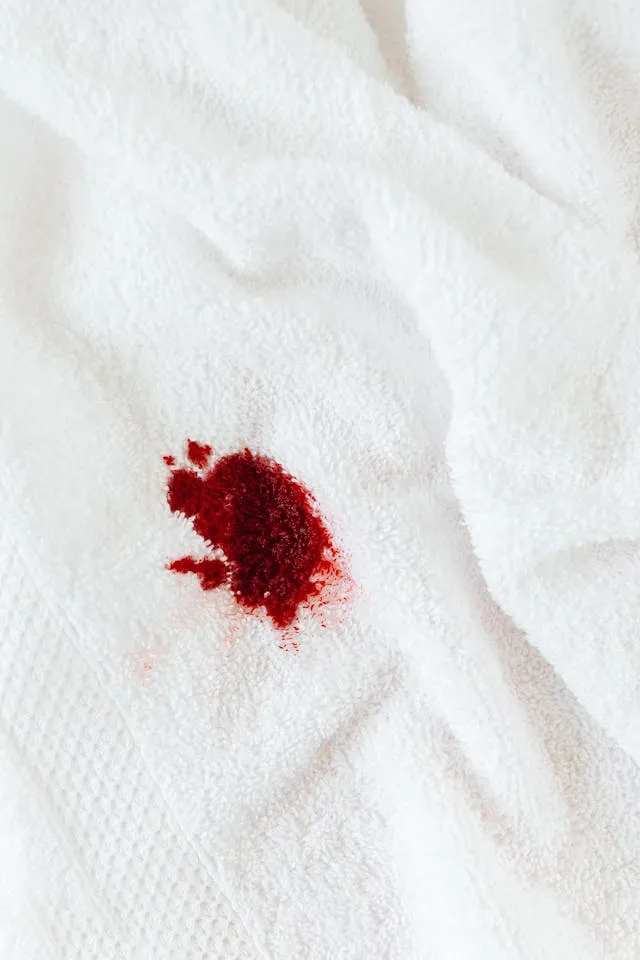
White clothes are both the easiest and the most unforgiving fabric for blood stain removal. The easiest because white fabric tolerates the strongest and most effective cleaning agents available—hydrogen peroxide, chlorine bleach, OxiClean—without the color damage risk that limits options on colored clothing. The most unforgiving because any residual staining, however faint, is immediately visible against white fabric in a way it wouldn’t be on a darker color.
The methods in this guide take advantage of white fabric’s tolerance for stronger treatments while being specific about which products work for which situations—because even on white fabric, using the wrong method at the wrong stage can make the stain worse. Hot water on fresh blood sets it permanently. Chlorine bleach applied before other treatments can sometimes yellow white fabric rather than whitening it if chemistry isn’t right. And drying before the stain is completely gone locks it in regardless of how white the fabric is.
This guide covers eight methods from the gentlest cold water flush through to multi-step protocols for the most stubborn dryer-set stains on white fabric—including when chlorine bleach is actually the right call and when it isn’t.
Why White Clothes Give You More Options
On colored or dark clothing, the risk of bleaching or lightening the fabric limits which treatments you can use. On white clothes:
- Hydrogen peroxide can be used at full 3% concentration without bleaching risk
- Chlorine bleach is available as a last resort
- OxiClean can be used at higher concentrations
- Multiple treatment rounds can be applied without worrying about cumulative color damage
- Results are easier to assess because any remaining stain is clearly visible against white
These advantages make blood stain removal from white clothes significantly more achievable than from colored fabric—even for old, set-in stains.
The Rules That Still Apply Even on White Fabric
Cold water only until the stain is gone. Heat sets blood protein into fabric permanently regardless of fabric color. White fabric is not immune to this—a blood stain heat-set into white cotton is just as difficult to remove as one set into colored fabric.
Never dry until the stain is confirmed gone. A stain that looks absent while wet often reappears as the fabric dries. Check in good light while damp before any heat exposure.
Work from the back of the stain. Flushing cold water through the back of the stain pushes blood out of the fabric rather than driving it deeper.
Test even on white fabric. Some white fabrics have optical brighteners, special finishes, or blended fibers that react unexpectedly to strong chemicals. A quick test on an inside seam is always worth doing.
What You’ll Need (Depending on the Method)
- Cold water
- Hydrogen peroxide (3%)
- Dish soap
- Baking soda
- Salt
- White vinegar
- Chlorine bleach
- OxiClean or oxygen bleach
- Enzyme laundry cleaner or pre-treatment
- Ammonia (clear, unscented—optional)
- Laundry detergent
- A soft-bristle brush or old toothbrush
- Clean white cloths
- A bowl or basin for soaking
- Rubber gloves
Method 1: Cold Water Flush (Mandatory First Step)
Cold water is the correct first response to any blood stain on white clothes—and it’s often underestimated as a standalone treatment for fresh blood. Blood is roughly 80% water when fresh, and a strong cold water flush before the blood has time to dry removes a significant portion of the stain without any cleaning product at all.
- Act immediately for fresh blood—the first 60 seconds are the most valuable. The longer blood sits, the more the protein bonds to the fabric fibers.
- Hold the fabric under cold running water with the stained side facing down. The water pressure flushes blood through the fabric from back to front—the direction it entered. Flushing from the front drives blood deeper into the weave rather than out of it.
- Use the strongest cold water pressure available. A forceful stream dislodges more blood than a gentle trickle.
- Continue flushing for two to three minutes for fresh blood. You’ll see the water running pink, then progressively clearer—continue until the water runs completely clear.
- For dried blood, the cold water flush is still the essential first step but functions differently—it rehydrates the dried protein rather than flushing it out immediately. Soak in cold water for 30 minutes to several hours to rehydrate before applying any treatment.
- Assess after flushing. Fresh blood caught immediately often leaves only a faint shadow after thorough flushing—this shadow responds well to a single hydrogen peroxide application. Blood that has been drying for more than an hour will need additional treatment after the cold water step.
- Do not wring, rub, or twist the fabric during flushing—this spreads the loosened blood into a larger area and distorts the weave.
For overnight dried stains: Fill a basin with cold water and submerge the garment completely. Leave for several hours or overnight. The extended soak progressively rehydrates the dried blood protein, making subsequent treatments significantly more effective than applying them to completely dry blood.
Best for: All blood stains as the mandatory first step. Often sufficient alone for blood caught within the first few minutes.
Method 2: Hydrogen Peroxide (Best All-Around Method for White Fabric)
Hydrogen peroxide is the single most effective treatment for blood stains on white clothes—and on white fabric specifically, it can be used at full strength without the color damage risk that limits its use on colored clothing. The oxygen it releases breaks down hemoglobin at a chemical level, dissolving the pigment that makes the stain visible. The fizzing reaction you see is the treatment working.
- Rehydrate dried stains with a cold water soak first—hydrogen peroxide works significantly better on moist stains than on completely dry blood.
- Pour 3% hydrogen peroxide directly onto the stain or apply with a cloth. On white fabric, direct application is fine—pour enough to fully saturate the stained area.
- Watch the fizzing reaction. The bubbling you see is oxygen being released as the peroxide reacts with the blood protein. A vigorous fizz indicates significant blood is present; a mild fizz indicates the stain is lighter or already partially removed.
- Allow to sit for five to fifteen minutes while the reaction continues. Don’t blot or disturb during this time—let the oxygen work through the stain depth.
- For old or heavily dried stains, apply a second generous application of hydrogen peroxide immediately after the first fizzing subsides. The second application penetrates the stain at the depth the first one reached and often produces the most dramatic results.
- Blot with a clean white cloth after the reaction to lift the dissolved blood. The cloth will show reddish-brown color transfer—this is the blood being removed from the fabric.
- Rinse thoroughly with cold water to remove peroxide residue and any remaining dissolved blood.
- Check in raking light—hold the fabric up to a window or lamp and look across the surface. Even faint residual staining is visible this way and indicates another treatment round is needed.
- Machine wash on cold with laundry detergent if any residual staining remains after hydrogen peroxide treatment.
- Air dry and confirm the stain is gone before any heat exposure.
For very stubborn dried stains on white fabric: Mix hydrogen peroxide with a small amount of dish soap and baking soda to create a paste. Apply to the stain, leave for 20–30 minutes, then rinse and wash. The combination of oxidizing (peroxide), surfactant (soap), and abrasive (baking soda) action handles stains that peroxide alone doesn’t fully resolve.
Best for: All blood stains on white fabric—fresh to moderately dried. The first chemical treatment to reach for on white clothes.
Method 3: Dish Soap and Hydrogen Peroxide Paste (Best for Set-In Stains)
Combining dish soap with hydrogen peroxide creates a more powerful treatment than either alone—the surfactant in dish soap helps the peroxide penetrate the fabric weave more evenly and lifts the dissolved blood away from the fibers more effectively. This combination is particularly good for blood stains that have been dried for more than 24 hours and have started to set into the fabric.
- Mix one tablespoon of dish soap with two tablespoons of hydrogen peroxide in a small bowl. Stir gently—don’t whisk or shake, which creates excessive foam that reduces the effectiveness of direct application.
- Rehydrate the stain with a cold water soak before applying the paste if the blood has been dried for more than a few hours.
- Apply the mixture directly to the stain using a cloth or spoon, fully saturating the stained area.
- Work gently into the fabric with a soft toothbrush using small circular motions—the brush gets into the fabric weave where a cloth can’t reach.
- Leave for 15–30 minutes. The combination works progressively—don’t rush this step for dried stains.
- Keep the mixture moist if it begins to dry before the dwell time is complete—add a few drops of cold water to re-wet.
- Rinse thoroughly with cold water while continuing to work the fabric gently with the toothbrush to lift loosened material from the weave.
- Repeat if necessary. For stains that have been in white fabric for several days, this treatment often requires two applications to fully clear.
- Machine wash on cold after the final rinse. Air dry and check before any heat.
Best for: Blood stains dried for 24 hours to a week on white cotton, linen, and synthetic blends. The enhanced version of straight hydrogen peroxide for more persistent stains.
Method 4: Baking Soda Paste (Best for Delicate White Fabrics)
For white fabrics that are more delicate—fine cotton, white linen, white silk-cotton blends—baking soda paste provides a gentler alternative to hydrogen peroxide with less risk of fiber damage while still being effective on dried blood. The mild abrasive action and alkaline chemistry work together to lift the blood protein without the oxidizing action that can stress delicate fibers.
- Mix two parts baking soda with one part cold water to form a thick, smooth paste.
- Rehydrate the stain with cold water before applying.
- Apply the paste generously to cover the entire stained area with an even layer.
- Press gently into the fabric with your fingers or a soft cloth—don’t scrub with a stiff brush on delicate white fabrics.
- Leave for 30 minutes for moderate dried stains; up to two hours for older stains.
- Rinse with cold running water, gently working the paste out of the fabric with your fingers.
- Follow with hydrogen peroxide if any staining remains after rinsing—the baking soda pre-treatment loosens the blood while the peroxide removes the residual pigment.
Best for: Delicate white fabrics, white blouses, fine cotton shirts where aggressive treatment risks fiber damage.
Method 5: Salt Paste (Best Emergency Treatment)
Salt draws blood out of fabric through osmosis and is the best emergency treatment when no other cleaning products are available. On white fabric it’s particularly useful as a first response that significantly reduces stain severity before targeted treatment with hydrogen peroxide or OxiClean.
- Wet the stained area with cold water.
- Apply a generous layer of table salt directly to the wet stain, covering it completely.
- Press the salt into the fabric firmly and leave for 10–20 minutes. The salt will turn pink or red as it draws blood from the fibers.
- Brush away the salt and rinse with cold water.
- Repeat with a fresh application of salt if blood is still drawing out.
- Follow immediately with hydrogen peroxide (Method 2) once the salt has drawn out as much blood as possible—salt removes a significant portion of the stain, leaving hydrogen peroxide with less work to do.
For a stronger salt treatment on white fabric: Make a paste of salt and cold water (thick enough to stay in place) and leave on the stain for up to one hour before rinsing. The extended contact time draws more blood from the fabric than a dry salt application.
Best for: Emergency treatment when other products aren’t available, reducing stain severity before targeted treatment, fresh to lightly dried blood on white fabric.
Method 6: Enzyme Cleaner (Best for Old and Set-In Blood on White Fabric)
Enzyme cleaners break down blood protein biologically—the protease enzymes dissolve the hemoglobin molecules that make blood stains persistent. For blood stains that have been in white fabric for more than a week, or that haven’t responded to hydrogen peroxide treatment alone, enzyme cleaner provides the targeted protein-breaking action that oxidizing agents can’t replicate.
- Soak the garment in cold water overnight before applying enzyme cleaner—maximum rehydration of old dried blood makes the enzymes significantly more effective.
- Apply enzyme cleaner generously to the stained area—products like Zout, Carbona Stain Devils #5, or any pet stain remover containing protease work well.
- Work into the fabric with a soft toothbrush to ensure penetration.
- Seal in a plastic bag to prevent drying—enzyme cleaners stop working when they dry out. Leave sealed for two to four hours for standard dried stains; up to eight hours for very old stains.
- Remove from the bag and machine wash on cold with laundry detergent. The wash cycle removes the dissolved stain and cleaner residue simultaneously.
- Air dry and inspect. For white fabric, even a faint shadow is visible—if any remains, follow with a hydrogen peroxide application or OxiClean soak before the next wash cycle.
- Combine with hydrogen peroxide for maximum effectiveness on severely set stains: enzyme cleaner first to break down the protein, then hydrogen peroxide to address the residual hemoglobin pigment.
Best for: Blood stains in white fabric for more than a week, stains that haven’t fully responded to hydrogen peroxide, old stains with significant protein cross-linking.
Method 7: OxiClean Soak (Best for Multiple Stains and Overall Whitening)
OxiClean and similar oxygen bleach products are particularly effective on white fabric because their oxidizing action both removes blood stains and simultaneously brightens the fabric—addressing any general yellowing or dingy appearance around the stain at the same time. For white garments with multiple blood stains or with staining combined with general discoloration, OxiClean is more efficient than spot-treating each stain individually.
- Fill a basin or sink with cold water and dissolve OxiClean according to the package directions—typically one scoop per gallon of water for standard stains; up to two scoops per gallon for severe or old stains.
- Submerge the garment completely, pressing it down to ensure full saturation. Every inch of the fabric should be in contact with the solution.
- Soak for a minimum of one to two hours for moderate dried blood. For old stains or stains that have been through the dryer, soak for up to eight hours.
- Check progress periodically. You’ll often see the stain visibly fading during the soak—this visual feedback helps assess whether additional soak time is needed.
- After soaking, apply a concentrated paste of OxiClean powder mixed with a small amount of cold water directly to any remaining stain and leave for 30 additional minutes before washing.
- Machine wash on cold with laundry detergent and an additional scoop of OxiClean in the drum.
- Rinse very thoroughly—OxiClean residue in fabric can cause skin irritation. An extra rinse cycle is worthwhile for OxiClean treatments.
- Air dry in sunlight if possible—UV light has a mild natural whitening effect on white fabric that complements the OxiClean treatment. Don’t dry in direct sunlight if the stain isn’t fully gone—UV light can oxidize residual staining and make it more visible.
- Repeat the full soak if any stain remains after washing and drying. OxiClean treatments are cumulative—each soak reduces the stain further.
Best for: Multiple blood stains on white fabric, white garments with both staining and general discoloration, old stains that need extended soaking treatment.
Method 8: Chlorine Bleach (Last Resort for Stubborn Stains on Pure White Cotton)
Chlorine bleach is the nuclear option for blood stains on white clothes—it removes stains completely but comes with significant limitations and risks that make it a last resort rather than a first response. Used correctly on the right fabric type, it’s highly effective. Used incorrectly, it yellows, weakens, or destroys the fabric.
When bleach is appropriate:
- Pure white cotton or linen that is 100% natural fiber—not blended with synthetic fibers
- Only after other methods have been tried and have left residual staining
- Not on white fabric with optical brighteners (check the care label)—bleach degrades optical brighteners and causes fabric to yellow
- Not on silk, wool, or delicate fabrics—chlorine bleach destroys these fiber types regardless of color
When bleach is not appropriate:
- White fabric blended with spandex, elastane, or nylon—bleach degrades synthetic fibers
- White fabric with any decorative elements—prints, embroidery, or colored trim that would be damaged
- White fabric with existing yellowing from previous bleach use—more bleach increases yellowing
Instructions:
- Pre-treat with hydrogen peroxide or enzyme cleaner first. Bleach is more effective on stains that have been partially treated—it removes the residual hemoglobin that other methods have broken down but not fully lifted.
- Dilute the bleach properly—never apply undiluted bleach directly to fabric. Mix one part chlorine bleach with ten parts cold water for a standard treatment solution.
- Apply the diluted bleach solution to the stained area using a cloth or by submerging the garment for a brief soak.
- Do not exceed five minutes of bleach contact time for spot treatment—longer exposure weakens cotton fibers and can cause fabric to develop yellow tones paradoxically.
- Rinse extremely thoroughly with cold water immediately after the treatment time—bleach must be completely removed to prevent ongoing fiber degradation.
- Machine wash immediately after bleach treatment with laundry detergent to neutralize any remaining bleach chemistry.
- Air dry and inspect—bleach-treated white fabric should be completely white with no residual staining visible.
The yellowing paradox: Paradoxically, too much bleach or too-frequent bleaching causes white fabric to yellow rather than whiten. This happens because bleach breaks down the optical brighteners in white fabric that reflect UV light and make it appear bright white. Once these brighteners are degraded, the natural off-white color of the cotton fiber shows through. If bleached white fabric has yellowed, OxiClean is more effective at restoring brightness than additional bleach.
Best for: Pure white cotton and linen with stubborn residual blood staining after other treatments, as a final step when all other methods have produced only partial results.
Method Comparison at a Glance
| Method | Best For | Strength | Time Required |
|---|---|---|---|
| Cold water flush | All stains, first step | Gentle | 30 min–overnight |
| Hydrogen peroxide | Most dried blood, all-around | Moderate–Strong | 15–30 minutes |
| Dish soap + peroxide paste | Set-in stains, 24+ hours old | Strong | 30–60 minutes |
| Baking soda paste | Delicate white fabrics | Gentle | 30 min–2 hours |
| Salt paste | Emergency treatment | Gentle | 15–30 minutes |
| Enzyme cleaner | Old, heavily set stains | Strong | 2–8 hours |
| OxiClean soak | Multiple stains, overall whitening | Strong | 1–8 hours |
| Chlorine bleach | Pure cotton, last resort | Very strong | 5–10 minutes |
Multi-Step Protocol for the Most Stubborn White Fabric Blood Stains
For blood stains that have been in white fabric for weeks, have been through the dryer, or haven’t responded to individual treatments, a sequential multi-step approach produces the best results:
Step 1 (Day 1): Extended cold water soak—submerge overnight in cold water to maximally rehydrate the stain.
Step 2 (Day 2): Apply enzyme cleaner, seal in a plastic bag, leave four to eight hours. Machine wash on cold. Air dry.
Step 3 (Day 2 or 3, if stain remains): Apply hydrogen peroxide directly and leave 20–30 minutes. Follow immediately with a hydrogen peroxide and dish soap paste left for another 20 minutes. Rinse and machine wash cold. Air dry.
Step 4 (If residual staining remains): OxiClean soak for six to eight hours. Machine wash with OxiClean added. Air dry in sunlight.
Step 5 (Last resort, pure cotton only): Diluted chlorine bleach spot treatment as described in Method 8.
Between every step: air dry and inspect in good light. Do not use the dryer at any stage until the stain is completely gone.
Sunlight as a Final Whitening Step
After blood stain removal, white fabric can sometimes retain a very faint shadow even when the main stain is gone—a residual discoloration too light to respond to chemical treatment. Natural sunlight is a surprisingly effective final step for white fabric:
UV light has a mild bleaching effect on white fabric and can eliminate faint residual shadows that washing hasn’t fully cleared. Lay the washed, damp white garment in direct sunlight for two to four hours. The combination of UV exposure and moisture produces gradual whitening that’s particularly effective on the faint organic residue that remains after blood stain treatment.
This only applies to white fabric—don’t use this approach on colored clothing where UV fading is damaging rather than helpful.
FAQ
Can I use boiling water to remove blood from white clothes? No—hot water of any kind sets blood protein permanently. The higher the temperature, the faster and more completely the protein bonds to the fabric. Boiling water would set a fresh blood stain irreversibly in seconds. Cold water only.
How many times can I bleach white fabric before it yellows? This varies by fabric quality and bleach concentration, but most white cotton fabrics can tolerate bleach treatment four to six times before optical brighteners degrade enough to cause visible yellowing. Use OxiClean as the primary treatment and reserve bleach for genuine last-resort situations to extend the fabric’s useful life.
Is it safe to mix hydrogen peroxide and dish soap directly? Yes—a mixture of hydrogen peroxide and dish soap is safe and more effective than either alone. Don’t mix hydrogen peroxide with chlorine bleach (produces toxic chlorine gas) or with ammonia (produces toxic fumes). Peroxide and dish soap together is both safe and recommended.
My white shirt has blood stains from a medical procedure that have been there for two weeks. Is there any hope? Two-week-old stains are challenging but often still treatable on white fabric where strong treatments are available. Start with an overnight cold water soak, then apply enzyme cleaner sealed in a plastic bag for eight hours, then follow with hydrogen peroxide treatment, then an OxiClean soak. The combination of maximum rehydration, protein-breaking enzyme action, and oxidizing treatment produces the best chance of significant improvement even on old stains.
Why does my white fabric look slightly grey or yellow around the former stain area after treatment? Two possible causes: OxiClean or soap residue that wasn’t fully rinsed (re-wet and rinse extremely thoroughly, then re-wash), or optical brightener degradation from bleach use (treat with OxiClean rather than more bleach). A wash with a small amount of bluing agent (Mrs. Stewart’s Liquid Bluing) restores the optical brightness of white fabric that has become slightly off-white from any cause.
The Bottom Line
White clothes give you access to the most powerful blood stain removal arsenal available—hydrogen peroxide at full strength, OxiClean at high concentration, and chlorine bleach as a final option. For most dried blood stains on white fabric, hydrogen peroxide applied directly after a cold water soak produces excellent results within 20 minutes. For older stains, enzyme cleaner with a long sealed dwell time followed by hydrogen peroxide handles the majority of cases. OxiClean soak is the best approach for multiple stains, overall whitening, and the most persistent cases. Chlorine bleach is reserved for pure white cotton when everything else has left residual staining. The rule that applies to every method is the same as for colored fabric: cold water only until the stain is gone, air dry to check before any heat, and never put a blood-stained white garment in the dryer until you’re certain the stain has been completely removed.
Enjoyed this project? Get even more DIY ideas that save (and make) you money.
Join our free newsletter for profitable DIY projects, clever cleaning hacks, home ideas, and creative crafts delivered straight to your inbox.
✓ Free forever • No spam • Unsubscribe anytime