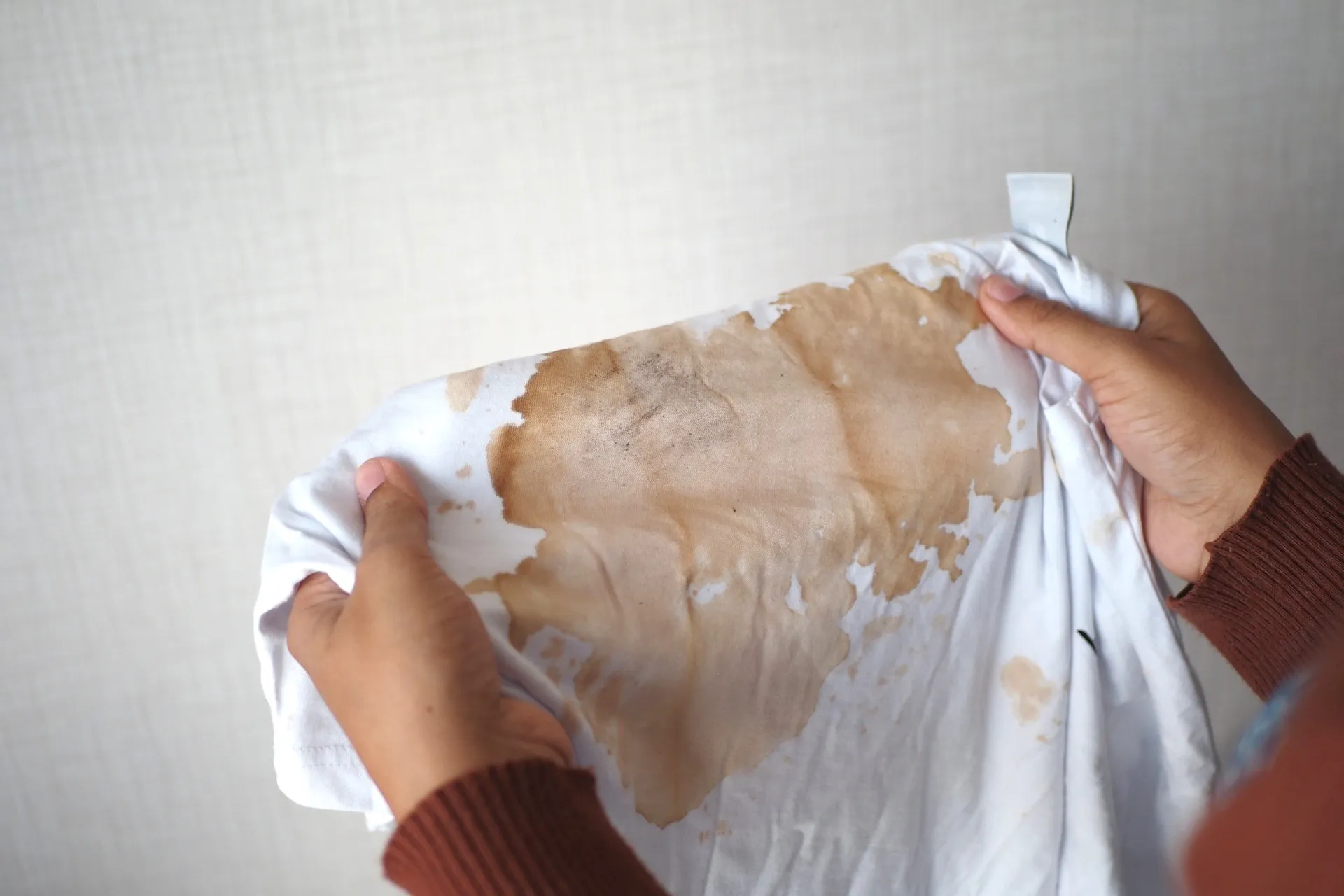
Blood stains are one of the most common laundry problems—and one of the most manageable when handled correctly. The frustrating part isn’t fresh blood, which responds well to cold water alone most of the time. It’s dried blood that’s already been sitting on fabric for hours, days, or longer—or worse, blood that’s been through the dryer and is now thoroughly heat-set into the fibers.
The chemistry behind blood stains explains why they’re stubborn when dry and why most people accidentally make them worse. Blood contains hemoglobin—an iron-rich protein that binds to fabric fibers as it dries. Heat accelerates this binding dramatically, which is why hot water and dryer heat are the two things that turn a manageable dried blood stain into a near-permanent one. Understanding this single fact—that heat is the enemy at every stage—is the most important thing you can take from this guide.
The good news is that even old, dried blood stains respond well to the right treatments, and several of the most effective methods use products you already have at home. The methods in this guide are organized from the gentlest and most accessible through to the most powerful treatments for stains that have resisted everything else.
Why Dried Blood Stains Are Different from Fresh Blood
Fresh blood is roughly 80% water—it rinses out easily with cold water before it bonds to fabric. As blood dries, several things happen simultaneously:
- The water evaporates, leaving behind the protein compounds concentrated in the fabric
- Hemoglobin oxidizes, turning from red to the characteristic dark brown-red of dried blood and bonding more strongly to fabric fibers
- The protein cross-links with the fabric at a molecular level, particularly in natural fibers like cotton, linen, and wool
The practical implication: dried blood needs to be re-dissolved before it can be removed, and the agents that dissolve dried hemoglobin most effectively are either enzymatic (biologically breaking down the protein), acidic (disrupting the protein bonds), or mildly oxidizing (breaking down the hemoglobin pigment).
The Non-Negotiable Rules
Never use hot water. Hot water denatures (sets) the blood protein into the fabric permanently—the same thing that happens when you cook meat. Cold water only at every stage until the stain is completely gone.
Never put blood-stained clothing in the dryer until the stain is completely removed. Dryer heat sets blood stains permanently. Air dry and check before drying.
Never use bleach on colored clothing. Chlorine bleach removes blood effectively from white fabric but destroys color. Use oxygen bleach (like OxiClean) as a safer alternative for colored fabric.
Act sooner rather than later. Even for dried stains, the longer blood has been in fabric, the more cross-linking has occurred and the harder it is to remove. A stain that’s been there a day is easier to remove than one that’s been there a month.
What You’ll Need (Depending on the Method)
- Cold water
- Hydrogen peroxide (3%)
- Dish soap
- Baking soda
- Salt
- White vinegar
- Meat tenderizer (unseasoned)
- Enzyme laundry detergent or enzyme stain remover
- OxiClean or oxygen bleach
- Ammonia (clear, unscented)
- Laundry detergent
- A soft-bristle brush or old toothbrush
- Clean white cloths
- A bowl or basin for soaking
- Rubber gloves
Method 1: Cold Water Soak (Best First Step for All Dried Blood Stains)
Cold water alone won’t fully remove dried blood in most cases—but it’s the essential first step that makes every other method more effective. Rehydrating the dried blood before applying any cleaning agent loosens the protein’s grip on the fabric fibers and allows cleaning agents to penetrate to the full depth of the stain rather than just working on the surface.
- Check the care label before proceeding. Confirm the fabric can be wet-cleaned—dry-clean-only fabrics including silk, wool blends, and some structured garments should go to a professional rather than being treated at home.
- Run cold water through the back of the stain—not through the front. Flushing from the back pushes the blood out through the same side it entered from, rather than driving it deeper into the fabric. Hold the fabric under a running cold tap with the stained side facing down, allowing the water pressure to work the blood outward.
- Continue flushing for two to three minutes. For a stain that has been dried for less than 24 hours, you’ll see a significant amount of blood releasing into the water during this flushing stage.
- Assess after flushing. If the stain has significantly lightened to a faint shadow, continue flushing and the remaining residue may rinse out entirely. If the stain is still largely present but softened and re-wetted, it’s ready for a targeted cleaning treatment.
- Soak in cold water for 30 minutes to two hours for stains that haven’t responded sufficiently to flushing alone. A simple cold water soak continues rehydrating the blood protein and allows it to loosen further before cleaning agents are applied.
- Do not wring or rub the fabric during soaking—this spreads the loosened blood into adjacent fabric areas.
For very old dried stains (more than a week old): soak in cold water overnight rather than for a few hours. The extended soaking period is necessary to fully rehydrate stains that have had significant cross-linking time.
Best for: All fabrics and all blood stains as the essential first step before any other treatment. Often sufficient on its own for stains dried for less than a few hours.
Method 2: Hydrogen Peroxide (Best All-Around Treatment for Blood)
Hydrogen peroxide is the most widely recommended and consistently effective treatment for blood stains—and it’s the one most people already have in their medicine cabinet. It works by releasing oxygen that breaks down the hemoglobin in blood at a chemical level, effectively dissolving the pigment that makes the stain visible. It’s fast, accessible, and produces results on dried blood stains that cold water alone can’t achieve.
- Cold water soak first as described in Method 1—rehydrating the stain before applying hydrogen peroxide produces significantly better results than applying directly to completely dry blood.
- Use 3% hydrogen peroxide—the standard concentration sold in pharmacies. Higher concentrations are more aggressive but also more likely to bleach fabric color.
- Test on a hidden seam first. Hydrogen peroxide can lighten some fabric dyes—apply a small amount to an inside seam or hem, allow to dry completely, and assess before treating the visible stain. It’s generally safe on white and light-colored fabrics; test carefully on dark and bright colors.
- Apply hydrogen peroxide directly to the stained area using a cloth, cotton ball, or by pouring a small amount directly onto the stain. You’ll see immediate fizzing—this is the oxygen reaction working. The fizzing lifts the blood protein from the fabric fibers.
- Allow to sit for five to ten minutes while the reaction continues. Don’t blot or disturb during this time—let the fizzing action work.
- Blot with a clean white cloth to lift the loosened blood. The cloth should show reddish-brown color transfer as it picks up the dissolved blood.
- Rinse thoroughly with cold water to remove the hydrogen peroxide and lifted blood. Residual peroxide continues to work and can cause uneven bleaching if left in the fabric.
- Repeat if the stain remains. A second application often removes what the first round loosened but didn’t fully lift.
- Check thoroughly before drying. The stain may appear gone while wet—hold the fabric up to light to confirm no shadow remains before machine washing and drying.
- Machine wash on cold if any residue remains after hydrogen peroxide treatment. Air dry and check.
Best for: White and light-colored fabrics, most cotton and synthetic blends, fresh to moderately dried blood stains. Test carefully on dark or brightly colored fabrics.
Method 3: Dish Soap and Cold Water (Best Gentle Treatment for Delicate Fabrics)
For fabrics that need a gentler approach than hydrogen peroxide—delicate synthetics, brightly colored items where bleaching risk is a concern, or items that are slightly old but not severely set—dish soap and cold water is an effective and low-risk treatment for dried blood.
- Rehydrate the stain with cold water first as in Method 1.
- Apply dish soap directly to the stain while the fabric is still damp from rehydration. A small amount—about the size of a pea for a coin-sized stain—is sufficient. More soap makes rinsing more difficult without improving results.
- Work the soap gently into the stain with your fingers or a soft toothbrush using small circular motions. The soap’s surfactants help lift the loosened blood protein from the fabric fibers.
- Allow to sit for five minutes.
- Work the lather through the fabric by gently rubbing the fabric against itself—the friction combined with the surfactant action lifts the stain.
- Rinse thoroughly with cold running water, continuing until the water runs clear.
- Repeat if any stain remains—dish soap treatment of dried blood often requires two to three rounds before the stain is fully removed.
- For stubborn residue after multiple rounds, proceed to hydrogen peroxide (Method 2) or enzyme cleaner (Method 5) for more targeted treatment.
Best for: Delicate fabrics, brightly colored items, silk-cotton blends, items where hydrogen peroxide bleaching risk is a concern.
Method 4: Baking Soda and Cold Water Paste (Best for Fresh-to-Moderate Dried Stains)
Baking soda combined with cold water creates a mild abrasive paste that draws blood out of fabric fibers through a combination of physical abrasion and chemical action. It’s particularly effective on cotton and linen where the texture of the fabric allows the paste to work into the fiber weave.
- Rehydrate the stain with cold water first.
- Mix two parts baking soda with one part cold water to form a thick paste—similar consistency to toothpaste. Mix fresh for each treatment rather than storing, as the paste loses effectiveness quickly.
- Apply the paste generously to the stained area, spreading it in an even layer that covers the stain completely.
- Work the paste into the fabric with a soft toothbrush using circular motions. The mild abrasive action of the baking soda physically dislodges blood protein from the fabric weave while the alkaline chemistry helps break down the stain.
- Leave for 30 minutes. For stains that have been dried for more than 24 hours, leave for one to two hours—the paste needs more contact time to work through the more deeply set protein bonds.
- Rinse with cold running water while gently brushing the paste away with the toothbrush.
- Assess the stain. For moderate dried blood stains, the paste often removes the majority of visible staining in one treatment.
- Follow with hydrogen peroxide or enzyme cleaner if residual staining remains after rinsing.
Best for: Cotton and linen, moderate dried blood stains, fabrics where abrasive action is appropriate, as a first chemical treatment after cold water rehydration.
Method 5: Enzyme Cleaner (Most Effective for Old and Set-In Blood Stains)
Enzyme cleaners—particularly those containing protease enzymes—are the most effective treatment for old, dried blood stains because they work by the same mechanism that makes blood stains persistent. Proteases biologically break down protein molecules—including hemoglobin—at a molecular level, dissolving the protein bonds that anchor the stain to the fabric. For blood stains that have been in fabric for days or weeks, or that have resisted other treatments, enzyme cleaner is the gold standard.
- Rehydrate the stain thoroughly with cold water before applying the enzyme cleaner. Enzyme cleaners work more effectively on moist stains than completely dry ones—the enzymes need moisture to function.
- Choose an enzyme cleaner that specifically lists protease as an ingredient—this is the enzyme that targets protein-based stains. Products formulated for pet stains (Nature’s Miracle, Rocco & Roxie) contain protease and work well on blood. Enzyme-based laundry pre-treatments (Zout, Carbona Stain Devils #5) are also formulated for protein stains.
- Apply the enzyme cleaner generously to the stained area, ensuring it penetrates the full depth of the fabric rather than just the surface.
- Allow the full dwell time specified on the product label—typically 15–30 minutes for standard stains. For dried blood that has been in fabric for more than a week, extend the dwell time to two to four hours.
- Do not let the enzyme cleaner dry out during the dwell period. If the fabric begins to dry, add a few drops of cold water to keep it moist—dried enzyme cleaner stops working.
- For old, heavily set stains, place the treated garment in a sealed plastic bag after applying the enzyme cleaner. This prevents drying and allows the enzymes to continue working for an extended dwell period.
- After the dwell period, work the cleaner into the fabric gently with a soft brush.
- Machine wash on cold with a good laundry detergent—the wash cycle removes the dissolved stain material and enzyme cleaner residue simultaneously.
- Air dry and inspect before placing in the dryer. Repeat if any stain remains.
Best for: Old and set-in blood stains, stains that have been in fabric for days to weeks, stains that haven’t responded to hydrogen peroxide or other treatments, blood stains on heavily structured fabric where thorough rinsing is difficult.
Method 6: Salt and Cold Water (Best Emergency Treatment and Blood Stain Prevention)
Salt draws moisture and dissolved proteins out of fabric through osmosis—the same principle that makes salt effective for preserving meat. For blood stains, salt works particularly well as an emergency first response when no other cleaning products are available, and as a pre-treatment that reduces the severity of a stain before more targeted cleaning.
- Rehydrate the stain with cold water.
- Pour a generous amount of table salt directly onto the wet stain—enough to fully cover the stained area with a thick layer.
- Press the salt firmly into the fabric and allow it to draw the blood from the fibers. The salt should turn pink or red as it absorbs the blood—this color change confirms the osmotic action is working.
- Leave for 15–30 minutes for fresh-to-moderate dried stains. The salt crust will harden as it absorbs blood.
- Brush away the salt and rinse with cold water.
- Repeat with fresh salt if blood is still visibly drawing out.
- Follow with a targeted treatment—hydrogen peroxide, enzyme cleaner, or dish soap—for any remaining stain after the salt has drawn out as much blood as possible.
Best for: Emergency treatment when other products aren’t available, reducing the severity of a stain before targeted treatment, as a first step that makes subsequent treatment more effective.
Method 7: Meat Tenderizer Paste (Best for Protein-Rich Old Blood Stains)
Unseasoned meat tenderizer contains papain—a protease enzyme derived from papaya—that breaks down protein molecules in meat. The same enzyme action works on the protein in blood stains, making meat tenderizer an effective and surprisingly powerful treatment for old, dried blood stains on natural fiber fabrics.
- Check that the meat tenderizer is unseasoned—seasoned versions contain salt, spices, and other additives that can stain fabric or affect color. Unseasoned meat tenderizer powder only.
- Rehydrate the stain with cold water.
- Mix meat tenderizer powder with just enough cold water to form a thick paste—roughly two parts powder to one part water.
- Apply the paste generously to the entire stained area and work it into the fabric with a soft brush.
- Allow to sit for 30 minutes to one hour. The papain enzyme needs contact time to break down the blood protein—don’t rush this step.
- For old, severely set stains, leave the paste on for up to four hours. Keep the fabric moist by adding a few drops of cold water if the paste begins to dry.
- Rinse thoroughly with cold water, working the paste out of the fabric completely.
- Machine wash on cold with laundry detergent.
- Air dry and inspect before considering the treatment complete.
Best for: Old blood stains on natural fibers (cotton, linen), stains that have been in fabric for more than a week, when enzyme cleaner isn’t available but meat tenderizer is.
Method 8: OxiClean or Oxygen Bleach Soak (Best for Stains That Have Survived Everything Else)
Oxygen bleach—OxiClean and similar products—is the most powerful treatment for blood stains that have resisted other methods. It releases oxygen ions that break down the hemoglobin pigment through oxidation, working deeper into the fabric structure than surface treatments can reach. Unlike chlorine bleach, it’s safe for most colored fabrics and doesn’t degrade cotton fibers with repeated use.
- Fill a basin with cold water—not warm or hot. Oxygen bleach is effective in cold water despite the common assumption that it needs heat; more importantly, cold water prevents further heat-setting of the stain.
- Dissolve OxiClean according to the product directions—typically one scoop per gallon of water. Stir until fully dissolved before adding the garment.
- Submerge the garment completely and press it down to ensure full saturation.
- Soak for a minimum of one to two hours for moderately dried stains. For old, severely set stains or stains that have been through the dryer, soak for up to eight hours or overnight.
- Check the stain periodically during soaking—you’ll often see the stain fading progressively as the oxygen bleach works through the fabric.
- After soaking, remove the garment and check the stain. If it’s significantly reduced, proceed to machine washing. If it’s still substantially present, apply a concentrated paste of OxiClean powder mixed with a small amount of cold water directly to the stain, allow to sit for 30 minutes, then wash.
- Machine wash on cold with laundry detergent and an additional scoop of OxiClean in the wash drum.
- Rinse very thoroughly—OxiClean residue in fabric can cause skin irritation with extended contact.
- Air dry and inspect before considering the stain removed. For dryer-set blood stains, repeat the full soak cycle a second time if any stain remains after the first treatment—dryer-set stains almost always require multiple treatments.
Best for: Old, set-in blood stains that haven’t responded to other methods, blood stains that have been through the dryer, stains on white or light-colored colored fabrics, the most stubborn cases where all other methods have been insufficient.
Method Comparison at a Glance
| Method | Best For | Safe for Colors | Time Required |
|---|---|---|---|
| Cold water soak | First step, all stains | Yes | 30 min–overnight |
| Hydrogen peroxide | Most dried blood, white/light fabric | Test first | 10–30 minutes |
| Dish soap + cold water | Delicate fabrics, bright colors | Yes | 15–30 minutes |
| Baking soda paste | Cotton/linen, moderate stains | Yes | 30 min–2 hours |
| Enzyme cleaner | Old and set-in stains | Yes | 30 min–4 hours |
| Salt + cold water | Emergency treatment | Yes | 15–30 minutes |
| Meat tenderizer | Old stains, natural fibers | Yes | 30 min–4 hours |
| OxiClean soak | Most stubborn, dryer-set stains | Yes (test first) | 1 hour–overnight |
Dealing with Dryer-Set Blood Stains
Blood stains that have been through the dryer are the hardest category to treat—the heat has accelerated the protein cross-linking to a point where the stain has essentially been cooked into the fabric. They’re not always removable, but significant improvement is achievable with the right approach:
- Start with an extended cold water soak—overnight minimum. The goal is maximum rehydration before any chemical treatment.
- Apply enzyme cleaner generously after soaking and seal in a plastic bag for four to eight hours. Enzyme cleaner is the most effective treatment for heat-set protein stains.
- If the stain persists, follow with an OxiClean soak for eight hours.
- For white fabric, hydrogen peroxide applied after the enzyme treatment and before the OxiClean soak adds an additional layer of treatment.
- Repeat the full cycle if improvement occurs but the stain isn’t fully removed—each cycle reduces the stain further even when complete removal takes multiple attempts.
- Accept realistic expectations. Some dryer-set blood stains, particularly old ones in heavy fabrics, won’t come out completely. A significant reduction in visibility is often the practical outcome rather than complete elimination.
Blood Stain Removal by Fabric Type
Cotton and linen: The most forgiving fabrics for blood stain removal. Can handle all methods including hydrogen peroxide, baking soda paste, and OxiClean soaking. Most dried blood stains in cotton respond well to enzyme cleaner or hydrogen peroxide.
Wool: Cold water only—hot water causes irreversible shrinkage and felting. Hydrogen peroxide at diluted strength (one part peroxide to three parts water), enzyme cleaner specifically formulated for delicates, or professional cleaning. Don’t scrub wool—it causes fiber damage.
Silk: Professional cleaning is the safest option. If home treatment is necessary, cold water flush and diluted enzyme cleaner applied very gently. No hydrogen peroxide—it damages silk fibers and affects the sheen. No vigorous scrubbing.
Synthetics (polyester, nylon, spandex): Generally respond well to most methods. Dish soap, enzyme cleaner, and hydrogen peroxide (test first on dark colors) all work. Synthetics don’t absorb stains as deeply as natural fibers, so dried blood often sits more on the surface and responds faster to treatment.
Denim: Heavy weave requires longer treatment dwell times. Cold water soak overnight, then enzyme cleaner or hydrogen peroxide (test on dark denim—peroxide will lighten indigo dye). OxiClean soak works well for stubborn stains in denim.
FAQ
Can I use warm water if I don’t have cold water available? Room temperature water is acceptable—it’s the hot water from the tap or heated water that causes protein setting. Cold water is optimal; cool tap water is acceptable; warm or hot water causes permanent damage to the stain.
My blood stain has been in the fabric for months. Is it too late? Months-old blood stains are very difficult but not always impossible to remove. An overnight cold water soak followed by four to eight hours with enzyme cleaner, then an OxiClean soak, produces the best chance of significant improvement. Complete removal from months-old, unheated stains is possible in many cases; from months-old heat-set stains, partial improvement is the more realistic outcome.
Does saliva help remove blood stains? Yes—saliva contains amylase enzymes that break down protein, and the specific chemistry of your own saliva is particularly effective on your own blood. For small fresh stains, applying saliva directly is a genuinely effective first response. It’s less effective than dedicated enzyme cleaners for dried blood but works as an emergency treatment.
Can I use bleach on a blood stain? Chlorine bleach is effective on blood stains in white fabric—it removes the hemoglobin pigment completely. Never use chlorine bleach on colored fabric, it destroys dye. Oxygen bleach (OxiClean) is the appropriate alternative for colored clothing—it removes blood effectively without damaging color.
Why does the stain look worse after drying? If a stain looks worse after drying than it did while wet, it usually means cleaning product residue—soap, OxiClean, or enzyme cleaner—is still in the fabric. Re-wet and rinse extremely thoroughly, then re-wash before re-drying. A shadow that appears after drying that wasn’t visible while wet is often residual hemoglobin that the cleaning loosened but didn’t fully remove—it becomes visible as it oxidizes during drying.
The Bottom Line
Dried blood stains respond to treatment—the key is cold water at every stage and the right cleaning agent for the severity of the stain. For most dried blood stains caught within a day or two, hydrogen peroxide produces excellent results quickly. For older, more set-in stains, enzyme cleaner with a long dwell time is the most reliable treatment. For stains that have been through the dryer, the OxiClean soak protocol combined with enzyme treatment gives the best chance of significant improvement. Whatever method you use, never use hot water, never put the item in the dryer before the stain is gone, and check in good light while the fabric is still damp before concluding the stain is removed.
Enjoyed this project? Get even more DIY ideas that save (and make) you money.
Join our free newsletter for profitable DIY projects, clever cleaning hacks, home ideas, and creative crafts delivered straight to your inbox.
✓ Free forever • No spam • Unsubscribe anytime