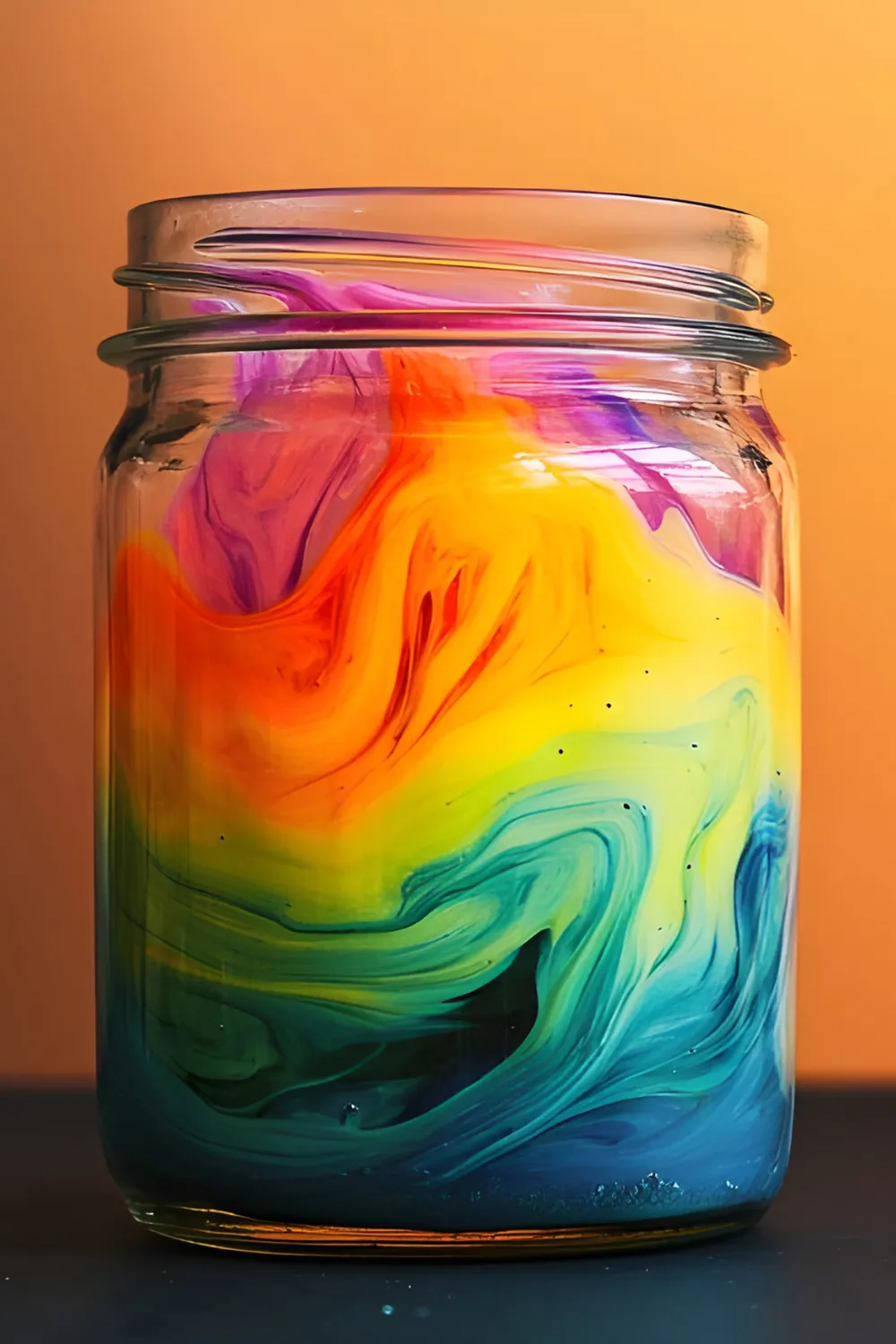
Imagine pouring several different liquids into the same jar and watching them refuse to mix — stacking themselves up in perfect, glowing bands of color like a rainbow trapped in glass. No stirring required, no mystery ingredients, no fancy lab equipment. Just a handful of kitchen staples and the invisible force of density doing all the work.
The Rainbow Density Jar is one of the most visually stunning science experiments you can do at home, and the payoff is completely disproportionate to the effort. Set it up on a sunny windowsill and it looks like a piece of art. Pull it out at a birthday party and every kid in the room will want a turn. Best of all, the science behind it is genuinely fascinating — and surprisingly easy to explain to children of any age.
Watch this short video to see the Rainbow Density Jar Experiment in action before you try it yourself:
What Is the Rainbow Density Jar Experiment?
The Rainbow Density Jar Experiment is a science activity in which several different liquids — each colored to represent a band of the rainbow — are carefully layered inside a clear jar or glass without mixing. Because each liquid has a different density, the heavier ones sink to the bottom while the lighter ones float on top, creating a series of distinct, colorful layers that look just like a rainbow.
It’s a staple in science classrooms and a favorite at home because it makes an abstract concept — density — completely visible and tangible. Children don’t just hear that some liquids are “heavier” than others; they see it happening right in front of them, layer by layer, in real time. The experiment works for kids as young as three (with adult help for the pouring) all the way through middle school, where it can anchor a more formal investigation into the physics of matter.
The Science Behind It: Why Don’t the Liquids Mix?
Before you line up your jars and start pouring, it’s worth taking a moment to understand what’s actually holding those layers apart — because it isn’t magic, even if it looks like it.
Density is a measure of how much mass is packed into a given volume of a substance. The formula is simple: density equals mass divided by volume (D = M/V). What this means in practice is that a cup of honey contains far more tightly packed molecules than a cup of water of exactly the same size, so honey is denser than water. Denser liquids are, in effect, heavier for their size — and heavier liquids sink below lighter ones when placed in the same container.
The key reason the layers stay separate rather than eventually blending is that many of the liquids used in this experiment don’t just differ in density — they also differ in their chemical makeup. Honey and corn syrup are water-based but heavily concentrated with sugars, giving them high density. Dish soap sits in the middle range. Water and colored water solutions come next. Vegetable oil is less dense than water but also non-polar, meaning it won’t dissolve into water even given unlimited time. Rubbing alcohol, the least dense of the group, floats serenely on top.
The result is a stable, self-sorting column of liquids. Each layer stays where physics put it, and the food coloring makes the invisible boundaries between them beautifully visible.
What You’ll Need
The classic six-layer version of this experiment uses liquids you most likely already have on hand:
- Honey — the densest layer, sitting at the very bottom (colored purple with red and blue food coloring)
- Blue dish soap — the second layer, which helpfully comes pre-colored (or use clear soap with blue food coloring)
- Water — tinted green with food coloring for the middle layer
- Vegetable oil — naturally yellow, no coloring needed, for the fourth layer
- Rubbing alcohol (70%) — the lightest layer, tinted red for the top (or use orange for a more realistic rainbow)
- A tall, clear jar or glass — the taller the better; a cylinder or drinking glass works perfectly
- Food coloring — red, blue, and green at minimum
- A pipette, turkey baster, or spoon — for slow, controlled pouring
- Small cups or bowls — one for mixing each colored liquid before adding it to the jar
Optional: a dropper for extra precision, or small objects like a grape, a plastic bead, or a raisin to drop in and observe where they settle among the layers.
Step-by-Step: How to Do the Rainbow Density Jar Experiment
Step 1: Prepare each colored liquid in a separate cup.
Before you start layering, mix and color each liquid in its own small cup or bowl. Add one drop of red and one drop of blue food coloring to your honey and stir well to turn it purple. Tint your water green with a few drops of green food coloring. Add red or orange food coloring to the rubbing alcohol. The dish soap layer is typically already blue, but if you’re using clear soap, add a drop of blue coloring and stir gently — avoid creating bubbles, which will disrupt the layers.
Step 2: Pour the honey into the jar first.
Pour your purple honey slowly and evenly into the center of your tall jar to create the first layer. You’re aiming for a layer about one to two centimeters thick — enough to be clearly visible but not so much that it crowds out the other layers. Let the honey settle and come to rest completely before adding the next layer, which takes about 30 to 60 seconds.
Step 3: Add the dish soap layer very slowly.
Tilt the jar at a slight angle and pour the blue dish soap down the inside wall of the jar rather than straight down into the center. This slows its descent and prevents it from punching through the honey layer below. Add it until you have a second visible band sitting cleanly above the honey. If you pour too fast, the two layers will blend at the boundary — slow is always better.
Step 4: Pour the green water down the side of the jar.
Using a pipette, spoon, or the tilt-and-pour method, carefully introduce the green water as the third layer. At this stage, patience is everything. Let the water trickle down the inside wall of the glass in a thin stream rather than splashing it in. Watch the green layer settle above the soap. If the boundary looks a little murky at first, give it a minute — the layers often clarify on their own as the liquids find their equilibrium.
Step 5: Add the vegetable oil.
Pour the vegetable oil gently onto the surface of the water. Because oil and water are chemically incompatible — oil is non-polar, water is polar — these two layers will separate naturally and quickly even if they’re temporarily disturbed. The oil will float into its own clean band above the water. Continue to pour slowly along the side of the glass for the cleanest results.
Step 6: Pour in the rubbing alcohol as the final layer.
The rubbing alcohol is the lightest liquid in the jar, so it will naturally float to the top. Still, pour it very slowly down the side of the glass to keep the oil layer beneath it undisturbed. This final red or orange band completes the rainbow. Stand back and look at what you’ve created — five or six distinct bands of color, each floating exactly where its density placed it.
Step 7: Let the jar settle in a well-lit spot.
Place your finished Rainbow Density Jar near a window or shine a flashlight behind it. The layers become even more vivid and translucent in direct light. Give it a few minutes to fully settle, and then invite kids to observe, make predictions, and ask questions about what they’re seeing.
Best Way to Get Perfectly Distinct Layers
The single most important technique in this experiment is pouring speed. Every failed Rainbow Density Jar comes down to the same cause: pouring too fast. When liquid hits the surface below it too quickly and with too much force, it punches through the layer and blends. Slow, gentle, controlled pouring — ideally using a pipette or tilting the jar and letting liquid trickle down the glass wall — is what separates a crisp rainbow from a muddy swamp.
The order of pouring also matters enormously. Always add liquids from densest to least dense (honey first, rubbing alcohol last). If you accidentally pour a lighter liquid before a denser one, the denser liquid will sink through it and mix everything up on the way down.
Room temperature liquids also layer more cleanly than cold ones. Honey straight from the fridge is thick and viscous, making it harder to pour in a controlled way and harder for the layers above it to settle properly. Let all your liquids come to room temperature before you start.
Rainbow Density Jar Experiment: Fun Variations to Try
Once you’ve mastered the classic version, there are several creative ways to extend the activity and keep kids engaged for longer.
The Density Drop Test: After completing your jar, drop small household objects into it one at a time — a grape, a plastic bead, a coin, a raisin, a piece of pasta — and ask kids to predict where each object will come to rest. Objects sink until they reach a layer whose density matches their own. A grape, for example, typically settles between the water and soap layers. This turns the finished jar into an ongoing investigation.
The Sugar Water Rainbow: Instead of using different household liquids, make four cups of sugar water using the same amount of water but different amounts of sugar (2, 4, 6, and 8 tablespoons respectively). Color each cup a different shade (red, orange, yellow, green) and layer them from highest sugar concentration to lowest. This version demonstrates how the same liquid — water — becomes denser as dissolved sugar increases, which is a more controlled and scientifically precise version of the experiment.
Swap the Liquids: Try replacing honey with maple syrup, or vegetable oil with baby oil, and observe whether the layers behave the same way. This teaches kids that density is a property of the substance itself, not just the color you add to it.
The Shake Test: Once the experiment is complete and the layers have been observed and recorded, let kids shake the jar vigorously. Watch the layers blend into a murky brown. Then set the jar down and check on it every 10 minutes. Depending on the liquids used, some layers may begin to re-form as the liquids settle back into their density order.
Troubleshooting: Why Aren’t the Layers Separating?
The layers keep mixing together. Almost always a pouring speed problem. Slow down significantly — introduce each new liquid as a thin trickle down the inner wall of the glass, not a pour into the center.
The honey and soap are blending. The soap was probably added before the honey had fully settled. After pouring the honey, wait a full minute before adding anything else, and make sure the honey layer has stopped moving.
The oil and water layers keep merging. They won’t actually merge — oil and water are chemically incompatible. What looks like merging is usually just bubbles or temporary disturbance. Give it two to three minutes and the oil layer will rise back above the water on its own.
The colors all turned brown. Too many layers were poured too quickly, and they all blended. This isn’t a failure — it’s actually a good teaching moment about what happens when differently colored things mix. Start fresh with a new jar and slower pouring.
Quick Fixes for Common Problems
| Problem | Potential Solution | Alternative Suggestion |
|---|---|---|
| Layers won’t stay separate | Pour much more slowly, trickling liquid down the jar’s inner wall. | Use a pipette or dropper for maximum control. |
| Honey and soap blending | Wait 60 seconds for each layer to fully settle before adding the next. | Warm the honey slightly so it pours in a thinner, more controlled stream. |
| Oil and water mixing | Give it 3–5 minutes — they will naturally separate without any help. | Make sure oil goes in before the rubbing alcohol, not after. |
| Colors all turned brown | Layers were added too fast — start fresh with a new jar. | Reduce to four layers instead of six for an easier first attempt. |
| Layers look murky at boundaries | Normal at first — boundaries often clarify as liquids settle. | Place the jar in a sunny spot to make layers more distinct and vivid. |
| Rubbing alcohol sinking instead of floating | It was poured too forcefully and punctured the oil layer — restart. | Pour the alcohol over the back of a spoon held just above the oil surface. |
Learning Extensions: Connecting the Rainbow Density Jar to School Concepts
For parents and teachers, this experiment is a natural gateway into several key science and math ideas that go well beyond the activity itself.
Density as a ratio — the idea that D = M/V — is introduced gently here without needing a formula. Children viscerally understand that honey is “heavier” for its size than water, and that this is why it sinks. From there, the mathematical relationship between mass and volume becomes something they’ve already seen in action.
Polarity and molecular chemistry comes into play when explaining why oil and water remain separate even when shaken together. Oil molecules are non-polar and have no attraction to the polar water molecules around them — they simply refuse to mix regardless of how much energy is applied. This is the same chemistry that explains why grease doesn’t wash off your hands with cold water alone.
The scientific method fits naturally here. Kids can form a hypothesis about which liquid will be densest, design their experiment by choosing their order of pouring, observe results, and reflect on whether their prediction was correct.
Color theory can also be woven in, particularly with the sugar water version of the experiment, where kids mix their own rainbow colors from primary food colorings.
Tips to Make the Most of This Experiment
Label your small cups with the name of each liquid before you start mixing colors — honey, soap, water, oil, and alcohol all look similar in clear cups once the food coloring is added, and pouring them in the wrong order will ruin the layers.
If you want the jar to last as a display piece for several days, keep it completely still on a flat surface away from vibration. The layers can remain stable for one to two days when undisturbed, and the effect in a sunny window is genuinely beautiful.
For younger children, reducing the experiment to just three layers — honey, colored water, and vegetable oil — makes it much more manageable and still delivers a clear, satisfying result. The three-layer version is nearly foolproof.
FAQ
How long do the layers stay separated? If the jar is kept still and undisturbed on a flat surface, the layers can remain clearly visible for one to two days. The oil and alcohol layers will stay separated from the water-based layers indefinitely because they’re chemically incompatible. The honey and sugar-based layers may very slowly begin to dissolve into the water layer over time if any mixing occurs at the boundary.
Can I use any tall container, or does it have to be a jar? Any clear container works — a tall drinking glass, a test tube, a cylindrical vase, or a mason jar are all excellent choices. Taller and narrower containers produce the most dramatic, clearly defined layers because there’s more vertical space between each band. Avoid wide, shallow containers where the layers spread out too thin to see properly.
Is the Rainbow Density Jar Experiment safe for young kids? Mostly yes, with one caveat. Honey, food coloring, dish soap, water, and vegetable oil are all non-toxic. Rubbing alcohol (isopropyl alcohol) should be handled by adults or older children under close supervision — it’s not safe to ingest and should be kept away from young children who might put their hands in the jar. For a fully child-safe version, replace the rubbing alcohol layer with very lightly sugared water tinted red, though the layering effect won’t be quite as clean at the top.
What if I don’t have all the liquids? The experiment works with as few as three layers. Honey, water, and oil give you a clear and satisfying three-layer density column. Each additional liquid adds more visual interest and more science to discuss, but none of them are strictly required. Use whatever you have and treat missing layers as an opportunity to experiment with substitutes.
Conclusion
The Rainbow Density Jar is one of those experiments that earns its place in the rotation permanently — not just because it looks spectacular, but because it delivers a concept that kids carry with them long after the jar is cleaned out. Density stops being an abstract word in a textbook and becomes something they’ve seen, created, and tested with their own hands. Set it up once and you’ll find yourself repeating it for every visitor who walks through the door, every science fair that comes around, and every rainy afternoon that needs a little bit of color. Just remember: slow is everything. Pour slowly, be patient, and the rainbow will take care of itself.
Enjoyed this project? Get even more DIY ideas that save (and make) you money.
Join our free newsletter for profitable DIY projects, clever cleaning hacks, home ideas, and creative crafts delivered straight to your inbox.
✓ Free forever • No spam • Unsubscribe anytime