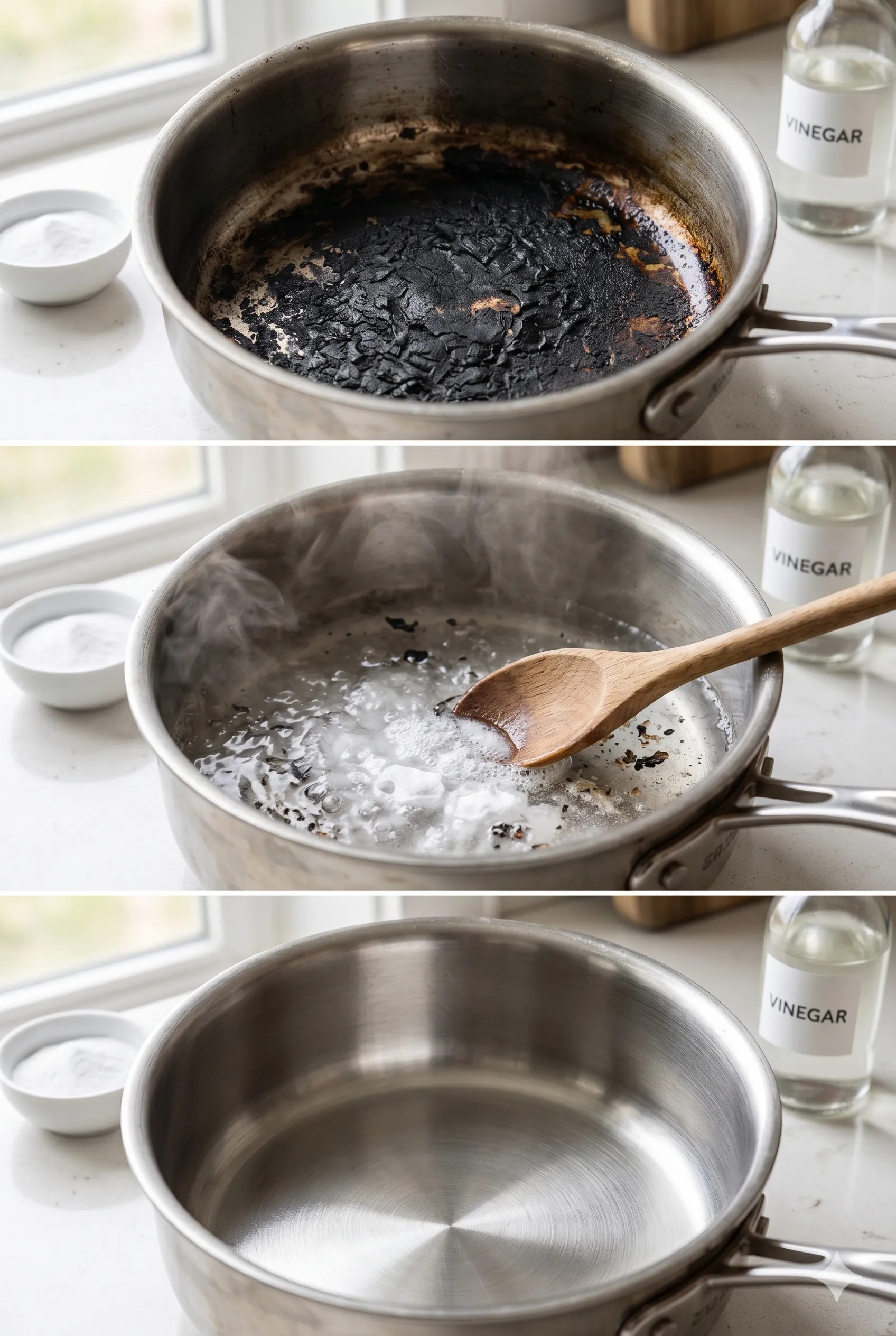
It happens to everyone. You put the milk on to warm, walk away for thirty seconds, and come back to a saucepan that looks like it’s been through a house fire. Or the pasta sauce reduced a little too enthusiastically while you were setting the table. Or the sugar you were melting for caramel went from golden to black in the blink of an eye.
Burnt saucepans have a way of making you feel like the damage is permanent—like the scorch marks and blackened crust are simply part of the pan now. But in almost every case, they aren’t. Whether you’re dealing with scorched milk, sticky caramel, burnt tomato sauce, or carbonized rice, the right method will lift that residue and restore your saucepan without wrecking the surface.
The trick is to stop fighting the burnt layer and start working with chemistry instead. A little heat, a little baking soda, and a little patience will do what twenty minutes of frantic scrubbing never could.
Here’s the Real Reason Burnt Saucepans Are So Hard to Clean
The burnt residue at the bottom of a saucepan isn’t just food that got a little crispy. When food burns, it undergoes a chemical transformation—sugars caramelize and then carbonize, proteins denature and bond to the metal surface, and fats polymerize into a hard, varnish-like film. What you’re left with is essentially a layer of carbon compounds that have chemically bonded to the pan.
Trying to scrape this off dry is like trying to chip concrete off a wall without a chisel. The carbon layer is brittle but adhesive—it shatters into tiny pieces under pressure but clings stubbornly to the surface beneath. Dry force spreads it, scratches the pan, and exhausts you without making much progress.
What actually works is breaking that chemical bond before you try to remove anything. Water, heat, and alkaline compounds like baking soda penetrate the burnt layer, rehydrate it, and weaken the bond between the carbon and the metal—so the residue lifts rather than scrapes. Understanding this is the difference between spending five minutes cleaning versus fifty.
What You’ll Need
Most of these are already in your kitchen right now:
- Baking soda
- White vinegar
- Dish soap
- Salt
- Cold or warm water
- A wooden spoon or silicone spatula
- A non-scratch sponge or soft scrubbing pad
- Optional: Cream of tartar, Bar Keepers Friend, dryer sheets, or a commercial degreaser for extreme cases
You’re Probably Doing This Wrong: Mistakes That Make It Worse
Before the step-by-step methods, let’s address the habits that turn a manageable cleaning job into an hour-long battle:
Scrubbing immediately after burning. The burnt layer is still fully bonded to the pan surface. Scrubbing at this point achieves almost nothing except scratching the pan and tiring your arm out. Always loosen the residue with heat and moisture first.
Plunging a hot pan into cold water. This is a very common reflex, but the thermal shock can warp the base of a saucepan—especially thinner or cheaper ones—meaning it will rock on the stove and heat unevenly from that point forward. Let the pan cool for a few minutes before running water into it.
Using metal utensils or steel wool on non-stick surfaces. If your burnt saucepan has a non-stick coating, metal tools destroy the coating in seconds. Even heavily burnt non-stick pans require only soft sponges and gentle methods.
Applying bleach or harsh chemical oven cleaners. These can discolor stainless steel and aluminum, degrade non-stick coatings, and leave chemical residues that are unsafe for cooking. Every method in this guide uses food-safe, everyday ingredients.
Skipping the soak. When in doubt, soak longer. Rushing the process and trying to scrub before the burnt layer has fully rehydrated is the single biggest reason cleaning attempts fail.
Step-by-Step: How to Clean a Burnt Saucepan
Method 1: Boiling Water and Baking Soda (Best for Most Burns)
This is the starting point for nearly every burnt saucepan—regardless of material or burn severity. It works on stainless steel, aluminum, and enamel, and it’s the method to try first before escalating to anything stronger.
- Let the saucepan cool for five to ten minutes after burning. It should still be warm but no longer dangerously hot. You want to retain some heat in the pan to accelerate the cleaning process, but not so much that adding water causes a steam explosion or warping.
- Fill the saucepan with enough water to fully cover the burnt area, then place it back on the stove over medium heat and bring the water to a boil. As the water heats, it begins to penetrate and loosen the carbonized layer from the inside out.
- Once the water is boiling, add two to three tablespoons of baking soda and stir briefly. The baking soda creates an alkaline solution that chemically breaks down the bonds between the carbon deposits and the pan surface. You’ll often see bits of burnt food begin to float free almost immediately.
- Reduce the heat to a simmer and let the mixture work for 10 to 15 minutes. While it simmers, use a wooden spoon or silicone spatula to gently scrape along the bottom and sides. You should see the burnt layer beginning to detach and lift into the water in chunks or sheets.
- Turn off the heat and allow the pan to cool to a safe handling temperature, about five minutes. Then carefully pour out the dirty water.
- Sprinkle a fresh layer of baking soda over any remaining residue and add just enough water to make a loose paste. Use a non-scratch sponge to scrub gently in circular motions—the remaining residue should lift with minimal effort at this point.
- Rinse thoroughly with warm water and dry immediately with a clean cloth to prevent water spots or rust on iron-based pans.
Method 2: Baking Soda and White Vinegar (Best for Stubborn or Thick Burns)
When the boiling water method leaves behind a persistent layer—common with caramelized sugars, thick sauces, or burns that have been sitting for a day or more—this two-ingredient method delivers noticeably stronger results.
- Pour a shallow layer of white vinegar into the saucepan, just enough to cover the burnt surface, and set it on the stove over medium heat. Bring the vinegar to a gentle simmer and let it work for three to five minutes. The acetic acid in vinegar begins dissolving the alkaline mineral deposits and softening the burnt layer.
- Remove the pan from the heat and immediately add two tablespoons of baking soda. The combination of vinegar and baking soda will react vigorously, fizzing and bubbling. This reaction is intentional—the rapid CO₂ release agitates the burnt residue from below, physically lifting it while the chemical reaction simultaneously weakens its bond with the pan.
- Let the fizzing subside completely, which takes two to three minutes. Don’t rush this step—the reaction is still working even as it calms down.
- Add enough warm water to cover the burnt area fully and return the pan to the stove over medium heat for another five minutes of simmering. At this point the burnt layer should be visibly loose and detaching.
- Allow the pan to cool, pour out the liquid, and use a wooden spoon or non-scratch sponge to clear away the loosened residue. For anything still clinging, apply a fresh baking soda paste and scrub gently.
- Rinse and dry thoroughly. For stainless steel pans, buffing with a dry cloth in the direction of the grain gives a clean, streak-free finish.
Method 3: The Overnight Soak (Best for the Worst-Case Scenario)
If the burn is severe, if it’s been sitting for days, or if you simply don’t want to deal with it right now, this hands-off overnight method does most of the work while you sleep.
- Fill the saucepan with warm water and add three tablespoons of baking soda and a generous squirt of dish soap. Stir briefly to combine.
- Set the pan on the stove and bring the mixture to a gentle boil for five minutes, then turn off the heat. This initial heating jump-starts the penetration process.
- Leave the pan to soak overnight (at least eight hours). The prolonged contact time allows the solution to fully penetrate even the most carbonized and compacted burnt layers.
- In the morning, bring the soaking mixture back to a boil for another five minutes before pouring it out. This second heating cycle finishes the loosening process.
- Most of the burnt residue should now wipe away with a non-scratch sponge and minimal pressure. Rinse thoroughly and dry.
Method 4: Salt Scrub (Best for Cast Iron and Uncoated Pans)
Cast iron saucepans cannot be treated with water-based soaking methods for long periods because the iron will rust. Salt provides effective abrasive cleaning without the corrosive effects of prolonged moisture. This method also works well for carbon steel and uncoated aluminum.
- While the pan is still slightly warm (not hot), pour three to four tablespoons of coarse salt directly onto the burnt area. The warmth helps the salt adhere and penetrate.
- Add just a few drops of neutral cooking oil or dish soap to the salt to form a gritty paste. The oil protects the cast iron surface while providing lubrication for scrubbing.
- Use a folded paper towel, a clean cloth, or a natural-bristle brush to scrub the salt paste over the burnt surface using firm circular motions. The coarse salt acts as a natural abrasive that is tough enough to break through carbonized residue but gentle enough not to damage seasoned cast iron.
- Add a fresh pinch of salt as needed if the first application becomes saturated with residue before the pan is clean.
- Wipe out all the salt and residue with dry paper towels until the surface is clean. Do not rinse cast iron with water unless absolutely necessary—if you do rinse, dry the pan immediately and completely, then apply a thin layer of cooking oil to re-season the surface before storing.
Method 5: Dish Soap Boil (Best for Burnt Milk, Cream, and Dairy)
Burnt dairy is a special category because milk proteins and sugars burn differently from other foods—they form a pale, sticky film that coats the bottom of the pan rather than thick charred chunks. This method targets that specific residue.
- Fill the saucepan with cold water and add two tablespoons of dish soap. Using cold water at the start prevents the burnt milk proteins from toughening further with heat.
- Place the pan on the stove and slowly bring the water to a simmer over low heat. The gradual heating allows the detergent to penetrate and dissolve the milk solids before they have a chance to harden further.
- Let the soapy water simmer for 10 minutes, using a wooden spoon to gently loosen the film from the base of the pan. The milk film should gradually dissolve into the water and the base should become visible.
- Allow the pan to cool slightly, pour out the water, and rinse. If any film remains, apply a paste of baking soda and a few drops of dish soap and scrub gently with a non-scratch sponge.
- For stubborn burnt milk on enamel saucepans, a soak in biological washing powder (laundry detergent with enzymes) dissolved in warm water for 30 minutes is exceptionally effective—the enzymes break down the milk proteins in a way that regular dish soap cannot.
How to Clean Burnt Saucepans by Material
Different saucepan materials have different tolerances, and using the wrong method can cause permanent damage.
Stainless steel is the most forgiving and handles all of the methods above without issue. Bar Keepers Friend (a mild oxalic-acid powder) is particularly effective on stainless steel for removing both burns and the rainbow heat discoloration that develops over time—apply it with a damp cloth, rub in the direction of the grain, and rinse.
Non-stick saucepans require the gentlest approach. Never use salt scrubs, baking soda paste applied with pressure, or any abrasive pad. For burnt non-stick pans, fill the pan with water and two tablespoons of dish soap and simmer on low for ten minutes. Allow it to cool, then wipe gently with a soft cloth. If the non-stick coating is visibly scratched, peeling, or flaking as a result of the burning, stop using the pan—damaged non-stick coatings can release particles into food.
Enamel saucepans (like Le Creuset or similar) are durable but can be chipped by aggressive scrubbing or sudden temperature changes. Use the baking soda boil method with a soft sponge. For stubborn stains on light-colored enamel, a paste of baking soda and hydrogen peroxide left for 30 minutes works well without abrading the surface.
Aluminum saucepans should not be treated with strongly alkaline solutions like heavy baking soda concentrations for long periods, as prolonged alkaline exposure can darken the aluminum. The vinegar and baking soda method is fine for short cleaning sessions, but avoid long overnight soaks with baking soda on bare aluminum.
Cast iron should follow the salt scrub method. Avoid prolonged water contact, and always re-season after any water-based cleaning.
How to Get Rid of Burnt Smells from a Saucepan
Even after the visual residue is gone, burnt saucepans sometimes retain a faint scorched smell that transfers to the next thing you cook. To eliminate it completely, fill the cleaned saucepan with water, add a few slices of lemon or two tablespoons of white vinegar, and simmer for five minutes. The citric acid neutralizes the odor compounds that cling to the metal surface. Pour out the liquid, rinse, and the smell should be gone.
Don’t Ignore a Warped or Pitted Saucepan
A thorough cleaning can restore the appearance and functionality of a burnt saucepan, but it can’t fix physical damage. If your saucepan rocks on the stove after a burning incident, the base has warped from thermal shock. A warped pan heats unevenly, making burning far more likely in the future—and on induction or ceramic stoves, poor base contact causes the stove to work harder and less efficiently.
Small pits or rough patches inside the pan after a severe burn can harbor bacteria if not cleaned thoroughly after every use. If the interior of a non-stick pan shows peeling, blistering, or flaking after a bad burn, the coating is compromised and the pan should be replaced.
Quick-Reference Cleaning Guide
| Burn Type | Best Method | Key Ingredient |
|---|---|---|
| Moderate food burn | Boiling water and baking soda | Baking soda |
| Thick, stubborn burn | Baking soda and vinegar combo | Baking soda + white vinegar |
| Old or very severe burn | Overnight soak | Baking soda + dish soap |
| Cast iron or carbon steel | Salt scrub | Coarse salt |
| Burnt milk or dairy | Dish soap boil | Dish soap |
| Rainbow heat discoloration (stainless) | Bar Keepers Friend or vinegar | Oxalic acid or vinegar |
| Burnt smell after cleaning | Lemon or vinegar simmer | Lemon or white vinegar |
Tips to Prevent Burning Your Saucepan
Never leave dairy or sugar unattended on heat. Milk, cream, and sugar are the most common culprits for burnt saucepans because they can go from fine to scorched in a matter of seconds. If you’re heating either, stay close and stir regularly.
Use the right size burner for the pan. A small saucepan on a large burner means the flame or heating element extends up the sides of the pan, superheating the walls and increasing the likelihood of burning whatever touches them.
Keep heat moderate. Most cooking tasks that people do on high heat can be done just as well—and with far less burning risk—on medium. High heat is rarely necessary in a saucepan and is the single biggest cause of burning.
Deglaze immediately when you see sticking. If food starts to catch on the bottom, add a splash of water, stock, or wine right away and stir. This dissolves the early-stage residue before it carbonizes and turns into a full burn.
Rinse or soak the pan right after cooking. The longer burnt food sits, the more it dries and bonds. Even a quick fill with warm water while you eat your meal makes cleaning dramatically easier afterward.
FAQ
What is the fastest way to clean a burnt saucepan?
The boiling water and baking soda method is the fastest reliable approach for most burns. Fill the pan with water, bring it to a boil, add baking soda, simmer for 10 to 15 minutes, and the residue will lift with gentle scrubbing. From start to finish it takes about 20 minutes with minimal hands-on effort.
Does boiling Coca-Cola clean a burnt pan?
It does work to some degree—the phosphoric acid and carbonation in cola can loosen burnt residue when simmered in the pan. However, baking soda and vinegar are more effective, cheaper, and don’t leave a sticky residue behind. Coca-Cola is best treated as a last resort if you genuinely have nothing else available.
Can I use oven cleaner on a burnt saucepan?
Oven cleaner can be effective on heavily burnt stainless steel or cast iron used outdoors or in a well-ventilated space, but it’s extremely caustic. It will destroy non-stick coatings and can discolor aluminum and enamel. The baking soda and vinegar methods in this guide are safer, equally effective for most burns, and don’t require safety precautions.
Why does my saucepan keep burning even after I clean it?
If food consistently burns in the same pan, the issue may be pan damage rather than cooking technique. A warped base creates hot spots where food burns while the rest of the pan is still cool. Scratched non-stick coatings lose their release properties and cause sticking. If your pan is warped, scratched, or older than seven to ten years, it may be time to replace it.
How do I clean a burnt saucepan without baking soda?
White vinegar alone (simmered in the pan for five to ten minutes) will loosen many burns. Dish soap and boiling water handles dairy and lighter burns. Coarse salt works as a physical abrasive for uncoated pans. Bar Keepers Friend is an excellent commercial alternative for stainless steel.
Conclusion
A burnt saucepan is almost never a lost cause—it just requires the right approach. Stop scrubbing cold and dry, let chemistry do the heavy lifting, and match your method to the type of burn you’re dealing with. The baking soda boil handles most everyday burns in under 20 minutes. The vinegar and baking soda combination tackles the stubborn ones. The overnight soak is your safety net for the truly dire cases. And if you’re dealing with a specialty material like cast iron or non-stick, following the right material-specific method protects your pan in the process. One thing remains true regardless of the method: the sooner you start, the easier the job.
Enjoyed this project? Get even more DIY ideas that save (and make) you money.
Join our free newsletter for profitable DIY projects, clever cleaning hacks, home ideas, and creative crafts delivered straight to your inbox.
✓ Free forever • No spam • Unsubscribe anytime