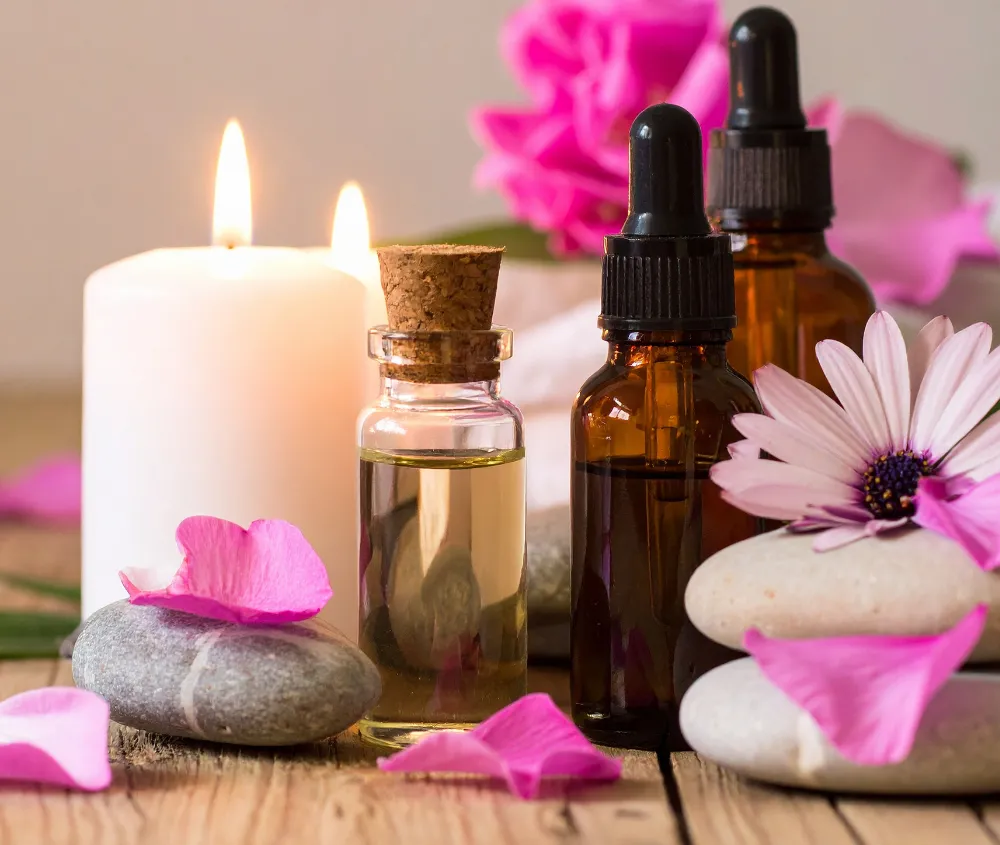
There is something almost meditative about a hand-poured candle. The soft glow, the slow curl of scented air filling a room — it feels intentional in a way that a store-bought candle never quite does. And when you make it yourself using real essential oils instead of synthetic fragrance, you know exactly what you’re breathing in.
The truth is, candle making looks more complicated than it is. Yes, there is a bit of science involved — wax temperatures, fragrance load percentages, wick sizing — but once you understand the logic behind each step, the whole process clicks into place. Whether you want a calming lavender candle for your bedroom or a zesty citrus blend for your kitchen, this guide will walk you through everything you need to know to get it right the first time.
Here’s the Real Reason Your Homemade Candles Don’t Smell Strong Enough
If you’ve tried making candles before and ended up with something that barely scents the air when burning, you’re not alone. The number one complaint from beginner candle makers is weak scent throw — and it almost always comes down to one of three things: adding the essential oils at the wrong temperature, not using enough oil, or choosing a wax that doesn’t hold scent well.
Essential oils are volatile, meaning their aromatic compounds evaporate quickly under heat. If you add them to wax that is too hot, most of the scent burns off before the wax even sets. If you add too little, the candle will smell pleasant up close but won’t fill a room. Getting this right is the difference between a candle that performs and one that disappoints.
What You’ll Need
Gathering everything before you start is important. Candle making involves hot wax and precise timing, so you don’t want to be hunting for supplies mid-pour.
Wax Options:
- Soy wax flakes (best for beginners — clean burning, good scent throw, easy to work with)
- Beeswax (natural and long-burning, but more expensive and harder to scent heavily)
- Coconut wax (excellent scent throw, creamy finish, but softer and pricier)
- Paraffin (strong scent throw but petroleum-based — not ideal if you’re going chemical-free)
Other Supplies:
- Pre-tabbed cotton wicks sized for your container diameter
- Glass jars or heat-safe containers (Mason jars, ceramic vessels, or repurposed glassware)
- A double boiler or a heat-safe pitcher inside a pot of water
- A kitchen thermometer (a candy or infrared thermometer works perfectly)
- Wooden chopsticks or pencils to hold wicks centered while the wax sets
- A kitchen scale for accurate measurements
- Essential oils of your choice
- Wick stickers or a small dab of hot glue to secure wicks to the bottom of jars
You’re Probably Doing This Wrong: The Fragrance Load Rule
Essential oils behave differently in wax than synthetic fragrance oils do. They are generally more volatile and lighter in molecular weight, which means they require a higher fragrance load to achieve the same scent strength — and even then, the cold throw (the scent when the candle is unlit) will always be stronger than the hot throw (the scent when burning).
A good starting point for essential oil candles is a fragrance load of 6–10% by weight. This means for every 100g of wax, you’ll use 6–10g of essential oil. For soy wax specifically, staying around 6–8% tends to produce the best results without causing the oil to pool on the surface or affect how the wax sets.
Use your kitchen scale, not a dropper, when measuring. Eyeballing essential oil quantities is one of the most common reasons beginner candles underperform.
Choosing the Right Wax for Essential Oil Candles
Not all waxes are created equal when it comes to holding essential oils.
Soy wax is the most forgiving and widely recommended for beginners. It has a lower melt point (around 120–180°F depending on the blend), which means you add your essential oils at a lower temperature and lose less to evaporation. It also burns cleanly and slowly, giving you more hours of scented air per candle.
Beeswax has a naturally warm, honey-like scent that pairs beautifully with warm essential oils like frankincense, myrrh, or vanilla-adjacent blends. However, its higher melt point (around 145–147°F) can be challenging when working with delicate top-note oils that evaporate quickly.
Coconut wax is becoming increasingly popular among natural candle makers because it has a superb scent throw and a beautiful, creamy appearance. It’s more expensive but worth it if you’re making candles as gifts or for sale.
Step by Step: How to Make Candles Using Essential Oils
Take your time with each step, especially the temperature stages. Rushing the cooling process or adding oils at the wrong moment are the two most avoidable mistakes in candle making.
- Step 1 — Prepare your containers and wicks. Place a wick sticker or small dot of hot glue at the bottom center of each jar and press your pre-tabbed wick firmly onto it. Let it dry completely. Lay a chopstick or pencil across the top of the jar and wrap the top of the wick around it once to keep it centered and taut. This small preparation step makes a significant difference in how evenly your candle burns.
- Step 2 — Measure your wax. Use your kitchen scale to weigh out your soy wax flakes. A general rule of thumb is that wax fills roughly double its weight in volume — so if your jar holds 8 oz of liquid, you’ll need approximately 8 oz (by weight) of wax flakes to fill it. Always make slightly more than you think you need, as you’ll want to do a small top-up pour once the candle has set and sunk slightly in the center.
- Step 3 — Melt the wax using a double boiler. Pour your wax flakes into a heat-safe pouring pitcher and place it inside a pot of simmering water. Never melt wax directly on an open flame or in a microwave unsupervised — wax is flammable. Stir occasionally as it melts. For soy wax, heat until the wax is fully liquid and reaches around 170–180°F.
- Step 4 — Remove from heat and let it cool to the right temperature. This is the most critical step for scent retention. Allow the melted wax to cool, stirring occasionally, until it reaches 130–140°F for soy wax. Use your thermometer — don’t guess. Adding essential oils above 150°F will cause most of the volatile aromatic compounds to simply evaporate before the wax sets.
- Step 5 — Add your essential oils. Once the wax hits your target temperature, pour in your pre-measured essential oils. Stir slowly and steadily for at least two full minutes. A thorough, unhurried stir ensures the oil is evenly distributed throughout the wax rather than pooling in one area. This directly affects how consistently the candle scents the air when burning.
- Step 6 — Pour into your prepared jars. Pour the scented wax slowly and steadily into your jars, leaving about half an inch of space at the top. Avoid pouring too quickly, which can introduce air bubbles. Re-center your wick if it has shifted during the pour. Set the candles on a flat, draft-free surface to cool undisturbed.
- Step 7 — Allow to cure fully before burning. This step is where most beginners lose their patience — and pay the price for it. Soy wax candles need a minimum of 24–48 hours to set, but ideally you should allow them to cure for a full 48–72 hours before lighting them. The curing process allows the fragrance molecules to fully bind with the wax, which dramatically improves scent throw. Candles burned too soon will always smell weaker.
- Step 8 — Trim the wick and do a test burn. Before the first burn, trim your wick to about ¼ inch above the wax surface. A wick that is too long will produce a large, sooty flame and burn through your candle unevenly. Light the candle and let it burn until the entire surface has melted into a full melt pool — this usually takes 2–4 hours depending on the jar diameter. Never extinguish a soy candle before it has reached a full melt pool on the first burn, as this causes “tunneling” where the wax burns down the center and wastes the outer edges.
The Best Essential Oil Blends for Candles
Not every essential oil performs equally well in candle wax. Heavier, resinous oils with lower volatility — like cedarwood, sandalwood, patchouli, and frankincense — anchor a blend and survive the heat of burning far better than light citrus top notes, which tend to fade quickly. Blending a mix of base, middle, and top notes gives you a candle that smells complex and lasts longer.
Relaxation & Sleep (Bedroom): Lavender, cedarwood, and chamomile. A classic grounding blend that promotes calm without being heavy. Use cedarwood as your base (40%), lavender as your middle (40%), and chamomile as your accent (20%).
Energy & Focus (Home Office): Rosemary, peppermint, and lemon. Fresh and stimulating — this blend is best for daytime candles. Because lemon is a volatile top note, use it sparingly (20%) and lean on rosemary (50%) and peppermint (30%) for staying power.
Warm & Cozy (Living Room): Frankincense, sweet orange, and clove bud. This combination smells rich, festive, and deeply comforting. Frankincense acts as a beautiful base that holds the blend together beautifully.
Clean & Fresh (Bathroom or Kitchen): Eucalyptus, tea tree, and lime. Bright, clean, and slightly medicinal in the best way. Tea tree has natural antimicrobial properties that make this blend feel genuinely purifying.
Romance & Ambiance (Dining Room): Ylang ylang, rose absolute, and sandalwood. Luxurious and heady — a little goes a long way with ylang ylang, so keep it at no more than 15% of your blend.
Quick Fixes for Common Candle Problems
| Problem | Potential Solution | Alternative Suggestion |
|---|---|---|
| Weak scent when burning | Increase fragrance load to 8–10% by weight | Switch to coconut or soy wax, which holds essential oils better than paraffin |
| Wax sinking or cracking in the center | Do a small top-up pour once the first layer has set | Pour at a slightly lower temperature to reduce shrinkage |
| Wick drowning in the melt pool | Switch to a larger wick size for your jar diameter | Trim wick to exactly ¼ inch before each burn |
| Candle tunneling down the center | Always burn until a full melt pool forms on the first use | Avoid burning in short sessions of under one hour |
| White, powdery coating on top (frosting) | This is a natural characteristic of soy wax and does not affect performance | Pour at a slightly higher temperature or use a soy-paraffin blend |
| Essential oil pooling on the surface | Stir more thoroughly for a longer time before pouring | Reduce fragrance load slightly and ensure wax is at the correct temperature |
| Sooty black smoke from the wick | Trim wick before every single burn | Keep candle away from drafts, which cause uneven and excessive burning |
Don’t Ignore These Candle Safety Rules
Making candles at home is genuinely safe when you respect the process, but there are a few non-negotiable rules.
Never leave melting wax unattended. Wax is flammable and can ignite if overheated. Keep a lid nearby to smother any flame — never use water on a wax fire.
Always use a thermometer. Guessing wax temperatures leads to inconsistent candles and can cause essential oils to flash off or behave unpredictably.
Work on a protected surface. Hot wax spills are difficult to clean and can damage countertops. Line your workspace with parchment paper or an old silicone mat.
Keep a fire extinguisher accessible. This sounds dramatic, but it is simply good practice any time you are working with an open heat source and flammable materials.
Cure candles away from pets and children. Freshly poured candles with high essential oil loads can be intensely aromatic and may cause irritation to sensitive respiratory systems before they have fully set.
Stop Doing This: Mistakes That Ruin Essential Oil Candles
Adding oils to wax that is too hot. If your wax is above 150°F when you add your essential oils, you are essentially cooking off the fragrance before it has a chance to bind with the wax. Be patient and use your thermometer.
Using plastic containers. Essential oils can degrade certain plastics over time, especially with the heat of a burning candle. Always use glass, ceramic, or metal containers.
Skipping the cure time. It’s tempting to light your candle the moment it looks solid. But soy wax continues to crystallize and bind with fragrance molecules for up to 72 hours after pouring. The patience pays off dramatically in scent throw.
Blending too many oils. Using six or seven different essential oils in one candle rarely produces a beautiful result. Stick to two to four complementary oils and you’ll get a cleaner, more intentional scent.
FAQ
Why don’t essential oil candles smell as strong as store-bought ones? Commercial candles almost always use synthetic fragrance oils, which are specifically engineered to survive heat and produce a strong hot throw. Essential oils are natural and more volatile — they produce a subtler, cleaner scent. Maximizing your fragrance load and choosing a wax with good scent retention (like coconut or soy) closes the gap significantly.
Can I mix essential oils and fragrance oils in the same candle? Yes, and many experienced candle makers do this to extend the performance of delicate essential oil top notes. Use the fragrance oil as a base anchor and the essential oil for the natural aromatic character.
How long will a homemade soy wax candle last? A properly made soy candle in an 8 oz jar will typically burn for 40–50 hours. Soy wax burns slower and cooler than paraffin, giving you significantly more hours per candle.
Is it safe to use essential oils in candles around pets? Some essential oils — particularly tea tree, eucalyptus, and citrus oils — can be harmful to cats and dogs when diffused or burned. Always research individual oils before burning them in a home with pets, and ensure good ventilation.
Conclusion
Making candles with essential oils is one of the most rewarding DIY projects you can bring into your home. The process teaches you patience, precision, and a genuine appreciation for natural materials. Your first batch might not be perfect — the wick might be slightly off-center, or the scent might be a touch too subtle — but every batch teaches you something. Keep notes on your temperatures, your ratios, and your blends. The candle that fills your home with exactly the right scent on a quiet evening is worth every small experiment it took to get there.
Enjoyed this project? Get even more DIY ideas that save (and make) you money.
Join our free newsletter for profitable DIY projects, clever cleaning hacks, home ideas, and creative crafts delivered straight to your inbox.
✓ Free forever • No spam • Unsubscribe anytime