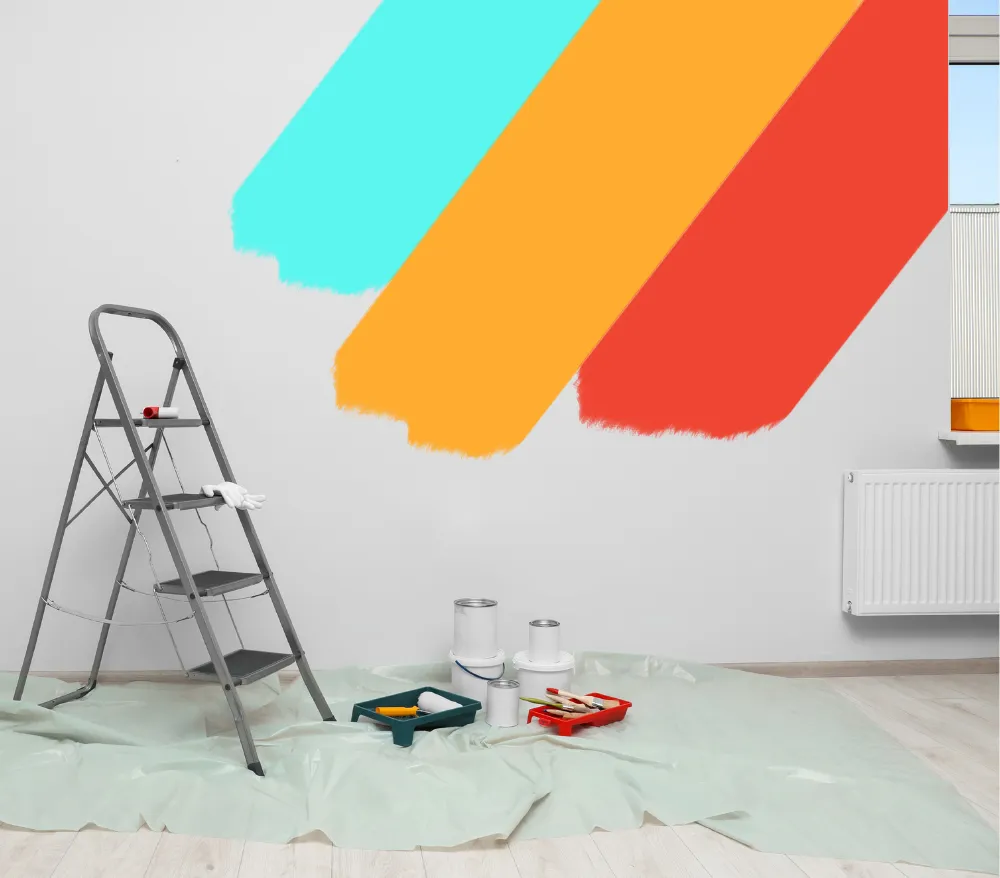
Most people dread painting a room not because the actual painting is hard, but because the whole process feels overwhelming. The prep work, the taping, the multiple coats, the cleanup — it stretches what should be a weekend project into something that bleeds into the following week. And yet professional painters routinely finish a standard room in a few hours. The difference isn’t magic. It’s method.
The fastest way to paint a room isn’t about cutting corners — it’s about working in the right sequence, using the right tools, and understanding which steps genuinely matter and which ones are habits people repeat without questioning. This guide strips the process down to what actually works, so you can get a clean, professional-looking result in the least amount of time possible.
Here’s the Real Reason Painting Takes So Long
If you’ve painted a room before and found it taking an entire weekend, the time wasn’t lost during the painting itself. It was lost in disorganized prep, waiting for paint to dry between poorly applied coats, fixing drips and missed spots, and — most commonly — going back to redo edges that weren’t cut in cleanly the first time.
Professional painters are fast because they have a system. They move through the room in a specific order, they never stop to second-guess the next step, and they use tools designed for speed without sacrificing finish quality. Once you understand the logic of that system, you can replicate it without years of experience.
Don’t Ignore the Prep: It’s Where the Time Is Really Won or Lost
The instinct for most people is to grab a brush and start painting as quickly as possible. Professionals do the opposite — they invest time upfront in preparation, because every minute spent on proper prep saves three minutes of fixing problems later.
That said, not all prep steps are created equal. Some are genuinely essential. Others are habits carried over from outdated advice. Here’s how to prep fast without skipping what matters.
Clear and protect the room efficiently. You don’t need to empty the room completely. Push large furniture to the center and cover it with a plastic drop cloth. Use canvas drop cloths on the floor rather than plastic sheeting — canvas stays in place, doesn’t bunch underfoot, and won’t cause you to slip mid-stroke. Removing furniture from the room entirely takes time and often isn’t necessary.
Wash the walls — but only where it matters. You don’t need to scrub every square inch. Focus on areas around light switches, door handles, and baseboards where grease and grime accumulate. A quick wipe with a damp cloth or a diluted sugar soap solution on the grimy spots is sufficient for most rooms. Skipping this step on greasy surfaces is one of the primary reasons paint peels prematurely.
Fill holes and sand in one pass. Use a lightweight spackle or quick-dry filler for nail holes and small dings. Apply it, let it dry for the time specified on the package (many quick-dry formulas are ready in 15–20 minutes), then sand lightly with a fine-grit sanding sponge. Don’t sand the whole wall — just the patched spots. Prime those spots with a dab of your wall paint or a touch of shellac-based primer to prevent them from showing as dull patches through your topcoat.
Tape strategically, not obsessively. Painter’s tape is useful along baseboards and window frames but becomes a time trap when people apply it to every single edge in the room. If you’re planning to cut in freehand — a skill that takes about 20 minutes to develop adequately — you can skip taping the ceiling line and wall-to-wall corners entirely. More on this in the technique section below.
What You’ll Need
Having everything staged and ready before you open a single can of paint is one of the highest-leverage time decisions you can make. Running to the garage for a missing roller sleeve mid-job breaks your rhythm and adds unnecessary time.
For Walls and Ceilings:
- A 9-inch roller frame with a ¾-inch nap roller cover (the right nap thickness for standard smooth-to-slightly-textured walls)
- An extension pole for your roller (this is non-negotiable for speed — rolling from the floor without bending and from the ceiling without a ladder saves enormous time)
- A roller tray with a disposable liner
For Edges and Detail Work:
- A 2–2.5 inch angled sash brush for cutting in
- A small trim brush (1–1.5 inch) for tight corners and detail areas
For Paint:
- High-quality paint in your chosen finish (flat or matte for ceilings, eggshell or satin for walls — higher sheen finishes are easier to clean but show imperfections more readily)
- A paint and primer in one formula if your walls are in good condition and you’re doing a same-tone or similar-tone color change
- A separate bonding primer if you’re making a dramatic color change (dark to light or light to very dark) or if the walls have stains
For Efficiency:
- A 5-in-1 painter’s tool
- A sturdy stepladder
- Blue painter’s tape (2-inch width)
- A paint grid rather than a tray if you’re using a bucket — it’s faster to reload a roller from a bucket with a grid than from a shallow tray
- Old clothes or a painter’s suit
You’re Probably Doing This Wrong: The Order of Operations
The sequence in which you paint a room matters more than most beginners realize. Painting in the wrong order forces you to go back and touch up areas you’ve already finished, which doubles your time.
The correct order is always: ceiling first, walls second, trim and baseboards last.
Within the walls themselves, the correct sequence is: cut in all edges first, then roll the field (the large open areas) immediately after while the cut-in edges are still wet. This “wet edge” technique is how professionals achieve seamless blending between brushed edges and rolled sections. If you cut in the entire room and then come back to roll an hour later, you’ll see a visible line where the dried edge meets the fresh roller paint — a lap mark that requires additional work to fix.
Step by Step: The Fastest Way to Paint a Room
Follow this sequence exactly. Each step is ordered to eliminate backtracking and minimize drying time between stages.
- Step 1 — Stage everything before you open any paint. Lay your drop cloths, move furniture, set up your ladder in the first corner you’ll work from, and have your brushes, roller, extension pole, and paint all within arm’s reach. Fill your bucket or tray. This staging step takes 15–20 minutes but eliminates constant interruptions once you start painting.
- Step 2 — Paint the ceiling first if it needs painting. Use your roller with an extension pole and work in sections across the ceiling, overlapping each pass by about 30%. Cut in the ceiling-to-wall edge with your angled brush first, then immediately roll the field while that edge is still wet. If you’re only painting the walls, apply painter’s tape to the top edge of the wall where it meets the ceiling, or develop your freehand cutting-in technique and skip the tape entirely.
- Step 3 — Cut in the walls with your angled brush. Starting in a top corner, use your angled sash brush to paint a band of color approximately 2–3 inches wide along all edges — where the wall meets the ceiling, where two walls meet in corners, and where the wall meets the baseboards and trim. Move systematically around the room rather than doing all the tops first and then all the bottoms. Work one wall section at a time so the cut-in edges remain wet when you roll.
- Step 4 — Roll the wall immediately while the cut-in edge is still wet. Load your roller generously — it should be fully saturated but not dripping. Start about 12 inches from the ceiling and roll in a large “W” or “M” pattern first to distribute the paint, then fill in the pattern with smooth parallel strokes. Keep a wet edge by always rolling back into the section you just painted rather than lifting and restarting. Work one wall completely before moving to the next.
- Step 5 — Work around the room in one continuous direction. Don’t jump between walls. Complete the cut-in and roll of one wall before moving to the next. This keeps your wet edges active and your workflow uninterrupted. A standard bedroom can typically be cut-in and first-coated in under 90 minutes using this method.
- Step 6 — Assess for a second coat while the first dries. Most rooms need two coats for full, even coverage. While the first coat dries (typically 1–2 hours for latex paint at room temperature), clean your brush lightly, keep your roller wrapped in plastic wrap or a damp cloth to prevent it drying out, and do a walk-around assessment of the first coat. Note any thin spots, missed areas, or drips to address in the second coat.
- Step 7 — Apply the second coat in the same sequence. Repeat the cut-in-then-roll sequence for the second coat. The second coat goes on faster than the first because you’re not working on a bare surface — the paint flows more smoothly and coverage is more even. Many professional painters find the second coat takes roughly 60–70% of the time the first coat required.
- Step 8 — Paint trim and baseboards last. Once the walls are fully done, paint your trim, baseboards, and door and window frames. Use your smaller trim brush and work carefully. By painting trim last, any wall paint that accidentally landed on the trim during wall painting gets covered cleanly. This is far faster than trying to protect every inch of trim before you start the walls.
- Step 9 — Remove tape and do touch-ups while paint is slightly tacky. If you used painter’s tape, remove it at a 45-degree angle while the paint is still slightly tacky — not fully wet, not fully dry. Removing tape from fully dried paint can pull the paint film with it. Do your final touch-ups with a small brush immediately after tape removal.
The Right Paint Finish for Every Surface
Choosing the wrong finish is a mistake that costs you time in the long run — either because the surface is difficult to clean and requires repainting sooner, or because the sheen level highlights every imperfection on an older wall.
Flat/Matte: Best for ceilings and low-traffic bedroom walls. Hides imperfections well but is difficult to wipe clean without leaving marks.
Eggshell: The most versatile finish for living rooms and bedrooms. Subtle sheen, reasonably washable, and forgiving on walls that aren’t perfectly smooth.
Satin: Good for kitchens, bathrooms, hallways, and children’s rooms where walls need regular cleaning. More durable than eggshell but shows surface imperfections more readily.
Semi-gloss: Best reserved for trim, baseboards, doors, and window frames. Highly durable and easy to clean, but too reflective for large wall surfaces.
Gloss: Used almost exclusively for trim in high-moisture areas. Very durable but extremely unforgiving of any surface imperfections.
Quick Fixes for Common Painting Problems
| Problem | Potential Solution | Alternative Suggestion |
|---|---|---|
| Visible lap marks on the wall | Always maintain a wet edge — never let cut-in sections dry before rolling | Add a paint conditioner like Floetrol to slow drying time in hot or dry conditions |
| Paint dripping down the wall | You’re overloading the roller or brush — remove excess paint on the tray grid before applying | Roll more slowly and use light pressure on the upstroke |
| Brush marks showing in cut-in edges | Use a higher-quality angled sash brush and apply paint in longer, smoother strokes | Lightly roll over cut-in edges with a small 4-inch roller while still wet |
| Paint peeling away with the tape | Remove tape at a 45-degree angle while paint is still slightly tacky, not fully dry | Score along the tape edge with a utility knife before removing |
| Uneven color coverage after two coats | The wall likely had stains or dramatically different base colors — apply a dedicated primer before the third coat | Spot-prime problem areas with shellac-based primer before the next coat |
| Paint smell lingering for days | Ventilate the room thoroughly with cross-ventilation during and after painting | Choose a low-VOC or zero-VOC paint formula for significantly reduced odor |
| Roller leaving a stippled, orange-peel texture | Switch to a shorter nap roller cover (¼ inch for smooth walls) | Thin the paint very slightly with water (no more than 10%) to improve flow |
Stop Doing This: Habits That Slow Every Paint Job Down
Painting directly from the can. Dipping your brush into the original paint can introduces contamination, makes it awkward to load the brush properly, and risks drying out the remaining paint. Always decant paint into a smaller cut bucket or tray.
Over-taping every edge in the room. Taping is slower than freehand cutting-in once you’ve practiced the technique. If you find yourself spending more than 30 minutes taping a room, you’re over-taping. Invest 20 minutes practicing freehand edging on a piece of cardboard and you’ll eliminate most of your taping time permanently.
Washing brushes and rollers between coats. If your second coat is following within two hours, there is absolutely no need to wash out your tools. Wrap your roller tightly in plastic wrap and seal your brush in a small plastic bag. They’ll be ready to go when you need them.
Painting in a cold or excessively humid room. Paint needs the right conditions to flow, level, and dry properly. Below 50°F, latex paint doesn’t adhere or dry correctly. In high humidity, drying times extend dramatically. Paint in a room with moderate temperature (60–80°F) and reasonable airflow for the fastest and most reliable results.
Using cheap roller covers. A cheap roller cover leaves fibers on the wall, holds less paint requiring more frequent reloading, and produces a worse finish that may need an extra coat to fix. A quality roller cover is a small investment that directly reduces your total painting time.
How to Speed Up Drying Time Between Coats
Sometimes you genuinely need to get two coats done in the same day and the standard drying time feels too long. There are a few legitimate ways to speed up the process without compromising the finish.
Increase ventilation by opening windows and using a fan to keep air moving across the painted surface. This accelerates the evaporation of water from latex paint significantly. Avoid pointing a fan directly at a freshly painted surface, which can cause uneven drying — instead, position it to create general airflow across the room.
If you’re painting in a humid climate, a dehumidifier running in the room during drying dramatically reduces the time between coats. High humidity is one of the most underappreciated reasons paint takes longer than expected to dry.
Choose a paint labeled “fast-dry” or check the recoat time on the label before purchasing. Some modern latex paints are formulated for one-hour recoat times, which can compress an all-day project into a focused morning.
FAQ
Can I paint a room in one day? Yes, absolutely — a standard bedroom or living room can be fully painted in one day if you start early, work in the correct sequence, and use a fast-dry latex paint. Allow the first coat to dry for at least one to two hours before applying the second, and you can realistically have two full coats done and the room reassembled by early evening.
Do I always need two coats of paint? Not always. If you’re painting a similar color over an existing coat in good condition and using a high-quality paint-and-primer formula, one coat can sometimes achieve full coverage. However, for color changes — especially light over dark or vice versa — two coats are almost always necessary for an even, professional result.
Is it faster to use a paint sprayer? A sprayer applies paint significantly faster than a roller for large, empty spaces. However, the setup time, masking requirements (everything in the room must be thoroughly covered), and cleanup time often make it slower overall for furnished rooms. Sprayers are most time-efficient for empty rooms, new construction, or large open spaces like garages.
How do I avoid getting paint on the ceiling when rolling the walls? Use a roller with moderate loading — not over-saturated — and slow your stroke slightly as you approach the ceiling. Maintaining a wet cut-in edge means any slight overlap between the roller and the brushed edge blends invisibly. If you do get a spot on the ceiling, let it dry fully and touch it up with a small brush rather than trying to wipe it while wet, which spreads the paint further.
Conclusion
The fastest way to paint a room isn’t a trick or a shortcut product — it’s a system. Stage everything before you start, work in the right sequence, keep your edges wet, and don’t stop to second-guess each step. A room that used to take an entire exhausting weekend can comfortably become a focused, satisfying one-day project. The first time you finish a room before lunch and spend the afternoon putting it back together, you’ll understand why professional painters seem almost unhurried — they’re not faster because they rush, they’re faster because they never have to go back.
Enjoyed this project? Get even more DIY ideas that save (and make) you money.
Join our free newsletter for profitable DIY projects, clever cleaning hacks, home ideas, and creative crafts delivered straight to your inbox.
✓ Free forever • No spam • Unsubscribe anytime