You finally find your favorite shirt, throw it on, and then notice that stain — the one you thought the wash had taken care of weeks ago. Still there. Maybe even darker now. Stubborn stains have a way of making you feel like the garment is done for, but in most cases, it absolutely isn’t.
The key to winning the battle against tough stains is knowing what you’re dealing with. Not all stains respond to the same treatment, and throwing a stained item straight into a hot wash is one of the most common (and costly) mistakes people make. Understanding the science behind why stains stick — and what breaks them loose — is what separates a rescued shirt from a ruined one.
This guide walks you through everything you need to know, from identifying the stain type to getting your whites bright again.
Why Some Stains Are So Stubborn
Not every stain is created equal. Some rinse out with cold water alone. Others seem to grip fabric fibers like they were born there. The reason comes down to the chemistry of the staining substance and how it interacts with your fabric.
Protein-based stains (blood, egg, sweat, dairy) bond tightly with fabric fibers when exposed to heat. This is why hot water “sets” these stains permanently — the proteins literally cook into the cloth.
Tannin-based stains (coffee, tea, wine, fruit juice) are plant-derived and penetrate fabric quickly. They oxidize over time, which is why older ones appear darker.
Oil-based stains (grease, butter, makeup, cooking oil) repel water, meaning a regular wash barely touches them. They need a degreasing agent to break the bond.
Dye-based stains (berries, tomato sauce, mustard) contain strong pigments that can bond chemically with fabric. They’re particularly aggressive on natural fibers like cotton and linen.
Combination stains (like pizza or curry) are the trickiest — they contain oils, dyes, and proteins all at once, requiring a multi-step approach.
What You’ll Need Before You Start
Having the right supplies ready means you act quickly instead of losing precious time hunting through cabinets while the stain dries.
- Blotting materials: Clean white cloths or plain paper towels
- Cold water: Your first line of defense for almost every stain
- Dish soap or liquid laundry detergent: Cuts through oil and lifts surface residue
- White vinegar: Excellent for tannin and dye stains
- Baking soda: Great as an absorbent paste for grease and odors
- Hydrogen peroxide (3%): Useful for brightening and lifting organic stains on light fabrics
- Rubbing alcohol (70%+): Tackles dye-based and resin-heavy stains
- Enzyme-based stain remover: The heavy hitter for protein, food, and grass stains
- Salt: An underrated emergency absorbent for fresh liquid stains
Pro tip: Always read your garment’s care label before treating anything. “Dry Clean Only” means exactly that — hand it off to a professional rather than experimenting at home.
Step-by-Step: How to Remove Stubborn Stains on Clothes
Step 1 — Act immediately, but don’t panic
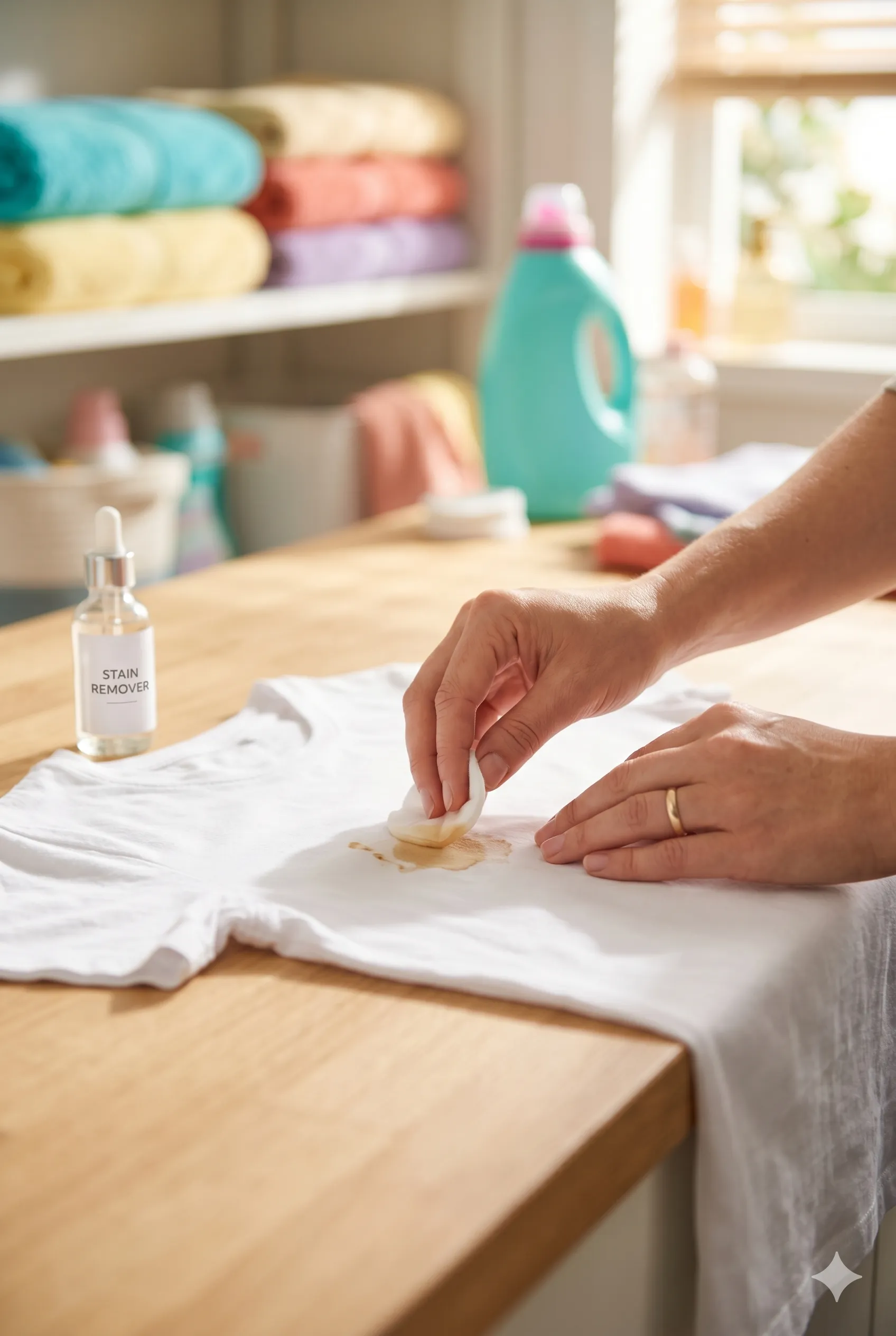
- As soon as a stain happens, gently blot up as much of the substance as you can using a clean white cloth or paper towel. Press down firmly, then lift straight up — do not rub or scrub, as this pushes the stain deeper into the fabric weave and can spread it outward.
- For solid or semi-solid stains (like butter or mud), use the edge of a spoon or a dull knife to lift away the excess before applying any liquid treatment.
- If you’re out and can’t treat the stain immediately, rinse the area with cold water and blot it as dry as possible. This buys time without setting the stain further.
Step 2 — Identify the stain type
- Take a moment to figure out what caused the stain before reaching for any product. Applying the wrong treatment — for example, using hot water on a blood stain — can permanently bond the stain to the fibers and make it nearly impossible to remove later.
- If you’re unsure what caused the stain, treat it as a combination stain: start with cold water, move to dish soap, then escalate to an enzyme cleaner.
Step 3 — Pre-treat the stain
- Apply your chosen treatment directly to the stained area and let it sit for at least 5–10 minutes. For older or dried stains, 20–30 minutes is better.
- For grease stains, apply a small amount of dish soap or sprinkle baking soda onto the stain, gently press it in with your fingers, and allow it to absorb the oil before rinsing.
- For protein stains (blood, sweat, egg), soak the area in cold water mixed with an enzyme-based stain remover. Never use warm or hot water at this stage.
- For coffee or wine stains, dab white vinegar onto the stain and let it penetrate for 10 minutes before rinsing.
- For mud or dirt, allow the stain to dry completely first — treating wet mud spreads it further. Once dry, brush off the loose particles, then pre-treat with liquid detergent.
Step 4 — Work from the outside in
- When applying any cleaning solution, always start at the outer edge of the stain and work inward in small circular motions. This prevents the stain from spreading outward into a larger patch, which is a very common mistake.
- Use a soft-bristled toothbrush for textured fabrics to gently work the solution into the fibers without damaging them.
Step 5 — Rinse thoroughly with cold water
- After pre-treating, rinse the stained area under cold running water from the back of the fabric. This pushes the loosened stain particles out through the front of the fabric rather than deeper into it.
- Check the stain before moving on. If it’s still visible, repeat the pre-treatment step rather than moving to washing.
Step 6 — Wash as normal — but air dry first
- Wash the garment according to the care label instructions using the appropriate water temperature for that fabric.
- When the wash is done, do not put the item in the dryer until you have confirmed the stain is completely gone. The heat from a dryer will permanently set any remaining trace of the stain. Lay the garment flat or hang it to air dry, inspect it in good light, and only tumble dry once you’re fully satisfied.
How to Remove Stubborn Stains on White Clothes
White clothes are both the easiest and trickiest to deal with. The good news is that you have more aggressive tools available — the bad news is that those tools can cause their own damage if used carelessly.
For food and tannin stains on whites, a paste of baking soda and hydrogen peroxide (3%) applied directly to the stain and left for 30 minutes before rinsing is highly effective. The mild bleaching action of hydrogen peroxide lifts discoloration without the harshness of chlorine bleach.
For sweat stains and yellowing, white vinegar diluted with equal parts water works well as a soak. Leave the garment for up to an hour, then wash as normal.
For grease stains on whites, dish soap is your starting point. Apply, let sit, rinse, and repeat before washing.
Regarding chlorine bleach: Use it sparingly and only as a true last resort. Bleach can react with certain residues and actually cause yellowing rather than whitening. Always dilute it properly (follow label instructions) and never use it on silk, wool, spandex, or any fabric with a delicate finish. Oxygen-based bleach (like OxiClean) is a gentler, safer alternative for most white fabrics.
Common Stubborn Stains and the Best Solutions
| Stain Type | Best Treatment | What to Avoid |
|---|---|---|
| Grease / oil | Dish soap, baking soda | Hot water (spreads it) |
| Blood | Cold water + enzyme cleaner | Warm water (sets proteins) |
| Red wine | White vinegar or salt (fresh), enzyme cleaner (dried) | Rubbing with a cloth |
| Coffee / tea | White vinegar, then cold rinse | Letting it dry untreated |
| Sweat / yellow rings | White vinegar soak or baking soda paste | Chlorine bleach on colored fabrics |
| Grass | Enzyme cleaner or rubbing alcohol | Hot wash before pre-treating |
| Mud | Let dry first, brush off, then detergent | Treating while still wet |
| Mustard | Dish soap + hydrogen peroxide | Vinegar (can set the color) |
Tips to Prevent Stubborn Stains in the First Place
Treat spills immediately. The longer a substance sits, the more it penetrates and bonds with the fabric. Even a quick cold water rinse dramatically improves your chances of full removal.
Pre-treat before every wash. If you notice a stain when loading laundry, apply a small amount of liquid detergent or stain remover and let it sit for a few minutes before the wash cycle begins. Don’t just toss it in and hope for the best.
Check pockets and care labels. Before washing, check pockets for pens, lip balm, or tissues — all of which can cause new stains in the wash. And always follow the care label to avoid fabric damage that makes stains harder to treat.
Store clean clothes properly. Yellowing on whites and discoloration on colors often develops in storage from oxidation, humidity, or contact with acidic materials. Wash clothes before storing, and keep them in a cool, dry place.
FAQ
Can stubborn stains be removed after washing and drying? It’s much harder once the garment has been through the dryer, but not always impossible. Re-wet the stained area, apply an enzyme-based stain remover, and allow it to soak for several hours or overnight before washing again. Success depends on the stain type and fabric.
Is it better to soak or scrub a stubborn stain? Soaking is almost always better. Scrubbing can damage fabric fibers, cause pilling, and actually push the stain deeper. Gentle blotting and soaking with the right product is more effective and safer for the garment.
Does hot water help remove tough stains faster? For most stains, hot water does more harm than good. It sets protein stains permanently and can cause dye-based stains to bond more deeply. Always start with cold water and only increase temperature if the care label and stain type specifically call for it.
Are natural stain removers as effective as commercial ones? For fresh stains, yes — white vinegar, baking soda, dish soap, and hydrogen peroxide handle a wide range of stains effectively. For older or set-in stains, a commercial enzyme-based remover typically delivers faster, more reliable results.
Conclusion
The real secret to removing stubborn stains isn’t a miracle product — it’s a combination of speed, the right treatment for the stain type, and the discipline to air dry before using any heat. Whether you’re rescuing a white blouse from a coffee spill or pulling a grease-stained shirt back from the brink, the steps are straightforward once you know them. Identify the stain, pre-treat it properly, rinse from the back, wash with care, and always, always check before the dryer. Most stains that seem permanent are simply stains that haven’t met the right treatment yet.
Enjoyed this project? Get even more DIY ideas that save (and make) you money.
Join our free newsletter for profitable DIY projects, clever cleaning hacks, home ideas, and creative crafts delivered straight to your inbox.
✓ Free forever • No spam • Unsubscribe anytime